

How to Build a Lifelong Bond with Your Balinese Nanny
Building a lifelong bond with your Balinese nanny starts long before you fall in love with her smile. It begins with simple, everyday choices about respect, routine and how you see her place inside your family.
Most expat parents arrive with only a rough idea of Balinese culture, yet a basic Balinese etiquette guide shows that harmony and politeness shape every interaction, including childcare.
Balinese nanny etiquette is about clarity as much as kindness. Your nanny cannot guess Western rules for sleep, discipline or screens, so walking her through routines slowly, and repeating them kindly, keeps everyone safe and relaxed.
At the same time, your nanny carries deep responsibilities to family, temple and community. A Balinese culture overview explains how ceremonies, offerings and Tri Hita Karana shape her days and energy.
When you ignore those realities, small frictions appear: late arrivals on holy days, quiet resentment over outings, or confusion about what is “allowed” with your children.
Handled well, Balinese nanny etiquette turns a paid job into a relationship that can last for years and follow you across countries, as shown in many expat family nanny stories from long-term Bali residents.
Table of Contents
Why Balinese Nanny Etiquette Matters for Expat Families
Balinese nanny etiquette matters because your nanny will often spend more time with your child than anyone else in Bali, yet come from a culture that avoids direct conflict and open disagreement.
Understanding how she is taught to be polite, smile through discomfort and defer to employers helps you read her signals and apply Balinese nanny etiquette before stress turns into mistakes or quiet resentment.
When you treat nanny care as “just help”, you miss a chance to build a stable, loving relationship that supports your child’s language, confidence and sense of security far beyond your time in Bali.
Balinese Nanny Etiquette for Explaining House Rules Clearly
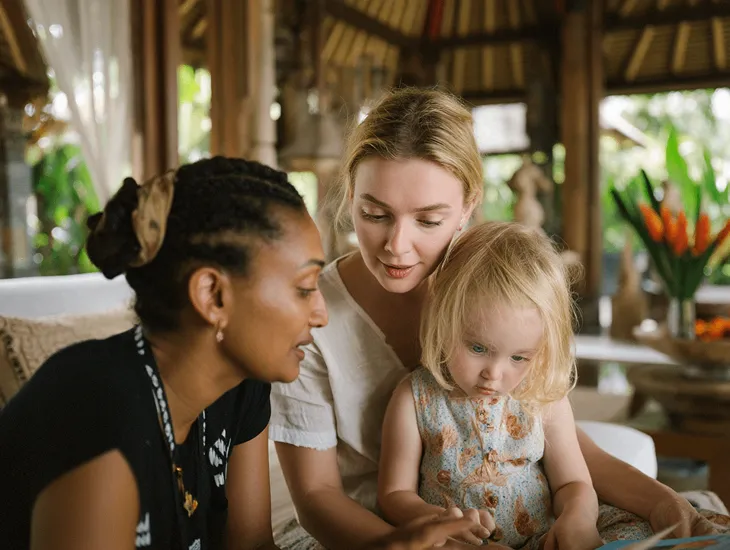
Balinese nanny etiquette starts with clear, kind explanations of house rules. Do not say “we are easy”; instead, walk through pool safety, nap routines, food limits and screen rules using simple English or Bahasa Indonesia.
Many Balinese nannies feel shy about asking questions and will smile or agree, even when instructions are unclear. Inviting questions and repeating key points over the first few days prevents quiet confusion.
Visual guides help too. Leave written schedules on the fridge, label cupboards and use checklists for bedtime or school mornings so your nanny can follow your routine without guessing or feeling embarrassed.
Balinese Nanny Etiquette in Daily Routines, Outings and Breaks
Balinese nanny etiquette continues in the small daily routines. When she joins you at the mall, Waterbom, beach clubs or the zoo, you cover her entry, meals and drinks while she is responsible for your child.
Plan real breaks. Many Balinese carers are too polite to say they are hungry or tired. Build in time for her to sit, eat, rest and follow Balinese nanny etiquette even on long shifts while another adult watches the children.
If you expect her to swim with your child, confirm that she is truly confident in water and give clear rules about who watches the pool and when. Do not assume local staff automatically have strong swimming skills.
Balinese Nanny Etiquette Around Ceremonies and Holy Days
Balinese nanny etiquette must honour temple life and ceremonies. Your nanny’s calendar is shaped by Galungan, Kuningan, Nyepi and family rituals that are as important to her as Christmas or Eid is to you.
Ask early about key dates and discuss how to manage time off, extra hours on quiet days and any help she may need with transport or offerings, using Balinese nanny etiquette as your guide for what is fair.
Supporting her religious obligations is not just generosity. It tells her that her faith and family matter, which often deepens loyalty and makes her more willing to support you during your own busy seasons.
Real Story — Balinese Nanny Etiquette in a Canggu Villa
Balinese nanny etiquette was not on Daniel and Anna’s radar when they hired Made for their Canggu villa. They said they were “relaxed” and never explained routines, holy days or rules for outings.
Made smiled and agreed to everything, but she was often late after ceremonies and unsure about nap times. Tension grew quietly as the parents felt disrespected and Made felt constantly anxious.
After a friend explained local norms, they reset the relationship: clear schedules on the fridge, agreed time off for temple days and proper breaks on outings. Within months, trust returned and the bond deepened.
Balinese Nanny Etiquette for Feedback, Conflict and Respect

Balinese nanny etiquette recognises that most nannies dislike direct confrontation. Correct mistakes privately, in a calm voice, and link feedback to safety or the child’s wellbeing instead of blame or shame.
Regular check-ins help. Ask open questions in simple Bahasa Indonesia, such as “Apa ada yang susah?” or “Ada yang bingung?”, so she feels invited to share small worries before they grow.
If conflict does arise, avoid raising your voice in front of children or other staff. Set a time to talk, listen first, then restate expectations and agree on what will change from tomorrow onward.
Bonuses and Appreciation in Balinese Nanny Etiquette Today
Balinese nanny etiquette turns pay into appreciation. Beyond a fair monthly salary, long-term families usually give THR before major religious holidays and occasional bonuses linked to extra responsibility.
Small gestures matter just as much. Remembering her birthday, asking about her children’s school, or sending a meal box home after parties shows that Balinese nanny etiquette is really about daily respect.
For holiday nannies, tipping at the end of a stay based on hours, nights and how much she did beyond childcare says thank you in a way Balinese carers clearly understand and appreciate.
Checklist for Practising Balinese Nanny Etiquette in 2026
Balinese nanny etiquette is easier when you treat it like a checklist. Start with respectful titles, clear routines, outing rules and a written summary of duties, hours, breaks and phone use in your villa.
Add ceremonies, time-off plans and a simple approach to feedback and conflict. Knowing in advance how you will handle late arrivals, sickness or mistakes prevents emotional reactions later.
Finally, plan appreciation: salary reviews, THR, small gifts and warm words in front of your kids. When they see you honour their nanny, they learn to value her culture and care too.
FAQ’s About Balinese Nanny Etiquette for Families ❓
Q: How important is language for Balinese nanny etiquette?
A: Shared language helps, but Balinese nanny etiquette relies more on patience, visuals and repetition. Simple English plus key Bahasa phrases is usually enough if you show, not just tell, what you expect.
Q: Should my children call our nanny by her first name?
A: In Balinese nanny etiquette, respectful titles like Mbak, Kakak or Ibu feel warmer and more polite than using only a first name. You can combine both, for example “Mbak Wayan”, to teach your kids respect and affection together.
Q: How do I handle holidays and ceremonies fairly?
A: Balinese nanny etiquette treats major temple days like Galungan or Nyepi as non-negotiable family duties. Discuss dates early, plan backups and see supporting her worship as part of the relationship, not an inconvenience.
Q: What is a normal bonus for long-term Balinese nannies?
A: Balinese nanny etiquette usually includes THR of about one month’s salary before key religious holidays, plus smaller bonuses for extra nights, travel or new responsibilities. Match the amount to her role, loyalty and your overall budget.
Q: How can I tell if my nanny is unhappy but staying polite?
A: In Balinese nanny etiquette, unhappiness often shows as quiet withdrawal, more small mistakes or sudden requests for time off. Regular check-ins, private talks and concrete questions let her share problems before she decides to leave.
Q: Can I still set firm boundaries and practise Balinese nanny etiquette?
A: Yes. Balinese nanny etiquette is not about saying yes to everything. It is about setting firm, consistent boundaries with calm tone, private feedback and clear reasons so rules feel fair rather than harsh or unpredictable.