Why Families Choose Pelangi School Bali for Ages Two to Twelve
If you have younger children and plan to base your family in Ubud, Pelangi School Bali quickly appears on the radar. It combines a small, nature-rich campus with a holistic curriculum and long-term friendships rather than short, transient stays.
On paper, this is a not-for-profit, IPC-based primary school, but the feel is closer to a village. The Pelangi School official site highlights small classes and a green, playful campus.
Founded by parents seeking an alternative to big-city schooling, the school focuses on happiness, creativity, bilingual learning and social-emotional skills as much as test scores or strict academic drills.
For relocation families, admissions and visas matter as much as philosophy. The Pelangi School Bali FAQs explain age placement, calendars and the need for a valid KITAS for non-Indonesian students.
Short-stay or cautious families often start with holiday camps. The Pelangi School camps page shows how visiting children join nature-rich programs to test the school and wider community.
This guide walks through location, campus life, curriculum, fees, community and visa basics so you can decide whether this Ubud primary school fits your child, your budget and your long-term Bali lifestyle plans.
Why Pelangi School Bali Appeals to Ubud Families in 2026
Pelangi School Bali appeals to families who want a gentle, community-based start to schooling. Instead of a huge campus, parents find a compact, green environment five to ten minutes south of Ubud, close to real village life.
Many long-term Ubud residents describe the school as warm and low-stress. Children tend to stay for years, building deep friendships rather than cycling through short-stay classmates every term.
For younger kids, parents often value that the school is firmly primary-focused. It is not trying to be everything from kindergarten to Grade 12, but to do the two-to-twelve window well in a familiar, village-scale community.
How Pelangi School Bali Blends Holistic Values and Academics
Pelangi School Bali blends holistic values with recognised standards. It uses the International Primary Curriculum alongside the Indonesian curriculum, weaving creativity and social-emotional learning into literacy, numeracy and science.
Teachers talk about educating the whole child, not only exam scores. Lessons aim to build moral awareness, empathy, resilience and curiosity so children enjoy learning instead of fearing school.
Because the programme works in English and Indonesian, children grow comfortable switching languages. Bilingual teachers and assistants help them navigate both international expectations and local culture from an early age.
Inside the Pelangi Campus, Nature and Daily School Life
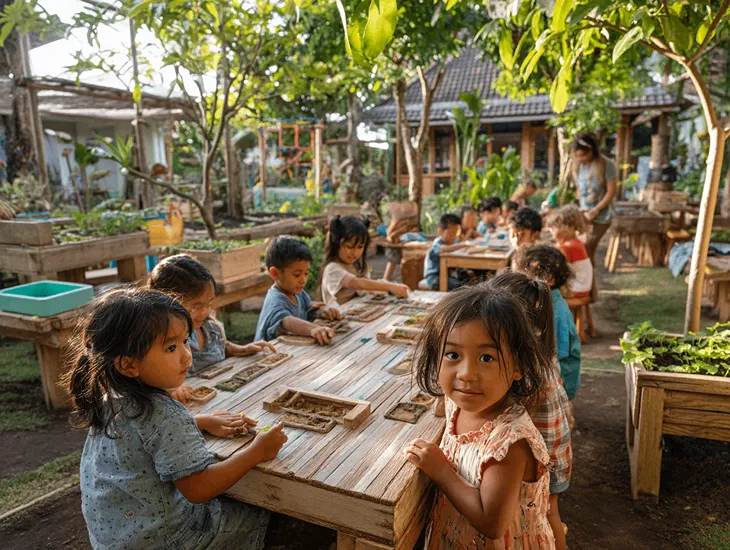
Pelangi School Bali sits in Mas village, surrounded by rice fields and everyday Balinese life. The compact campus is full of trees, gardens and open spaces, so children feel close to nature rather than packed into corridors and concrete.
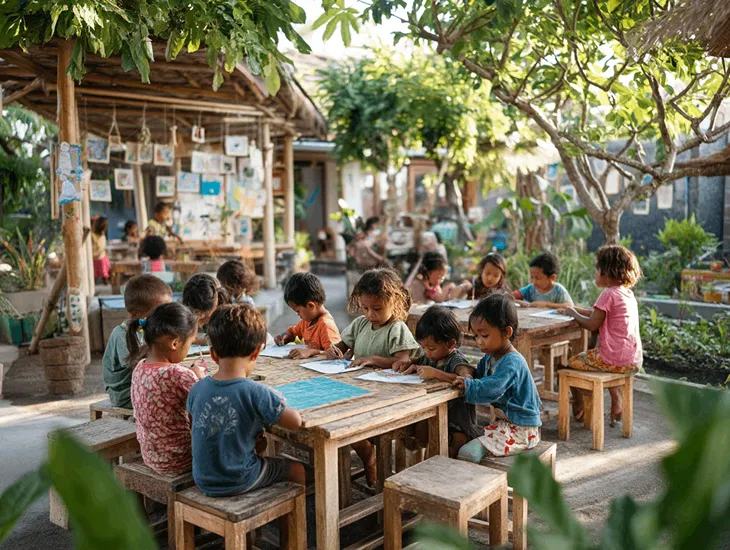
Outdoor areas double as classrooms. Children plant gardens, observe insects, play under shade and move between spaces, which can be a welcome change if they are used to heavy screen time and indoor days.
Daily routines include healthy snacks and lunches, often with vegetarian options. Parents often comment on how relaxed children look at pickup time, dirty from play but emotionally settled and eager to return.
Real Story — Choosing Pelangi for Young Children in Ubud
Pelangi School Bali first appeared on Anna and Marco’s radar when they visited Ubud with their two and five year olds. They wanted a small, bilingual school where their children could play barefoot and still learn solid basics.
After touring the campus, they saw mixed-age play in the yard, simple classrooms and art hanging everywhere. The atmosphere felt closer to a village festival than a strict institution, yet lessons were clearly structured.
They enrolled for a year, then stayed longer. Their eldest later transitioned smoothly to a larger south Bali secondary school, confident in English, Bahasa Indonesia and day-to-day life in Bali.
How Programs and Activities at Pelangi School Bali Are Structured
Pelangi School Bali focuses on early years and primary. Playgroup and kindergarten provide a gentle start, while Grades one to six follow the International Primary Curriculum and Indonesian standards in a bilingual setting.
Children join arts, music, sports and nature clubs. Activities like circus skills, aikido, football and creative crafts give them space to try new skills without the pressure of high-stakes competition.
Holiday camps open the doors to visiting children. Short-stay families often use these programmes to test how their child adjusts to the campus, teachers and peer group before committing to a full school year.
Community and Scholarships at Pelangi in Mas Ubud
Pelangi School Bali is known for feeling like a community rather than a transient hub. Many families live full-time in Bali, and children may stay at the school for most of their primary years.
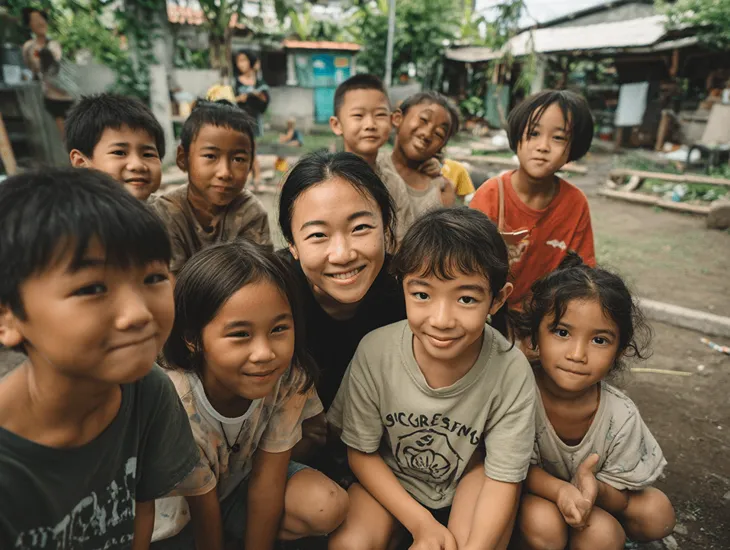
The student body mixes Indonesian and international children from more than twenty nationalities. This helps friendships cross cultures and languages instead of clustering into a single background.
Through scholarships, the school welcomes local students who could not otherwise afford fees. Environmental projects and community events then connect the campus with surrounding villages, extending impact beyond the gates.
Visas, Legalities and Timing to Attend Pelangi School Bali
Pelangi School Bali expects non-Indonesian students to hold a valid KITAS or have an active application in process. This can be a dependent KITAS under a working parent or a student KITAS sponsored by the school foundation.
Families who arrive on tourist visas but plan to enrol should speak with a visa advisor early. Converting a child’s status takes time, and starting the process late can create gaps in school attendance.
It helps to map term dates against visa timelines and travel plans. Aligning arrival, housing and paperwork with the academic calendar keeps your child’s transition smoother and avoids mid-term disruptions.
Checklist to See if This Ubud Primary School Fits Your Child
Pelangi School Bali may suit your child if they enjoy outdoor, sensory-rich environments. Muddy feet, animal sounds and changing weather are part of daily life, not exceptions reserved for a rare school trip.
Learning style matters. This school works best for families who prioritise creativity, projects and social-emotional growth over constant tests, rankings and strict uniforms.
Finally, this option is strongest for early years and primary. You will likely need a plan for middle and high school later, whether that is south Bali, online programmes or relocating again.
FAQ’s About Pelangi School Bali for Local and Expat Families ❓
Q: What ages does this Ubud school cover?
A: Pelangi School Bali runs from playgroup and early years through roughly Grade six, serving children from about two to twelve years old in a primary-focused environment.
Q: Where is the school located in Ubud?
A: The campus is in Br. Kumbuh, Mas, just south of central Ubud in Gianyar. It sits among rice fields and village life rather than in a busy tourist street or urban corridor.
Q: What curriculum does the school follow?
A: Pelangi School Bali combines the International Primary Curriculum with the Indonesian National Curriculum, delivered bilingually in English and Indonesian with a holistic, creative approach.
Q: Does the school offer secondary or high school?
A: No. This option focuses on early years and primary. Families usually move to larger international schools, online programmes or other options after Grade six.
Q: How important are visas for enrolling here?
A: For non-Indonesian children, the school expects a valid KITAS or an application in process. Parents should coordinate with a visa advisor and the office before term starts to avoid interruptions.
Q: Is this a good choice for short-term families?
A: It can work, especially via camps or short enrolments, but Pelangi School Bali is strongest for families planning to stay several years and build deep community ties.