
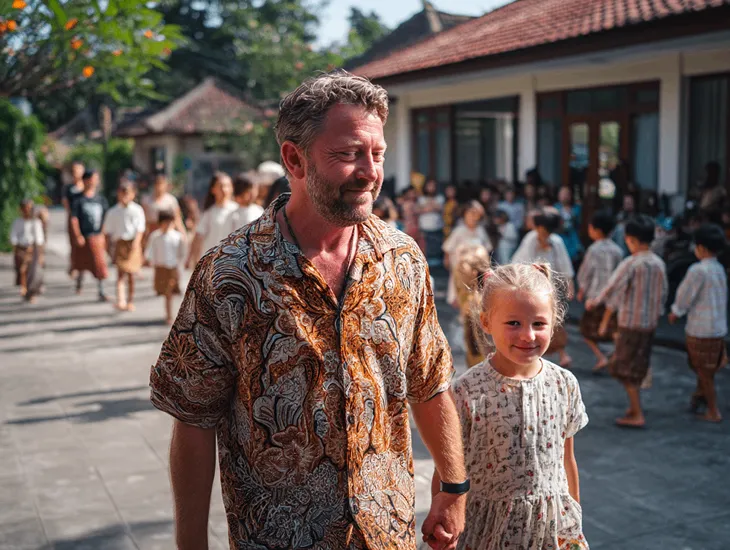
Creating a Balanced Life for Your Only Child in Bali
Raising an only child in a new country brings unique challenges. You worry about their social growth without siblings at home. Many parents feel this pressure daily.
Finding consistent playmates in a transient environment is difficult. Your child may rely too much on adult interaction for entertainment. This shift often limits their independent development.
Pererenan has high humidity and constant motorbike noise. You might struggle to find safe spaces for peer play. Social isolation becomes a real risk for your family.
Over-scheduling activities can lead to immense parental burnout. Yet doing nothing leads to social delay for the child. You need a middle ground that works.
Success comes from using the island’s vibrant social infrastructure. Schools and clubs offer the necessary peer interaction for growth. You can foster a Balanced Life in Bali today.
Follow these professional childcare standards in Indonesia to guide your child. These steps create a fulfilling world for your only child. They will thrive in this environment.
Table of Contents
1. Anchoring Social Life with Schools
International schools provide the primary social anchor for expat families. These institutions offer structured co-curricular activities daily. This exposure is vital for an only child seeking a Balanced Life in Bali.
The Island School in Bali features over sixty different clubs. Students interact with various grade levels through sports and arts. This broadens their social circle beyond class groups.
Programs run every afternoon from Monday to Friday. They foster self-esteem and help children follow their unique interests. Consistent peer contact prevents the isolation often associated with only children.
Teachers act as mentors in these structured settings. They encourage teamwork and leadership skills in every group. This professional guidance ensures your child develops strong prosocial habits.
Active participation in school events builds a sense of belonging. Children meet peers with similar interests and backgrounds. These connections form the foundation of their island social life.
School-based programs are designed to be inclusive and diverse. Your child will interact with students from all over the world. This global perspective is invaluable for their personal growth.
Regular attendance at these activities creates a reliable routine. It ensures that social time is a priority every day. This consistency is essential for an only child’s development.
Parents can also connect with other families through school events. This helps build a supportive community for the entire family. A strong school network is a powerful resource.
Choosing the right school is a significant first step. Look for institutions that prioritize holistic development and social interaction. This choice sets the stage for a happy childhood.
In Bali, international schools are hubs of activity and learning. They provide a safe and stimulating environment for all ages. Your child will find many opportunities to shine.
2. Integrating Peer Play via Kids Clubs
Daycare centers like Umalas Kids Club offer vibrant play-based environments. They serve children aged one to five with age-specific programs. These centers are essential for building independence early.
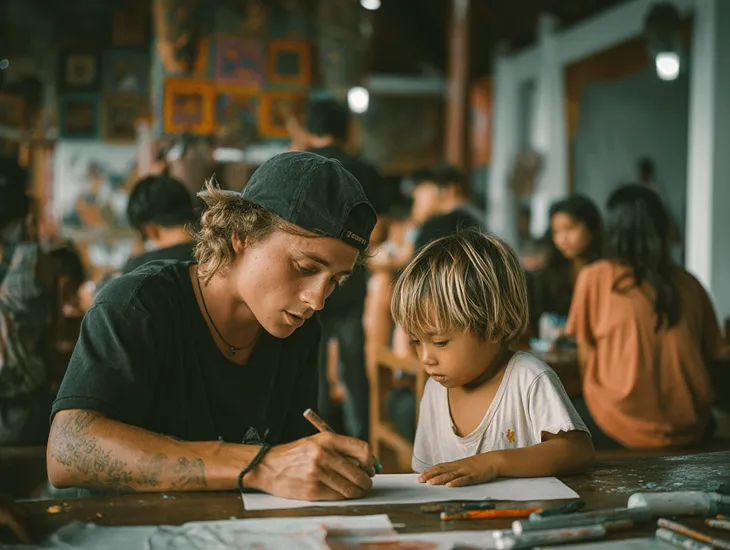
Supervised sessions combine physical outdoor games with creative indoor arts. Kids learn to socialize in a safe and nurturing setting. Regular attendance ensures your child develops essential behaviors through play.
Other venues like Coconut Kids Club focus on cultural interaction. They offer cupcake decorating, painting, and traditional sessions. These activities provide a rich social landscape for children.
Many clubs offer half-day and full-day programs for busy parents. This flexibility allows you to tailor social time to your child’s needs. It is an effective way to maintain a Balanced Life in Bali.
Structured play environments reduce the burden on parents. You can focus on work while your child interacts with peers. This balance is healthy for the entire family unit.
Kids clubs are designed to be fun and educational. They offer a variety of activities that spark curiosity. Your child will look forward to their time at the club.
These centers also prioritize safety and professional supervision. You can rest assured that your child is in good hands. This peace of mind is invaluable for busy expats.
Interaction with children of different ages is very beneficial. Older children can act as mentors for the younger ones. This dynamic mimics the social structure of a larger family.
Play is the primary way that children learn about the world. It builds confidence and improves communication skills. Kids clubs provide the perfect stage for this growth.
Exploring different clubs keeps the experience fresh and exciting. Each venue offers a unique set of activities and peers. This variety enriches your child’s social life significantly.
3. Setting Stable Home Routines
Home routines provide necessary security in a busy environment. Research supports authoritative parenting for the best social outcomes. Warmth combined with clear boundaries helps an only child feel secure.
Involve your child in household tasks and family decisions. Choosing weekend activities or helping with chores builds maturity. These responsibilities encourage responsibility and emotional regulation.
Maintaining a predictable schedule reduces anxiety for young children. Balance school, clubs, and family time with independent play. This structure is a cornerstone of a Balanced Life in Bali.
Modeling prosocial values at home is very important. Show your child how to share and care for others. These lessons at home translate into better social success.
Predictable routines help children manage the high stimulation of island life. They know what to expect each day. This consistency fosters a calm and productive home atmosphere.
Creating a dedicated space for play and learning is helpful. It allows your child to focus on their own interests. This independence is a key part of their development.
Bedtime routines are especially important for quality sleep. A calm and quiet evening helps children process their day. This rest is essential for their physical and mental health.
Meal times are great opportunities for family connection. Use this time to talk about your day and plan. These interactions strengthen the bond within the family unit.
Balance technology use with active and creative play. Set clear limits on screen time to encourage other interests. This balance is vital for a healthy and active lifestyle.
Routines can be flexible but should maintain a core structure. This allows for spontaneous fun while providing a safe base. A stable home is a happy home for everyone.
4. Building Freedom within Safety Boundaries
Safety is a non-negotiable aspect of island living. Only children do not have siblings to support them during play. Parents must enforce strict rules around pools and roads.
Use gated communities or supervised play spaces for independent practice. Solo exploration near water or traffic is never appropriate. Rely on established clubs that prioritize high supervision standards.
Teaching your child about water currents and road safety is vital. Foster independence within safe boundaries to build their confidence. This balanced approach protects them while allowing for growth.
Always choose beaches with lifeguards and clear flag systems. Supervision should be constant during any water-based activity. Safety awareness is a skill that serves them well.
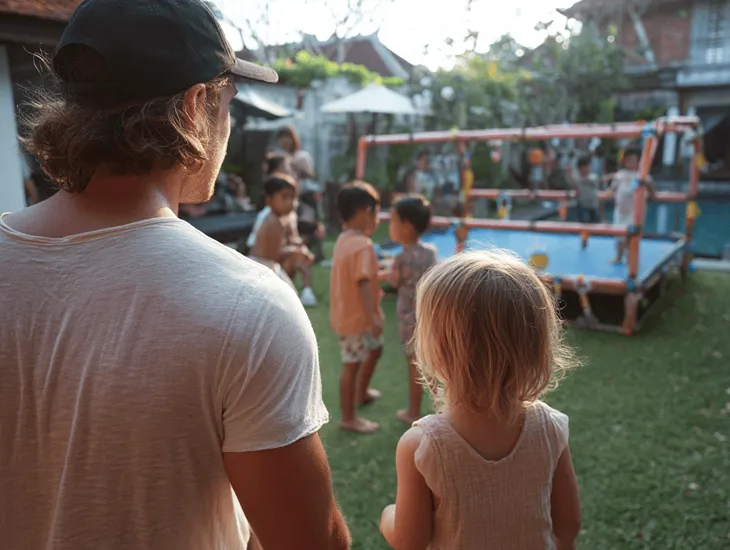
Gated playgrounds provide a controlled environment for testing limits. Your child can run and climb without immediate danger. This physical freedom is essential for their overall well-being.
Pool fences are a mandatory safety feature for any villa. They provide a physical barrier that prevents accidental drowning. Never compromise on this essential piece of equipment for your home.
Road safety requires constant vigilance in the local traffic. Teach your child to always hold an adult’s hand near motorbikes. This simple habit prevents dangerous situations on busy streets.
Supervised water play is a highlight of many kids clubs. It allows children to enjoy the water in a safe way. These sessions build confidence and improve swimming skills over time.
Independence is a gradual process that requires trust and guidance. Start with small steps in safe and familiar environments. This builds the foundation for more freedom as they grow.
Protecting your child while allowing them to explore is a delicate task. Focus on providing safe options for their curiosity and energy. This approach fosters a healthy sense of adventure.
5. Leveraging Local Cultural Touchpoints
The community in Bali functions as an extended family. Local ceremonies and temple visits offer unique social touchpoints. These events teach respect for local traditions and cultural values.
Encourage friendships across different cultures and age groups. Kids clubs often integrate Balinese dance and performances into their schedules. This immersion broadens social skills beyond nuclear family roles.
Communal values in Indonesia can compensate for smaller household sizes. Engaging with the local neighborhood fosters a sense of belonging. It helps an only child feel connected.
Participating in kite making or batik design classes is fun. These activities build teamwork and patience in children. They also offer a path toward a Balanced Life in Bali.
Learning about local customs enriches your child’s perspective. It creates a well-rounded and globally-minded individual. These experiences are unique to life in this tropical paradise.
Cultural events are often vibrant and family-friendly. They provide a festive atmosphere for children to explore. This exposure fosters a deep appreciation for the local way of life.
Interacting with Balinese staff and neighbors is a daily opportunity. It teaches children about kindness, patience, and community spirit. these values are at the heart of the island’s culture.
Traditional arts and crafts are great for fine motor skills. They also encourage creativity and self-expression in young children. These sessions are both educational and highly enjoyable for kids.
Temple visits provide a sense of peace and reflection. They are beautiful spaces that offer a glimpse into local spirituality. Sharing these moments as a family is very meaningful.
The spirit of “gotong royong” or mutual cooperation is inspiring. It shows children the importance of helping others in the community. This lesson is a vital part of their social education.
6. Avoiding Pressure and Social Isolation
Living in Pererenan was isolating for Maxwell and his only child. The lack of siblings made social development difficult for the toddler. Maxwell searched for a way to connect his son with others.
Maxwell, a 38-year-old American from Charlotte, USA, arrived in early 2024. He felt the pressure of being his son’s only companion. He needed a way to bridge the social gap.
He eventually used a service for a Nanny in Bali to find a local peer group. By joining community events and kids clubs, his son blossomed socially. The transition was life-changing.
Maxwell now balances his work as a consultant with his son’s active schedule. They enjoy the vibrant community life together every weekend. This shift has improved their overall family happiness.
Avoiding over-pressure is key to maintaining a healthy relationship. Do not treat your child like a project. Allow them space to explore their own interests and passions.
Social isolation can lead to feelings of loneliness and withdrawal. Proactively seeking out peer groups prevents this from happening. A well-connected child is usually a much happier child.
Listen to your child’s needs and preferences for activities. Forcing them into too many clubs can backfire and cause stress. Finding the right balance is a collaborative family effort.
Unstructured play time is just as important as organized clubs. It allows children to use their imagination and relax. Ensure there is plenty of room for “boring” time in their week.
Parental burnout is a real risk for solo parents. Don’t be afraid to ask for help or take a break. Your well-being is essential for your child’s happiness and health.
Celebrate your child’s social wins, no matter how small. Making a new friend or sharing a toy is a big deal. These positive reinforcements build their social confidence over time.
7. Utilizing Professional Support Systems
Professional childcare services can bridge the social gap. A part-time helper provides an additional adult mentor for the child. This interaction supports skill development and offers parents personal time.
Screened caregivers in Indonesia understand the local cultural etiquette. They can facilitate playdates and supervise cultural activities safely. This support system is a valuable tool for busy parents.
Having a reliable support system prevents parental burnout and stress. It allows you to maintain a healthy work-life balance. Professional help is a key ingredient for a Balanced Life in Bali.
Discuss your child’s developmental goals with your nanny. They can help implement routines and social challenges. This collaboration ensures your only child receives the best care.
Support systems extend beyond just childcare. Connect with other expat families through local forums. Sharing experiences and advice makes the parenting journey much easier.
Professional nannies can also assist with early language learning. They can teach your child basic Indonesian phrases through daily play. This skill helps them connect more deeply with the local community.
Having a consistent helper provides emotional stability for the child. They form a bond with a trusted adult outside of the family. This relationship is very beneficial for their emotional growth.
A nanny can also handle some of the daily chores. This frees you up to spend more quality time with your child. It is an investment in your family’s overall quality of life.
Vetting your helper thoroughly is essential for peace of mind. Use reputable agencies that perform full background checks. This ensures the safety and well-being of your entire household.
A good support system is like having a second family. It provides the necessary help and care in a foreign country. You don’t have to do everything alone.
8. Mastering Your Balanced Life in Bali
Creating a fulfilling life requires intentional planning and local resources. Bali provides an incredible ecosystem for children to thrive. Leverage schools, clubs, and the community to build their world.
Focus on quality interactions rather than the number of siblings. An only child can develop exceptional prosocial skills in this environment. Supportive parenting remains the most important factor.
By following these tips, you ensure a vibrant and Balanced Life in Bali. Your child will benefit from the rich cultural tapestry. Embrace the unique opportunities this island provides.
Consistency in your parenting style will yield the best results. Stay warm but maintain clear boundaries for behavior. This foundation allows your child to navigate the world with confidence.
Take time to enjoy the journey as a family. The bonds you create now will last a lifetime. Bali is the perfect backdrop for a happy and balanced childhood.
Reflect on your family’s progress and adjust as needed. Every child is different and requires a unique approach. Staying flexible ensures everyone’s needs are met over time.
The island’s natural beauty offers endless opportunities for exploration. Spend time at the beach or in the jungle together. These shared adventures are the heart of a happy family life.
Building a balanced life is an ongoing process. Stay proactive in seeking out new opportunities for growth. Your child’s social and emotional health is worth the effort.
Trust your instincts as a parent and stay present. Your love and support are the most important things for your child. Everything else is just a helpful addition to their world.
Bali is a wonderful place to raise an only child. With the right support, they will grow up to be confident. Enjoy every moment of this incredible island experience together.
9. FAQs about Only Children
Q: Is it lonely for an only child in Bali?
A: No, if they attend kids clubs regularly. These provide vital peer connections.
Q: Are schools in Bali social for only children?
A: Yes, co-curricular activities allow kids to mix. This broadens their social circle effectively.
Q: Is Bali safe for solo exploration?
A: No, constant adult supervision is required. Use supervised play areas for safe practice.
Q: Do only children have social delays?
A: Research shows only children often have high prosocial traits. Supportive parenting is key.
Q: How can I meet other expat kids?
A: Join international schools or community playgroups. Kids clubs are also great social hubs.
Q: Should I hire a nanny for my only child?
A: A helper provides a mentor and social bridge. It helps maintain a Balanced Life in Bali.

