
5 Tips to Boost Child Speech in Bali Effectively
Raising a toddler in a bilingual environment presents incredibly unique challenges for new parents. You might notice your precious child speaking significantly fewer words than their peers back home in Europe today.
This sudden realization often leads to intense anxiety about their overall developmental progress. Many parents constantly worry that living overseas is somehow severely hindering their child’s natural language skills and mental growth.
The deep confusion worsens when well-meaning friends offer conflicting advice about local medical standards. Trying to navigate potential speech delays without clear, culturally relevant guidance only increases your daily parental stress exponentially.
Using proven, targeted strategies to boost Child Speech in Bali effectively can help relieve this overwhelming anxiety. It strongly empowers you to support your child’s complex language development actively and confidently always.
We combine reputable international pediatric research with highly practical advice tailored specifically for this unique bilingual environment. You can consistently use these targeted, evidence-based methods to enhance your daily communication efforts effortlessly.
This comprehensive guide provides highly actionable steps for worried parents, from tracking essential milestones to finding qualified local therapists. We rely on verified advice from the Ministry of Health Republic of Indonesia for absolute accuracy.
Table of Contents
Tip 1: Understanding Normal Bilingual Milestones
Pediatric experts globally agree that essential early language milestones remain remarkably consistent across entirely different cultures. Whether raising a monolingual or bilingual child, the foundational steps of early communication remain perfectly identical.
Around twelve to fifteen months of age, your growing child should clearly demonstrate active babbling and intentional gestures. The complete absence of these early communicative sounds may quickly indicate a potential developmental concern.
By sixteen months, not speaking a single meaningful word is universally considered a serious red flag. Medical professionals strongly advise that early, comprehensive evaluation is absolutely crucial if these basic milestones are completely missed.
At twenty-four months, healthy children should successfully combine two meaningful words into short, simple phrases. A classic, recognizable example is combining basic words to make simple daily requests, like confidently saying “mau susu”.
Tip 2: Using Responsive Talk Routines in Indonesia
Intensive, responsive daily conversation is the absolute best proven way to actively stimulate your young child’s vocabulary. The Indonesian Ministry of Health heavily promotes interactive “serve and return” communication as an excellent preventative measure.
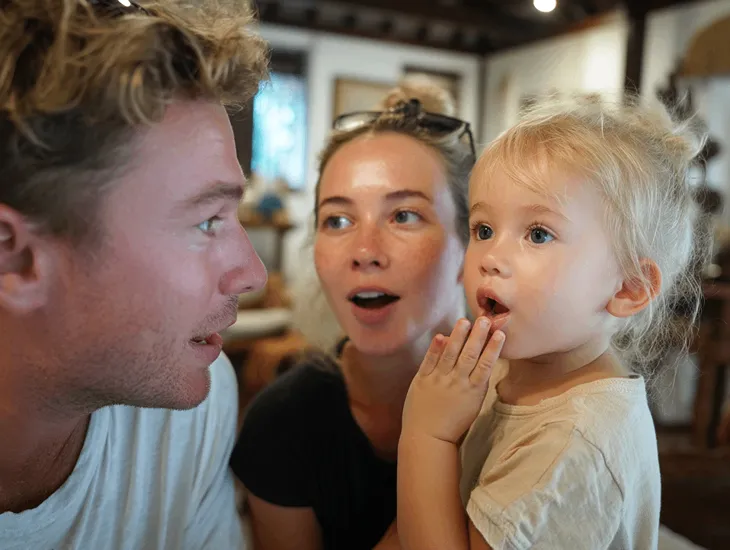
This highly effective technique requires you to immediately and enthusiastically respond to their early communication attempts. Whether they gesture, grunt, or use partial words, your active engagement strongly validates their initial vocal effort.
Always expand upon their incredibly simple sounds to actively model the correct, complete language structure visually. If your toddler points and says “ma,” you should clearly and enthusiastically reply, “mau susu ya?” always.
Avoid repeatedly copying or positively reinforcing incorrect mispronunciations, which locals often refer to as “cadel” speech. Patiently repeat the right word slowly to improve Child Speech in Bali effectively without causing any frustration.
Tip 3: Reading and Storytelling Strategies
Reading aloud together is a universally recommended educational strategy for dramatically improving any toddler’s overall comprehension skills. Daily story sessions consistently expose young children to highly complex sentence structures they might never hear otherwise.
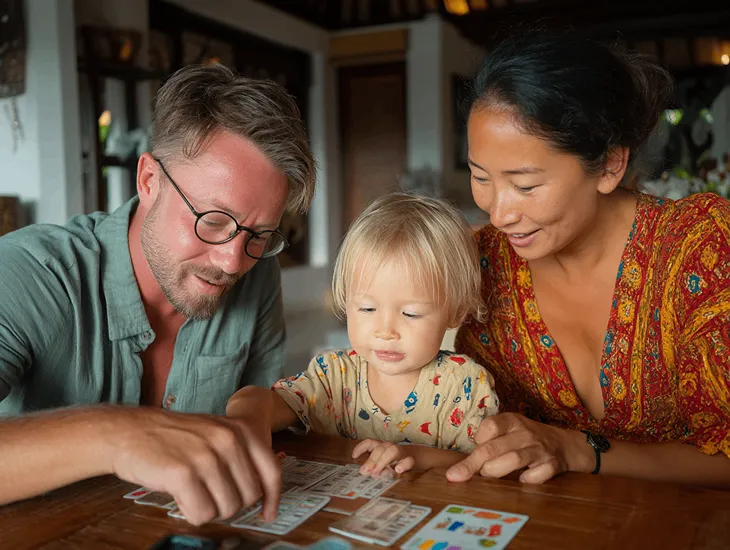
Carefully choose engaging, age-appropriate picture books and actively involve your curious child in the entire reading process. Ask incredibly simple questions about the vibrant, colorful illustrations to encourage them to point and vocalize aloud.
Thoughtfully incorporate diverse stories about daily local life to make the new vocabulary highly relevant to them. Describing familiar outdoor scenes, like the busy local warung or sunny beach, significantly helps contextualize new words.
Do not just monotonously read the written text; actively animate your voice and use highly expressive facial gestures. This incredibly enthusiastic approach successfully captures their attention and makes essential language learning a highly enjoyable activity.
Tip 4: Avoiding Passive Screen Time
Indonesian public health articles explicitly highlight excessive daily gadget use as a major, preventable developmental risk factor. Passive screen time drastically reduces the real-time, face-to-face social interaction that is absolutely crucial for early learning.
Relying heavily on bright digital devices as convenient electronic babysitters directly hinders normal, healthy language acquisition. Young children learn proper speech best by actively observing human lip movements and responding to authentic facial expressions.
Leading pediatric guidelines strongly advise severely limiting or entirely eliminating any passive screen time for young toddlers. You must proactively replace this passive viewing time with highly interactive daily play and deeply engaging conversation.
Encourage structured play-based prompts using tactile physical toys rather than relying on rapidly flashing digital animations daily. Pretend play actively supports Child Speech in Bali by encouraging naming, describing, and making verbal requests naturally.
Tip 5: Knowing When to Seek Professional Help
Recognizing the specific, documented red flags for early speech delay ensures you can act quickly and decisively. If your child shows no meaningful vocal progress over several months, a professional medical evaluation is strictly necessary.
The very first recommended step is a comprehensive pediatric evaluation to rule out any underlying physical issues. This crucial assessment typically includes incredibly thorough hearing tests and a standardized developmental screening for absolute diagnostic accuracy.
Serious speech delays can sometimes stem from hidden underlying causes like partial hearing loss or oral-motor problems. Identifying these highly specific root causes early allows for incredibly targeted and highly effective therapeutic medical interventions immediately.
The highly respected local therapy centers provide completely specialized services for various complex language difficulties today. They consistently offer comprehensive initial assessments and structured therapy sessions tailored perfectly to your child’s unique developmental needs.
Real Story: Navigating Therapy Options
Adriano, an Italian expat from Messina, loved his new island life here until early 2024 began. The 44-year-old father suddenly realized his two-year-old son was barely speaking compared to other active toddlers nearby.
While other vibrant kids at the busy local cafes were happily babbling away, his son remained perfectly quiet. He mostly pointed silently at what he wanted rather than attempting to speak or combine basic words.
His intense worry over his son’s severe lack of progress cast a heavy shadow over their tropical surroundings. Navigating a completely foreign medical system felt incredibly overwhelming and isolating for the deeply concerned Italian father.
Adriano urgently reached out to a trusted local therapy agency, desperate for someone to point him forward. With dedicated professional guidance, his young son finally started hitting those absolutely crucial early communication milestones with confidence.
Practical Activities for Child Speech in Bali
Integrating essential language practice into your busy daily schedule must feel completely natural and never artificially forced. Consistently use simple, repetitive songs and traditional rhymes in both your home language and the local Indonesian dialects.
Frequent singing actively helps young children quickly recognize distinct sound patterns and significantly improves their overall vocal rhythm. This highly engaging educational method is frequently recommended by dedicated early childhood educators across the entire island.
Enthusiastically engage in highly structured pretend play to encourage them to naturally use new, descriptive daily vocabulary. Setting up a fun, fake local food stall beautifully allows them to practice requesting items and naming foods.
Acknowledge every single brave effort they make to speak, even if the actual pronunciation completely fails initially. Positive reinforcement strongly encourages them to keep trying, boosting Child Speech in Bali effectively over a long time.
Avoiding Common Cultural Misunderstandings
Many worried parents falsely assume that bilingualism itself directly causes severe, permanent speech delays globally for children. Recent advanced pediatric research completely refutes this, consistently showing that early communication milestones remain similar across all languages.
Slight vocabulary differences simply reflect relative daily exposure to each specific language, not actual permanent neurological damage. Your child’s amazing brain is highly capable of safely processing multiple complex languages simultaneously without experiencing any confusion.
Some well-meaning locals may suggest that your quiet child will simply naturally catch up on their own. However, waiting entirely too long significantly reduces the overall long-term effectiveness of vital, early professional intervention therapy sessions.
Always consult highly qualified pediatricians rather than relying solely on casual assurances from well-meaning friends or neighbors. Professional medical guidance perfectly ensures that you accurately address any potential developmental issues with evidence-based therapeutic strategies immediately.
FAQs about Language Development
Q: Does raising a child bilingual cause speech delay?
A: No, research shows early milestones are the same; they just split vocabulary across languages safely.
Q: When should I worry about my child’s speech?
A: Seek help if they completely lack single words by 16 months or two-word phrases by 24 months.
Q: How can I boost Child Speech in Bali daily?
A: Use responsive talk, read engaging books daily, and strictly limit passive screen time for better results.
Q: Are there English-speaking speech therapists available locally?
A: Yes, professional local centers provide tailored clinical assessments and expert therapy services for expat families.
Q: Should I correct my toddler’s mispronunciations constantly?
A: Do not copy incorrect speech; simply model the right pronunciation slowly and clearly for them always.

