
Goa Giri Putri Cave in Bali: A Spiritual Journey for Families
Exploring underground temples presents unique logistical challenges for parents navigating a foreign environment. Navigating narrow entrances and damp floors can be difficult for young children. You want a cultural experience that remains safe for everyone.
Poor preparation leads to physical discomfort and safety risks during your holiday. Choosing the wrong time to visit results in heavy crowds and high humidity. You need verified information to ensure a secure spiritual journey.
Professional guidance is essential for a respectful encounter with local traditions. Finding a location that follows strict cultural protocols protects your family. You can enjoy the spiritual atmosphere while knowing your children are safe.
Visiting Goa Giri Putri cave in Bali is a significant cultural experience. The site features an impressively narrow entrance that opens into a massive cavern. With proper preparation, this becomes a focus of your trip.
Early morning arrivals provide the coolest temperatures for children exploring the island. Following official cultural guidelines shows respect for the local Hindu traditions. You can explore the inner shrines while managing the physical tour operations.
This guide reviews access procedures and safety requirements for foreign travelers. Following official cultural heritage standards ensures every family member stays protected and respectful. Start your temple exploration with complete confidence today in Indonesia.
Table of Contents
Accessing the Cave Entrance
The entrance to the temple is located midway up a steep limestone hill. Families must climb roughly one hundred stairs to reach the landing area. This climb requires a moderate level of physical fitness.
The actual rock opening is extremely narrow and requires crawling. Most adults must crouch carefully to pass through the initial three-meter passage. This unique physical feature is a highlight for active and adventurous children.
Once inside, the tight space suddenly expands into a massive cathedral-like cavern. The physical contrast between the entry and the vast interior is striking. It creates a highly memorable sensory experience for the whole family.
Guides are available at the base to assist with the steep climb. They provide context on the history and spiritual importance of the site. Hiring a local expert ensures you navigate the limestone steps safely.
Rituals and Spiritual Etiquette
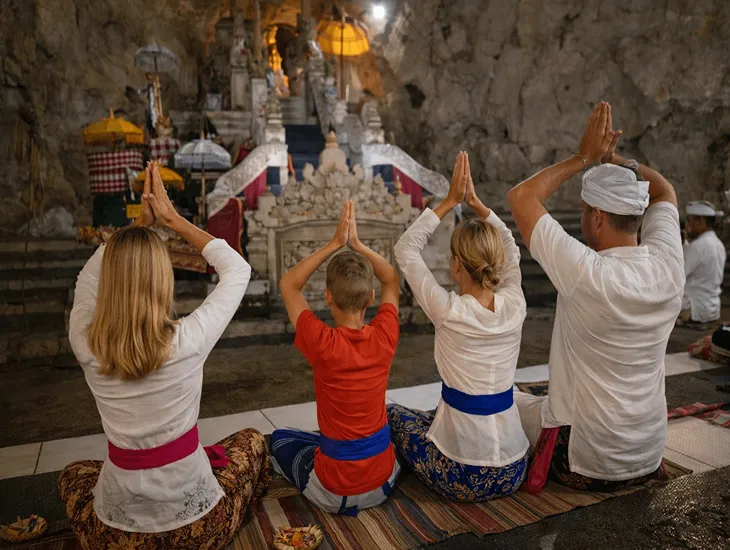
A small ritual is performed at the mouth of the cave. A local priest sprinkles holy water on visitors to signify spiritual purification. Children should be encouraged to remain quiet and respectful during this ceremony.
Wearing a traditional sarong and sash is mandatory for all guests. These required items are available for rent at the base of the stairs. Ensure your children are properly covered to follow local religious standards.
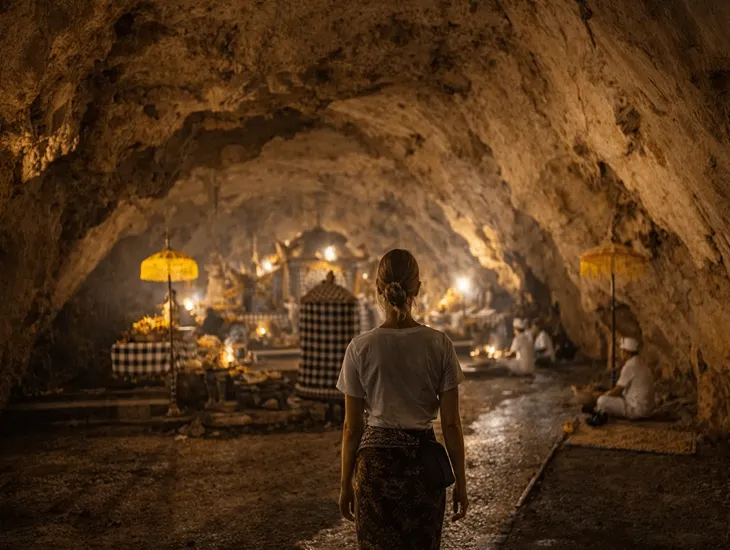
Maintaining a low volume of speech is expected inside the cavern. The echo of the massive space amplifies every sound throughout the limestone walls. This environment teaches children the importance of cultural mindfulness in Indonesia.
Do not enter the temple if you are menstruating or have an open wound. These are strict traditional rules followed at all local Hindu sites. Respecting these boundaries ensures the spiritual integrity of the location.
Physical Challenges for Children
The interior floor can be damp and slippery in certain sections. Children should wear sturdy shoes with good grip to prevent accidental falls. Avoid wearing flip-flops as they provide minimal support on uneven limestone paths.
Dripping water from the high ceiling is common throughout the cave. While the water is considered holy, it can make rocky surfaces quite wet. Parents must hold the hands of younger children during the walk.
The cave stretches roughly three hundred meters from entry to exit. The walk remains mostly flat once you pass the initial narrow opening. The dim lighting requires careful footing for everyone in your family group.
Certain dark sections may feel claustrophobic for sensitive children. Talk to your kids about the unique experience before entering the passage. Understanding what to expect reduces anxiety during the physical crawl through the rocky entrance.
Inner Temple Shrines and Layout
There are six distinct shrines located within the massive cavern. Each shrine is dedicated to different deities in the local Hindu pantheon. Families can observe local devotees performing prayers and leaving colorful daily offerings.
The final shrine area is dedicated to the Goddess of Mercy. It features a blend of local Hindu and Buddhist architectural elements. This demonstrates the unique religious harmony found on the island of Nusa Penida.
Massive stalactites and stalagmites dominate the natural landscape inside the temple. These rock formations have been carved by water over thousands of years. They provide an excellent educational opportunity for curious school-aged children exploring Indonesia.
Natural light filters down through small cracks in the high ceiling. This creates a mystical atmosphere that is perfect for quiet reflection. The scale of the interior is often compared to a natural underground cathedral.
Real Story: Kenji’s Family Pilgrimage
Kenji from Tokyo wanted to take his seven-year-old son to a sacred site. He worried about the narrow entrance of Goa Giri Putri cave in Bali and potential safety risks. He required a safe plan.
The steep stairs and humid interior were significant concerns for his son. Kenji struggled to find clear instructions on the crawling passage for children. He needed a guide who understood professional supervision standards for tourists.
He hired a local assistant to help manage the stairs and gear. They reached the entrance early to avoid the midday heat and crowds. The assistant guided his son through the gap with constant support.
The boy felt like an explorer discovering a hidden world. They watched the priests perform ancient rituals in the massive inner chamber together. The structured approach allowed Kenji to enjoy the spiritual moment safely.
Safety Gear and Clothing Requirements
Flashlights are helpful for navigating the darker sections of the cave. Some areas are illuminated by electric lights, but a backup is recommended. You can rent high-quality torches at the ticket counter before entering.
Lightweight, highly breathable clothing is best for the humid interior environment. Avoid heavy fabrics that trap heat and moisture directly against the skin. This keeps children comfortable during the thirty-minute walk through the cave.
A small backpack is useful for carrying water and extra sarongs. Keep your hands free to assist children on the stairs and passages. Minimal gear allows for easier movement through the extremely narrow entrance.
Antibacterial hand sanitizer is recommended for use after exiting the cave. You will likely touch limestone walls and handrails during the journey. Maintaining hygiene is essential after visiting public cultural sites in Indonesia.
Humidity and Ventilation Concerns
The air inside the cave is intensely humid and can feel heavy. Children with respiratory sensitivities should move slowly to avoid overexertion. The natural ventilation from the large exit helps circulate the air continuously.
Taking frequent breaks at the shrines allows everyone to rest properly. The spiritual stops provide a natural rhythm for the underground walk. Staying hydrated before and after the visit is crucial for active families.
The exit is a wide opening on the opposite side of the hill. The transition from the humid interior to the fresh air is a relief. The walk back offers stunning views of the ocean.
Wild macaques are often present near the main cave exit path. Keep food and shiny objects stored securely inside your sealed backpack. Teach children not to interact with or feed the wild animals for safety.
Booking Guides and Local Tips
Most families visit the site as part of a day tour in Nusa Penida. You can book a private driver to manage the transportation logistics. This allows for a flexible schedule that caters to children.
Avoid visiting during major Hindu festivals like Galungan to prevent delays. The cave becomes extremely crowded with local pilgrims during these times. A quiet weekday morning offers the best experience for international families.
Check the local tide charts if you plan to visit nearby beaches. The road to the cave follows the beautiful coastline of the island. Combining the temple visit with a swim makes a balanced itinerary.
Photography is permitted but should be done carefully without a flash. Respect the privacy of local devotees who are actively praying at the shrines. Capturing the natural scale of the cave requires a wide-angle lens.
FAQs Family Trip Goa Giri Putri cave in Bali
Q: Is the cave entrance too small for large adults?
A: Most adults can easily pass through the rock opening by crouching or crawling carefully.
Q: Are there bats inside the cave?
A: Yes, small bats live in the high ceiling but do not disturb the passing visitors.
Q: How long does the entire visit take?
A: A typical family visit takes roughly forty-five to sixty minutes to complete comfortably.
Q: Can we visit with a baby in a carrier?
A: It is theoretically possible, but the narrow entrance makes it very difficult and highly unsafe.
Q: Is there an entrance fee for the temple?
A: Yes, a fixed fee of 50,000 IDR per person is required to support the local temple maintenance.
Q: Are there toilets available at the site?
A: Basic restroom facilities are located near the main ticket counter at the base of the stairs.

