
Seaweed Farms in Bali: A Family Trip Showing Kids How Locals Harvest Seaweed
Many families struggle to find educational activities that connect children with local culture. Standard tourist attractions often lack depth and authentic interaction. You want a meaningful way to spend your holiday.
Passive sightseeing leads to a lack of engagement for young learners. Children miss the opportunity to understand sustainable livelihoods and marine conservation. This disconnection limits the educational value of the trip.
Manual research for traditional aquaculture sites is difficult. You seek a calm, eco-friendly experience that teaches responsibility. A structured visit ensures your children learn while staying safe.
Fortunately, a Family Seaweed Farms in Nusa Lembongan trip offers an educational solution. These seaweed plots offer a direct look at coastal life. It is a practical way to combine education with your stay.
Professional supervision helps parents manage risks near the water. Understanding the local farming cycles ensures your children remain protected. Preparation is essential for a successful Family Seaweed Farms in Nusa Lembongan outing.
This guide explores ways to experience seaweed harvesting with your family. We cover age-appropriate roles, safety protocols, and logistics. Plan your cultural immersion with confidence today.
Table of Contents
What is Seaweed Farming and Why It Matters
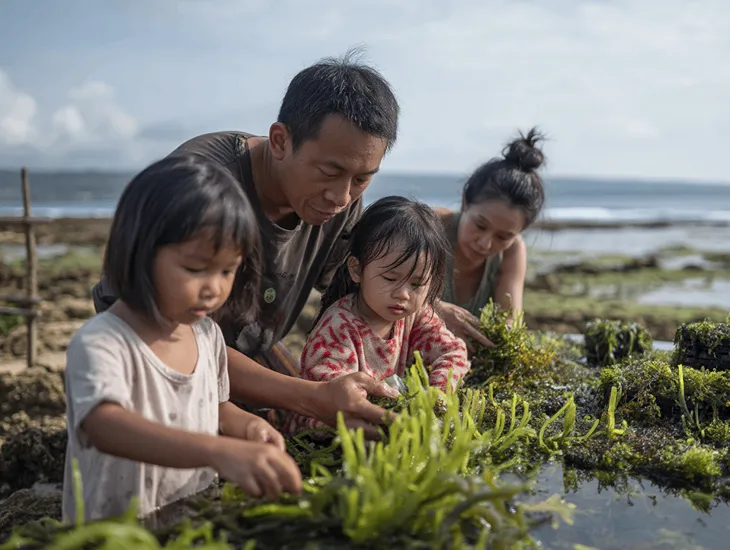
Seaweed farming is a traditional practice that supports coastal communities in Indonesia. Farmers tie seeds to ropes submerged in shallow water. These plots create structured gardens near the shore.
This industry is low-tech and fertilizer-free, making it sustainable. Seaweed helps protect coral reefs and maintains water quality. It is a vital part of the local marine ecosystem.
The harvest provides a primary livelihood for hundreds of local families. Understanding this economy teaches children about the value of work. It highlights how communities adapt to their environment.
Visit the World Wildlife Fund to learn about sustainable aquaculture globally. Teaching children these concepts early fosters a lifelong respect for nature. It is a powerful lesson in environmental stewardship.
Main Locations for Seaweed Tours
Nusa Lembongan and Nusa Ceningan are the most famous hubs for this activity. Tours often depart from Jungut Batu or near Mangrove Point. These locations offer clear water for families.
Nusa Penida also hosts traditional farms visible from the coastal roads. Many small-group tours include a boat ride to visit these plots. This provides a perspective on the island’s coastline.
Access usually relies on local tour operators and eco-travel sites. Vetting is done via community reviews and safety policies. There are no official government lists for family-certified farms.
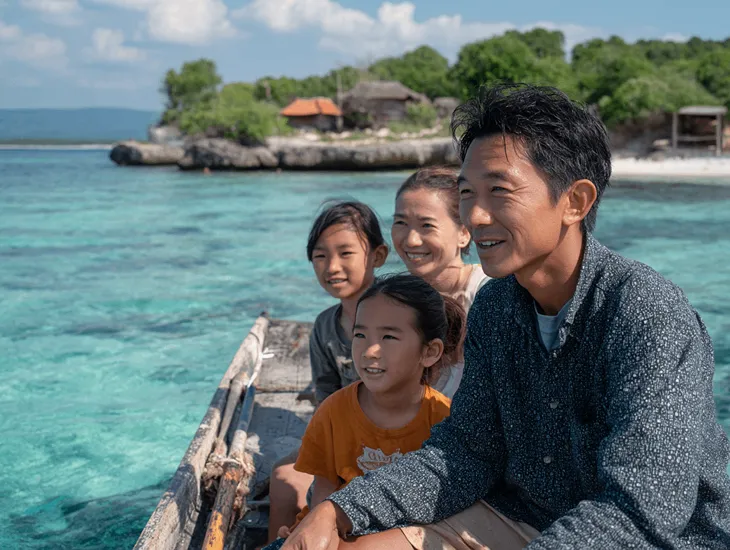
The turquoise waters of the channel provide the perfect backdrop for learning. Arriving during low tide allows children to walk closer to the plots safely. Proper timing is the key to a successful excursion.
Educational Benefits for Young Children
A professional eco-tour introduces kids to marine biology. They learn how plants grow without soil in an aquatic environment. This expands their understanding of the natural world.
The visit highlights the importance of environmental conservation. Children see how clean water is necessary for the farmers’ success. This fosters a sense of responsibility toward the ocean.
Interacting with local farmers provides a human connection to the food chain. It is a lesson in global citizenship. Cultural immersion is a major benefit of visiting these sites.
Seeing the drying process on the shore connects the ocean to the marketplace. It shows the effort required to produce everyday items like cosmetics or snacks. This awareness builds gratitude and curiosity.
Activities for Toddlers and Preschoolers
Young children should stay on the beach or a secure boat deck. They can watch the colorful boats and farmers working with the ropes. Use this time to explain the seaweed plots.
Do not allow toddlers to walk on unstable wooden floats or nets. The ground can be slippery and uneven near the water. Focus on visual observation to keep the experience safe.
Parents can bring a small bucket for kids to touch harvested seaweed. This tactile experience is safe for sensory development. It keeps them connected to the activity from a safe distance.
The bright colors of the seaweed and the sound of the waves are engaging. Keep these sessions short to avoid overstimulation or heat exhaustion. Focus on a fun, low-pressure introduction to the farm.
Real Story: Chloe’s Family in the Islands
Meet Chloe, a 38-year-old from Canada. She arrived in Indonesia and required a hands-on conservation activity for her daughter. She found that standard sightseeing lacked depth for her child’s education.
Chloe wanted her daughter to observe real conservation work. She needed a safe environment where a child could interact with the local food chain. They organized a Family Seaweed Farms in Nusa Lembongan trip.
Chloe’s daughter helped tie seaweed seeds to a rope while sitting on the sand. A local nanny from Nanny in Bali helped manage the logistics while Chloe took photos.
This interaction was more impactful than any classroom lesson. The local farmer showed her how to check for pests. This hands-on experience became the highlight of their entire island vacation.
Hands-On Learning for Ages 6 to 12
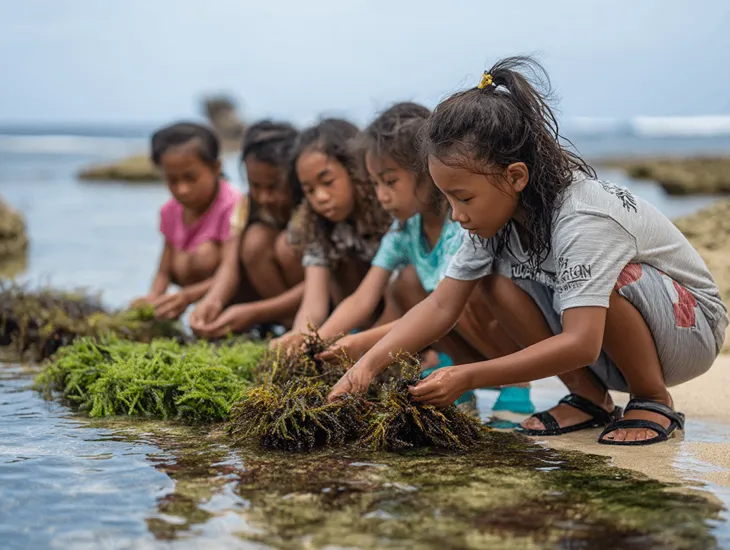
Children in this age group can participate in guided planting activities. They can help fetch ropes or spread seaweed out for drying. These tasks keep them physically active.
Non-slip water shoes are mandatory for walking on the seabed. This protects feet from sharp coral or sea urchins in the shallows. Constant supervision ensures they stay in safe zones.
Tours include short talks on marine biology tailored for kids. They learn about the different types of seaweed and their uses. This learning provides context for the work.
Encouraging children to ask the farmers questions builds confidence. They gain a deeper understanding of the day-to-day challenges of coastal life. This engagement makes the trip highly rewarding.
Roles for Teenagers in Sustainable Aquaculture
Teenagers can handle more involved roles in the harvesting phases. They can assist in pulling heavy ropes from the water during low tide. This work builds resilience and teamwork.
Discussions focus on the economic impacts of aquaculture. Teenagers are encouraged to ask about market prices and export. This provides a look at international trade.
Participants under fifteen must always be accompanied by an adult. Life jackets are required during boat transit to deeper plots. Safety remains the priority for all swimmers.
Teenagers often enjoy documenting the process for social media. This allows them to share the message of sustainability with their peers. It turns a traditional practice into a modern advocacy project.
Logistics and Choosing a Reputable Tour
Most seaweed tours last between three and six hours. They typically include hotel pickup, a boat ride, and a briefing. Choose operators that emphasize eco-friendly practices.
Participants should bring extra clothes and high-SPF sunscreen. Leave all valuables at your hotel to prevent loss in the water. Preparation ensures you can focus on the experience.
Vetting relies on individual operator reputations and reviews. Always confirm the inclusion of child-sized life jackets before booking. There are no official government safety standards for these tours.
Check the tides before finalizing your booking with the operator. Low tide is essential for a hands-on experience in the plots. Managed schedules lead to a much more organized and successful outing.
FAQs about Family Seaweed Farms in Nusa Lembongan
Q: Is it safe for children to touch the seaweed?
A: Yes. The seaweed is safe, but watch for small marine life like crabs or snails.
Q: What should we wear for the tour?
A: Wear swimsuits, sun hats, and mandatory non-slip water shoes to protect your feet.
Q: Do we need to be strong swimmers?
A: No. Most activities take place in shallow, knee-deep water near the shoreline.
Q: How long is the boat ride?
A: Most boat rides to the plots take ten to fifteen minutes from the beach.
Q: Can we buy seaweed products?
A: Yes. Many farms sell dried seaweed or local snacks for visitors to take home.
Q: Is the tour suitable for toddlers?
A: Yes, but they must remain on the boat or beach for their physical safety.

