
Review Us
Penglipuran Village in Bali 2026 - Family walking on cobblestone streets surrounded by traditional Balinese homes
admin_n

Exploring Penglipuran Village in Bali: A Family-Friendly Cultural Education Experience

Finding safe cultural activities for energetic toddlers is challenging for parents. Many cultural sites have uneven terrain or sit near busy roads, making walking stressful. Families often struggle to balance education with basic child safety.

Parents worry about exposing their children to busy roads during cultural tours. The fear of losing sight of a child ruins the relaxing atmosphere of a vacation. Traditional villages often lack the stroller infrastructure needed.

Missing authentic local experiences limits your family’s cultural immersion. Children miss the opportunity to learn about traditional living and unique local philosophies. You need a destination that combines cultural depth with physical safety.

Visiting Penglipuran Village in Bali provides the perfect educational solution. Recognized globally for its cleanliness, this car-free environment ensures maximum safety for wandering children. Check official tourism villages in Indonesia to plan your travel dates.

The pedestrian-only streets allow parents to relax while kids explore freely. This enclosed community design naturally limits wandering risks. It is an ideal setting for a peaceful family day out.

This guide highlights the best family activities available within the traditional compound. Your children will love the bamboo forests and interactive local workshops. Prepare for an unforgettable cultural journey that prioritizes family safety.

Core Experience and Family Appeal

Located in Bangli Regency, this site is recognized as an exceptionally clean destination. It was officially named a UNESCO Best Tourism Village recently. The community operates heavily on the traditional Tri Hita Karana philosophy.

The entire area is completely car-free and strictly pedestrian-only today. This organized layout provides a highly secure environment for active children to explore safely. Parents can walk without constantly checking for passing motorbikes.

Well-maintained traditional homes line a neat, central cobblestone street. While slightly bumpy, the main path remains accessible for sturdy family strollers. This enclosed community design naturally limits wandering risks for toddlers.

Families find the atmosphere deeply relaxing compared to busy southern tourist zones. The lack of modern vehicles creates a quiet, historical ambiance for visitors. Visiting this traditional community feels like stepping back in time.

Renting Traditional Costumes Safely

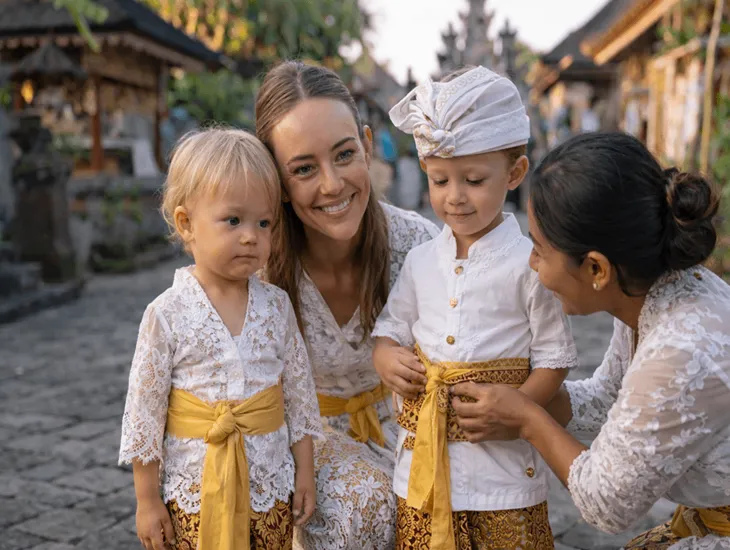
Cultural Costumes in Indonesia 2026 - Young children wearing traditional Balinese outfits on a cobblestone street

Families can easily rent traditional Balinese attire directly from local homes. This activity is highly popular with visiting kids and teenagers alike. The colorful fabrics make for incredible family vacation photographs.

Local residents assist visitors in wrapping the sarongs and tying the sashes correctly. This interactive process serves as a fun, tactile cultural lesson for children. Kids enjoy dressing up while learning about local customs.

Walking the main streets in these outfits adds a deeply immersive element. The rented clothes are generally clean and well-maintained by the local owners. Ensure the outfits fit comfortably so children can still walk safely.

This simple activity creates lasting memories of your cultural excursion. Parents appreciate the affordability and accessibility of these local rental services. It is a mandatory experience when touring the historic compound.
Exploring the Shaded Bamboo Forest

A massive forty-five-hectare bamboo forest sits directly behind the main compound. This natural area offers beautifully shaded walking and cycling paths. It provides a cool retreat from the intense midday tropical sun.

The paths are wide and generally suitable for all age groups. Children love running through the towering, green bamboo stalks. The rustling leaves create a calming sensory experience for easily overstimulated toddlers.

The forest serves as a vital environmental and spiritual resource locally. Parents can explain the importance of nature conservation during the walk. It seamlessly blends physical exercise with gentle environmental education.

Touring this green space requires sturdy, comfortable walking shoes for everyone. The natural terrain can occasionally be uneven in certain specific sections. It adds a gentle nature-walk element to your cultural itinerary.

Interactive Cultural Workshops for Kids

Families can actively observe or participate in making traditional bamboo crafts. Local artisans demonstrate their skills directly from their open family compounds. This visual learning process captivates curious school-aged children perfectly.

Workshops often include making small offering boxes known locally as Keben. Kids can also try assembling the daily flower offerings called Canang Sari. These hands-on activities develop fine motor skills while teaching local traditions.

Full hands-on classes sometimes require prior booking or group minimums to run. Families should inquire at the main ticket counter upon their initial arrival. It is a fantastic way to engage older children creatively.

Participating in these daily tasks shows kids the dedication of local residents. They learn that Penglipuran Village in Bali is a living community, not a museum. It fosters deep respect for the host culture.

Real Story: Family Calm in Bangli

When Eve, an Australian graphic designer, moved to Seminyak, she faced challenges. She struggled to find safe places where her active four-year-old could run freely. Narrow, scooter-filled streets caused constant parental anxiety daily.

Eve felt exhausted constantly holding her son’s hand during outdoor trips. She wanted a cultural destination where he could walk independently without danger. The loud traffic noise in the south was becoming overwhelming.

She consulted bali-nanny.com to find a reliable travel assistant for the weekend. The nanny suggested exploring Penglipuran Village in Bali for its pedestrian-only layout. This local insight finally gave her a stress-free travel plan.

The nanny supervised the toddler as he ran along the car-free cobblestones. Eve finally relaxed and took beautiful photos of the traditional bamboo architecture. The quiet environment provided the peaceful cultural day they desperately needed.

Tasting Traditional Food in Bali

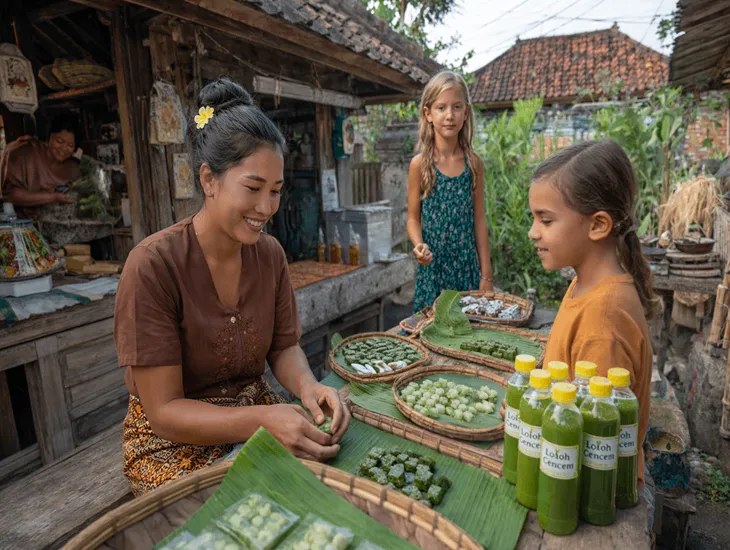
Traditional Food in Bali 2026 - Family tasting local sweet rice cakes and herbal drinks at a village stall

Exploring local cuisine is a major highlight of this specific destination. Kids can try sweet rice cakes known locally as Klepon. These soft, green treats are filled with delicious liquid palm sugar.

Another popular dish is Tipat Cantok, featuring rice cakes in peanut sauce. This mild, savory option is generally well-received by younger, picky eaters. Food stalls are integrated directly into the traditional family compounds.

Adults should definitely sample the traditional green herbal drink called Loloh Cemcem. This unique local beverage is refreshing after a long walk in the sun. It offers a true taste of the Bangli regional flavors.

The food preparation areas are generally very clean and well-maintained. Eating local snacks supports the community economy directly. It is a tasty and highly authentic addition to your cultural tour.

Respectful Etiquette for Entering Homes

Visitors are warmly welcomed to enter the traditional family compounds. This allows families to see the authentic layout of a local household. It provides an intimate look at daily life in the community.

You must always respect the residents’ private living spaces when entering. Do not open closed doors or enter designated sleeping quarters. Children should be instructed to look with their eyes, not their hands.

Sacred structures and family shrines are present in every single compound. Do not allow children to climb or sit on these holy structures. Maintaining respectful boundaries ensures the village remains open to tourists.

Offerings of flowers and incense are placed on the ground everywhere. Stepping on or moving them is considered highly disrespectful by the locals. Children must be carefully instructed to walk around these daily offerings.

Essential Safety and Hygiene Protocols

The primary physical risk involves tripping on the traditional cobblestone streets. Comfortable, closed-toe walking shoes are required for both adults and children. The uneven surface can be challenging for toddlers learning to walk.

If a religious procession occurs, families must maintain a respectful distance. Keep quiet and follow instructions from the traditional village security guards. These local guards are known as pecalang in the community.

Littering or vandalizing plants is strictly forbidden and heavily frowned upon. Maintaining the clean village status is a point of deep pride locally. Families must carry all their trash out of the main compound.

Women who are menstruating are strictly prohibited from entering village temples. They may explore the streets but must bypass sacred temple boundaries. Respecting these specific religious rules is mandatory for all visiting foreigners.

FAQs about Penglipuran Village in Bali​

Q: How much is the entrance fee for foreigners?

A: International adults pay IDR 50,000, and children pay IDR 30,000.

Q: Can we pay with credit cards at the entrance?

A: No, only cash (IDR) or local QRIS payments are accepted.

Q: What are the daily opening hours?

A: The village is open daily from 8:00 AM to 6:00 PM.

Q: Is the main street accessible for baby strollers?

A: Yes, strollers can navigate the cobblestones, though the ride is bumpy.

Q: Do we need to wear a sarong?

A: Sarongs are only required if you enter the specific temple areas.

Q: How long does a typical family visit take?

A: A typical family visit lasts between one and two hours total.

If you need a reliable nanny to keep your kids safe and comfortable while exploring Penglipuran Village in Bali, chat with our team on WhatsApp now.