
Guide to Visiting the Monkey Forest in Ubud, Bali: An Exciting Family Day Out
Visiting a sanctuary with wild animals often creates anxiety for parents. Ensuring children remain safe while exploring a tropical jungle requires careful planning and strict adherence to local park regulations.
Without a proper safety strategy, a simple family outing can turn into a stressful event. Wild macaques are unpredictable and often associate human belongings with potential snacks or play items.
Expat families frequently worry about potential bites or aggressive behavior from the animals. These concerns can overshadow the beauty of the sacred temples and ancient stone carvings found inside.
Fortunately, visiting the Monkey Forest in Ubud is a managed experience. Trained rangers from Padangtegal village actively monitor the grounds to assist visitors and maintain a peaceful environment for everyone.
Reviewing international travel health advice is essential before any animal encounter. Following professional guidance ensures you understand the necessary medical protocols should an accidental scratch occur during your visit.
This guide provides a comprehensive roadmap for a successful family adventure. You will learn about ticketing, age-appropriate activities, and the cultural etiquette required for this sacred Hindu site. You can visit the official website to book tickets
Table of Contents
Park Ranger Vetting and Safety Monitoring
The sanctuary is actively monitored by official, uniformed local staff known as rangers. These individuals are from the local village and receive specific training to manage macaque behavior and aggression.
Rangers are the only individuals permitted to feed the animals within the forest. They also possess basic first aid training to assist any guests who may experience a minor slip or scratch.
Parents often worry about supervision when visiting wildlife sanctuaries. While the forest does not employ private nannies, many reputable agencies provide caregivers with verifiable police background checks for your trip.
The constant presence of these specialists ensures that the sanctuary remains a secure environment. Families can rely on these roaming professionals for guidance on how to navigate the jungle paths safely.
Preparation and Ticketing Process in Bali
Preparation is key before entering the gates of the sanctuary. You must leave all jewelry, sunglasses, and plastic bags in your vehicle, as monkeys often snatch loose items from tourists.
Tickets can be purchased directly at the main entrance counter using cash or cards. To skip long queues during the busy season, pre-booking online via the official website is highly recommended.
Once you enter, ensure all your belongings are secured inside a zipped cross-body bag. Do not bring a stroller into the forest, as the monkeys often climb them to investigate.
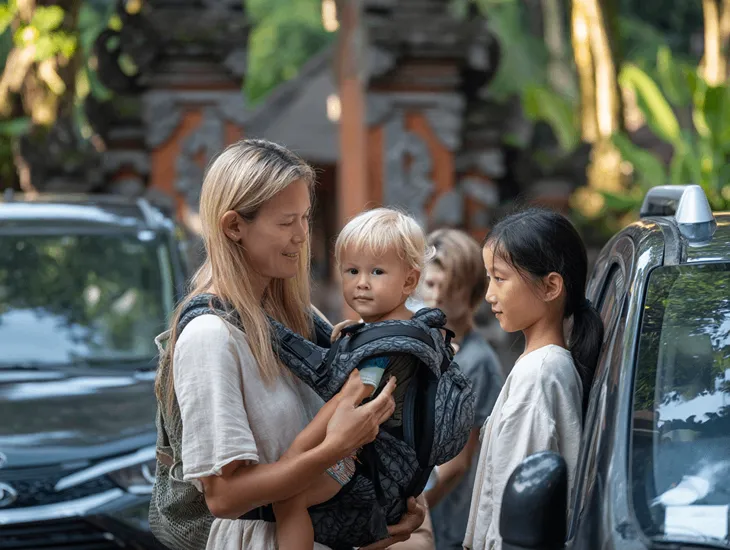
Ergonomic baby carriers are the preferred method for transporting young infants. This keeps your hands free and ensures your child is safely elevated away from the inquisitive ground-dwelling macaques.
Visitation Fees and Peak Season Timelines
Weekday rates for adults are approximately *IDR 100,000, while children aged three to twelve pay *IDR 80,000. Weekend and public holiday rates increase slightly to reflect the higher demand from visitors.
Infants under the age of three enjoy free entry to the forest. The park is open daily from 9:00 AM to 6:00 PM, though the last entry is strictly at 5:00 PM.
The optimal time for families to visit is exactly at 9:00 AM. Arriving early allows you to explore before large tour buses arrive and while the monkeys are generally calmer.
A standard visit typically takes between sixty to ninety minutes. This provides enough time to walk through the main temple areas and enjoy the lush jungle canopy without feeling rushed.
*(Disclaimer: Amounts may be changed at any time without prior notice by the authorized authority.)
Critical Safety Protocols for Families in Bali
Never attempt to feed or touch the monkeys during your visit. You must also avoid making direct eye contact, as the macaques perceive this behavior as a threat or a challenge.
If a monkey jumps on you, do not panic or scream. Remain calm, drop any items they are grabbing, and step away slowly while signaling a uniformed ranger for immediate assistance.
Running or making loud noises can startle the animals and trigger defensive behavior. Parents must supervise children closely to ensure they maintain a respectful distance from the macaques at all times.
Maintaining a calm demeanor is the most effective way to ensure a peaceful visit. Following these safety protocols allows families to enjoy the Monkey Forest in Ubud without unnecessary physical risks.
Real Story: Navigating the Sacred Jungle
Meet Chloe, a 34-year-old digital nomad from Australia living in Pererenan. She felt the heavy humidity of the morning as she prepared for a long day trip to the highlands of Bali.
Chloe was nervous about taking her toddler to the forest because her son refused to let go of his colorful plastic water bottle. She knew monkeys associated plastic with snacks and might become aggressive.
She used the babysitter in Bali services to find a vetted caregiver who specialized in active supervision. Together, they packed a secure backpack and kept all snacks hidden deep inside a zipped pocket.
The babysitter expertly distracted the toddler while Chloe photographed the moss-covered bridges. They enjoyed the cool shade of the banyan trees and left the sanctuary feeling completely successful and safe.
Cultural Etiquette at Sacred Hindu Temples
The forest is a sacred Hindu site containing three active temples, including Pura Dalem Agung. Inner courtyards are strictly reserved for worshippers and are not accessible to the general touring public.
Visitors must dress modestly with their shoulders and knees covered at all times. If a ceremony is taking place, a traditional sarong and waist sash are mandatory to approach the courtyards.
Always follow the instructions of the staff regarding which areas are open for viewing. Maintaining a quiet and respectful presence honors the local community and the spiritual significance of the forest grounds.
Photography is allowed, but you should never use a flash as it startles the animals. Being a mindful visitor ensures that these ancient sites are preserved for future generations of travelers.
Medical Protocols for Animal Encounters
Macaque bites and scratches carry a risk of bacterial infection and potential Rabies exposure. If an encounter occurs, immediately wash the wound with soap and running water for at least fifteen minutes.
Report directly to the on-site First Aid clinic for professional cleaning and to record the incident. You must then seek immediate evaluation at a local hospital for Rabies Post-Exposure Prophylaxis (PEP) treatments.
High-quality hospitals are available to provide the necessary vaccinations and medical care. Taking these steps seriously is vital for your long-term health and safety after any wildlife interaction on the island.
Parents should discuss these medical protocols with their children before entering the sanctuary. Awareness of the rules helps prevent accidents and ensures everyone knows how to react if a monkey approaches.
Accessibility Challenges and Baby Carrier Tips
The terrain inside the forest features steep, slippery stone steps and exposed tree roots. These natural obstacles make the use of a stroller completely impractical and unsafe for parents.
Unpaved temple grounds and narrow mossy bridges require stable footwear for all family members. Navigating these paths with a baby strapped into a secure carrier is the most effective strategy for mobility.
Keep infants strictly at arm’s length from the monkeys to prevent any reaching or grabbing. Elevated paths provide excellent views of the forest floor while keeping small children away from the animals.
Preparation for these accessibility challenges ensures you are not caught off guard by the rugged terrain. Using the right gear allows your family to focus on the unique beauty of the jungle environment.
FAQs about the Monkey Forest in Ubud
Q: Are the monkeys in the forest dangerous?
A: They are wild animals; if you follow the safety rules, the risk is very low.
Q: Can I bring food into the forest?
A: No, bringing food or snacks is strictly prohibited to prevent monkey aggression and snatching.
Q: Is the forest stroller friendly?
A: No, the forest has steep steps and roots; using a baby carrier is much safer.
Q: What should I wear for my visit?
A: Wear modest clothing that covers your shoulders and knees to respect the sacred temple sites.
Q: Do I need to worry about Rabies?
A: While rare, any bite requires immediate medical attention and potential PEP vaccinations at a hospital.
Q: How much time should we spend there?
A: A typical family visit lasts about sixty to ninety minutes to see the main areas.

