
Green School Bali tour in Ubud: Touring a Renowned Sustainable Campus for Family
Parents want to visit renowned sustainable sites with their children. However, navigating a jungle campus with young kids is a challenge. Finding a balance between education and safety is difficult. Refer to Official Tourism Indonesia.
Uneven paths and bamboo structures present safety risks for active toddlers. You worry about your child wandering near the river. Slipping on muddy jungle trails causes anxiety. Managing these logistical hurdles alone prevents learning.
You spend the visit watching your child’s footing and miss the educational mission. Physical fatigue sets in quickly when carrying children across rough terrain. This exhaustion disrupts the experience for the entire family.
It leads to physical strain during the tour. Professional childcare support transforms your visit to Green School Bali into a calm outing. Experts manage the physical safety of your children while you focus on the learning experience.
A dedicated assistant ensures that toddlers follow the guide’s safety instructions. They handle the hydration and sun protection needs of the children. This proactive care prevents over-stimulation in the humid jungle environment.
Hiring a babysitter in Bali provides the necessary support for this active excursion. You can explore the unique architecture and gardens with total peace of mind. Secure your professional help for the campus visit today.
Table of Contents
Significance of Sustainable Education in Bali
Sustainability is a core value of this institution. The campus demonstrates how human development coexists with nature. It attracts thousands of visitors interested in global environmental solutions.
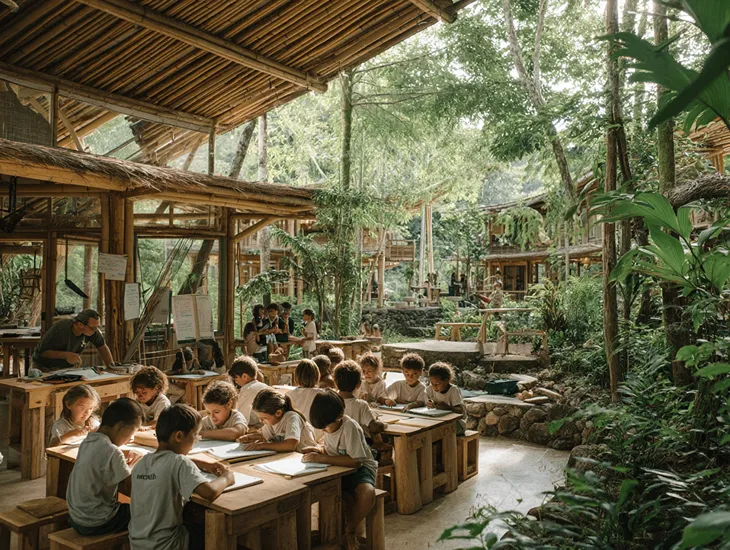
Students engage with the environment through outdoor activities. This approach fosters a connection to the local community. Visitors observe classrooms without traditional walls. This open design promotes transparency in education.
Learning spaces use natural light and ventilation. The campus serves as a laboratory for sustainable living. An organized walk offers insights into innovative methods. You learn about solar power and water filtration.
The school promotes the “Three Springs” of learning: living, leading, and learning. This philosophy encourages students to become responsible global citizens. Visitors see these principles in action throughout the day.
Engaging with nature is a daily requirement for every student. This fosters a deep respect for the planet from a young age. Families gain a new perspective on environmental stewardship during the visit.
A professional babysitter in Bali helps keep kids focused on the tour. They prevent children from disrupting the classes in session. This ensures a respectful and educational atmosphere for all participants.
Bamboo Architecture and Campus Design
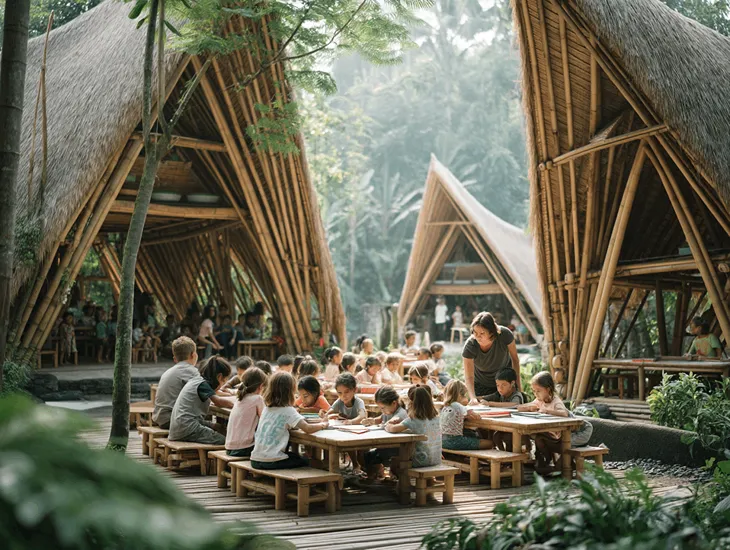
Bamboo is the primary building material on campus. This fast-growing grass provides a durable structural solution. The Heart of School is an architectural masterpiece featuring three massive spiral towers.
Designers utilized traditional Balinese techniques. Skilled local artisans worked alongside international architects. This collaboration preserves cultural heritage. Every building connects with the jungle landscape.
Bridges made of bamboo cross the river to link different areas. This creates unity between architecture and nature. Structures remain open to the tropical air. You learn about innovative preservation methods during the visit.
The use of bamboo reduces the environmental impact of construction. It is a carbon-neutral material that grows rapidly in Indonesia. This highlights the school’s commitment to using local and renewable resources.
Navigating these large structures requires careful supervision of active kids. The floors and stairs often feature natural bamboo textures. A dedicated babysitter in Bali ensures children walk safely on these unique surfaces.
Parents can appreciate the intricate engineering of the bamboo joints. The assistant manages the children’s movements nearby. This allows for a deeper appreciation of sustainable design and construction.
Permaculture Gardens and Local Ecosystems
Organic gardens provide a portion of the campus food supply. Students learn to plant and harvest vegetables using permaculture principles. This hands-on experience teaches the importance of food security.
Permaculture design mimics the patterns found in natural ecosystems. It creates a self-sustaining environment. Waste management systems process organic materials into compost. This protects the local soil and water quality in Bali.
This sustainable experience includes visits to the Bali Starling conservation area. This program protects an endangered bird species. Children enjoy observing animals in a natural setting.
A dedicated assistant monitors child behavior in these sensitive areas. They prevent kids from touching delicate plants or disturbing the animals. You can study the garden systems without worrying about your child.
The gardens demonstrate how to grow food without chemical fertilizers. This highlights the school’s dedication to organic farming. Visitors see a wide variety of tropical fruits and medicinal herbs.
Nannies help children identify different plants using simple language. This turns the garden walk into a fun learning activity. Your children stay engaged and educated throughout the nature tour.
Renewable Energy Systems and River Vortex
The school utilizes innovative systems to generate clean power. Solar panels cover bamboo roofs across the campus. These systems reduce the reliance on the local power grid.
The Ayung River provides a source of hydroelectric energy. A river vortex water wheel demonstrates how moving water creates electricity. This feature is a highlight of the educational stroll.
Students monitor energy data in real time. This integration of technology and nature is a key learning tool. Visitors see the central energy hub during the campus walk.
Guides explain how different systems power the school. You learn about the conversion of used cooking oil into biodiesel. This shows the practical application of recycling in a community setting.
Managing kids near moving water and solar arrays requires vigilance. A babysitter in Bali keeps children at a safe distance from the equipment. You can ask detailed questions about the technology.
The energy hub serves as an inspiration for sustainable infrastructure. It proves that renewable energy is viable even in remote jungle locations. Families learn the importance of energy conservation during the visit.
Real Story: Claire's Campus Excursion in Bali
Claire (38, France) lived in Pererenan and required an organized strategy for a campus visit. She found that the slippery jungle paths and rugged terrain created significant physical stress and safety risks for her toddler. She sought a professional assistant to manage the child’s supervision during her time at the school.
Managing an energetic toddler near the Ayung River and open bamboo structures became an exhausting challenge for Claire. She noticed that the uneven dirt paths and steep stairs prevented her from focusing on the educational presentation. She needed a verified strategy to supervise her child while she observed the renewable energy systems.
Claire stopped attempting to navigate the rugged hillside alone and she hired a specialized travel childcare assistant to provide physical support and manage the baby carrier. This decision allowed the assistant to monitor the child in the permaculture gardens while Claire focused on the educational objectives.
The assistant managed the hydration schedule and kept the child engaged. This professional support allowed Claire to focus on the educational presentation while the child remained secure. The visit was organized and rewarding for the family.
Claire finally appreciated the bamboo architecture without constant distraction. The babysitter carried the child up the steep stone steps effortlessly. This division of labor ensured that the educational mission was accomplished safely.
The outing concluded with a peaceful walk back to the entrance. Claire felt energized by the sustainable message she had absorbed. The professional help had transformed a difficult hike into a successful learning experience.
Navigating Rugged Terrain in the Jungle
The campus terrain is intentionally rugged. Visitors walk on dirt paths and stone steps. These surfaces become slippery during the rainy season. This environment requires attention to footing and balance.
Walking for an hour is tiring for small children. They often demand to be carried across the ground. A babysitter in Bali manages these physical challenges. They carry younger children and guide toddlers through the terrain.
Steep stairs connect the different levels of the hillside campus. These sections require a slow pace. A dedicated assistant provides the support needed for a safe ascent during the campus exploration.
Parents should ensure children wear sturdy, closed-toe shoes. This prevents injuries from rocks or insects on the jungle trails. Your babysitter helps check the children’s gear before the stroll begins.
The humid climate in Ubud causes fatigue to set in quickly. Assistants ensure children take regular breaks in the shade. This prevents over-heating and keeps the children happy during the walk.
Managing the physical demands of the terrain allows parents to focus on the guide. You can follow the group easily without lagging behind. The caregiver ensures the family stays together on the jungle paths.
Safety Protocols for Families on Campus
The school enforces safety rules to protect visitors. You must remain on designated paths. This prevents damage to the natural environment. Construction zones are strictly off-limits to everyone.
The Ayung River creates a powerful natural boundary. Children must stay away from the river edge during the walk. Constant supervision is necessary. A babysitter in Bali keeps children away from hazardous areas.
The visit involves exposure to tropical insects and plants. Caregivers monitor child movements to avoid contact with harmful vegetation. Emergency first aid kits are available at several locations on campus.
Staff members are trained to handle minor injuries and heat-related issues. They ensure that all visitors follow the school’s safety guidelines. This professional oversight protects both the guests and the students.
Parents must sign a safety waiver before the walk starts. This acknowledges the rugged nature of the bamboo campus environment. Having a professional assistant helps you meet these safety expectations.
The babysitter carries extra sunscreen and insect repellent for the kids. They manage the application to ensure continuous protection in the jungle. This attention to detail keeps your children comfortable and safe.
Booking Professional Support for a Green School Bali tour
Scheduling support for a campus visit is a simple process. Parents provide child ages and the date. We match you with an assistant experienced in nature outings for the campus visit.
Most families book a 4 to 6 hour block. This covers travel and the walk. A babysitter in Bali meets you directly at your accommodation. They help prepare the children and pack the necessary gear.
Professional assistants speak English fluently. They understand your rules for child safety. Vetted caregivers provide peace of mind. We conduct thorough background checks and verify all references.
Transparent pricing ensures you know the cost before the trip begins. We provide clear quotes for all specialized childcare services in Indonesia. This honesty builds long-term trust with our clients.
Your assistant manages the check-in process and ticket logistics. They ensure the children are ready for the walk before the guide starts. This coordination ensures a smooth and organized start to the visit.
Booking early is recommended during the high season in Bali. This guarantees the availability of our most experienced travel nannies. Secure your professional support for a successful school visit today.
FAQs about Green School Bali tour in Ubud
Q: Are strollers allowed?
A: No. The campus uses rugged jungle paths and many stairs. Use a baby carrier instead.
Q: How long is the visit?
A: Public visits usually last sixty minutes and include walking during a Green School Bali tour.
Q: What shoes should kids wear?
A: Children must wear closed-toe shoes with good grip for the jungle terrain.
Q: Should we bring water?
A: Yes. Bring a refillable bottle to stay hydrated during the walk.
Q: Is there an entrance fee?
A: Yes. Fees support local educational programs and scholarships in Indonesia.
Q: Is the campus open on holidays?
A: No. Public visits are closed on Indonesian national holidays and school breaks.

