
Essential Beach Shopping in Bali for Families – Must-Have Items for Kids
Preparing for a coastal holiday with babies requires careful planning and the right gear. Sun protection and water safety are paramount when traveling to tropical destinations. Parents often feel overwhelmed by the sheer volume of items needed for a simple afternoon.
Packing the wrong equipment leads to sunburns and uncomfortable children on the sand. You waste valuable holiday time searching local markets for specific infant floaties or mineral sunscreen. The intense heat quickly ruins the experience if you arrive unprepared. Managing this gear while trying to supervise active toddlers is exhausting.
You spend your trip carrying heavy bags instead of swimming or relaxing. The logistical burden prevents you from enjoying the coastlines of Indonesia. Refer to Official Tourism Indonesia for general safety standards. Hiring a professional babysitter in Bali provides essential logistical support. A dedicated caregiver handles the packing, carrying, and correct application of all your beach gear.
Table of Contents
High-SPF Sunscreen and UV Clothing
Sun protection is the most critical category for any family visiting the tropics. The sun near the equator is incredibly strong, even on cloudy days. You must prioritize high-SPF sunscreen, preferably mineral-based for sensitive infant skin.
Specific trusted brands and gentle formulas are expensive or hard to find locally. It is crucial to include these items in your essential beach shopping in Bali list before you travel. Bring enough supply to last your entire stay.
UV swimwear and long-sleeved rash guards provide excellent physical barriers against the sun. These garments reduce the need for constant sunscreen reapplication on large areas of the body. A wide-brimmed sun hat and good-quality sunglasses shield developing eyes from the glare.
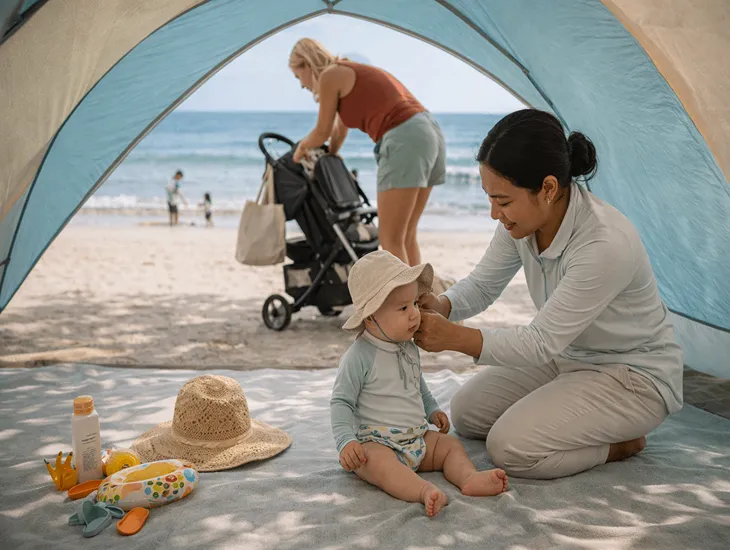
Consider bringing a small pop-up beach tent or UV shelter for midday naps. Many coastal areas have limited natural shade available during peak afternoon hours. Caregivers reapply sunscreen strictly on schedule, usually every two hours or after swimming.
Age-Appropriate Water Safety Gear
Do not rely on hotels or local shops to have the correct sizes of float aids. You must bring specific safety items that fit your child perfectly. Swim vests or puddle jumpers are essential for toddlers learning to navigate the waves.
Inflatable baby rings with sun canopies are great for calm pool days. However, they are not suitable for the unpredictable currents of the open ocean. Always assess the water conditions before allowing your child to use inflatables.
Sturdy water shoes with firm soles are a non-negotiable item for coastal exploration. They protect small feet from sharp coral, hidden rocks, and extremely hot sand. These are often difficult to find in exact toddler sizes locally.
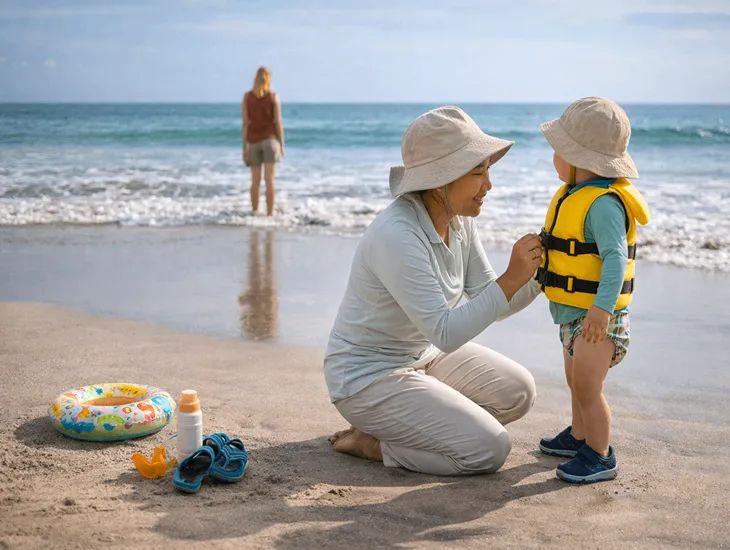
A babysitter in Indonesia strictly enforces the use of these safety items. They ensure the vest is clipped correctly before the child approaches the waterline. This vigilant supervision is crucial for preventing water-related accidents.
Swimwear Strategies for Active Babies
Always pack at least two swimsuits or UV suits per child for the trip. This strategy allows one suit to dry completely while the other is in use. Putting a wet, cold swimsuit on a toddler often leads to tears and resistance.
Light cover-ups or sarongs are highly useful for walking between the pool and cafes. They provide a quick layer of modesty and warmth in air-conditioned areas. Quick-dry towels made of microfiber take up minimal space in your day bag.
A babysitter in Bali manages these clothing changes smoothly and quickly. They handle the transition from wet swimwear to dry clothes before getting into the car. Rinsing the salt and sand out of the swimwear daily prolongs the life of the fabric.
Choosing bright, neon colors for swimwear makes it easier to spot your child in a crowd. Avoid blue or green suits that blend into the water. Visibility is a key component of passive safety on a busy coastline.
Sand Toys and Affordable Inflatables
You do not need to pack heavy plastic toys from your home country. Buckets, spades, and simple sand sets are cheap and easy to find everywhere. Supermarkets and convenience stores in main tourist areas stock these items abundantly.
Buying these items locally supports the community and saves valuable luggage space. Let your children pick out their own cheap inflatables upon arrival. It becomes a fun first-day activity for the family.
An optional extra for babies is a small, inflatable travel pool. You can fill this with a few inches of seawater and place it under an umbrella. This allows little ones to splash safely even when the ocean waves are rough.
Your assistant manages the cleanup and storage of these sandy items. They ensure no plastic waste is left behind on the sand when you leave. Respecting the local environment is a core value taught by professional staff.
Real Story: Haruto’s Relaxing Coastal Retreat
Haruto wiped the sweat from his eyes and dropped the heavy, sand-covered beach bag onto the Seminyak sand. His toddler was crying, refusing to wear a sun hat, and already walking toward the crashing waves.
He had traveled from Tokyo for a peaceful week by the ocean. Managing the gear alone was exhausting. He hired a professional babysitter in Bali to help.
The caregiver took over the heavy beach bag and immediately organized the shaded play area. Haruto finally sat down on a lounge and watched the ocean. The babysitter applied the mineral sunscreen perfectly.
She engaged the toddler in a sandcastle building game and enforced the water shoes rule without any tears. Haruto finally had time to read his book and swim safely.
After the swim, the assistant handled the sandy cleanup and clothing change effortlessly. They returned to the villa calm and happy, with all the gear neatly repacked. The professional support transformed their daily routine completely.
First-Aid and Hydration Necessities
A well-stocked first-aid kit is crucial for any family outing. Include child-specific fever and pain relief medication, as local brands differ. Antihistamines and any regular prescription medications must be brought from home.
Pack band-aids, disinfectant, and antibiotic ointment for minor scrapes on rocks or coral. A babysitter in Indonesia is trained in basic First Aid and CPR. They know exactly how to handle these small emergencies calmly.
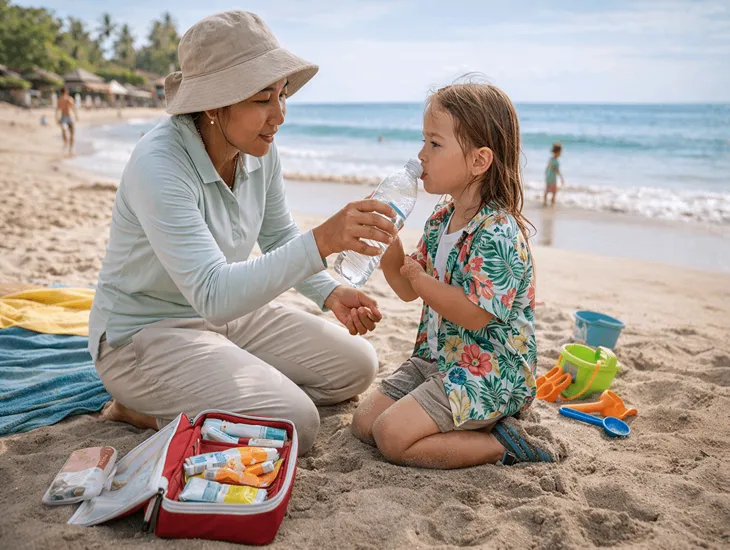
Dehydration happens rapidly in the intense tropical heat. Bring electrolyte sachets from home to mix into water bottles if a child feels unwell. Your caregiver monitors hydration levels constantly, ensuring frequent water breaks are taken.
Hand sanitizer and wet wipes are essential for snacking on the beach. Facilities for washing hands with soap are not always available near the sand. Maintaining hygiene prevents stomach bugs that ruin a holiday.
What to Pack vs. What to Buy Locally
Knowing what to pack saves stress and luggage fees. Bring trusted, child-safe sunscreen and perfectly fitting UV swimwear from home. Specific medications and preferred floatation devices are non-negotiable packing items.
High-quality water shoes with firm soles are rarely found in local beach shacks. Ensure you purchase these before you board your flight. These critical safety and health items form the core of your pre-trip preparation.
Conversely, you can buy extra casual clothing, simple toys, and basic inflatables very easily upon arrival. Local supermarkets offer a wide variety of affordable snacks and fresh fruit. Do not waste suitcase space on these bulky items.
A professional babysitter in Bali can advise you on where to find the best local supplies. They know the nearest pharmacies and the most reliable supermarkets. Focus your essential beach shopping in Bali on the items that guarantee safety.
How a Professional Assistant Manages Gear
Before leaving the villa, the babysitter packs and checks the entire day bag. They ensure sunscreen, hats, rash guards, water shoes, and towels are ready. They confirm that everyone is dressed for the sun.
This meticulous preparation means parents can simply walk out the door. You do not have to double-check lists or search for missing goggles. The logistical burden is entirely lifted from your shoulders.
On the sand, the caregiver manages the physical space so parents can relax. They anticipate when sunscreen needs reapplication and when the kids need water. After the excursion, the assistant rinses the salt and sand from the children and the gear.
They handle the showers and the transition back into clean clothes. They reset the kit so it is ready for the following day. By delegating these tasks, your family days stop being a logistical chore.
FAQs about Essential Beach Shopping in Bali
Should I bring a stroller?
A: A baby carrier is much better for the sand and narrow paths than a stroller.
Can I buy baby formula locally?
A: Yes, but specific international brands may be hard to find. Bring your preferred brand.
Are puddle jumpers available?
A: It is risky to rely on local shops for precise safety gear sizes. Bring them from home.
Do I need water shoes?
A: Yes. Water shoes protect feet from sharp coral and hot sand on the coastline.
Where do I buy beach toys?
A: You can buy cheap buckets and spades at local supermarkets upon arrival.
Do I need a babysitter?
A: A babysitter in Bali manages the heavy bags and ensures safety gear is used correctly.

