
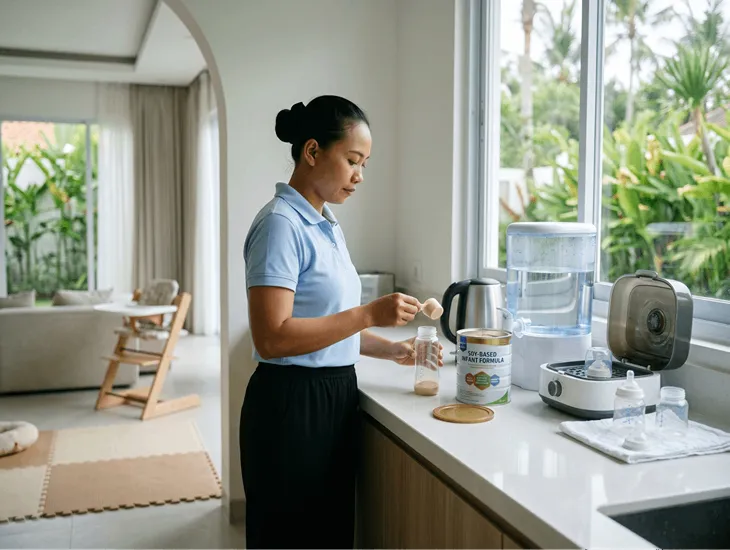
Understanding Soy Formula for Babies in Bali
Relocating to Indonesia creates immediate hurdles with specialized infant diets. Contaminated tap water severely increases medical risks for vulnerable babies who require specific plant-based nutrition on a daily basis.
Incorrect preparation leads directly to severe stomach infections. Juggling tight work deadlines while constantly monitoring precise mixing ratios is extremely difficult. Unnoticed sterilization lapses quickly disrupt your entire household stability.
Relying on untrained household staff dramatically increases medical risks. Subtle misunderstandings regarding proper water sterilization create highly dangerous pediatric health situations for busy expatriate families living locally in the province.
The Indonesian Pediatric Society provides clear, safe feeding protocols. Vetted caregivers strictly implement these rules daily. Secure your routine for soy formula for babies in Bali with professional help.
Hiring a trained professional ensures safe feeding practices continuously. Vetted caregivers expertly manage daily preparation protocols, allowing working parents to focus completely on their professional business obligations with absolute confidence.
Expert pediatric oversight effortlessly streamlines your dietary management routines. Delegating these critical preparation tasks prevents severe parental burnout while ensuring the infant maintains a perfectly healthy and stable developmental trajectory.
Table of Contents
Global Standards for Infant Nutrition
Global health authorities identify breastmilk or cow’s milk formula as the default choice. Specialized soy-based alternatives are recognized as effective options when medically indicated for early childhood development needs.
Modern processing methods improve these specialized products. Research indicates that infants consuming these formulations experience normal growth outcomes. This includes healthy bone density and endocrine function during developmental stages.
These products are not recommended for preterm infants. Premature babies possess nutritional needs that plant-based protein isolates cannot support. Medical evaluations ensure the nutrition plan supports the infant’s unique trajectory.
Consulting a pediatric specialist ensures parents understand when to introduce solid foods alongside specialized milks. This balanced approach supports immune system development and continuous physical growth during the first year.
Parents must store unmixed powder in a cool, dark location. High ambient humidity causes powdered milk to clump and spoil quickly, compromising its nutritional integrity before the expiration date.
Indonesian Pediatric Society Protocols
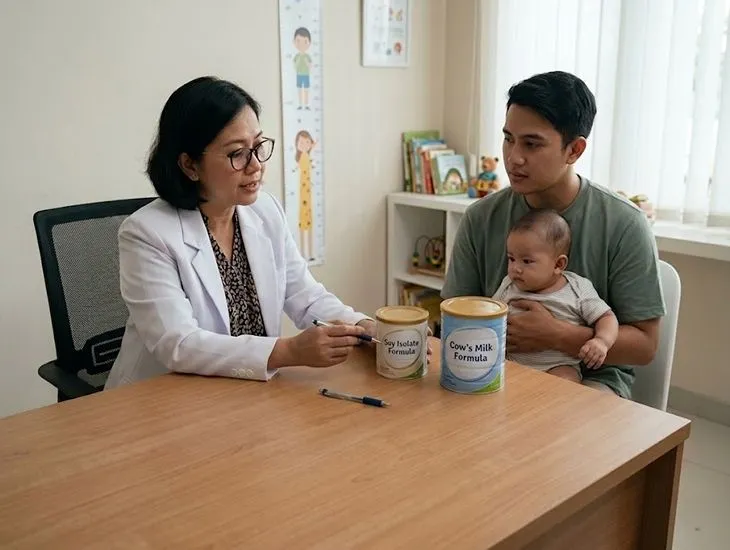
The pediatric community in Indonesia aligns with international medical standards. Doctors consider soy isolate-protein products safe when prescribed for cow’s milk protein allergy. Modern formulations undergo processing to reduce phytates.
Phytate reduction ensures infants absorb zinc and copper. These minerals are vital for physical development. Current pediatric data addresses concerns regarding hormonal effects effectively for growing infants.
Hormonal development remains unaffected when caregivers use these products appropriately. The national health framework supports breastfeeding as the primary nutrition source. Alternatives are viewed as secondary clinical interventions for infants.
Medical Indications for Dietary Changes
Doctors recommend switching formulas when infants receive specific medical diagnoses. Galactosemia is a primary indication for this change. This rare metabolic disorder prevents infants from processing sugars in standard milk.
Hereditary lactase deficiency is another valid reason for transitioning. Isolated soy proteins offer a complete alternative when lactose-free cow’s milk is unsuitable. Infants with IgE-mediated milk allergies often tolerate soy.
Pediatricians monitor these cases to determine if hydrolyzed options are needed. Families following vegan diets may request these alternatives. Fortified products provide a way to respect ethical choices safely.
Medical professionals perform careful evaluations before recommending dietary shifts. Accurate allergy testing prevents unnecessary nutritional restrictions and confirms whether an infant truly requires an alternative plant-based protein source permanently.
Caregivers carefully monitor the infant’s digestive output following a dietary transition. Observing changes in stool frequency helps pediatricians confirm that the new plant-based protein is being absorbed correctly.
Avoiding Unapproved Supermarket Drinks
A distinction exists between regulated infant products and standard beverages. Ordinary soy milk from supermarkets in Indonesia is unsuitable for infants. Standard drinks lack the vitamins required for brain development.
Feeding these drinks to a baby causes nutritional deficiencies. Registered infant products undergo testing and fortification. The National Agency of Drug and Food Control regulates these items strictly.
Caregivers must understand this vital difference. A professional babysitter ensures only pharmacy-grade products are used for soy formula for babies in Bali. Approved labels display detailed allergen warnings and instructions.
Unapproved commercial beverages lack the crucial calcium and vitamin D concentrations found in medical formulations. Using these improper substitutes compromises skeletal development and severely impacts long-term infant health outcomes.
Water Safety and Preparation Hygiene
Safe formula preparation depends on water quality. Tap water in Indonesia contains bacteria and parasites. Caregivers must never use it for drinking or mixing infant meals.
Families must use sealed bottled water from reputable brands. Water must be boiled and cooled before mixing any powdered products. Equipment hygiene is equally essential for health.
Bottles and teats require thorough sterilization. Items should air-dry on clean surfaces to prevent gastrointestinal infections. A vetted babysitter enforces these protocols to ensure a sterile preparation environment.
When leaving the villa, caregivers must transport mixed bottles in insulated cooler bags. Maintaining strict temperature control prevents rapid bacterial growth while navigating the hot tropical climate outside.
Parents must regularly inspect the villa’s water dispenser for mold or mildew buildup. Even bottled water becomes contaminated if the dispensing machine lacks proper scheduled maintenance and rigorous daily cleaning routines.
Using a dedicated electric kettle exclusively for boiling infant water adds another layer of safety. This prevents cross-contamination from adult beverages or food remnants commonly found in shared household cookware.
Real Story: Managing Allergies in Canggu
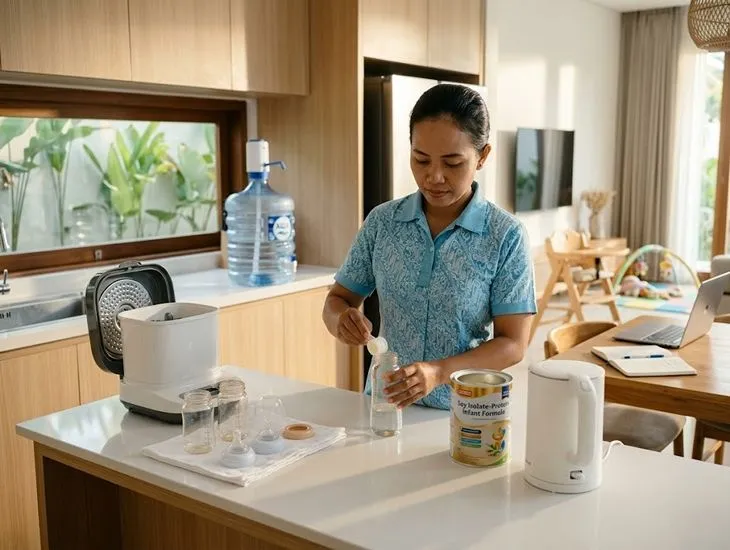
Elena identified a medical management deficit after arriving in Canggu. Her infant required a transition to soy isolate-protein formula due to a milk allergy. She struggled to manage sterilization routines.
Her informally hired helper used unboiled tap water to rinse feeding equipment. This error caused a stomach infection and a medical clinic visit. The situation disrupted Elena’s client deadlines.
Elena hired our professional agency to supply a vetted caregiver. The new babysitter implemented strict water safety protocols for soy formula for babies in Bali, allowing Elena to meet deadlines.
Best Practices for Formula Mixing
Caregivers must follow the exact mixing ratios on registered packaging. This ensures the correct nutritional balance for the child. Diluting powder too much causes malnutrition.
Adding excess powder strains the infant’s kidneys. A trained professional measures every scoop according to medical instructions. Formula should be prepared immediately before feeding.
High heat causes bacteria to multiply in mixed liquids. Improper storage creates a risk for illness. Caregivers must discard leftover liquid after a feed finishes.
Parents traveling across the island must carry pre-measured powder dispensers. Maintaining a sterile preparation kit prevents cross-contamination and ensures safe feeding schedules are followed strictly during local family excursions.
Caregivers should visually inspect the formula powder before every use. Any clumping, discoloration, or unusual odor indicates moisture contamination, meaning the entire container must be discarded immediately to ensure safety.
Washing hands thoroughly with antibacterial soap before handling any preparation equipment is an absolute necessity. Caregivers must scrub for twenty seconds, focusing on fingernails where harmful bacteria often hide successfully.
Professional Standards for Caregivers
Entrusting a child with dietary needs requires caregiver competence. Reputable agencies ensure staff hold pediatric first aid training. Professionals follow medical instructions for soy formula for babies in Bali.
They record feeding times and diaper output in a daily log. Trained caregivers recognize red-flag symptoms like persistent vomiting or lethargy. They contact parents or medical clinics without delay.
Vetted caregivers maintain professional boundaries. They do not adjust formula concentration or switch brands independently. Hiring a trained expert provides stability for parents with busy schedules.
Professional sitters establish a clear communication framework with parents. Detailed daily updates provide essential health data, allowing expatriate families to monitor infant metrics without pausing their professional schedules.
Agencies continuously monitor the performance of their placed caregivers. Regular evaluations guarantee that the babysitter maintains the highest level of vigilance regarding sanitation protocols and specialized dietary management over time.
FAQs about Soy Formula for Babies in Bali
Q: Is soy infant formula safe for daily use?
A: Yes. Modern regulated formulations are safe when recommended by a qualified pediatrician.
Q: Can I use supermarket soy milk?
A: No. Supermarket drinks lack nutrients and are dangerous for an infant’s developing system.
Q: Is tap water safe for mixing powder?
A: No. Always use sealed bottled water or boiled and cooled water to prevent infections.
Q: When do doctors prescribe these products?
A: They are prescribed for cow’s milk allergies, galactosemia, or severe lactose intolerance.
Q: How long can mixed formula sit out?
A: Mixed liquids should be consumed immediately. Discard leftovers promptly after the feed.
Q: Can a sitter manage feeding routines?
A: Yes. Vetted professionals safely prepare specialized meals and follow strict hygiene protocols.