
Review Us
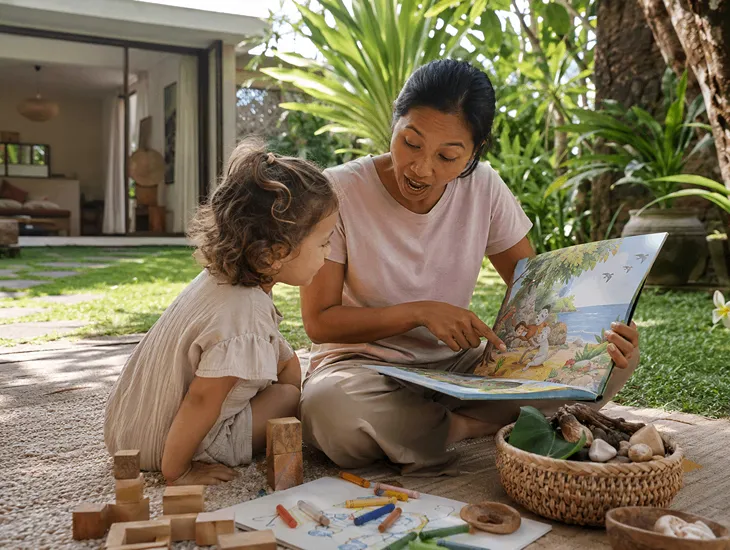
Creative Child Play 2026 – Babysitter in Indonesia reading a colorful storybook outdoors
author

Child Imagination Growth: How to Grow Your Child’s Imagination Every Day at Home

Expat parents in Indonesia worry about early childhood development constantly. Managing work while keeping toddlers engaged creates pressure for families living far from reliable support networks.

Relying on tablets to occupy children is a tempting trap. Excessive screen time can actively hinder a child’s natural creativity, delaying problem-solving skills crucial for academic success.

Bored children become irritable quickly without structured offline activities. Consequently, parents feel profound guilt when they cannot provide constant entertainment while balancing remote work inside their villa.

Ignoring unstructured play stifles natural curiosity over time. Children lacking creative outlets struggle to process complex emotions and face major difficulties interacting with peers successfully.

The Ministry of Education promotes holistic learning for young students. Fostering Child Imagination Growth daily ensures strong cognitive foundations are built safely at home.

An experienced caregiver can help securely enforce these digital boundaries. They replace screens with sensory activities, providing busy parents with peace of mind and deeply happy children.

Why Child Imagination Growth Matters

Early childhood experts connect pretend play with stronger language abilities. Creative cognitive development builds emotional regulation naturally, helping young learners navigate complex social environments easily.

Children develop critical problem-solving skills through imaginative scenarios. They test different solutions safely during unstructured playtime, which builds immense confidence for their future school years.

Structured academic drills cannot replace organic, child-led discovery. Creative expression allows toddlers to process their daily experiences effectively, teaching them to communicate complex feelings without relying strictly on vocabulary.

Parents must prioritize free time over rigid schedules consistently. Boredom acts as a powerful catalyst for invention, forcing the brain to seek novel ways to entertain itself independently.

Providing open-ended materials accelerates this cognitive development. Items like cardboard boxes or blank paper offer infinite possibilities, encouraging independent thinking and sustained focus daily.

Having a supportive adult present maximizes this creative exploration safely. A guided approach ensures your toddler thrives in their tropical environment without feeling unnecessary academic pressure.

Everyday Home Habits to Boost Creativity

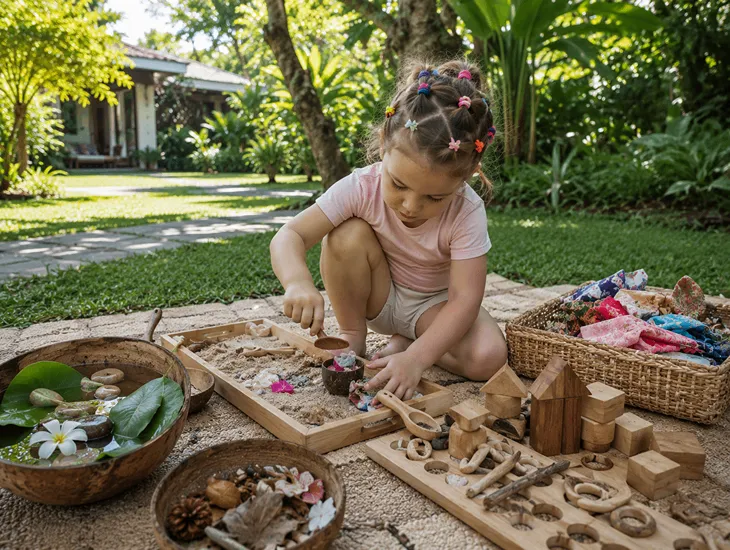
Early Childhood Development 2026 – Toddler playing with open-ended sensory materials in the garden

Establishing predictable daily habits significantly accelerates a child’s imagination growth. Consistency provides the secure framework children need to explore new ideas freely and take bold creative risks.

You must allow self-directed play without constant adult interference. Stepping back gives children the freedom to invent their own rules and resolve minor conflicts independently during playtime.

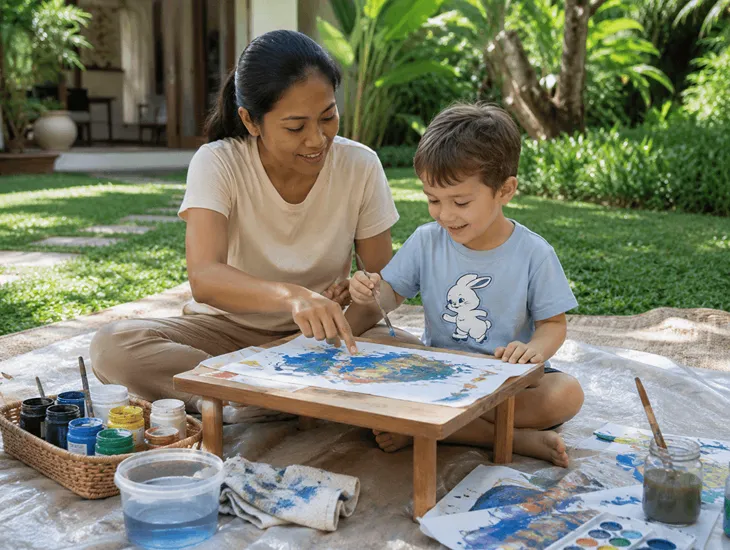
Creating a dedicated messy zone encourages sensory exploration safely. Covering floors with protective sheets allows uninhibited painting or clay modeling, which translates directly into mental flexibility.

Rotating simple toys keeps the playtime environment feeling fresh. An inspiration basket filled with fabric scraps and building blocks works wonders to spark new narrative ideas constantly.

Asking open-ended questions during normal daily interactions is crucial. Queries about their drawings prompt children to explain their thought process, strengthening their internal narrative structure immensely.

Quality home support actively maintains these beneficial habits. A skilled companion rotates materials and observes play without interrupting unnecessarily, fostering a deeply creative atmosphere while you focus on work.
Protecting Screen-Free Zones for Play

Excessive screen time can actively hinder a child’s natural imagination growth. Digital devices provide passive entertainment requiring zero mental effort, preventing the brain from developing its own creative pathways.

You must establish strict boundaries around technology use daily. Keeping tablets out of sight during meals forces children to talk, which improves family connection and verbal fluency instantly.

Designating specific times for unstructured offline exploration is vital. The hours before dinner are perfect for independent invention, even if children initially resist the boredom before creating fascinating games.

Car rides offer excellent opportunities for verbal imagination games. Playing word association or inventing silly scenarios turns idle travel time into highly productive developmental sessions together.

Replacing screens with engaging offline alternatives requires initial effort. Keeping drawing supplies and puzzles readily accessible in main living areas prompts children to choose active creation naturally.

An experienced caregiver can help securely enforce these digital boundaries. Engaging children with physical activities instead of cartoons guarantees an active and healthy developmental environment.

Simple Open-Ended Activities to Try

Sensory art projects stimulate a child’s imagination growth rapidly. Finger painting and clay molding allow children to explore textures and shapes, helping them invent entirely new visual concepts.

Creating a busy box utilizes cheap recycled materials perfectly. Combining string, stickers, and cardboard to build custom toys lets children invent elaborate stories around their homemade creations easily.

Outdoor play in tropical environments offers infinite inspiration. Simple gardening or mud shaping builds strong physical and mental connections, as nature provides the ultimate canvas for curious minds.

Dramatic role-playing develops empathy and complex communication skills. Setting up a pretend restaurant or shop using basic household items lets children practice real-world interactions safely.

Puppet shows encourage shy children to express themselves boldly. Crafting simple characters from old socks sparks incredible storytelling sessions where the child controls the narrative direction completely.

Introducing these activities regularly ensures continuous cognitive development. Having a dedicated helper prepare these creative concepts fills the day with customized attention that promotes deep growth.

Real Story: Unlocking Creativity in Ubud

While Theo, a 36-year-old from Sweden, managed his busy architecture firm from a quiet village in Ubud, his five-year-old son, Leo, struggled without structured kindergarten classes.

Theo relied heavily on a tablet to keep his son quiet during client meetings. He soon noticed Leo throwing massive tantrums whenever the screen was turned off, disrupting the household.

This screen dependency severely stunted Leo’s cognitive development. Realizing that passive routines were harming his son’s emotional regulation, Theo urgently needed a strategy to spark Child Imagination Growth offline.

He decided to seek specialized childcare to break this digital addiction. The new companion immediately removed the tablet and introduced simple sensory bins filled with leaves and stones.

They guided Leo through basic role-playing scenarios next. By building a small fort using spare bedsheets, Leo slowly began narrating elaborate stories about his imaginary jungle expeditions.

Theo now works efficiently while Leo creates vibrant artwork nearby. This targeted intervention successfully replaced screen time with active exploration, rescuing their family experience in Indonesia.

How a Professional Facilitates Daily Play

Creative Playtime Support 2026 – Professional caregiver guiding a painting session in the garden

A trained companion understands the mechanics of Child Imagination Growth thoroughly. By acting as a supportive co-narrator during daily play, this guidance expands the child’s narrative capabilities significantly.

They ask strategic questions to extend playtime naturally. Queries like what happens next prompt deeper cognitive processing, gently challenging the child to solve imaginary problems independently.

Professionals know how to manage the chaos of creative sessions. Setting clear boundaries regarding safety without stifling exploration ensures children feel secure enough to take creative risks.

Incorporating reading rituals into the daily schedule happens seamlessly. Discussing the illustrations builds comprehension and vocabulary, making this active reading style far superior to passive listening.

They monitor physical safety while encouraging gross motor exploration. Building obstacle courses in the living room develops both brain and body while preventing accidental injuries.

Consistent developmental support transforms standard supervision into a masterclass in early learning. This high level of engagement ensures your child benefits from targeted cognitive exercises daily.

Addressing Misconceptions About Boredom

Many parents fear that boredom indicates bad parenting. Rushing to schedule every minute of a child’s day perfectly actually harms early childhood creativity in the long-term.

True creativity requires empty time to flourish properly. Boredom acts as the uncomfortable transition period before invention begins, helping children discover their own internal motivation.

Another myth is that creativity requires expensive educational toys. Elaborate toys with single functions restrict open-ended thinking, whereas simple cardboard boxes provide vastly superior imaginative experiences for toddlers.

Parents also confuse academic drilling with cognitive development. Forcing young children to complete worksheets causes unnecessary stress, while play-based learning delivers far better outcomes without negative pressure.

Expat parents sometimes underestimate the value of messy play. Prioritizing a spotless villa over sensory exploration restricts artistic freedom, though protective mats solve this issue easily.

Knowledgeable childcare providers gently guide parents away from these misconceptions. Demonstrating the power of simple unstructured play helps families embrace healthy developmental practices confidently.

Sustaining Creative Habits for the Future

Maintaining creative momentum requires ongoing commitment from the entire family. You must prioritize offline interactions consistently to build a resilient and adaptable adult eventually.

Creative thinking translates directly into superior problem-solving abilities later. Children who play imaginatively become innovative teenagers, learning to view challenges from multiple perspectives naturally and confidently.

Emotional intelligence also stems from early role-playing experiences. Practicing empathy through imaginary scenarios prepares them for real relationships, providing vital social skills for global academic environments.

Consistency is the key to embedding these habits permanently. Keeping inspiration baskets rotated and enforcing screen-free limits allows the child’s mind to wander safely and productively.

Celebrate their weird and wonderful creations without judgment. Displaying their messy artwork validates their creative process completely, encouraging them to continue taking imaginative risks daily.

Establishing a long-term vision for creative development lays the groundwork for a lifetime of curiosity. Investing in high-quality childcare secures your child’s imaginative future successfully.

FAQs about Child Imagination Growth

Q: Why is screen time bad for creativity? 

A: Screens provide passive entertainment that stops the brain from inventing original scenarios independently.

Q: What are open-ended materials? 

A: These are simple items like blocks or boxes that can become anything during imaginative play.

Q: How does boredom help a child? 

A: Boredom acts as a catalyst, forcing children to create their own games and stories naturally.

Q: Can a Babysitter in Bali help with this? 

A: Yes. An experienced professional facilitates sensory activities and securely enforces screen-free time.

Q: Does pretend play improve school readiness? 

A: It builds vocabulary, emotional regulation, and problem-solving skills needed for formal education.

Looking for a creative sitter to support your child’s imagination growth at home? Chat with our team on WhatsApp now!