
Review Us
Unstructured Play for Kids 2026 – Young child building a creative fort with a babysitter in Bali
author-2

Unstructured Play for Kids: Simple Ways to Encourage Real Free Play

Expatriate parents often feel immense pressure to keep their children constantly engaged. Moving to a new country frequently leads to heavily scheduled days filled with endless structured activities.

This constant scheduling eliminates vital downtime. Children miss out on independent exploration when adults direct every single moment of their daily routine.

Over-scheduled children often struggle with independent problem-solving. Without free time, they rely on adults for entertainment, leading to frequent complaints of boredom and rising parental exhaustion.

The lack of creative freedom reduces emotional resilience. When adults fix every minor challenge, young minds fail to develop the necessary confidence to navigate simple daily obstacles independently.

Encouraging unstructured play provides a highly effective solution. Child-led activities foster deep cognitive growth and physical coordination, according to guidelines from the World Health Organization.

Professional caregivers understand how to support this vital development. A trained Babysitter provides safe environments and steps back, allowing your child to build lasting creative independence organically.

What Defines Unstructured Play for Kids?

Unstructured play involves activities free from adult organization. Children decide exactly what they want to do and precisely how they wish to execute their ideas.

This child-led exploration has no predetermined outcomes. Adults remain available for safety but consciously avoid running the game or imposing rigid rules on the activity.

Creative independence thrives when there is no single correct way to finish a task. Gentle supervision replaces direct instruction, allowing imaginations to develop naturally without time limits.

Creating their own games is much better for their developing brains than passively watching a screen. Step-by-step adult crafts do not qualify as free play because they remove agency.

True freedom means giving kids the power to alter the game. They can change narratives midway, fostering adaptability and a strong sense of personal autonomy.

Cognitive and Physical Benefits of Free Play

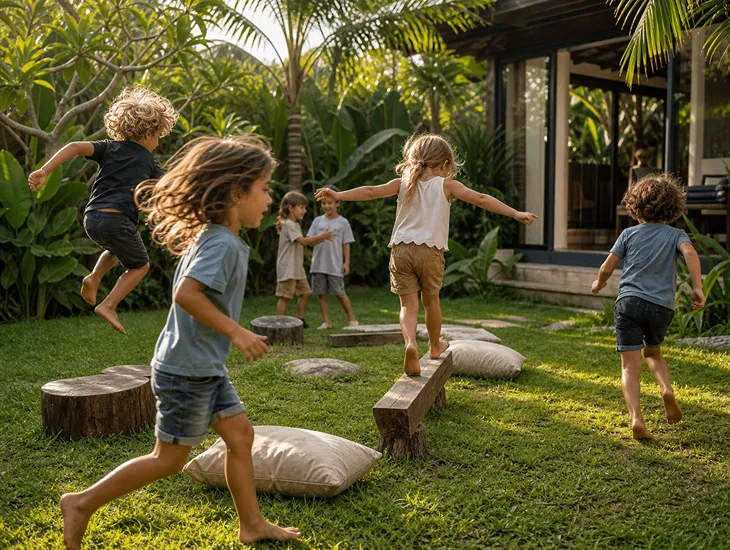
Unstructured Play for Kids 2026 – Children running and inventing games in a tropical garden

Running, jumping, and climbing significantly improve balance and muscle strength. Kids learn how their bodies move through space while naturally regulating their energy and reducing daily tension.

Engaging in slightly risky play helps young minds calibrate danger. Jumping from manageable heights teaches them to make quick decisions and manage their emotional responses effectively.

Free exploration dramatically increases vital problem-solving skills. Children learn about natural consequences quickly when they experiment, investigate, and navigate obstacles without immediate adult intervention.

This unstructured time builds essential emotional intelligence and resilience. Negotiating roles with peers during a game fosters deep empathy and a strong understanding of complex social cues.

Academic performance often improves when children have sufficient free time. Regular breaks from structured learning allow their brains to process information and develop enhanced creative thinking skills.

Long-term mental health benefits are also profound. Children who play freely learn to avoid chronic stress, forming stronger friendships and developing deeper moral values naturally.
Popular Types of Child-Led Exploration

Rough and tumble activities include playful wrestling on soft surfaces. This physical interaction builds core strength while teaching crucial lessons about setting boundaries and emotional regulation.

Creative construction allows for pure self-expression. Providing loose parts like wooden spoons, yarn, and cardboard boxes inspires children to build forts and invent unique architectural masterpieces independently.

Locomotor activities involve joyful movement. Chasing friends, playing tag, and climbing trees develop gross motor skills and spatial awareness while providing excellent cardiovascular exercise.

Imaginative role-play nurtures storytelling and empathy. Using old hats and clothes, children explore different emotional scenarios by pretending to be doctors, pilots, or fictional characters.

Mastery play allows children to practice real-world tasks safely. Digging holes in the backyard or mixing mud kitchens builds practical competence and deepens their self-confidence immensely.

Age-Appropriate Activities for Early Development

Toddlers thrive on simple sensory exploration. Sand, water, and playdough stimulate their developing senses, while large blocks encourage basic construction without complex adult instructions.

Pretend play begins early with simple domestic mimicking. Toddlers love putting stuffed animals to bed, which helps them process their own daily routines and emotional experiences.

Preschoolers benefit immensely from open-ended nature adventures. Hand them a small notebook and let them explore the backyard freely, observing insects and collecting interesting fallen leaves.

School-age children enjoy building complex, rule-free obstacle courses. Handing them building bricks without the instruction manuals forces them to innovate and design original, imaginative structures.

Story baskets are perfect for primary school kids. Fill a basket with random safe objects and invite your child to invent a completely original narrative around them.

Teenagers require space for self-initiated creative projects. Experimenting with digital art, photography, or independent entrepreneurial ventures fosters high-level problem-solving and contemporary creative expression.

Real Story: Overcoming Overscheduling in Sanur

Emily from Australia hoped to help her four-year-old daughter transition smoothly after moving to Sanur. However, enrolling the young girl in numerous structured daily classes immediately backfired.

Her daughter was losing the ability to entertain herself. Accustomed to adult direction, the young girl complained of boredom and demanded immediate entertainment.

Emily realized that fixing every minor challenge was stunting her daughter’s emotional resilience. She needed a way to foster independence without feeling like a neglectful parent.

She utilized a professional agency to find a caregiver trained in child-led exploration. Emily specifically requested someone who understood the value of stepping back safely.

The new caregiver arrived and set up simple, open-ended materials in the garden. She gently stepped back, allowing the child to invent her own games using sticks and fabric.

Within a week, Emily’s daughter was happily building imaginative forts alone. Emily finally found time to work peacefully, realizing that stepping back was a major parenting success.

Practical Strategies to Encourage Independence

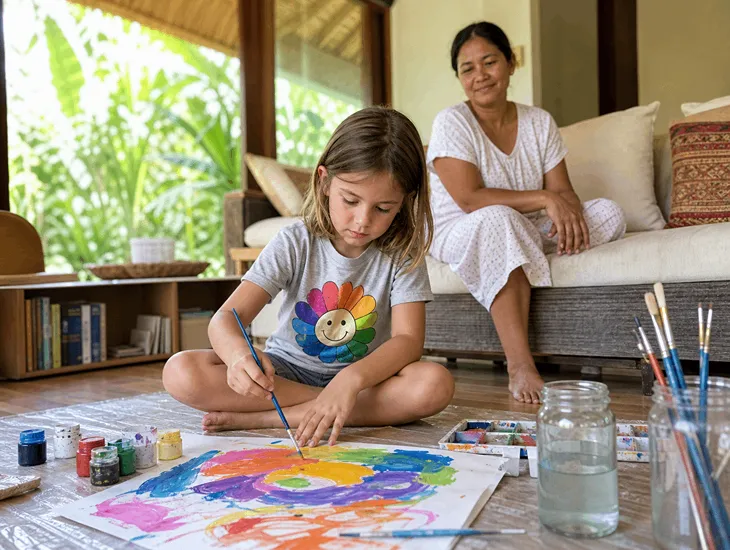
Unstructured Play for Kids 2026 – Caregiver observing a child painting creatively alone

Promoting independent play requires parents to step back gracefully. Saying you will join the game in twenty minutes forces the child to initiate their own entertainment.

Stocking your home with open-ended toys is crucial. Avoid battery-operated gadgets with predetermined outcomes, opting instead for versatile items that enable unique narratives.

Setting strict screen limits is necessary for creative growth. Digital consumption is passive, preventing the active boredom required to spark genuine self-directed imagination.

Embracing boredom is a powerful parenting tool. Providing an hour of uninterrupted free time forces kids to push past initial frustration and discover their own interests.

Creating dedicated neighborhood hours encourages wider social integration. Collaborating with other families allows youngsters to engage in mixed-age group games in larger, safe outdoor spaces.

Choose summer camps that prioritize free time over academics. Avoiding camps with rigid educational agendas ensures your child gets the necessary mental breaks they deserve.

How a Babysitter in Bali Facilitates Creativity

A professional caregiver acts as a gentle facilitator rather than a strict director. They prepare diverse materials and ensure the environment is physically safe before stepping aside.

Providing accessible natural materials sparks immediate child curiosity. Placing leaves, corks, and fabric scraps at eye level allows the child to independently select their creative tools easily.

When a child struggles, a trained professional resists the urge to fix it immediately. Instead, they ask open-ended questions to encourage trial-and-error learning and essential emotional resilience.

Maintaining this delicate balance is a specialized childcare skill. A great caregiver monitors safety from a distance while celebrating the child’s effort, ensuring a deeply enriching developmental experience.

They implement quiet times with minimal direct interference; by reading nearby, they model independent behavior and show the child that adults do not need to entertain them.

They excel at balancing supervision with age-appropriate freedom. By ensuring a mix of social interaction and solo exploration, they craft a well-rounded and deeply satisfying daily routine.

Common Mistakes to Avoid During Playtime

Over-directing activities instantly ruins creative free play. Dictating exactly how to glue a craft together turns free exploration into a rigid, adult-led classroom exercise.

Filling every minute with scheduled events is highly detrimental. Children require two to three hours of empty time daily to decompress and invent their own spontaneous games.

Solving problems too quickly robs children of vital learning opportunities. Rebuilding a fallen block tower for them prevents the development of necessary frustration tolerance and grit.

Praising only perfect, realistic results discourages artistic experimentation. Caregivers should focus on celebrating the creative process and the effort, rather than demanding a flawless final product.

Defaulting to screens when a child complains of boredom disrupts natural development. Boredom is perfectly acceptable; it acts as the necessary catalyst for independent thought and invention.

FAQs about Unstructured Play for Kids

Q: What is the main difference between structured and free play? 

A: Free play is entirely child-led without adult rules. Structured play involves specific instructions.

Q: How much free time does my child need daily? 

A: Experts recommend at least one hour of uninterrupted free time daily to foster deep creativity.

Q: Will my child learn anything without educational toys? 

A: Yes, open-ended objects like blocks teach complex problem-solving and vital fine motor skills.

Q: What if my child constantly asks me to join? 

A: Gently delay your participation by twenty minutes, encouraging them to play independently first.

Q: How can a professional caregiver help? 

A: They provide safe environments and materials, offering gentle supervision without interrupting.

Need a babysitter who can encourage unstructured play for your kids at home? Chat with our team on WhatsApp now!