

Review Us
The 6Cs of Education 2026 – Babysitter in Indonesia facilitating an educational game with a child
author-2

The 6Cs of Education: A Simple Guide for Modern Parents

Expat parents relocating to Indonesia face unique child development challenges. You want your child to succeed academically. Moving away from familiar school systems creates deep anxiety for busy foreign professionals.

Relying solely on traditional schooling leaves critical gaps. Memorizing facts does not prepare children for complex global challenges. Without modern skill development, young learners struggle to adapt and thrive independently.

Parents often feel overwhelmed balancing remote work and childcare. You lack the time to design structured learning activities. This pressure often leaves remote-working parents feeling overwhelmed and frustrated.

You need a proven framework to guide early learning. The 6Cs of Education provide a clear path for parents. This modern approach builds essential life skills beyond standard classroom memorization.

The Indonesian Ministry of Education and Culture encourages holistic learning approaches for early childhood. Implementing The 6Cs of Education prepares your child for the future. You can integrate these core principles into normal routines.

An experienced caregiver facilitates these vital learning milestones naturally. A dedicated Babysitter in Bali turns everyday play into education. This structured support gives you peace of mind while working.

Collaboration in Daily Routines

Children learn best through social interaction and shared experiences. Collaboration requires sharing, turn-taking, and resolving minor conflicts peacefully. These interactions build a vital foundation for future academic and professional success.

Problem solving with others yields better results than working alone. Parents must encourage cooperative tasks within the home environment. Tidying a playroom together teaches teamwork and shared responsibility effectively.

Using cooperative board games provides excellent collaboration practice. These games remove intense competition and focus on mutual goals. Children learn to support their peers and celebrate shared victories.

A professional caregiver naturally models these collaborative behaviors. They talk through planning roles during simple baking or building projects. This active participation turns standard supervision into a productive team exercise.

Integrating The 6Cs of Education into daily life prepares children for school. They enter classrooms ready to cooperate with new classmates. This social readiness drastically reduces friction during early educational transitions.

Communication Skills at Home

The 6Cs of Education 2026 – Babysitter in Indonesia reading a colorful storybook with a toddler

Effective communication involves speaking, listening, reading, and writing accurately. It includes understanding non-verbal cues like facial expressions and tone. These skills allow children to express complex ideas clearly.

Good communication unlocks access to advanced educational materials later. Children must learn to articulate their needs and understand others. This mutual understanding prevents behavioral outbursts caused by deep frustration.

Parents should prioritize active listening during daily conversations. Turn off digital devices during meals to protect this space. Asking open questions encourages children to share their thoughts fully.

Caregivers facilitate communication by reading aloud every single day. They ask the child to retell stories in their own words. This practice builds vocabulary and sequential narrative skills simultaneously.

Pretend play offers another fantastic avenue for verbal development. Children act out different scenarios and practice diverse vocabulary sets. A skilled caregiver guides this play to maximize linguistic growth safely.
Content Mastery Through Play

“Content” simply refers to core academic knowledge, like literacy and basic math, and the strategies children use to learn them. Children must learn how to learn effectively to succeed globally.

Modern frameworks do not abandon traditional reading and math. These six core principles, known as The 6Cs of Education, enhance these core subjects significantly. This combined approach ensures children understand facts.

Parents can embed numeracy into completely normal daily activities. Counting items on a shopping list introduces basic math practically. Measuring ingredients during cooking sessions provides excellent fractions practice.

Following a child’s natural interests accelerates content mastery quickly. Find age-appropriate books about space or dinosaurs for them. Discussing the materials afterward solidifies their new academic knowledge effectively.

An educated caregiver supports this content acquisition seamlessly. They introduce structured educational games that feel like pure fun. This gentle guidance builds a robust academic foundation before kindergarten begins.

Critical Thinking During Activities

Critical thinking involves analyzing information and comparing different perspectives. Children must learn to question assumptions and solve complex problems. These analytical skills are mandatory for navigating modern global challenges.

Memorizing facts holds less value in our digital age. Information is easily accessible via smartphones and computers everywhere. Children must evaluate whether that information is actually trustworthy and accurate.

Parents build critical thinking by asking engaging questions daily. Asking what might happen next in a story sparks analysis. You should avoid giving direct answers immediately to encourage independent thought.

Discussing different viewpoints helps children develop deep intellectual empathy. Asking how a friend might feel introduces alternative emotional perspectives. This broadens their understanding of diverse human experiences significantly.

A qualified caregiver challenges children with appropriate intellectual puzzles. They encourage kids to test alternative explanations during normal play. This constant mental stimulation sharpens their reasoning skills very effectively.

Creative Innovation and Discovery

Creative innovation means taking existing knowledge and building something new. It requires flexible thinking and a willingness to try unusual solutions. True innovation relies heavily on a solid foundation of facts.

This skill is never about making a random mess. Informed creativity connects critical thinking with original design ideas. Children use their base knowledge to invent practical new concepts.

Providing open-ended materials sparks this creative innovation easily. Blank paper, building blocks, and fabric scraps offer infinite possibilities. Children design their own unique games and elaborate stories independently.

Adults must reframe mistakes as valuable learning experiments entirely. Asking what else to try removes the fear of failure. This keeps creativity firmly connected to continuous exploration and discovery.

A dedicated caregiver provides unstructured time for these projects. They supply art materials and observe the creative process quietly. This protected space allows pure innovation to flourish without constant interruption.

Confidence Building and Resilience

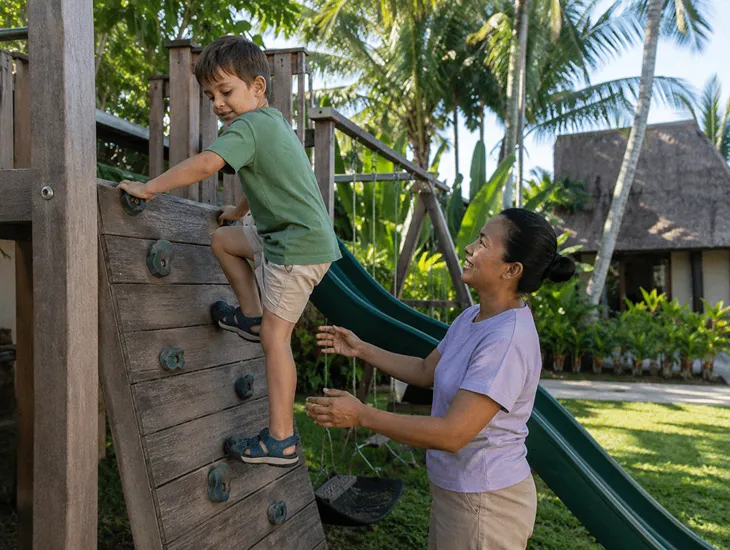
The 6Cs of Education 2026 – Child climbing a small playground structure safely in Bali with help

Confidence is the willingness to take safe risks daily. It involves persisting after failures and maintaining a positive attitude. Children must firmly believe they can try and learn anything.

Overprotecting children from all difficulties harms their psychological development. They must experience minor struggles to build true emotional resilience. Rescuing them immediately prevents them from developing independent coping mechanisms.

Parents build confidence by giving age-appropriate responsibilities at home. Praising effort and strategy matters more than praising perfect results. This approach teaches children to value hard work and persistence.

Allowing children to struggle with puzzles builds incredible tenacity. Adults should offer gentle support instead of solving the problem. Conquering a difficult task independently provides a massive confidence boost.

An experienced caregiver understands this delicate balance naturally. They encourage children to try new physical activities safely. This consistent encouragement creates brave, resilient learners ready for any challenge.

Real Story: Learning in Sanur

After relocating his remote marketing agency to Sanur, German expat Lucas noticed his four-year-old daughter, Emma, lacking focus and throwing frequent tantrums. She struggled to engage with her toys independently.

Lucas relied heavily on television to keep Emma occupied indoors during his meetings. He soon realized this constant screen time severely impacted her ability to self-regulate and communicate her basic needs.

This passive routine hindered Emma’s social and cognitive growth. Lucas knew he needed a strategy to build her confidence and communication skills without relying on digital distractions throughout the workday.

He recognized the need for targeted, screen-free engagement. Seeking a solution, he found an educated caregiver who immediately introduced cooperative games and spent hours building complex structures using wooden blocks.

The caregiver asked open questions to spark Emma’s critical thinking. Emma learned to articulate her frustrations instead of screaming loudly. She developed incredible resilience and started inventing her own creative stories.

Lucas now works efficiently while Emma enjoys structured educational play. This targeted intervention replaced screen time with active skill building, proving that mindful daily support can transform a child’s developmental path.

Professional Support for Expats

Foreign families face immense pressure when managing early childhood development. Balancing corporate careers and daily parenting requires reliable domestic support. Finding qualified help is essential for maintaining a peaceful household.

Implementing The 6Cs of Education requires patience and consistency. Busy parents often lack the energy for this structured engagement. Outsourcing this task to a professional yields vastly superior developmental results.

Our agency uses this exact framework for internal staff training. Caregivers know they must support collaboration, communication, and creative innovation. They do much more than simply watch your children play.

We prioritize vetting candidates who model these exact behaviors. Our professionals are warm collaborators and excellent verbal communicators consistently. They encourage independent problem-solving and enforce safe boundaries respectfully.

FAQs about The 6Cs of Education​

Q: What are the core skills in The 6Cs of Education framework? 

A: The core skills include Collaboration, Communication, Content, Critical Thinking, and Confidence.

Q: Why is memorization no longer enough for students? 

A: Information is easily accessible digitally today. Children must learn to apply facts creatively.

Q: How do caregivers build communication skills at home? 

A: Caregivers read aloud, ask open questions, and encourage kids to narrate their daily experiences.

Q: Does this framework ignore basic math and reading? 

A: No. Content mastery includes literacy and numeracy. The other skills simply enhance this knowledge.

Q: How can a Babysitter in Bali help my child? 

A: A trained caregiver implements these six principles through structured play and sensory activities.

Q: What is the best way to build a child’s confidence? 

A: Allow them to take safe risks, struggle with puzzles, and praise their effort instead of results.

Need a sitter who can help your child practice the 6Cs of education through everyday play and routines? Chat with our team on WhatsApp now!