

Review Us
Baby Bottles Guide 2026 – Professional caregiver testing milk temperature on wrist safely
author

Baby Bottles Guide: How to Choose the Right Bottle for Your Baby

Finding the right feeding equipment for your newborn presents overwhelming choices for expatriate parents. You face countless options regarding materials and flow rates while trying to establish a healthy feeding routine.

An incorrect choice often causes severe infant discomfort. A bottle with poor airflow leads to excessive gas and painful colic. This distress creates sleepless nights and deep frustration for exhausted parents.

Improper preparation compounds these feeding issues significantly. Proper sterilization is key to keeping bacteria away from your baby’s delicate system. Rushed feeding techniques cause choking hazards and increase painful acid reflux symptoms.

You need a structured approach to infant feeding safety. A reliable Baby Bottles Guide helps you select appropriate equipment. It ensures you understand crucial safety standards for products sold locally.

Professional preparation remains equally important. The Indonesian Ministry of Health sets clear guidelines regarding safe infant food preparation. Skilled caregivers follow these strict protocols to protect your child from illness.

Our comprehensive resource simplifies your selection process. Learn how to combine the right equipment with professional caregiver techniques. This approach guarantees safe and comfortable feedings for your growing infant.

Essential Factors for Choosing Feeding Equipment

Selecting suitable feeding equipment requires evaluating several key components. The nipple shape should mimic a natural breast closely. This design prevents nipple confusion for mothers who combine breastfeeding and artificial feeding.

Anti-colic functions remain critical for sensitive infants. Special ventilation systems reduce air intake during feeding. This feature prevents excessive gas and keeps your baby comfortable after finishing their meal.

You must select the correct flow rate for their age. Newborns require slow flow to prevent choking. Older infants need faster flow rates to match their developing swallowing capabilities safely.

Material selection impacts hygiene and longevity. Glass options offer excellent durability and resist chemical leaching perfectly. Plastic alternatives provide a lightweight design but require strict verification of safety certifications.

Bottle size matters as your infant grows. Small containers work best for newborns requiring frequent meals. Larger vessels accommodate older infants consuming greater liquid volumes during fewer daily feeding sessions.

Consult this Baby Bottles Guide when assessing your options. Every infant displays unique preferences regarding nipple texture. You may need to test a few variations before finding the perfect match.

Understanding Safety Standards in Indonesia

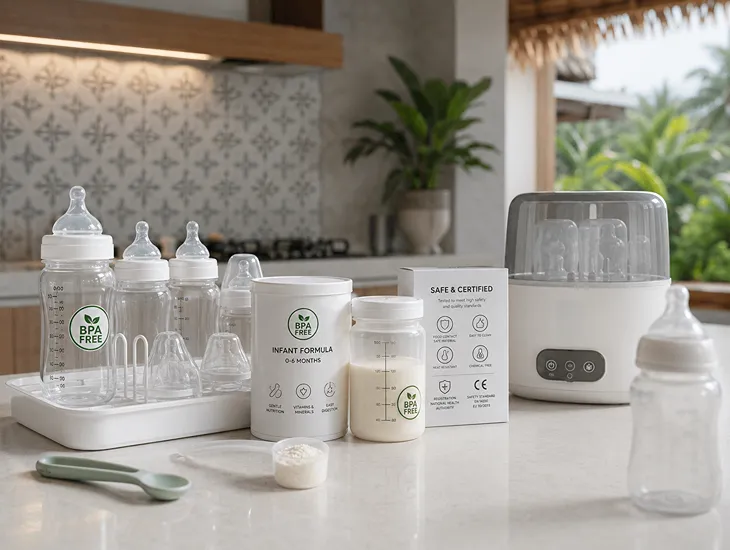
Baby Bottles Guide 2026 – Assorted BPA-free feeding equipment displayed on a clean kitchen counter

Purchasing infant products locally requires understanding specific regional regulations. The Indonesian government enforces strict safety protocols for food packaging. These laws restrict harmful chemicals in products intended for young children.

You must look for clear safety certifications on packaging. Ensure the product displays a specific BPA-free label. This guarantees the material will not release dangerous toxins into warm infant formula.

Many reputable brands operate safely in the local market. Look for items registered with the national health department. European safety certifications also provide strong reassurance for expatriate parents shopping locally.

Avoid purchasing unbranded equipment from informal markets, as these cheap alternatives often use substandard plastics that can pose severe health risks when boiled. Prioritize certified brands to ensure maximum safety.

Choosing certified equipment establishes a safe foundation for infant feeding. Professional caregivers strictly rely on these high-quality tools for daily use. Always prioritize trusted brands when shopping for your infant.

Proper Sterilization and Preparation Methods

Thorough cleaning precedes any sterilization procedure. You must scrub all equipment components using hot water and soap. A dedicated brush removes hidden milk residue from narrow caps and nipple threads.

Boiling remains the most common sterilization method locally. Submerge all cleaned items in boiling water for ten minutes. Let the equipment cool completely before removing it with sterile tongs.

Electric steam sterilizers offer excellent convenience for busy parents. As this Baby Bottles Guide notes, load washed items facing downward inside. The rapid steam cycle eliminates harmful bacteria efficiently and safely.

Cold water sterilizing solutions provide another viable option. You submerge the items in the chemical mixture for thirty minutes. You must change this solution daily to maintain its antibacterial effectiveness.

Never use a microwave to warm infant milk. This dangerous method creates uneven hot spots that cause severe burns. Run the container under warm water until it reaches the correct temperature.

An experienced caregiver will always test the liquid temperature on their wrist first. This crucial step prevents painful mouth burns during every single feeding session, ensuring your baby remains safe.

Establishing Safe Infant Feeding Techniques

Proper positioning prevents serious feeding complications. You should hold your infant comfortably with their head elevated above their shoulders. This angle prevents liquid from entering their middle ear canal.

Never prop the container on a pillow and leave. This reckless practice creates a massive choking hazard. An adult must hold the equipment actively throughout the entire feeding duration.

Maintain a precise angle during the meal. Tilt the vessel so milk fills the entire nipple area. This technique prevents your infant from swallowing excess air while they suck.

Implement frequent burping breaks to release trapped gas. Stop the feeding after your infant finishes one third of the liquid. Gently pat their back while supporting their delicate neck.

Paced feeding prevents uncomfortable overeating. Our Baby Bottles Guide advises allowing your child to pause and breathe naturally. Never force an infant to finish if they display clear fullness cues.

Professional caregivers monitor your child carefully during meals. They watch for signs of distress like coughing or gagging, and they stop the feeding immediately if breathing issues occur.

Real Story: Solving Feeding Struggles in Canggu

After his daughter was born, British expat Ryan struggled to establish a smooth feeding routine in Canggu. He felt emotionally exhausted managing her inconsolable crying after every single meal.

He initially purchased basic plastic equipment from a local supermarket. The fast flow rate caused his daughter to swallow massive amounts of air. The resulting colic left Ryan deeply worried.

The constant screaming drained his energy, making it difficult to focus on his remote work. He needed expert assistance to identify the underlying problem and restore peace to his household.

He sought help from an experienced child-minding professional to evaluate the situation. The caregiver immediately replaced the fast nipples with slow-flow alternatives and introduced proper paced feeding techniques.

This simple adjustment dramatically reduced his daughter’s air intake. The caregiver taught Ryan how to warm and sterilize the equipment correctly, focusing on safety and temperature control at all times.

His daughter stopped crying after meals, allowing Ryan to finally get some sleep. He felt confident managing his child’s daily nutritional needs, knowing he had reliable support systems in place.

Age-Specific Flow Rates and Feeding Systems

Baby Bottles Guide 2026 – Expatriate father feeding a calm infant using an anti-colic system

Newborns require extreme care during their first three months. You must use slow flow nipples to prevent accidental choking. They consume tiny amounts of milk frequently throughout the day.

Infants reach a transitional stage around four months. You can introduce a medium flow option as their appetite increases. They become easily distracted, so quiet feeding environments are highly recommended.

Older babies handle fast flow nipples efficiently after six months. They consume larger volumes of liquid less frequently. You must supervise them closely as they attempt to hold the equipment.

Gradual weaning begins around twelve months. You should introduce small cups during regular solid meals. Limit artificial nipples to specific nap times to encourage healthy dental development moving forward.

This Baby Bottles Guide helps you navigate these developmental transitions. Adapting the equipment to match their physical growth is essential for ongoing comfort. You should continually observe their feeding habits.

Always consult a pediatric professional if severe feeding difficulties persist. Getting expert medical advice ensures any underlying health issues are addressed promptly, giving you peace of mind during meal times.

Overcoming Common Infant Feeding Challenges

Infants occasionally refuse their milk. This rejection often indicates an incorrect temperature or an uncomfortable flow rate. Try adjusting the warmth slightly before offering the meal again later.

Colic symptoms require immediate technical adjustments. Ensure you hold the vessel at the correct forty-five degree angle. Increase the frequency of your burping breaks to release painful stomach gas.

Breastfed infants sometimes experience frustrating nipple confusion. They might bite the artificial tip instead of sucking smoothly. Using a wide, natural-shaped tip helps them transition between feeding methods easily.

Allowing someone else to offer the milk often helps. Infants strongly associate their mother with breastfeeding. A professional caregiver can introduce artificial feeding without triggering this deep maternal association.

Patience remains vital when introducing new feeding equipment from this Baby Bottles Guide. Do not panic if your child rejects the first few attempts. Consistent, calm repetition eventually leads to successful and comfortable meals.

Caregivers can observe your infant’s reactions to different nipple textures. Their objective perspective helps identify the specific features your baby prefers, making the transition to artificial feeding much smoother.

Communicating Preferences to Your Caregiver

Clear communication prevents dangerous feeding errors. You must write down your specific brand preferences and nipple flow requirements. Explain your choices using the principles in this Baby Bottles Guide.

Document your infant’s precise daily schedule. List the exact liquid measurements required for each meal. Specify their typical fullness cues so the caregiver knows exactly when to stop feeding.

Provide explicit instructions regarding formula preparation. Note the required powder ratios and the safe water temperature. Emphasize that they must test the liquid on their wrist before every meal.

Detail your preferred household sterilization routine. Explain where you store the clean equipment securely. A competent professional follows these hygiene protocols meticulously to protect your child from bacterial infections.

Provide at least three sterilized containers for backup. Keep extra tips available in case of damage. Preparing adequate supplies ensures your caregiver can handle spills or feeding accidents smoothly.

Leave emergency contact information clearly visible in your kitchen. If your infant refuses to eat or shows signs of distress, your caregiver needs immediate access to your preferred pediatric clinic.

FAQs about Infant Feeding

Q: How often should I replace feeding equipment?

A: Our Baby Bottles Guide recommends replacing silicone nipples every three months or if cracked.

Q: What is the safest way to warm milk? 

A: Submerge the container in a bowl of warm water. Never use a microwave.

Q: How do I know if the flow rate is too fast? 

A: Your infant will cough, gag, or let milk spill from the corners of their mouth.

Q: Can a Babysitter help with colic? 

A: Yes, trained professionals use paced feeding and frequent burping to reduce painful gas intake.

Q: Are plastic containers safe for my child? 

A: Yes, provided they are BPA-free and meet national safety standards in Indonesia.

Need a babysitter who can help with your baby’s bottle-feeding routine? Chat with our team on WhatsApp now!