

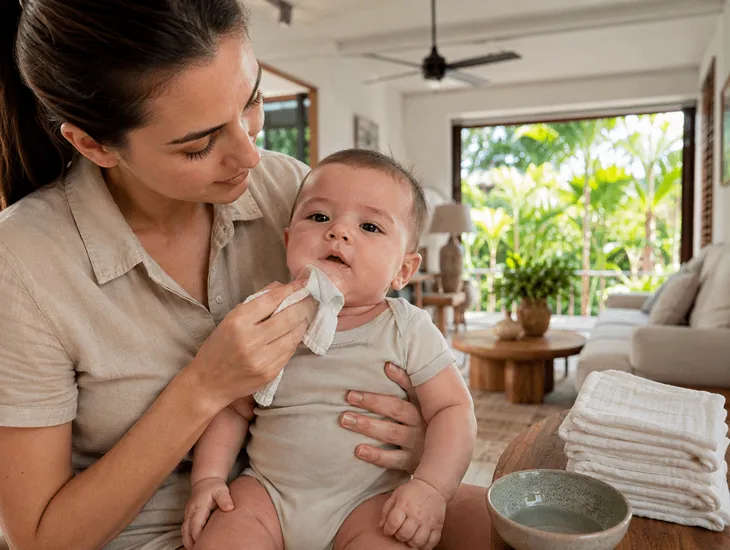
Recognizing and Managing Baby Drool Rash: Prevention and Treatment Tips
Teething causes infants to produce excessive saliva. Saliva pooling on delicate skin triggers contact dermatitis, leaving parents struggling to counter the wetness during busy days.
Red patches spread around the mouth and neck creases. Your infant becomes fussy from constant chafing, which disrupts family sleep and daily productivity.
Balancing remote work with childcare creates domestic stress. Expats struggle to find immediate solutions as the skin irritation worsens without systematic care.
Fortunately, proper moisture control heals skin safely. The Indonesian Ministry of Health recommends strict infant hygiene to prevent secondary bacterial infections from developing.
Consistent routines eliminate painful irritation. Mastering how recognizing and managing baby drool rash works becomes much easier with expert assistance handling daily cleaning routines.
A professional caregiver in Indonesia handles daily skin maintenance flawlessly. Their presence keeps your infant dry, providing absolute peace of mind.
Table of Contents
Identifying Symptoms and Affected Areas
Drool rash appears as distinct red, bumpy patches on an infant’s delicate face. The inflamed skin frequently looks shiny, chapped, or raw during teething phases.
This specific contact dermatitis concentrates heavily around the mouth, cheeks, and chin areas. Excessive saliva easily flows downward into vulnerable neck folds and across the upper chest.
Residual milk or solid food purees easily get trapped inside these damp neck creases during daily feedings. This organic matter ferments quickly, intensifying the contact dermatitis and creating a sour smell.
The affected skin can crack open and become intensely inflamed if left untreated. Constant moisture exposure weakens the fragile dermal barrier, allowing environmental irritants to cause physical distress.
Distinguishing simple salivation irritation from severe skin conditions remains vital for parents. Mild patches remain highly manageable at home with proper hygiene adjustments and moisture control protocols.
Primary Triggers and Climate Risks
Excessive saliva production peaks during major teething milestones or common infant colds. Saliva constantly coats the cheeks and chin, keeping the skin wet and vulnerable to chafing.
The warm, humid climate in Bali accelerates skin maceration and friction injuries. Constant environmental dampness combined with natural body heat worsens common contact dermatitis, requiring aggressive daily moisture management.
Infants who sleep on their stomachs or sides often press their wet cheeks directly into damp sheets. This prolonged compression forces saliva deeper into the dermal layers, worsening facial irritation overnight.
Plastic pacifiers trap excess saliva directly between the hard shield and sensitive skin. This trapped moisture creates a perfect environment for rapid rash development around the lower chin.
Smeared food particles left on the face aggravate existing dermal inflammation immediately. Acidic purees or formula residue cause immediate burning sensations on raw, unprotected skin surfaces after meals.

Structured Care Protocols and Household Guidelines
Parents must establish clear household guidelines for tracking early infant skin health. Early intervention prevents minor inflammation from quickly escalating into painful bleeding cracks around the mouth.
Education ensures every childcare helper handles daily infant skincare routines uniformly. Proper moisture tracking requires identifying subtle texture changes and minor redness before inflammation spreads widely.
Documenting the appearance of the rash using clear photos helps track healing progress accurately over time. Sharing these visual updates with your childcare team ensures everyone remains aligned on treatment adjustments.
Caregivers must inspect deep neck creases regularly for hidden dampness after afternoon naps. Catching wetness before red patches appear minimizes overall healing times and reduces infant fussiness.
Providing clear instructions to your childcare team guarantees consistent skin maintenance daily. Standardized preventative care successfully preserves the delicate skin barrier despite heavy salivation during teething cycles.
Daily Hygiene Habits for Prevention
Frequent, gentle wiping forms the absolute foundation of successful rash prevention strategies. Use a clean, ultra-soft cloth or burp cloth to gently dab saliva away throughout the day.
You must never rub the facial skin aggressively with dry or rough fabrics. Rubbing breaks the fragile outer skin layer, causing immediate pain and increasing susceptibility to infections.
Prioritize organic bamboo or long-staple cotton fabrics for all burp cloths and clothing items. These premium materials absorb liquid efficiently without scratching or irritating the skin surfaces during cleanings.
Utilize highly absorbent or waterproof bibs to protect your infant’s clothing from wetness. Change damp bibs immediately to prevent excess moisture from soaking the upper chest and neck creases.
Apply a thin layer of protective barrier ointment onto completely dry skin surfaces. Pure petroleum jelly shields the face from continuous saliva contact effectively before naps or outdoor trips.
Managing Pacifiers and Teething Triggers
Limit pacifier use to allow the sensitive skin around the mouth to air out. Periodically remove the pacifier to wipe away accumulated saliva hidden underneath the plastic shield.
Offer chilled teething rings or cold washcloths to soothe swollen gums safely during teething. Cold items provide immediate physical comfort while reducing heavy drooling impulses caused by erupting teeth.
Supervise your child closely while they utilize textured silicone teethers to massage their sensitive gums safely. Ensure these toys are attached to clean clips to prevent them from dropping onto dirty surfaces.
Pat the face completely dry immediately after your infant chews on teething toys. Maintaining a dry skin surface prevents saliva from pooling in deep creases and causing friction damage.
Clean toys and pacifiers daily using mild, unscented soap and warm water. Removing dried saliva and bacteria prevents secondary contact irritation on your infant’s face.
Real Story: Soothing Saliva Irritation
Chloe spent hours rocking her crying seven-month-old daughter in Pererenan, watching the raw, angry red sores spread deeply into the infant’s neck folds. The poor baby screamed during every feeding.
The skin was cracking open, turning every wipe into a painful ordeal that left Chloe trembling with anxiety. She felt completely trapped between her mounting corporate deadlines and her child’s visible suffering.
The humid air seemed to mock her efforts as every bib soaked through within minutes. Realizing she could no longer manage this agonizing cycle alone, Chloe sought out an expert infant caregiver.
A highly trained professional arrived and calmly assessed the raw skin creases. She immediately replaced the harsh commercial wipes with plain water and an ultra-soft organic cloth.
The caregiver gently dabbed away saliva every ten minutes and applied a thin petroleum barrier. She systematically rotated dry bibs the absolute moment moisture appeared on the fabric.
Effective Home Treatment Practices
Wash the affected facial areas gently using tepid water twice daily. Parents must avoid heavily medicated washes, alcohol wipes, or scrubbing the inflamed infant skin under any circumstances.
Allow the washed facial areas to air-dry completely for exactly two minutes before applying ointments. Securing total skin dryness prevents trapping residual moisture underneath the thick barrier layer directly.
Apply a high-quality protective barrier ointment immediately once the skin dries completely. Successfully managing saliva irritation involves using these thick layers to block saliva from touching raw skin.
Parents must reapply this protective layer consistently after every feeding and nap. Maintaining an unbroken barrier shields the healing infant skin from newly produced saliva throughout the busy day.
Avoid standard perfumed lotions, which trap moisture and worsen existing skin inflammation. Stick to pure, unscented barrier options like pure petroleum jelly for optimal dermal recovery and protection.
Trim your infant’s fingernails short to prevent accidental scratching during sleep. Eliminating sharp nails stops the child from breaking the fragile skin barrier and introducing harmful bacteria.
Apply a clean, cool compress lightly against the cheeks to soothe sudden flare-ups. This gentle temperature reduction instantly calms angry skin without requiring harsh chemical interventions.
Resting your infant in highly ventilated rooms allows the therapeutic barrier to dry undisturbed. Maximizing quiet air exposure remains a critical step for accelerating successful domestic healing protocols.
Knowing When to Consult a Doctor
Parents must seek professional medical evaluation if the skin becomes extremely raw or bleeds. Oozing yellow crusts or pus indicate a dangerous secondary bacterial infection requiring antibiotics.
A stubborn facial rash that fails to improve after several days of careful drying requires attention. Pediatricians can accurately differentiate simple contact dermatitis from infantile eczema or impetigo.
Fungal infections frequently thrive in trapped salivary moisture. If the red patches develop a bright red border with distinct satellite spots, a doctor must prescribe targeted antifungal treatments.
Keep a detailed log of your infant’s symptoms, temperature readings, and treatment responses ready for your pediatrician. This organized data helps medical professionals make precise clinical decisions quickly during consultations.
High fevers, extreme lethargy, or poor feeding demand immediate trips to local pediatric clinics. In Bali’s humid environment, superficial skin infections can escalate quickly into systemic illnesses.
Seeking care immediately prevents unnecessary health complications. Expats should maintain a list of international medical centers in Indonesia that offer specialized pediatric emergency services around the clock.
A vigilant caregiver identifies these critical infection red flags during daily clothing changes and cleanings. They inform parents instantly, ensuring your child receives prompt care at a reputable clinic.
A qualified caregiver in Bali assists during the medical recovery phase. They follow the prescribed pediatric protocols precisely, ensuring your infant receives exact topical medication doses on dry skin surfaces.
FAQs about Recognizing and Managing Baby Drool Rash
Q: What causes a drool rash to develop?
A: It is contact dermatitis caused by prolonged contact between saliva and delicate infant skin.
Q: Where does this skin irritation usually appear?
A: It concentrates around the mouth, cheeks, chin, neck folds, and upper chest areas.
Q: How can I protect my baby’s skin?
A: Apply a thin layer of pure barrier ointment like petroleum jelly to completely dry skin.
Q: Can I use standard scented baby lotions?
A: No, scented lotions contain harsh fragrances that irritate raw skin and trap harmful moisture.
Q: When does this condition require a doctor?
A: Seek medical care if the skin oozes pus, bleeds, or accompanies a high fever.

