
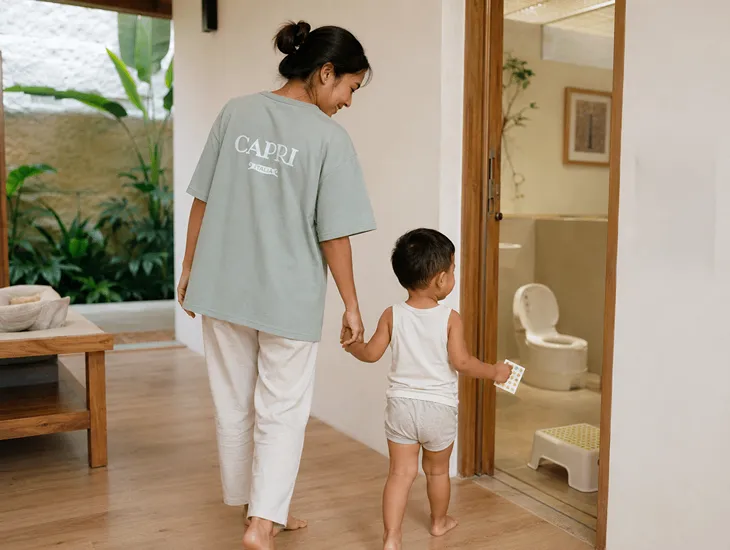
Review Us
Potty Training with Your Sitter 2026 – Coordinated routines, caregiver alignment, and toddler tools
author

Potty Training with Your Sitter: Tips for Consistent Success in Bali

Toilet learning is a major milestone for parents. Unfamiliar tropical environments complicate this fragile developmental process significantly. Managing multiple schedules while working creates structural confusion for your child during major transitions.

Inconsistent training methods frustrate young children. When approaches shift constantly between caregivers, progress stalls. Your toddler experiences immense stress when expectations change throughout the day.

Confused children experience emotional regressions or sudden resistance. This setback delays independence. Without a unified daily strategy, parents often feel overwhelmed trying to navigate these developmental delays.

Establishing a unified approach is the single best solution for families. Shared routines give young children the essential confidence to succeed. Professional caregivers maintain these vital structural parameters seamlessly in your home.

Implementing Potty Training with Your Sitter requires complete alignment between all adults. Clear communication transforms this milestone into a cooperative victory. Parents secure predictable results by utilizing verified, expert caregiver guidance.

Clinical guidelines from the Mayo Clinic emphasize reading readiness cues accurately. A professional babysitter in Bali guarantees compliance with these pediatric recommendations, ensuring safety and long-term milestones.

The Core Principle of Caregiver Consistency

Consistency across all caregivers is the single most important factor in shared toilet learning success. Toddlers thrive on predictable routines. Matching your home habits with external care prevents severe confusion.

If a child uses the toilet at home but wears diapers elsewhere, development stops entirely. This mixed messaging causes unnecessary emotional stress. Your child struggles to understand what adults expect.

Professional caregivers prioritize absolute uniformity in their daily routines. They echo your specific timing and structural boundaries carefully. This collaborative effort accelerates independence and confidence for your young toddler.

Children benefit immensely from seeing identical responses to their developmental efforts. A reliable babysitter in Bali ensures your child feels completely secure during the entire learning process.

Choosing premium childcare in Indonesia helps maintain these strict structural boundaries efficiently. Experienced professionals adapt to your lifestyle without compromising safety guidelines. You achieve reliable results through disciplined caregiver cooperation.

Deviating from the established routine slows down progress and increases household anxiety. All active adults must use the same language parameters. Keeping methods synchronized across settings guarantees a smoother transition.

Developing a Shared Toilet Learning Plan

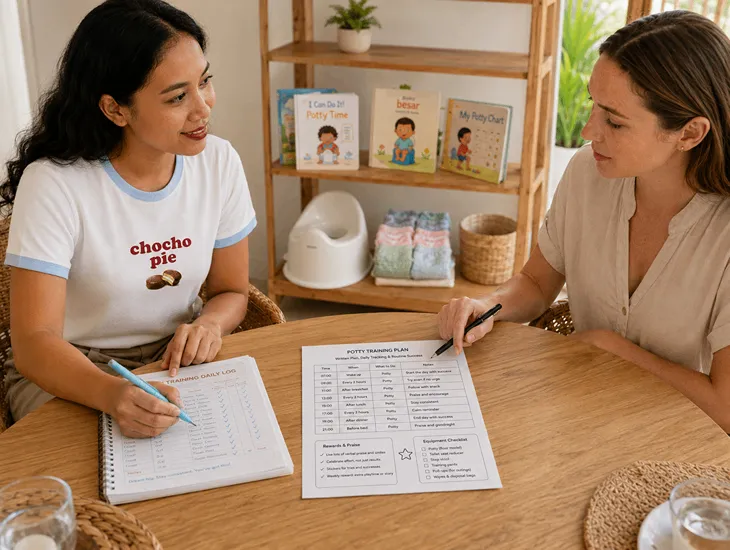
Childcare in Indonesia 2026 – Written potty training plans, daily tracking logs, and routine success

Shared care experts recommend typing a comprehensive written plan for everyone involved in childcare. Give this document to grandparents, educators, and helpers. Documenting your system ensures absolute operational alignment.

Specify exactly how often to prompt your child throughout the active day. Common intervals include every two hours or immediately after meals. Clear scheduling guidelines eliminate dangerous guesswork for caregivers.

Outline the exact equipment required for your child’s daily routine. Detail whether they utilize a floor model or a toilet seat reducer. Consistency in physical equipment prevents sudden situational anxiety.

Define your preferred praise system and the exact phrases to use during successes. Positive reinforcement should celebrate effort rather than just successful outcomes. Matching rewards maintains high motivation across environments.

A dedicated babysitter in Bali executes this written plan with extreme precision and care. They maintain your established systems without introducing unauthorized changes. Your child experiences perfect continuity every day.

Include specific instructions on handling wet clothing within your documented plan. Instruct helpers to remain calm and neutral. Clear guidelines protect your child’s emotional well-being during unexpected developmental setbacks.
The Process of Potty Training with Your Sitter

When managing Potty Training with Your Sitter, follow a structured step-by-step workflow. Sourcing the right professional from a verified agency is the first critical step for safety-conscious parents on vacation.

Share your written guidelines with your babysitter in Bali during the initial interview phase clearly. Ensure the candidate feels completely comfortable following your specific cues before finalizing any official employment contracts.

Schedule a short trial session to observe their interaction style directly in your villa. Watch how the professional delivers gentle prompts without creating power struggles or unnecessary performance anxiety.

Implement a daily tracking sheet to monitor successes and setbacks accurately. Caregivers should log exact timing, fluid intake, and behavioral responses after every single toilet attempt during the active day.

Review these logs every evening to spot emerging physical patterns together. Open communication allows you to adjust prompting intervals based on real data. Consistency guarantees long-term developmental milestone success always.

Encourage your caregiver to provide detailed feedback at the end of their shift. Discussing resistance or fears helps you refine the strategy. Cooperative evaluation ensures the training remains positive.

Identifying Individual Readiness Cues and Timing

Pediatricians advise starting the process only when your child shows clear readiness signs. Common indicators include staying dry for long periods and following simple verbal instructions throughout the day comfortably.

Forced training before physical readiness leads to intense behavioral resistance and frustration. Avoid rushing the milestone due to holiday travel schedules or external societal pressures. Patience ensures a smoother transition.

Build toilet attempts into your child’s existing daily schedule naturally. Ideal times include immediately after waking, after snacks, and right before leaving your private villa for outdoor family activities.

Professional childcare in Indonesia focuses heavily on recognizing these subtle behavioral cues. Experienced staff know when to prompt and when to offer comfortable breaks. This balanced approach reduces milestone anxiety.

A skilled babysitter in Bali mirrors your home schedule with absolute precision. They ensure your child never feels rushed or pressured during active learning sessions throughout their tropical holiday experience.

Watch for signs of physical discomfort during hot weather sessions carefully. Increased hydration alters predictable urination patterns. Adapting your schedule to climate factors maintains safety and consistency during learning.

Real Story: Achieving Success in Uluwatu

Anson felt the weight of his demanding remote schedule pressing down on him. Balancing client calls while monitoring his toddler’s fragile new toilet habits felt impossible in their unfamiliar villa.

His previous local helper had completely ignored the agreed schedule, choosing to keep his daughter in diapers to avoid any mess. This mismatch caused immediate regression and immense frustration.

He desperately needed someone who respected the delicate nature of early childhood transitions. The situation required a partner who would diligently follow instructions rather than prioritizing their own temporary convenience.

He utilized our agency to find an experienced babysitter in Bali for daytime support. This decision connected him with an expert who understood the absolute necessity of maintaining consistent toilet learning parameters.

The caregiver executed the written schedule flawlessly, using the exact positive reinforcement phrases Anson preferred. His daughter’s anxiety melted away as predictable tracking sheets restored household harmony.

Anson realized the value of highly vetted support for complex developmental phases. The dedicated assistance empowered his child to regain her independence and thrive securely in their new environment.

Managing Accidents Safely Without Toddler Shaming

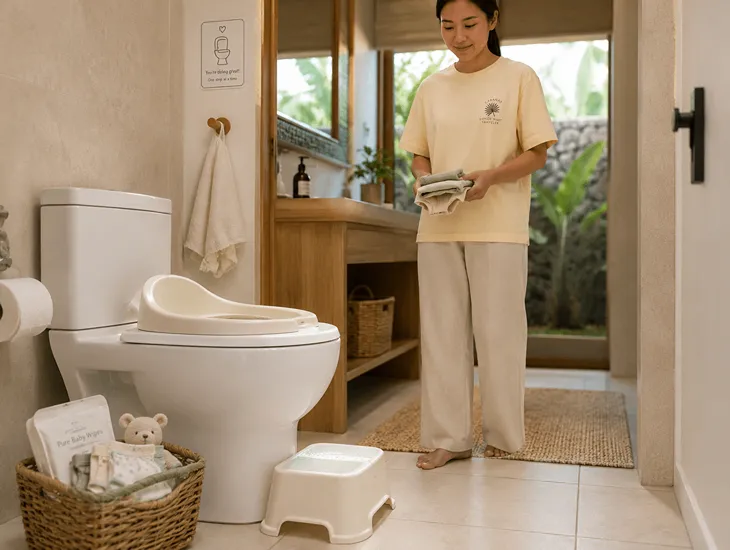
Babysitter in Bali 2026 – Step stool bathroom equipment setup, safe environments, and infant hygiene

Accidents are a completely normal and expected part of developmental learning. Caregivers must remain calm and avoid showing visible frustration when unexpected slips occur in your private holiday accommodation.

Negative reactions can cause severe developmental regression for your learning child. Use neutral language like explaining that clothes got wet and gently reminding them to try next time.

Praise your child for honesty if they tell an adult after an accident occurs. Recognizing physical sensations is a major developmental milestone that deserves positive reinforcement from all caregivers.

Parents and helpers must respond identically to wet clothing situations. Mismatched reactions confuse the toddler and create deep anxiety, which stalls their overall independence and behavioral progress significantly.

A premium babysitter in Bali guarantees a nurturing, penalty-free environment for your child during tough setbacks. Verified professionals handle cleanup duties discreetly and maintain a supportive atmosphere always.

Never allow helpers to punish or shame an infant for missing the toilet. Emotional safety is paramount for growth. Protecting their dignity ensures they remain motivated to try again.

Selection of Clothing and Environment Setup

Dress your learning child in clothing that is exceptionally easy to remove quickly. Loose, elastic-waist pants prevent sudden accidents caused by complicated belts, overalls, or tight denim fastenings.

Ensure your helper always has immediate access to abundant spare clothing and wipes. Organize these essential supplies in a centralized, highly visible location within your holiday accommodation for rapid deployment.

Maintain identical equipment across all care settings whenever your family travels. Utilizing the same style of reducer seat makes tactile sensations predictable and comfortable for your toddler in unfamiliar environments.

A prepared environment reduces transition anxiety for the entire household. Keep the bathroom brightly lit and physically accessible to foster independent habits safely for your learning child during their stay.

Your chosen babysitter in Bali restocks these necessary supplies before starting their daily shift. They maintain a clean, organized workspace to ensure your child’s safety and physical comfort continuously.

Navigating Varied Cultural Caregiver Dynamics

Shared training often involves multiple family members and external helpers simultaneously. Cultural values regarding independence, cleanliness, and age expectations can differ significantly across various regions and domestic traditions.

Stricter traditional methods or a caregiver’s over-reliance on diapers for convenience will confuse your child. Aligning philosophies through open, preliminary discussions prevents conflicting techniques from disrupting your child’s progress.

Provide your helper with clear written translations of your specific cues and phrases. Visual aids bridge language gaps effectively and guarantee uniform execution of your toilet learning strategy at home.

A professional babysitter in Bali prioritizes open communication to protect your household values and maintain structural consistency. Respectful collaboration ensures everyone follows child-centered pediatric guidelines accurately during your vacation.

Investing in expert support removes the friction of mismatched care methods entirely. Potty training becomes much easier when you secure a dedicated partner who honors your parenting choices.

Discuss your rules regarding screen time and rewards during these cultural alignment sessions. Clear boundaries prevent caregivers from using unauthorized distractions. Unified expectations create a secure environment for learning.

FAQs about Potty Training with Your Sitter

Q: How often should a caregiver prompt my child? 

A: Prompting every two hours or after meals ensures consistent success and reinforces the routine.

Q: Should my child wear diapers during the day? 

A: Use training underwear to help them recognize physical wetness sensations and encourage active learning.

Q: How do we handle accidents away from home? 

A: Stay calm, change clothes quickly, and offer neutral reinforcement without displaying any frustration.

Q: Can a babysitter in Bali manage tracking logs? 

A: Yes, our professionals document all attempts to map physical patterns accurately for your review.

Q: What if my child shows sudden resistance? 

A: Pause training briefly and consult your written plan to ensure complete caregiver alignment.

Need a babysitter to help with your child’s potty training? Chat with our team on WhatsApp now!