
Review Us
Infant Health in Indonesia 2026 – Professional caregiver gently cleaning the face of an infant
author-2

Baby Watery Eyes: Why You Should Avoid Rubbing Them

Raising an infant in a tropical climate presents unique health challenges. Expatriate parents often notice sudden excessive tearing in their infants. This visual symptom causes immediate concern for busy working families.

Ignoring this tearing can lead to severe discomfort for your infant. The tropical dust and high humidity exacerbate the irritation quickly. You worry constantly while managing your remote business obligations.

Without proper guidance, tired parents might wipe the area incorrectly. Forceful cleaning spreads harmful bacteria across the delicate facial skin. This simple mistake easily creates a painful and severe infection.

Pediatric experts from the World Health Organization warn against aggressive physical contact with inflamed tissues. They recommend calm observation and strict hygiene protocols. Gentle care prevents tragic vision complications entirely.

Understanding the root causes of these visual symptoms restores your confidence. Knowing exactly when to seek a medical professional protects your family. You regain control over unexpected infant health crises.

A professional Babysitter in Bali manages these daily hygiene routines perfectly. They execute safe cleaning steps for watery eyes while you work. This reliable support brings total peace of mind.

Common Causes of Baby Watery Eyes

Infants frequently experience excessive tearing due to blocked tear ducts. This anatomical issue affects nearly thirty percent of all newborns. The ducts are simply not fully open yet.

This blockage leads to constant tearing and sticky morning crusting. The condition usually resolves naturally by the first birthday. It is rarely a true medical emergency.

Conjunctivitis is another frequent cause of Baby Watery Eyes. Viral and bacterial infections create redness and uncomfortable swelling. Bacterial forms require prompt antibiotic drops from a local doctor.

Allergies also trigger sudden excessive tearing and intense itching. Tropical pollen and indoor dust are common irritants in Indonesia. These allergens cause puffy lids and constant sneezing.

Simple environmental irritants like wind or shampoo cause temporary tearing. A professional caregiver monitors these daily symptoms closely. They help identify the specific cause safely.

Monitoring these visual signs daily is highly recommended for parents. Understanding the difference between minor blockages and serious infections is crucial. This proactive approach ensures safe and healthy development.

The Severe Risks of Eye Rubbing

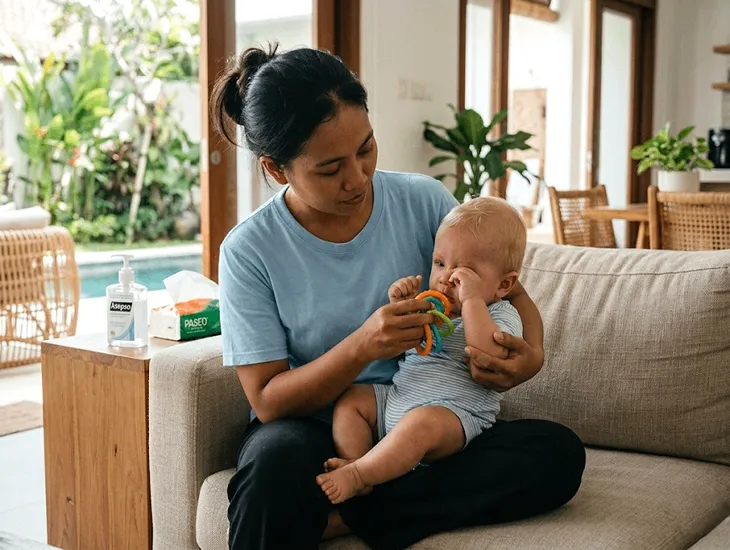
Infant Eye Care in Bali 2026 – Caregiver gently preventing an infant from touching a sensitive face

Pediatric health sources strongly advise against any physical rubbing. Rubbing transfers harmful bacteria and viruses from hands directly to eyes. This action significantly increases the risk of conjunctivitis.

Forceful rubbing can easily scratch the delicate cornea. This corneal abrasion causes intense pain and worsens existing inflammation. It creates a gateway for severe bacterial infections.

Repeated physical pressure contributes to long term structural damage. It can weaken the cornea over time in growing children. Protecting the facial area is absolutely essential.

Rubbing an infected area spreads germs rapidly between both sides. It also exposes other family members to the same virus. Strict hand hygiene breaks this dangerous chain of transmission.

A dedicated Babysitter in Bali never scrubs an irritated area. Their primary job is to prevent the infant from scratching. They alert parents immediately when irritation begins.

Preventing this physical rubbing requires constant and dedicated supervision. A distracted infant is less likely to touch their sensitive face. This continuous attention guarantees superior eye health daily.
Safe Home Care and Cleaning Steps

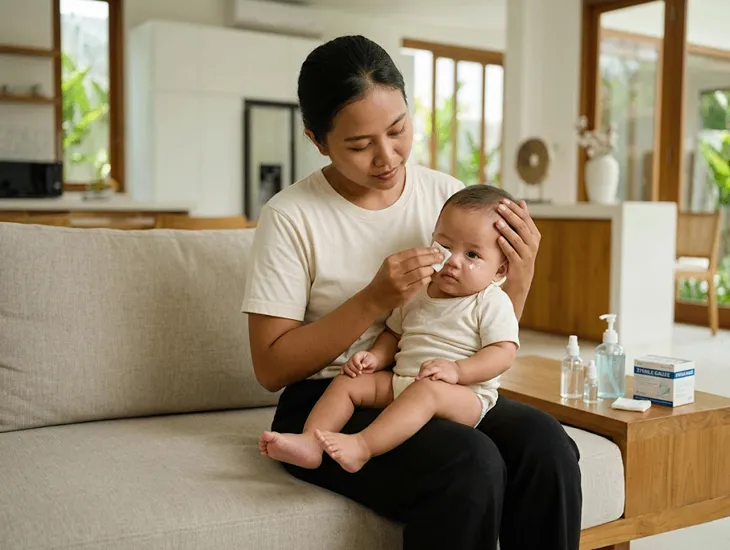
Maintaining clean hands is the first line of defense. Wash your hands thoroughly before touching the infant. Keep the fingernails of the infant very short to prevent scratching.

Cleaning requires a gentle approach using sterile materials. Dampen a soft cotton pad with cooled boiled water. Wipe very gently from the inner corner toward the outside.

Always use a fresh cotton pad for each wipe. Reusing the same pad spreads bacteria back into the tissue. Never apply any physical pressure or scrubbing motions.

Some pediatricians recommend a specific tear duct massage. You must only perform this technique if explicitly instructed by a doctor. It involves gentle downward strokes near the nose.

Reduce exposure to strong perfumes, cigarette smoke, and harsh soaps. These airborne irritants trigger excessive tearing quickly. Flush the area with clean water if an irritant enters directly.

Maintaining these strict cleaning protocols speeds up the healing process. Consistency prevents minor blockages from developing into severe complications. Your careful attention protects their vision perfectly every time.

Urgent Versus Routine Medical Triggers

Parents must seek urgent medical care for specific severe symptoms. Marked redness, significant swelling, or yellow pus are major red flags. Sudden worsening requires an immediate clinic visit.

If the infant seems unusually lethargic or develops a fever, seek help. Poor feeding combined with visual symptoms indicates systemic illness. You must not delay professional medical assessment.

Suspected physical injuries or trapped foreign bodies are strict emergencies. Do not attempt to remove objects trapped deeply inside. Go straight to a pediatric specialist in Indonesia.

Routine assessments are appropriate for mild, lingering symptoms. If Baby Watery Eyes persist beyond several weeks, schedule a checkup. Blocked ducts lasting past twelve months require specialist probing.

Persistent itchiness and seasonal sneezing suggest chronic allergies. A professional caregiver notes these patterns accurately. They relay this vital information to the parents for routine doctor visits.

Following these clear medical triggers prevents unnecessary parental panic. Trusting professional medical advice always yields the best physical outcomes. Immediate action during red flags ensures rapid and full recovery.

Real Story: Navigating Infant Health in Pererenan

Clara wiped dust from her Pererenan villa window, worried about her son’s constantly streaming eyes. The dry season winds constantly blew dirt through the open living room daily.

Her son rubbed his face furiously, leaving angry red streaks across his delicate skin. Clara paced the floor, her heart racing as the redness spread. She desperately needed immediate assistance.

She had recently hired Mia, a trained Babysitter in Bali. Mia arrived and immediately washed her hands thoroughly. She gently intercepted the infant’s hands to stop the frantic scratching.

Mia used sterile water and fresh cotton pads to clean the sticky discharge. She worked carefully from the inner corner outward without applying pressure. She calmly advised Clara to visit a clinic.

The pediatrician diagnosed a simple bacterial infection and prescribed safe drops. Mia administered the medication perfectly on schedule over the next week. The frightening redness and tearing disappeared completely.

Clara finally breathed a sigh of relief as her son smiled again. She returned to her demanding software projects without her previous intense anxiety. The structured hygiene routine restored peace.

How a Babysitter in Bali Ensures Hygiene

Pediatric Hygiene in Indonesia 2026 – Caregiver wiping an infant face with a sterile cloth

Professional caregivers understand the exact causes of visual irritation. They know that rubbing is dangerous and strictly forbidden. They maintain the highest hygiene standards at all times.

They are trained to distract infants from touching their faces. Engaging toys and supervised play keep little hands busy. This proactive strategy prevents corneal scratches effectively.

A trained caregiver follows doctor prescribed care plans perfectly. They administer drops or perform specific massages exactly as directed. Consistency is the key to a fast recovery.

They also manage siblings to prevent cross contamination. Keeping older children away from the affected infant stops the spread. This holistic household management protects everyone.

Observing subtle changes is a critical part of their role. They document any increase in excessive tearing precisely. Parents receive detailed reports at the end of every shift.

This structured approach to hygiene relieves immense stress for parents. Knowing a professional monitors your child allows for focused remote work. Quality childcare directly supports your successful expatriate lifestyle.

Addressing Cultural Care Misunderstandings

Caregivers from different backgrounds often suggest traditional home remedies. Many local communities rely on herbal drops. Indonesia’s Ministry of Health emphasizes that suspected infections require modern clinical treatment.

Using unclean clothes or random eye drops is incredibly dangerous. These unproven methods introduce new bacteria and worsen the condition. You must establish strict medical boundaries clearly.

Some cultures believe breast milk cures all visual infections safely. Experts stress that milk is not enough for bacterial issues. You should only use it after consulting a doctor.

Blocked ducts persisting past one year are not just normal traits. They often require routine ophthalmology review and minor procedures. Do not ignore long term symptoms.

Clear communication with your caregiver prevents these dangerous misunderstandings. Provide written instructions regarding approved medical treatments only. This clarity ensures your infant receives the safest possible care.

Respecting local customs is important but medical safety always comes first. Establishing clear boundaries ensures your child remains fully protected. Professional care aligns perfectly with international pediatric standards.

Screening Caregivers for Medical Awareness

Screening candidates requires specific questions about hygiene and safety. Ask them how they would handle sticky morning discharge. Their answers reveal their practical knowledge and professional training.

A strong candidate explains the inner to outer wiping technique. They emphasize using clean water and avoiding physical pressure. They should immediately mention washing their hands first.

Inquire when they would call you about a health problem. They should identify yellow pus and swelling as strict red flags. Independent medical decisions are entirely unacceptable.

Conducting a trial shift helps you observe their actual hygiene practices. Watch how they manage dirty diapers and hand washing. A Babysitter in Bali must prioritize cleanliness instinctively.

Professional agencies vet their candidates for these exact health protocols. They ensure caregivers understand basic pediatric safety standards. This rigorous screening process protects your expatriate family completely.

Investing time in this detailed screening process prevents future anxiety. Hiring a medically aware professional elevates your entire household routine. Your family thrives under this highly structured and safe care.

FAQs about Baby Watery Eyes​

Q: What is the most common cause of tearing in infants? 

A: Blocked tear ducts are the primary cause, usually resolving naturally by the first birthday.

Q: Why is rubbing the area dangerous for infants? 

A: Rubbing transfers bacteria and can scratch the cornea, leading to severe infections.

Q: Can a Babysitter in Bali clean the discharge safely? 

A: Yes, trained caregivers use sterile water and cotton pads to wipe gently without pressure.

Q: When should I seek urgent medical care? 

A: Seek immediate help for marked redness, yellow pus, swelling, or if the infant has a fever.

Q: Are herbal home remedies safe for infant infections? 

A: No, unapproved herbal drops introduce bacteria. Always consult a pediatrician for treatments.

Q: How long do blocked ducts typically last?

A: Most resolve within six to twelve months, but persistent cases require a specialist review.

Need help managing your baby’s watery eyes? Chat with our team on WhatsApp now.