
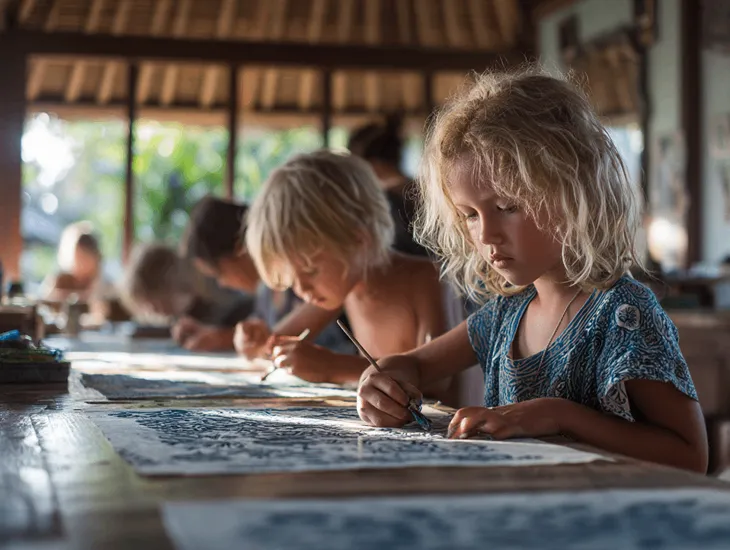
Batik Making Class in Bali: Creating Your Own Traditional Souvenir Fabric with the Family
Traveling families seek indoor activities beyond standard sightseeing tours. Finding hands-on experiences suitable for all ages is often difficult. You want an engaging cultural activity for your children.
Temple visits quickly tire young children who require active participation. Parents struggle to find secure indoor activities during the midday heat. This lack of engagement leads to holiday frustration.
Without professional guidance, you might choose a workshop lacking proper safety protocols. This poor choice results in a stressful experience. You require a structured session for your family.
The island offers numerous guided workshops designed specifically for families. These classes provide a controlled environment for traditional fabric dyeing. Refer to UNESCO Intangible Heritage for context.
Professional instructors safely manage the hot wax and synthetic dyes. Following official cultural guidelines ensures your family enjoys authentic practices. Proper instruction guarantees success during the creative process.
This guide explores the best ways to enjoy these textile workshops. We cover age-appropriate techniques and strict safety precautions. Plan your creative cultural experience with complete confidence today.
Establishing a permanent connection to local heritage enriches your travel itinerary. Children develop a deeper respect for artisan skills through direct participation. It is a productive way to spend an afternoon.
Table of Contents
What to Expect from This Creative Activity in Bali
These workshops provide guided sessions where families learn wax-resist dyeing on cotton. Participants usually create a small piece of fabric or a tote bag. It forms a practical souvenir.
Classes typically last between two and three hours depending on the chosen design. The standard format includes a lecture on tools, hot wax, and dyeing. It offers a structured process.
The instructor guides you through each step, from sketching to boiling the fabric. You do not need any prior artistic experience to participate. The focus remains on the traditional process.
Instructors provide all necessary templates for beginners to trace easily. You can select traditional motifs or draw your own custom shapes. This flexibility ensures everyone creates a completely unique piece.
Artisans often demonstrate the speed and precision required for professional textile production. Watching these experts work provides inspiration for your own project. It is an impressive display of manual skill.
The Cultural Significance of the Wax-Resist Technique
UNESCO recognizes this textile art as an intangible cultural heritage of Indonesia. Classes begin with a short introduction to various pattern histories. This provides valuable educational context.
Learning about the meaning behind different motifs helps children appreciate local traditions. They learn that the colorful fabric tells a unique story. It creates a respectful cultural exchange.
By participating in a workshop, your family directly supports local artisans. It promotes a sustainable tourism practice that benefits the local economy. Your souvenir carries genuine cultural value.
Understanding these dyeing techniques provides deep insight into Indonesian history. Royalty traditionally reserved many specific patterns during ceremonies. This knowledge adds profound meaning to your creative holiday.
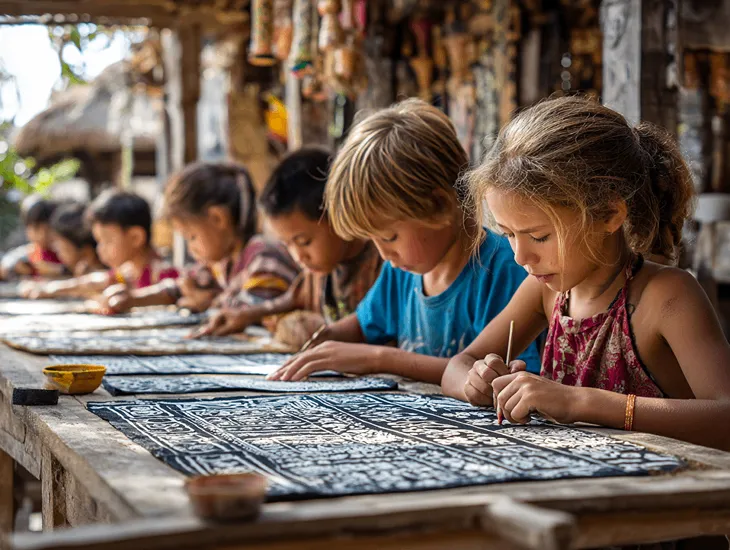
Safety Protocols for Managing Hot Wax and Dyes
Instructors heat the wax between sixty and ninety degrees Celsius. They provide close supervision when children use the canting tool. Safety remains the primary focus of the studio.
Common safety practices include keeping younger participants away from the main wax-pot. Instructors assist children directly when applying wax to ensure no splashes occur. This prevents accidental burns.
Studios handle the dyeing process in a controlled environment using safe synthetic dyes. Guides advise participants to wear old clothing to avoid stains. Proper studio management ensures a clean experience.
Studios maintain clear walkways to prevent tripping near the heated materials. First-aid kits remain available on-site for immediate response. These protocols guarantee a secure environment for all guests.
Ventilation systems ensure that the fumes from the melting wax do not cause discomfort. Airflow is strictly managed to maintain a healthy workspace. Professional standards are visible in every studio.
Pricing and Standard Package Inclusions
Group classes in artisan hubs like Ubud often cost between IDR 600,000 and IDR 800,000 per person. Packages usually include fabric, tools, dyes, and instructor guidance. It presents an affordable activity.
Private or luxury workshops can charge from IDR 2,000,000 upwards for a personalized experience. These premium sessions often include hotel transport and a larger fabric piece. They offer more comfort.
The government does not set standardized pricing for these local cultural workshops. Fees vary based on the operator, the location, and the specific materials used. Always confirm inclusions before finalizing your booking.
Booking during the off-peak season sometimes yields lower rates. Many studios offer group discounts for parties of five or more participants. Proper financial planning optimizes your holiday budget.
Some packages also include a light snack and traditional herbal tea. These small additions improve the overall hospitality experience for families. Confirm these details during the reservation process.
Real Story: Selena’s Creative Afternoon in Ubud, Bali
Selena (35, Germany) lived in Pererenan and required an indoor cultural activity for her daughter. She found that the midday heat made outdoor temple visits physically exhausting. She sought a controlled workshop environment.
Managing a child’s attention span during long historical tours posed a challenge. Selena stopped booking outdoor sightseeing tours and traveled to a studio in Ubud. She needed a verified safety strategy.
Selena hired a specialized travel childcare assistant from the Sitter in Bali to coordinate the fabric design. This decision allowed her to focus on her own complex pattern while the assistant managed the hot wax safety.
Selena completed her complex pattern while the assistant managed the child. The session produced two completed fabrics without parental anxiety. It provided an organized and highly productive day.
The assistant also helped with the final drying process and packaging. This extra support meant Clara could leave the studio without carrying wet items. It was an efficient and secure afternoon.
Age-Appropriate Fabric Design for Young Children
These workshops suit children aged six and older who can follow instructions. They need the attention span required for the waxing stages. Older children handle the complex tools easily.
Parents often choose to let younger kids add simple dots to a shared design. This co-creation keeps toddlers involved without the risk of handling hot wax. It forms a collaborative effort.
Some studios offer simplified sessions for younger children upon explicit request. Always communicate the ages of your children when booking to ensure proper accommodation. Proper planning prevents holiday frustration.
Teens can experiment with advanced shading techniques using the traditional canting. They can create intricate borders that require steady hands. This provides a satisfying challenge for older participants.
Simplifying the patterns reduces the physical strain on younger wrists. Large, open shapes are easier to fill with color during the dyeing stage. This ensures a proud moment of accomplishment.
Choosing Between Private and Group Workshops
Group sessions present an excellent way to meet other traveling families. However, the instructor divides their attention among multiple participants. This requires parents to monitor their children actively.
Private family-only sessions allow the instructor to focus on your specific group needs. This enables parents and children to coordinate their designs into a matching set. It provides a relaxed environment.
Private workshops benefit families with younger children requiring constant supervision. The dedicated instructor can adapt the process to suit shorter attention spans. This flexibility ensures a positive outcome.
Reviewing the studio portfolio helps parents choose the right instructional format. Some venues specialize exclusively in large corporate events. Selecting a family-focused studio prevents scheduling conflicts.
Small group sizes allow for deeper conversations with the artisan instructors. You can ask detailed questions about the plant sources for natural dyes. It enriches the cultural learning experience.
Practical Tips for a Successful Family Craft Day
Wear comfortable, closed-toe shoes to protect your feet from any accidental studio drips. Long-sleeve shirts offer an extra layer of protection but remain optional. Practical clothing is essential here.
Bring a small bottle of water for each participating family member. Studios become warm near the actively heated wax pots. Staying hydrated keeps children focused during the two-hour session.
Take photographs of each stage to document your family’s creative journey. The transformation from a pencil sketch to a dyed pattern looks visually clear. These photos provide excellent holiday memories.
Plan a quiet meal immediately following the workshop session. The intense focus required for dyeing often leaves children hungry. A planned lunch ensures a smooth transition afterward.
Ensure your phone battery is charged to capture the final boiling process. Watching the wax melt away to reveal the white lines is fascinating. It is the highlight of the day.
FAQs about Batik Making Class for Family in Bali
Q: Is it safe for children to use hot wax?
A: Instructors provide strict supervision and assist kids directly with the canting tool.
Q: How long does a typical class last?
A: Most standard workshops last between two and three hours from start to finish.
Q: Do we get to keep the fabric?
A: Yes, participants take home their finished fabric or tote bag at the end.
Q: Can toddlers participate?
A: It is difficult for toddlers; they usually co-create a piece with a parent.
Q: What should we wear to the class?
A: Wear old clothing that you do not mind getting stained and closed-toe shoes.
Q: Do we need artistic skills?
A: No prior experience is required. Instructors provide templates and step-by-step guidance.
Q: Are natural dyes available?
A: Some specialized workshops offer natural indigo and plant dyes upon request.
Q: Do we need to book in advance?
A: Yes, advance booking is recommended to prepare materials and instructor time.

