
Review Us
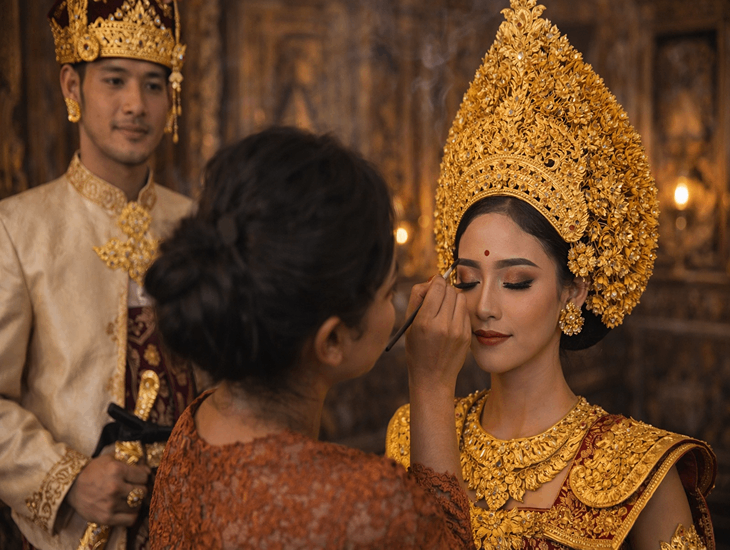
Makeup Traditions in Bali 2026 – Balinese bride with gold headpiece and traditional makeup during a ceremony in Ubud
admin_n

Beyond the Dress: Sacred Makeup Traditions in Bali

Visitors often see the splendor of ceremonies in Indonesia but miss the profound meaning behind the painted faces. The intricate lines and bold colors are not just for show; they carry deep spiritual weight that outsiders rarely comprehend. This visual language communicates status, spiritual readiness, and protection against unseen forces during sacred rituals.

Misunderstanding these visual codes can lead to a superficial appreciation of the culture, reducing sacred rites to mere photo opportunities. You might feel like a spectator looking at a costume rather than witnessing a living prayer etched onto the skin. Without context, the beauty of these rituals remains a mystery to the untrained eye.

Understanding Makeup Traditions in Bali transforms your experience from passive viewing to deep cultural connection. This guide decodes the symbols, from the bridal Payas Agung to the dancer’s third eye, helping you see the spiritual intent behind the beauty. You will learn to read the stories written on the faces of the people around you.

From Payas Alit to Payas Agung

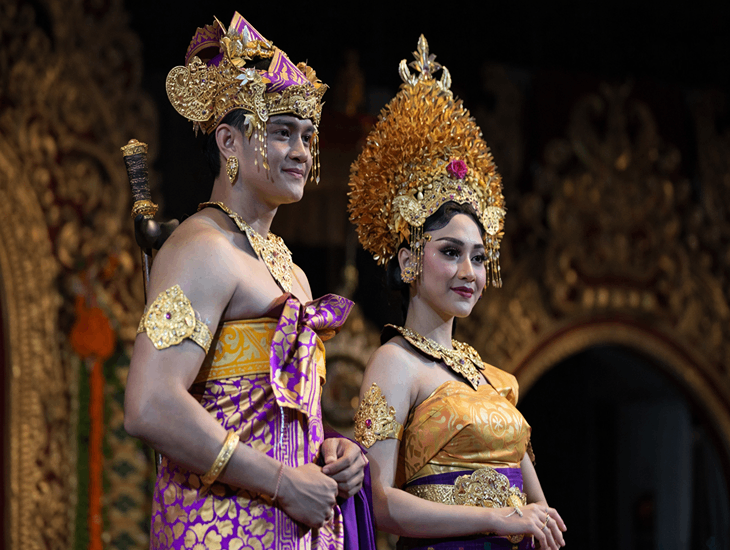
Payas Agung Balinese bridal makeup with srinata forehead detail and gold crown in temple ceremony

In the local culture, “payas” refers to the complete dress code and makeup style required for a specific ceremony. Payas Alit is the simplest form, used for daily prayers or visiting the village temple. It involves modest attire and minimal makeup, focusing on cleanliness and respect rather than ornamentation.

Payas Agung sits at the other end of the spectrum, representing the highest level of luxury and spiritual significance. This elaborate style is reserved for weddings, tooth-filing ceremonies, and other major rites of passage. It transforms the wearer into a king or queen for the day, elevating their status in both the human and divine realms.

The face is deliberately reshaped during the application of Payas Agung to create a flawless, almost mask-like appearance. A defining feature is the srinata, a symmetric curve painted on the forehead to frame the face. This works in harmony with the towering gold crown to symbolize Mount Agung and overflowing abundance.
Bridal Makeup as Cultural Wisdom

Studies on bridal aesthetics describe Makeup Traditions in Bali as a form of preserved cultural wisdom. The classic bridal look emphasizes a foundation shade that is often lighter than the natural skin tone to suggest purity and refinement. This base provides a blank canvas for the bold features that define the traditional aesthetic.

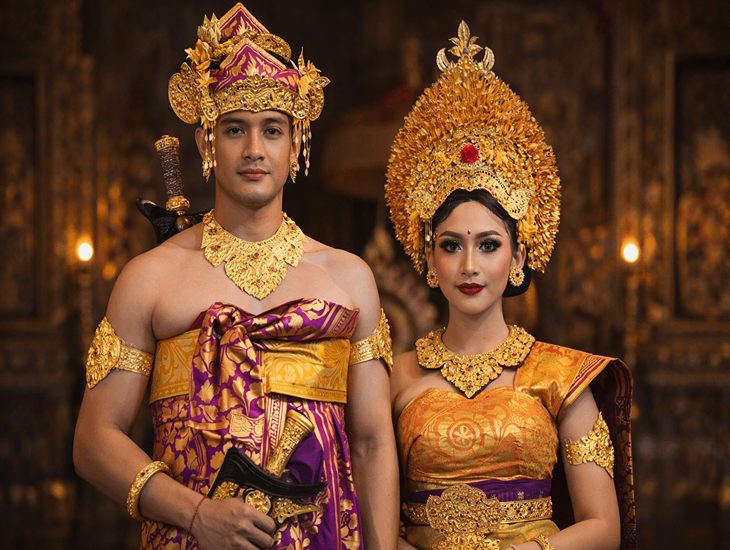
The eyes and eyebrows are elongated with black liner to create a gaze that is both sharp and commanding. Bold blush is applied to the cheeks, and the lips are painted in deep red or crimson hues. These elements combine to project vitality, fertility, and the readiness of the couple to enter a new phase of life.

While modern products are now used, the underlying rules of proportion and symbolism remain strictly traditional. The makeup turns the bride and groom into representations of divine figures, embodying prosperity for their future family. It is a visual blessing that the community witnesses and acknowledges during the ceremony.

Dance Makeup and the Third Eye

Traditional dance makeup was developed to ensure facial expressions remained readable from a great distance. Dancers use thick foundation and heavy contouring to sculpt the face under the harsh stage lights or sunlight. Bright eyeshadows and extended eyeliner dramatize the eyes, allowing the audience to follow every subtle movement.

Eyebrows are often drawn higher than the natural brow line to enlarge the eye area and enhance expressiveness. This exaggeration is necessary for the silent storytelling that defines Balinese dance forms. Every line is calculated to amplify the character’s emotion, whether it is a refined hero or a chaotic demon.

A key sacred element in this style is the white dot placed between the eyebrows, known as the cundang. Historically made from powdered limestone, this “third eye” is believed to give dancers clearer spiritual vision. It acts as a protective talisman against negative energy or black magic from the audience during the performance.

Beauty Rituals Before the Makeup

Before a major ceremony, women often undergo purification rituals that focus on the body and skin. These treatments, such as flower baths or lulur scrubs, are acts of spiritual cleansing rather than mere vanity. The goal is to purify the physical vessel so it is worthy of the sacred attire it will wear.

Traditional herbal scrubs using rice powder, turmeric, and sandalwood are applied to soften and brighten the skin. This prepares the canvas for the heavy makeup that will follow, ensuring it sits on a radiant base. These practices are rooted in the philosophy of Tri Hita Karana, seeking harmony with nature and the divine.

Massages with aromatic oils are also common, helping to calm the mind before the intensity of the event. A calm spirit is considered essential for true beauty to shine through the layers of paint and powder. Makeup Traditions in Bali always begin with this internal and external purification.

Modern Adaptations of Tradition in Bali

Contemporary practitioners preserve the core codes of the past while adapting to the availability of modern cosmetics. The ideal of pale, flawless skin is now achieved with high-definition foundations rather than traditional rice powders. However, the symbolic meanings behind the colors and shapes remain unchanged.

Forehead marks and the reshaping of the hairline are still practiced with rigorous attention to detail. These elements connect the current generation to their ancestors, creating a sense of continuity through time. The aesthetic evolves, but the spiritual syntax of the makeup remains intelligible to the community.

For the modern Balinese woman, wearing this makeup is a declaration of cultural identity in a globalized world. It serves as a reminder of her role within the village structure and her obligations to the gods. The mirror reflects not just a modern face, but a lineage of tradition that spans centuries.

Real Story: The Galungan Transformation

Balinese Bridal Makeup 2026 – Groom and bride in traditional attire with distinct eyeliner and srinata markings

Amara stood in her Penestanan rental, staring at her camera bag and then at her toddler, who was currently covered in crackers. She was ten minutes away from her first Galungan temple ceremony, an invitation she didn’t want to ruin. But as she looked at her simple Western makeup and messy hair, she felt a surge of panic.

The village was already alive with the sound of gamelan, and she felt completely “undone” and disrespectful. She realized she couldn’t get ready and wrangle her son at the same time without arriving late and frazzled. That is when she utilized Bali Nanny & Care to watch him for the morning so she could focus.

With her hands free, she visited a local salon where the women dressed her in a kebaya and applied a modest version of the traditional makeup. Walking into the temple, she felt not like an outsider, but a respectful participant, blending into the sea of colors. The effort she put into her appearance was her way of honoring the invitation.

The Role of Makeup in Ceremonies

Makeup in this context serves as a uniform for the soul during religious activities. It distinguishes the human participants from the demonic forces that are often the subject of the rituals. By beautifying the physical form, the community invites divine presence and favor into the ceremonial space.

Specific rites, such as the tooth filing ceremony, require distinct makeup looks that signify a transition from animalistic nature to human maturity. The makeup softens the features, symbolizing the smoothing of sharp canine teeth and the taming of inner vices. It is a visual representation of the internal spiritual change occurring during the rite.

The application process itself can be meditative, a time for the wearer to mentally prepare for the long hours of prayer. It acts as a barrier, separating the sacred time of the ceremony from the mundane tasks of daily life. In this way, the makeup is functional, spiritual, and social all at once.

Respectful Observation for Visitors in Indonesia

Visitors should appreciate these traditions without treating the participants as mere exhibits. It is important to ask for permission before taking close-up photographs of people in prayer or makeup. The intense focus of the participants deserves respect and space, especially during the holiest moments of the ritual.

Tourists should generally avoid wearing ceremonial makeup unless they are explicitly invited to do so by a local host. Appropriating these sacred symbols for fashion can be seen as disrespectful to the spiritual beliefs they represent. Appreciation is best shown through quiet observation and adherence to the modest dress code of the temple.

Understanding the effort and meaning behind the appearance enhances your respect for the culture. When you see a procession, you recognize the hours of preparation that went into every detail. This awareness fosters a deeper connection to the .

FAQs about Makeup Traditions in Bali​

Q: What is the white dot on the forehead? 

A: It represents the third eye, symbolizing spiritual clarity and focus during dance or prayer.

Q: Can tourists wear traditional makeup? 

A: Only if you are invited to participate in a ceremony or a specific cultural photoshoot.

Q: What is Payas Agung? 

A: It is the most elaborate level of traditional dress and makeup, reserved for royalty and weddings.

Q: Do men wear makeup in ceremonies? 

A: Yes, grooms and male dancers wear specific makeup styles to define their features.

Q: Is the traditional makeup waterproof? 

A: Modern adaptations use long-wear and waterproof products to withstand the tropical humidity.

Need help exploring Makeup Traditions in Bali, Chat with our team on WhatsApp now!