
Choosing Bali Kiddy School for Bilingual Learning in Bali 2026
Bali parents often first meet Bali Kiddy School through a friend’s recommendation or an online listing, then cross-check details with the official Bali Kiddy School profile. For 2026, many families are asking if a national-plus route is enough versus going fully international.
As a bilingual “national plus” school, Bali Kiddy School mixes Indonesia’s curriculum with Singapore-style Maths, English and Science. For many Denpasar and Kerobokan families, that blend feels like a middle road: more English and rigour than local TK/SD, but more affordable than top-tier international schools listed in common Bali school guides.
The Teuku Umar Barat campus location matters too. The main road between Denpasar and Kerobokan can be busy, but it is also practical if you live in central Denpasar, Kerobokan or parts of Canggu. Parents often compare this location with other national-plus and international schools in general Bali education roundups, such as an overview of Bali kindergartens and schools.
By 2026, parents are also more conscious about accreditation and data. Bali Kiddy School appears in official Ministry of Education databases as a recognised school with a clear NPSN, something you can confirm via an Indonesian Ministry of Education school search. That reassures families who may relocate or later shift into Indonesian or overseas systems.
For expat parents, a key question is whether a national-plus school like Bali Kiddy School can support a long-term pathway, from preschool through junior secondary, while keeping fees manageable. This guide walks through type, location, programs, language use, teachers, facilities and admissions so you can decide calmly.
Handled well, a school tour and structured comparison can turn Bali Kiddy School from “one more brochure” into a realistic 2026 option. The rest of this article gives you a parent-friendly lens, so you can ask sharper questions before committing to a multi-year journey.
Table of Contents
-
Why Bali Kiddy School Appeals to Denpasar and Kerobokan Parents
-
How Bali Kiddy School Blends National and Singapore Curricula
-
English Use and Bilingual Learning Culture at Bali Kiddy School
-
Real Story — Choosing Bali Kiddy School Over a Full International
-
Admissions, Fees Feel and Who Bali Kiddy School Really Suits
-
Checklist for Visiting and Evaluating Bali Kiddy School in 2026
-
FAQ’s About Bali Kiddy School for Local and Expat Families ❓
Why Bali Kiddy School Appeals to Denpasar and Kerobokan Parents
For families living between Denpasar and Kerobokan, Bali Kiddy School offers a single campus on Jl. Teuku Umar Barat. That stretch is busy, but it puts school runs within reach of many villa and housing areas.
Parents often compare distance and traffic first. With Bali Kiddy School, the drive from central Denpasar, Kerobokan or west-side Canggu can feel manageable, especially if you share drop-offs with a nanny or driver.
Another appeal is continuity. Bali Kiddy School lets you keep siblings from preschool to junior secondary in one environment. That avoids the stress of moving schools every few years and helps children build long-term friendships.
How Bali Kiddy School Blends National and Singapore Curricula
As a national-plus campus, Bali Kiddy School must follow the Indonesian national curriculum, especially for core national subjects taught in Bahasa Indonesia. This keeps children aligned with local academic standards and future Indonesian options.
On top of that, Bali Kiddy School adopts Singapore-style approaches for English, Maths and Science. Materials and methods aim to be more rigorous than typical local schools, giving students stronger foundations in problem solving and literacy.
For parents, this blend can be a compromise. Bali Kiddy School may not have every feature of elite international schools, but the Singapore-style core subjects plus national compliance give a balanced academic feel for 2026.
Age Range and Class Pathways Offered by Bali Kiddy School
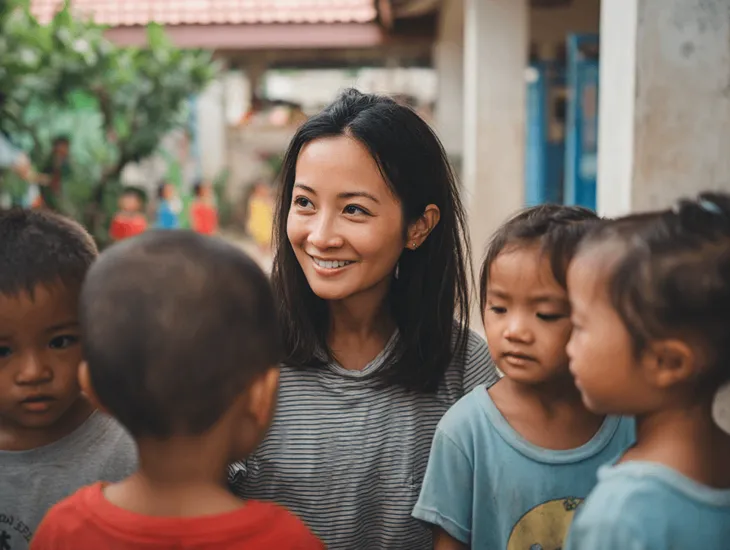
From the first visit, families notice that Bali Kiddy School is not just a preschool. It offers a pathway from Playgroup and Kindergarten through Primary Grades 1–6 and Junior Secondary Grades 7–9, roughly ages 2–15.
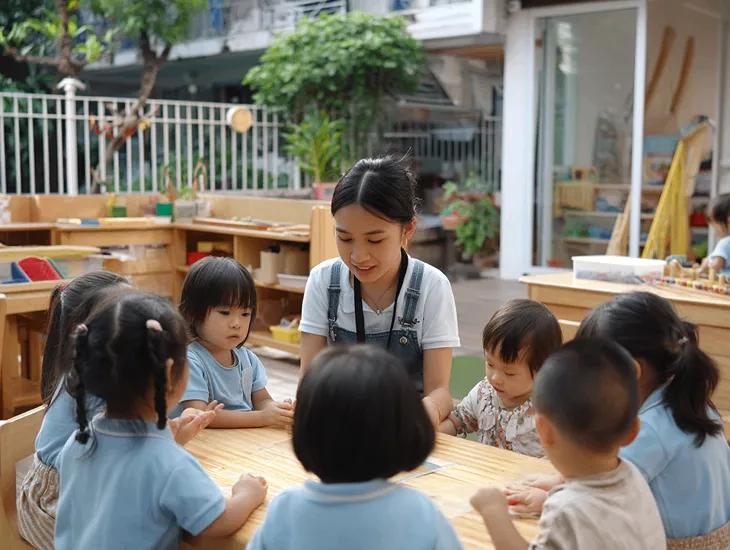
In early years, Bali Kiddy School focused on play-based activities and school readiness. Teachers work on fine and gross motor skills, simple pre-literacy and social routines, which helps children transition gently into more formal learning.
By Primary and Junior Secondary, Bali Kiddy School shifts into a stronger academic structure. Schedules, homework and subject blocks grow more formal, while still aiming to keep class sizes and teacher contact suitable for mid-range fee levels.
English Use and Bilingual Learning Culture at Bali Kiddy School
English is a daily presence at Bali Kiddy School, not only in English class but also in greetings, class instructions and many notices. This helps children hear and use English naturally over time, including those from Indonesian-speaking homes.
At the same time, Bali Kiddy School keeps Bahasa Indonesia central for national subjects and identity. This matters if your child may later join local schools, sit Indonesian exams or plan to live long term in Indonesia.
For mixed families, the bilingual culture at Bali Kiddy School can be a big draw. Children can switch between languages in age-appropriate ways, supported by teachers who intentionally manage code-switching and classroom language.
Real Story — Choosing Bali Kiddy School Over a Full International
When Anya and Ryo moved from Jakarta to Denpasar in 2025, they toured several South Bali schools. Bali Kiddy School was not on their first list; they started with bigger international campuses in Canggu and Sanur.
After seeing fee structures, they realised a full international route for two children would pressure their budget. A friend suggested visiting Bali Kiddy School on Teuku Umar Barat as a national-plus alternative with strong English.
On tour, they saw compact facilities but liked the friendly teachers, English use and clear path to Grade 9. In the end, they chose Bali Kiddy School as a realistic base, planning to reassess international options later for senior high.
Teachers, Facilities and Daily Life at Bali Kiddy School
Teachers at Bali Kiddy School usually hold education degrees and have experience working in bilingual or English-medium settings. Recruitment and training focus on classroom English, classroom management and child-friendly routines.
Facilities at Bali Kiddy School include age-appropriate classrooms, indoor and outdoor play areas, and rooms used for arts, music, sport and extracurricular clubs. Spaces are not huge but are organised to match different age levels.
Daily life at Bali Kiddy School mixes lessons, breaks, circle time, project work and after-school clubs. Parents often comment that their children settle into routines quickly and feel known by staff, an advantage of a single-campus school.
Admissions, Fees Feel and Who Bali Kiddy School Really Suits
When making first contact, Bali Kiddy School admissions usually ask for basic documents like family ID or passports, photos and prior school reports. This helps staff place children in the right level and flag extra support needs.
Fee levels at Bali Kiddy School sit in the mid-range for Bali. They are higher than most purely local TK/SD options but generally lower than full international brands in Canggu, Ubud or Sanur, which appeals to many working families.
In practice, Bali Kiddy School suits parents who want English exposure, a clear pathway to Grade 9 and national curriculum alignment, without committing to the highest-fee international route from the very beginning.
Checklist for Visiting and Evaluating Bali Kiddy School in 2026
Before your tour, write down what you want most from Bali Kiddy School: language balance, class size, discipline style, homework expectations or transition into other systems. Bring this list so you can ask targeted questions.
During the visit, look at how children and teachers interact. At Bali Kiddy School, you should see English being used naturally, with supportive corrections and children feeling safe to speak, not afraid of mistakes.
After the tour, compare Bali Kiddy School with other options in Denpasar and Kerobokan. Consider traffic, timetable, after-school activities and longer-term plans, especially if you think your child may later move to a full international or local SMP/SMA.
FAQ’s About Bali Kiddy School for Local and Expat Families ❓
Q: What type of school is Bali Kiddy School in 2026?
A: Bali Kiddy School is a bilingual national-plus school using the Indonesian curriculum, enriched with Singapore-style Maths, English and Science for extra rigour.
Q: What age range does Bali Kiddy School cover?
A: Bali Kiddy School takes children from about age 2 in Playgroup and Kindergarten through Primary and Junior Secondary, roughly to age 15.
Q: Is Bali Kiddy School suitable for expat children with limited Bahasa?
A: Many mixed and expat families choose Bali Kiddy School. English is widely used, and teachers are used to helping children who are new to Bahasa Indonesia or new to Bali.
Q: How does Bali Kiddy School compare with full international schools?
A: Bali Kiddy School offers stronger English and academics than most local schools but may have fewer international accreditations and facilities than the highest-fee international campuses.
Q: Can a child later move from Bali Kiddy School to another system?
A: Because Bali Kiddy School follows the national curriculum, students can often move into Indonesian schools. With planning and support, some also transition to international schools in Bali or abroad.

