
Ending the "Super-Maid" Myth for Safer Nanny and Maid Roles
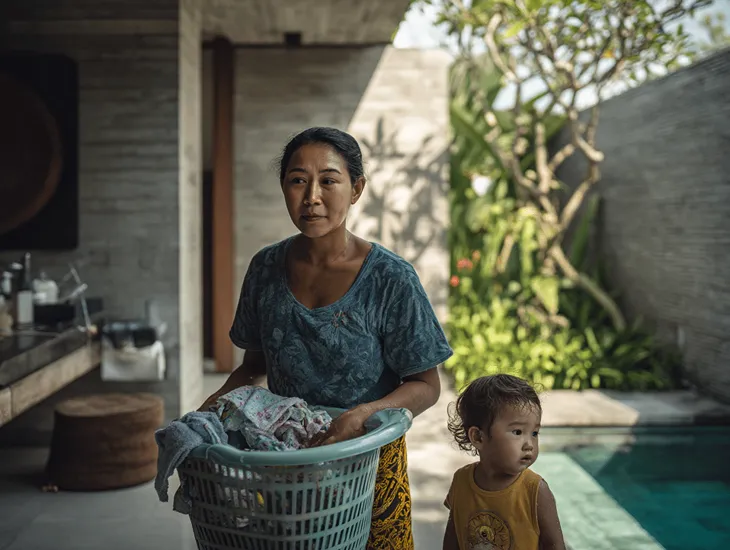
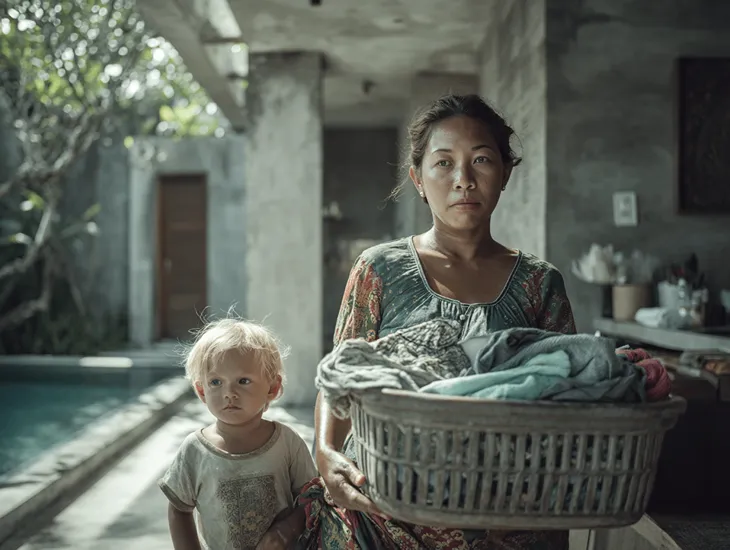
The availability of affordable help is one of the biggest perks of moving to Bali. It’s easy to fall into the trap of believing one person can seamlessly manage a large villa, cook three meals a day, and provide attentive, developmental care for your children.
This “super-maid” expectation is not only unrealistic but dangerous. It places impossible demands on domestic workers, leading to burnout, distraction, and potential safety lapses that could put your children at risk.
The anxiety sets in when you realize your helper is too exhausted from scrubbing floors to watch your toddler by the pool, or that she’s cooking dinner while the baby cries unattended.
The blurred lines between a housekeeper and a caregiver often result in neither job being done safely. Without clear role definitions, parents may inadvertently contribute to a cycle of overwork that is prevalent in the informal labor market, compromising the very safety and peace of mind they sought by moving abroad.
The solution lies in dismantling this myth and adopting a professional, segmented approach to hiring. By separating the roles of housekeeper and caregiver—or setting strict, realistic boundaries for a hybrid role—you ensure that your children receive focused, high-quality care.
This guide provides a roadmap for finding and vetting nannies in Bali who are qualified, rested, and empowered to prioritize your child’s safety above all else.
Table of Contents
The Dangers of the "Super-Maid" Model
The concept of a “super-maid”—a single worker expected to be a cleaner, cook, laundry service, and full-time caregiver 24/7—is deeply problematic. When roles aren’t clearly defined, it leaves workers vulnerable to exhaustion and exploitation.
When one person is tasked with everything, safety is the first casualty. A tired worker cannot react quickly to a choking hazard or a poolside slip.
Relying on one person for everything also risks overlooking basic labor rights. International human rights organizations, such as Human Rights Watch, point out that domestic workers are frequently excluded from formal protections.
By perpetuating this model, expat families risk contributing to a system of abuse. Transitioning to specialized roles, such as dedicated nannies in Bali, respects the worker’s dignity and ensures your children are watched by someone mentally and physically present.
Safe Screening and Vetting Standards in Indonesia
Hiring safely requires more than a casual chat. Authoritative standards for childcare involve a rigorous vetting process. First, verify identity and work authorization. Ensure the candidate has a valid KTP (National ID) and check their history.
Comprehensive background checks, including criminal record searches where possible, are essential for anyone entering your home.
Professional reference checks are non-negotiable. Speak directly to previous employers, preferably other expat families, to ask specific questions about reliability and stress management.
Structured interviews should include scenario-based questions: “What would you do if the baby developed a fever?” or “How do you handle a tantrum?” Finally, prioritize candidates with verifiable First Aid and CPR certification for children. This “safety-first” approach filters out unqualified candidates and sets a professional tone from day one for all nannies in Bali.

Step-by-Step Safer Hiring Process
To find reliable nannies in Bali, follow a structured process. Start by defining the role clearly. Are you looking for a child specialist, a housekeeper, or a cook? If it’s a hybrid role, define the split explicitly (e.g., “childcare from 8 AM to 2 PM, light housekeeping during naptime”).
Write a detailed job description that includes hours, duties, and crucially, what is not expected, such as heavy lifting or night feeds without extra pay.
Next, advertise with your safety criteria front and center. State that references and background checks are mandatory. During the interview, assess their comfort with your specific house rules, such as no screen time for kids or strict pool safety.
A paid trial period of 1-3 days allows you to observe their interaction with your children in real-time. Once satisfied, seal the deal with a written contract. Even if local laws are weak on this, a contract protects both parties by clarifying expectations around salary and time off.
Household Safety Protocols and Risk Areas
Safety protocols are the backbone of a secure home. For nannies in Bali, emergency readiness is key. Ensure your helper has a list of emergency contacts in both English and Bahasa Indonesia, including the nearest hospital and police station. Verify their First Aid skills periodically to ensure they remain fresh and applicable.
Establish clear supervision ratios. One person cannot safely watch three children under five while cooking dinner. If you have multiple young children, consider hiring additional help for domestic tasks.
Transport safety is another critical area; never ask a caregiver to drive your children on a scooter without a valid license and appropriate helmets. Finally, respect their need for rest. A live-in worker is not a robot; they need uninterrupted sleep and a weekly day off to recharge.
Age-Appropriate Expectations for Children
Assigning age-appropriate chores builds independence and relieves the pressure on your staff. Toddlers (2-3 years) can help tidy toys or put clothes in a hamper. Preschoolers (4-5 years) can set the table or match socks. School-age children (6-11 years) should be handling their own school bags, watering plants, and helping with simple meal prep.
Older kids (12+) can take on more significant tasks like cleaning their rooms or helping wash the car. By clarifying these roles, you ensure that the caregiver’s focus remains on supervision and safety, not cleaning up after capable children. This balance teaches responsibility to your kids while allowing nannies in Bali to focus on their primary job: caregiving.
Cultural Misunderstandings in Bali
Navigating cultural nuances is vital for a harmonious household. A common misunderstanding is the “live-in equals family” rhetoric. While warmth is encouraged, this mindset often masks exploitation, leading to 24/7 availability expectations. Treat your live-in staff as professionals with defined working hours and privacy.
Communication styles also differ. Indonesian culture often values indirectness and harmony, meaning a worker might say “yes” to a task she doesn’t understand or feels uncomfortable doing. Encourage open, honest feedback and create a safe space for her to voice concerns.
Discuss discipline explicitly; explain your stance on physical punishment (strictly forbidden) versus positive reinforcement to align her methods with your parenting philosophy for all nannies in Bali.
Real Story: The Heart-Stopping Wake-Up Call
The kitchen was starting to look spotless, the way Maya liked it, but the silence from the garden was what finally made her blood run cold. She dropped her laptop and ran toward the terrace just as her two-year-old reached the edge of the unfenced pool.
Ibu Wayan was inside, scrubbing the stovetop, trying to keep up with the impossible “Super-Maid” checklist Maya had set. In that one terrifying second, Maya realized that a clean kitchen wasn’t worth a child’s life.
Maya, a freelance consultant from Canada living in Pererenan, had hired Wayan to “do it all.” She thought she was being efficient, but she had actually created a recipe for disaster. After pulling her daughter away from the water, she sat down with Wayan.
They were both shaking. Maya realized she had set Wayan up for failure by demanding she be in two places at once.
She immediately restructured the household. She hired a part-time cleaner for the heavy villa maintenance and redefined Wayan’s role strictly as a caregiver. When Maya used a professional agency to facilitate the new contract, the change was instant.
Wayan was happier and more engaged, and Maya could finally work without the nagging fear that silence meant danger.
Fees and Salary Expectations for Childcare
While there is no fixed government tariff for private nannies in Bali, market rates provide a guideline. In 2026, a full-time live-out caregiver typically earns between IDR 3,500,000 and IDR 6,000,000 per month, depending on experience and English proficiency. Specialized staff or those with nursing backgrounds command higher fees, often IDR 7,000,000+.
Agency fees reflect the intensive vetting process. Expect to pay a placement fee, often equivalent to one month’s salary, for the security of background checks and verified references.
While freelance options on social media are cheaper, the risk of unverified candidates is higher. Investing in a reputable agency or paying a fair, above-market wage directly supports ethical labor practices and secures better care for your children.
FAQs about Hiring Nannies
Q: Is it legal to hire a worker without a contract in Indonesia?
A: While common in the informal sector, it is risky. A written contract protects both parties by clearly defining duties, salary, and termination notice, reducing the chance of disputes.
Q: Do I need to pay a 13th-month salary (THR)?
A: Yes, THR (Religious Holiday Allowance) is a mandatory customary bonus in Indonesia, usually paid before the employee’s major religious holiday (Eid al-Fitr or Galungan).
Q: Can I ask my nanny to clean the whole villa?
A: If she is hired as a nanny-housekeeper, yes, but her primary focus must be the children. Heavy deep cleaning should be outsourced to prevent unsafe multitasking.
Q: What if my nanny doesn’t speak English well?
A: Communication is key for safety. If her English is limited, consider paying for language lessons or using translation apps for critical instructions like medication dosages.
Q: How many hours should a live-in worker be on duty?
A: A worker is not a 24-hour servant. Standard practice is 8-10 hours of active work per day, with adequate breaks and at least one full day off per week.
Q: Should I provide food for my staff?
A: Yes, it is standard to provide meals or a food allowance for both live-in and full-time live-out staff to ensure they are well-nourished and energized.

