
Exploring Goa Gajah Cave, Ubud: A Historical Excursion for Families
Visiting traditional temples in Indonesia often feels unengaging for children. Standard tours lack the active participation required to hold their attention. This leads to disengagement during cultural excursions.
Parents struggle to find archaeological sites that offer a safe balance of history. Many venues are crowded or physically demanding for toddlers. These hurdles prevent families from enjoying heritage.
Disengaged children often become restless in quiet religious spaces. This creates tension for parents who want to respect local customs. Disagreements can ruin a successful family outing.
Organizing a family adventure Goa Gajah in Bali provides a manageable and exciting solution. This 9th-century cave temple offers narrow passages and jungle gardens. It allows kids to explore history actively.
Strategic planning ensures a safe excursion. A visit to the elephant cave offers history and fun for everyone. Following professional childcare standards helps parents select secure environments.
Ancient builders carved the temple directly into the rocky hillside. It served as a spiritual sanctuary for Hindu and Buddhist practitioners. This variety ensures an organized family outing.
Table of Contents
Historical Origins of the Temple Site in Bali
Goa Gajah dates back to the ninth century. It is a significant archaeological site located southeast of Ubud. The location combines historical shrines with lush natural landscapes.
Ancient builders carved the temple directly into the rocky hillside. It served as a spiritual sanctuary for Hindu and Buddhist practitioners. The site features various stone relics and ancient bathing pools.
The name translates to Elephant Cave in English. This refers to the dramatic carvings found at the entrance of the dark passage. It is one of the most unique landmarks in Indonesia.
Scholars discovered the site in the early twentieth century. Restorations have preserved the intricate carvings and structures for modern visitors. Exploring these ruins provides a deep look into the past.
Entrance Fees and Mandatory Attire
Entrance fees are approximately 50,000 IDR for foreign adults. Children under twelve pay half price at 25,000 IDR. Parking costs 5,000 IDR for cars at the main gate.
Every visitor must wear a traditional sarong and sash. These items are provided for free at the ticket booth. Covering your legs is a mandatory sign of respect at temples.
Ensure your shoulders are also covered before you enter the sacred grounds. Staff members are available to assist with tying your sarong correctly. Dress codes are strictly enforced.
Tickets are only available for purchase at the entrance. There is no requirement for online booking before your visit. Arriving with small bills of local currency ensures a fast transaction.
Safety Tips for Cave Navigation
The main cave entrance features a dramatic stone carving. The passage inside is narrow and remains dimly lit throughout the day. Visitors must walk single file to navigate the interior safely.
The ground inside can be slippery due to high humidity. Hold your children’s hands firmly as you explore the small chambers. Use a phone light to see the floor clearly.
Watch your head when entering the smaller side alcoves. The ceilings are low and stone surfaces are often uneven. Move slowly to avoid accidental trips.
Stay close together as a group inside the dark areas. Some children might feel nervous in tight spaces. Reassure them that the cave is only fifteen meters deep and secure.
Discovering the Lush Jungle Grounds
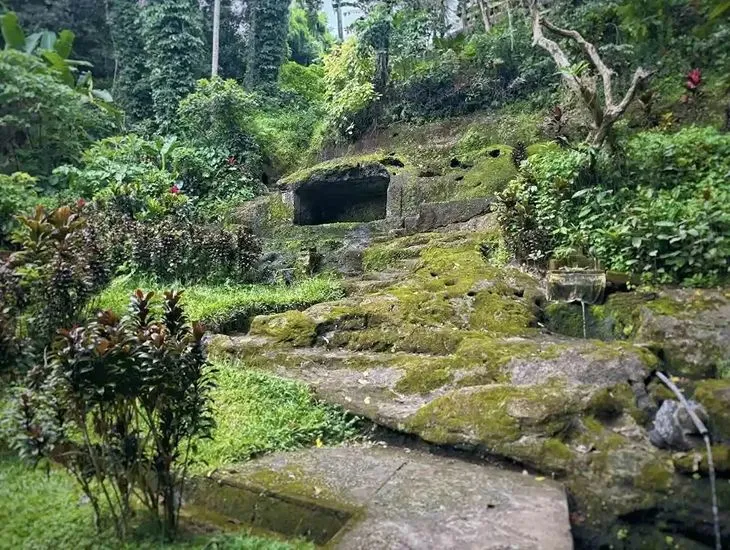
Beyond the cave lie shaded gardens and tropical streams. Stone paths lead to ancient bathing pools and moss-covered shrines. These areas provide a cool retreat from the intense heat.
The grounds feature various steps that descend into a small valley. Waterfalls and exotic plants create an environment for children to observe. It feels like a hidden world in the jungle.
Bridges cross over small creeks where kids can see local wildlife. The sound of running water adds to the tranquil atmosphere. Exploring these paths is an organized way to exercise.
Rest in the shaded pavilions located throughout the gardens. These structures offer a spot for children to rehydrate. Taking regular breaks ensures that the family remains energized.
Age Suitability for Family Adventure
School-age children find the demon-mask carvings fascinating. The cave feels like a mini-adventure for young explorers. It is an organized way to introduce children to history.
Toddlers can enjoy the open garden spaces and fish ponds. Paths are generally safe for walking under close adult supervision. Avoid bringing large strollers as the steps are steep and narrow.
Teens will appreciate the historical context and photography opportunities. Ancient carvings provide a background for high-quality shots. Everyone can find something interesting at this site.
Supervised sensory exploration helps children connect with the environment. Let them touch the cool stone walls and listen to the birds. This engagement makes the family adventure Goa Gajah in Bali memorable.
Real Story: Takashi’s Discovery in Ubud, Bali
Hana (38, Japan) lived in Pererenan and required an active outdoor activity for her son, Takashi. She found that typical museum visits failed to hold his interest. She sought a family adventure Goa Gajah in Bali.
Managing an active child during temple tours was a challenge. Hana hired a specialized travel childcare assistant from the Sitter in Bali network. The assistant provided physical support on the steep steps.
This professional assistance allowed Hana to focus on the historical details. Kenji enjoyed the cool dark cave interior. The sound of the traffic was distant as they explored the jungle stream.
Takashi found a stone carving of a fish near the pools. This discovery turned the outing into an organized and successful excursion. They completed the half-day trip safely and comfortably.
Cultural Conduct for Young Visitors
Respectful behavior is mandatory at this sacred temple site. Children should avoid climbing on the ancient stone statues. Explain the importance of the location before your group arrives.
Keep noise levels low when near the active prayer areas. Many locals visit the site to perform traditional ceremonies. Quiet observation shows respect for the spiritual customs.
Avoid touching the sacred objects located inside the cave alcoves. These items are part of active religious practice for the community. Following these rules ensures an organized visit for everyone.
Teach your children to say thank you to the temple attendants. Small gestures of kindness are highly valued in the local culture. It is a way to model good etiquette during travel.
Travel Logistics and Optimal Timing
Arrive at eight in the morning to avoid the heat. The site is a fifteen-minute drive from central Ubud. Efficient logistics ensure a successful outing in the lush jungle region.
Morning light provides the best conditions for taking photos of the entrance. Crowds are smaller during the early hours. You can explore the grounds at a relaxed pace.
The visit typically takes ninety minutes to complete. Plan to visit a nearby cafe for lunch after your exploration. This creates an organized half-day trip for your family.
Taxis and private drivers are readily available for transport back to town. Ensure you have a clear agreement on the return price before you depart. Proper planning makes the journey stress-free.
FAQs about Family Adventure Goa Gajah in Bali
Q: Is the cave safe for toddlers?
A: Yes. Hold their hands inside the cave and near the steep stairs for safety.
Q: Are sarongs included in the fee?
A: Yes. Sarong rentals are provided for free with your entry ticket.
Q: Is there a dress code?
A: Yes. Cover your shoulders and wear the provided sarong to enter the temple grounds.
Q: How long is the visit?
A: Most families spend ninety minutes exploring the cave and the jungle gardens.
Q: Are there monkeys at the site?
A: No. This temple has minimal monkey activity compared to other forests.
Q: Do we need to book?
A: No. You can buy tickets directly at the entrance for your family adventure Goa Gajah in Bali.

