
Family-Friendly Cooking Classes in Bali: Fun, Flavorful, and Educational
Finding engaging daytime activities for children is often a difficult struggle. Many parents want rich cultural experiences that entertain active young minds. Repetitive beach visits often fail to engage energetic toddlers today.
Keeping kids entertained indoors usually involves too much unmonitored screen time. This leads to disengagement for parents seeking highly productive family activities. You might worry about finding educational yet fun local events.
Exploring local cuisine with children often feels incredibly stressful in restaurants. Picky eaters might immediately reject unfamiliar dishes served at dinner times. This hesitation makes dining out a tense experience for everyone.
Organizing a session of Cooking Classes in Bali provides an active solution. Check official family activities in Indonesia to carefully plan your itinerary. Families bond while learning about unique culinary traditions together.
This hands-on environment allows children to touch and smell fresh ingredients. Parents finally enjoy an authentic cultural activity with their young kids. It is a fantastic way to build valuable practical life skills.
Table of Contents
Concept of Culinary Experiences for Families
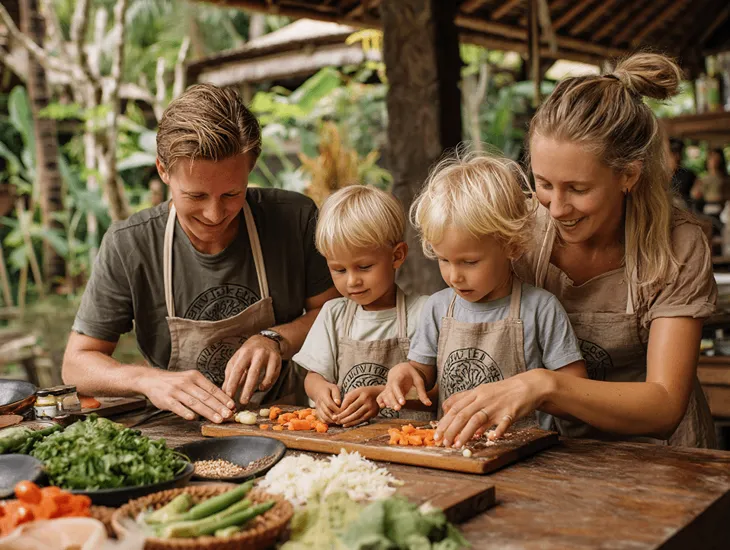
Culinary sessions offer wonderful half-day educational experiences for travelers and expats. Parents and children cook together under professional local chef guidance. They learn traditional recipes using English as the primary instruction language.
These structured sessions often start with a very vibrant market tour. Families explore local stalls to identify fresh regional spices and produce. This interactive introduction builds great excitement before the cooking actually begins.
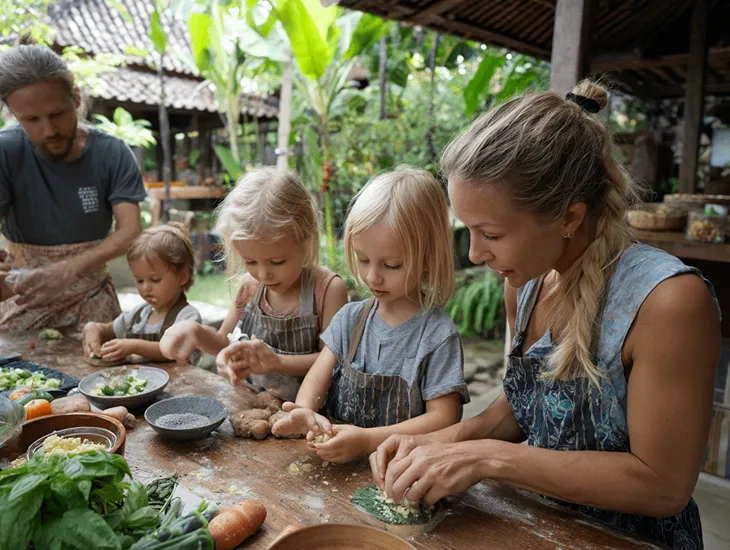
Hands-on preparation includes chopping fresh vegetables and grinding aromatic local spices. Children enjoy mashing ingredients manually with a traditional mortar and pestle. The fun session concludes warmly with a shared family meal.
Instructors teach guests how to make authentic dishes like Sate Lilit. Families discover the secrets behind making the perfect local peanut sauce. This immersive approach makes the local culture highly accessible and fun.
Typical Age Limits for Children
Resort culinary schools often cater directly to children aged eight upwards. These structured environments offer separate age-based pricing for younger hotel guests. Primary school students handle basic culinary tasks with adequate adult supervision.
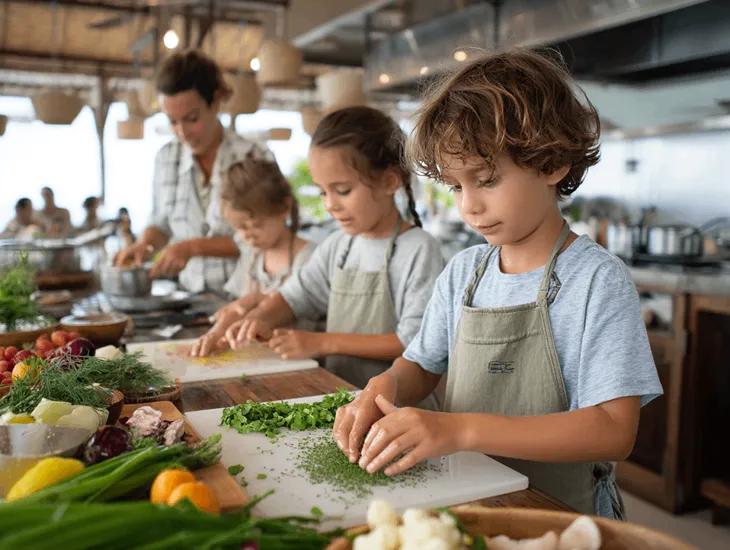
Dedicated kids-only sessions target young children between four and twelve years. These specialized programs focus on simple baking and fun food decoration. Children take home personalized recipe cards after the fun session concludes.
General family-oriented sessions eagerly welcome both adults and younger children together. Younger kids manage easier kitchen tasks like stirring and decorating plates. Older teenagers safely handle complex preparation like grilling and sharp chopping.
There is no official government regulation regarding minimum participation ages locally. Each culinary school sets internal guidelines based on available kitchen equipment. Parents must verify these specific age restrictions before booking any tickets.
Pricing and Fees for Family Sessions
Luxury resort sessions often cost around IDR *750,000 per single person. Many upscale venues offer significant pricing discounts for children under twelve. These premium hospitality options usually require a minimum of two participants.
Private home-style sessions provide a much more intimate family cooking experience. Prices for private sessions range broadly from IDR *650,000 to *1,000,000. These specific rates often decrease slightly for larger groups of five.
Standard booking platforms list many affordable options starting at fifty dollars. Children often join these smaller local classes at no extra cost. Always check the official website for current seasonal family package rates.
High-end packages frequently include complimentary hotel transfers for your absolute convenience. Some premium operators also provide custom aprons as special souvenir gifts. Comparing different local providers ensures you find the best overall value.
*(Disclaimer: Amounts may be changed at any time without prior notice by the authorized authority.)
Kitchen Safety Protocols for Children
Physical safety remains a top priority during these fun culinary sessions. Instructors closely supervise the safe use of knives and hot stoves. Younger children receive much simpler tools like modern nylon safety knives.
Operators highly recommend one supervising adult for every two young children. This strict ratio ensures constant monitoring near hot surfaces and grills. Step-by-step cooking demonstrations prevent accidental burns or minor kitchen finger cuts.
Professional commercial kitchens provide proper ventilation and excellent running water access. Staff members undergo rigorous training in standard modern food safety practices. This professional oversight ensures a highly secure environment for visiting foreigners.
Children should wear comfortable closed-toe shoes to completely protect their feet. Loose clothing must be secured properly before approaching any cooking station. These simple daily precautions keep the entire family safe from harm.
Real Story: A Culinary Adventure Bali
Mark, an experienced engineer from Canada, relocated to Ubud last month. His young daughter struggled with the intensely strong flavors of local food. Mark wanted a gentle way to introduce exciting new spices.
Heavy monsoon rains forced them to stay indoors all week long. Mark needed an engaging indoor event that was completely child safe. He felt frustrated searching for age-appropriate cultural experiences online completely alone.
He consulted bali-nanny.com to find a highly reliable local childcare expert. The professional nanny suggested booking highly rated Cooking Classes in Bali. They arranged a private session focused entirely on mild local dishes.
His daughter joyfully crushed fresh sweet peanuts using a stone mortar. She eagerly tasted the mild coconut sauce she helped to stir. This tactile engagement completely eliminated her underlying fear of local food.
Hygiene Standards and Dietary Options
Reputable providers emphasize clean cooking facilities and fresh local organic ingredients. Frequent handwashing is integrated directly into the core class learning experience. These high standards prevent unwanted stomach issues for sensitive foreign travelers.
Accommodating specific dietary needs is very common in these modern classes. Families can easily request vegetarian or strict vegan menu options beforehand. Operators also adjust daily recipes for severe nut or local seafood allergies.
Clear communication about dietary restrictions ensures a completely safe dining experience. Instructors separate cooking stations to prevent any dangerous allergen cross-contamination issues. This flexibility allows every single family member to safely enjoy the meal.
Consult official healthy travel guidelines to understand standard Indonesian food safety. Chefs ensure that all cooking utensils are sanitized thoroughly before starting. Parents can relax knowing the pristine environment meets strict hygiene protocols.
Educational Value for Young Minds
Culinary sessions provide significant educational value far beyond simply eating food. Children develop essential life skills like measuring and following complex instructions. The collaborative environment fosters strong teamwork and highly creative problem solving.
Learning about local spices serves as a highly practical cultural immersion. Kids discover the fascinating origins of ingredients they see every day. This knowledge deepens their profound appreciation for the host country’s culture.
Class sizes remain small to allow for highly individualized chef attention. This intimate setting creates a highly relaxed and wonderful educational atmosphere. Children feel comfortable asking questions and exploring completely new cooking techniques.
Preparing traditional sweet desserts like Klepon brings incredible joy to kids. They learn how to roll the sweet green rice dough perfectly. This fantastic hands-on process turns a simple cooking lesson into art.
Practical Booking Steps for Families
Start by choosing the right Cooking Classes in Bali for your family. Resort options offer ultimate convenience and highly structured safety protocols. Private home classes provide a much more authentic cultural learning environment.
Verify the minimum age requirements before making your final online reservation. You should also confirm the exact adult-to-child supervision ratio expected there. Check if the venue requires booking several days in advance locally.
Arrive punctually for morning sessions that include a local market tour. Supervise your children closely near any sharp cooking tools or stoves. Encourage them to taste new ingredients and ask the local chef questions.
Review the official cancellation policies before you finalize the online payment. High-demand culinary programs often sell out completely during peak tourist seasons. Securing your spot early guarantees a wonderful day for everyone involved.
FAQs about Cooking Classes in Bali
Q: What is the minimum age for kids?
A: Most Cooking Classes in Bali welcome children aged four and above for safe tasks.
Q: Do classes accommodate food allergies?
A: Yes, professional instructors can adjust recipes for nut, seafood, or severe gluten allergies.
Q: Are the cooking sessions taught in English?
A: Yes, professional culinary classes are conducted entirely in English to accommodate foreign visitors.
Q: How long does a typical class last?
A: Most comprehensive family cooking sessions last between three and four hours in total.
Q: Is a market tour always included?
A: Morning sessions usually include local tours, while most afternoon sessions skip the market visit.
Q: Do we eat the food we cook?
A: Yes, families enjoy their proudly prepared meals together at the end of the session.

