
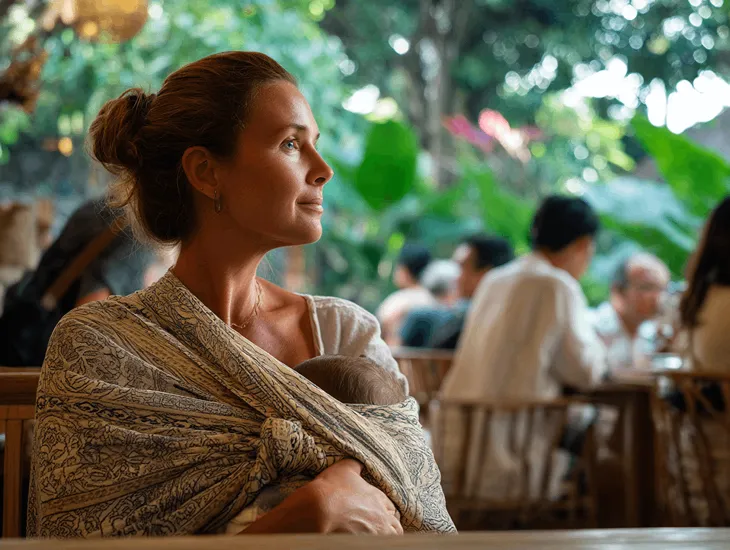

How Breastfeeding in Public in Bali Can Feel Comfortable
Navigating infant feeding while traveling or living abroad often creates significant anxiety for new mothers in the tropical climate. Wondering where and how to nurse your baby comfortably in unfamiliar surroundings can feel completely overwhelming.
In 2026, the island has evolved to be more inclusive, yet the initial hesitation remains for many expatriates. Understanding public infant feeding is the first step toward regaining your freedom as a parent.
Without understanding local customs, mothers frequently worry about inadvertently offending residents or facing uncomfortable interactions. The intense tropical heat adds physical discomfort to the already stressful task of discreetly feeding a fussy baby.
This persistent anxiety prevents mothers from truly enjoying their daily outings and exploring the beautiful island freely. When fear dictates your schedule, the entire expatriate experience can quickly become an exhausting marathon.
Fortunately, understanding the legal protections and supportive cultural norms drastically eases this difficult emotional transition. Learning practical strategies transforms chaotic feeding times into calm, manageable moments wherever you are on the island.
Reviewing guidelines from the Indonesian Ministry of Health reveals robust national policies actively supporting nursing mothers everywhere. Understanding these basic rights ensures you feel completely confident and protected during your adventures.
By applying these specific methods, you can successfully navigate Breastfeeding in Public in Bali. These carefully selected tactics provide essential reassurance, improve your overall comfort, and ensure a relaxing holiday experience.
Table of Contents
Legal and Policy Backdrop in Indonesia
Indonesia mandates and protects a mother’s right to feed her infant exclusively for the first six months. National health laws align perfectly with global recommendations, supporting continued nursing long after this period.
Indonesian law actually protects nursing mothers, stating that anyone intentionally obstructing a mother from nursing can face penalties. This robust legal framework reinforces your right to feed your child wherever you are.
Knowing that you have the law on your side changes the way you experience public infant feeding. It provides a psychological safety net that allows you to focus on your baby’s needs rather than external judgment.
Current regulations also require modern workplaces, bustling airports, and large shopping malls to provide dedicated lactation spaces. These designated areas offer essential privacy and structural support for mothers needing to express breast milk.
This implies that Breastfeeding in Public in Bali is not just tolerated, but structurally supported. Even if individual social comfort levels vary, mothers possess the legal right to nourish their infants safely.
The government continues to promote “Pemberian ASI Eksklusif” as a national priority for public health. This means health officials and local authorities are trained to support, not hinder, your feeding journey.
Cultural Context and Social Norms in Bali
Nursing is culturally normal, highly valued, and actively promoted by national campaigns throughout the entire archipelago. Government initiatives proudly describe it as a win for overall health, social equity, and economic stability.
However, studies reveal that individual social norms, religion, and family beliefs strongly influence public perceptions. While many relatives fully encourage it, others may feel slight discomfort regarding visible exposure rather than feeding.
Most local residents in Bali completely accept nursing as a natural, entirely normal part of daily family life. Discrete feeding utilizing a lightweight cover or turning away often matches expectations in more conservative environments.
In Bali, the culture is generally more relaxed than in other parts of Indonesia due to the high volume of international influence. However, maintaining a level of modesty is still highly appreciated by the local Balinese community.
Understanding this nuanced cultural context helps foreign parents navigate the local landscape with much greater confidence. Acknowledging these traditional roots ensures you approach public infant feeding with appropriate cultural respect.
Many local mothers nurse their children while working or attending temple ceremonies, often using their “selendang” or sash. This visibility helps normalize the act for everyone, creating a supportive environment for expatriates.
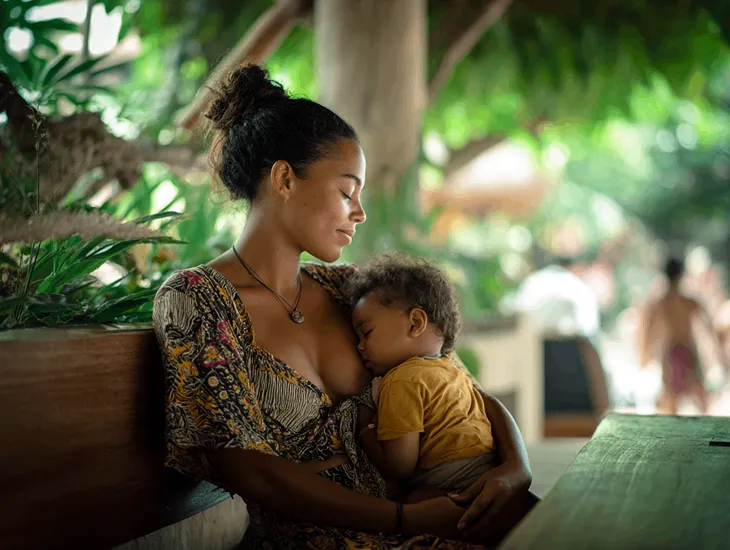
Utilizing Breastfeeding-Friendly Facilities
Indonesian law pushes modern malls, public offices, and major health facilities to provide dedicated lactation rooms constantly. While an official island-wide list remains unconfirmed, many large venues proudly advertise these specialized nursing rooms.
In 2026, places like Beachwalk Shopping Center in Kuta and Living World in Denpasar offer high-quality “Ruang Laktasi.” These rooms are usually equipped with air conditioning, comfortable chairs, and diaper-changing stations.
Health facility guidelines recommend providing private or semi-private spaces equipped with comfortable seating and clean water. These accessible hygiene facilities actively support mothers needing a quiet environment away from the chaotic island crowds.
Seeking out these designated spaces provides a sanctuary during incredibly hot or exceptionally busy afternoons. Utilizing these rooms ensures your baby feeds without constant distraction while you relax in a cool environment.
While not strictly required, using these facilities is a fantastic option for mothers seeking absolute privacy. They offer a comfortable, legally mandated alternative when public infant feeding feels too overwhelming.
You can often look for the “Ruang Menyusui” sign, which typically features a baby bottle or a mother nursing icon. Most staff members in large establishments will be happy to guide you to these locations.
Choosing Supportive Venues and Times
Community support models demonstrate that cafes offering comfortable seating and flexible staff significantly reduce maternal stress. Choosing a family-oriented clientele allows you to relax, knowing other parents understand your immediate child needs.
Mothers often feel most relaxed in casual beach clubs featuring dedicated, well-supervised kids’ play areas. These bustling community hubs normalize children’s presence, making nursing just another routine activity among fellow relaxed parents.
While you can often find recommendations for supportive venues in private expat networks, trust your instincts. The overall atmosphere of a venue will dictate how comfortable you feel while Breastfeeding in Public in Bali.
Areas like Canggu, Ubud, and Sanur are particularly known for their baby-friendly cafes and inclusive environments. Many of these spots provide high chairs and shaded corners perfect for a quiet feeding session.
Opting for shaded, outdoor seating areas provides natural privacy and excellent ventilation during the intensely hot hours. Careful venue selection empowers you to manage your environment and your baby’s sensory needs effectively.
Avoiding peak times at popular restaurants can also help you find a quieter corner to nurse. A less crowded space often means fewer distractions for a baby who might be easily overstimulated by the noise.
Using Clothing and Covers Strategically
Global maternal resources emphasize that specialized nursing-friendly tops and lightweight scarves help mothers feel less exposed. These strategic clothing choices provide essential privacy without hiding the fact that they are actively nursing.
In the intense tropical heat, utilizing breathable, lightweight muslin shawls or quick-access tops is incredibly important. Heavy covers trap heat quickly, causing discomfort and dangerous overheating for your delicate baby.
Bamboo and linen fabrics are highly recommended for the 2026 Bali climate as they allow for maximum airflow. When public infant feeding, the last thing you want is a sweaty, frustrated infant.
Practicing using your chosen cover at home before venturing out builds confidence and smooths the transition. Familiarity with your clothing allows for quick, discreet access when your baby suddenly demands immediate, urgent feeding.
Strategic clothing choices beautifully balance your personal desire for modesty with your baby’s absolute need for comfort. This practical approach makes public infant feeding significantly easier and much more discreet for expatriate mothers.
Consider an “apron-style” cover that has a rigid neckline, allowing you to maintain eye contact with your baby. This helps with bonding and ensures the baby is latching correctly while you remain covered.
Real Story: Alessandra's Experience in Bali
When Alessandra, a 40-year-old from Bari, Italy, moved to Uluwatu in late 2023, she pictured effortless living. Instead, she found herself trapped in her air-conditioned villa, afraid to nurse outside her familiar home.
The thought of navigating a local market with a hungry newborn filled her with dread and anxiety. She worried that public infant feeding would violate cultural norms she did not yet fully understand locally.
She eventually searched local expat forums and discovered detailed advice on using lightweight muslin covers effectively. She learned that prioritizing her baby’s nutritional needs was fully supported by strong Indonesian health law protections.
Protecting her baby’s feeding schedule transformed their difficult transition into a period of joyful, confident outings. Securing this vital cultural clarity reduced her stress, allowing the Italian family to explore the island happily.
One afternoon, Alessandra successfully nursed her baby at a small warung overlooking the cliffs. She realized that the local staff were not only supportive but often offered her a glass of water and a smile.
This moment of connection helped her feel truly at home in her new community. It proved that with the right preparation, Breastfeeding in Public in Bali can be a beautiful part of island life.
Involving Partners and Extended Family
Indonesian research highlights the crucial role partners play in normalizing nursing within busy public spaces. Supportive partners protect your immediate space and expertly manage any potentially awkward interactions with curious bystanders directly.
Recommended partner actions include choosing seating that provides the mother with a protective back-wall or corner position. This simple physical positioning immediately reduces the number of people who can directly observe the feeding process.
Partners can help by handling the food orders and payments so the mother doesn’t have to interrupt the feeding. They can deflect unwanted attention so the mother remains entirely focused on her nursing infant.
A partner can also carry the nursing kit, ensuring that water, wipes, and the nursing cover are always within reach. This allows the mother to stay seated and relaxed while the baby latches and feeds.
This teamwork deeply strengthens the family bond and reduces the mother’s emotional burden during daily outings. A proactive partner makes public infant feeding feel incredibly safe and wonderfully supported throughout the entire trip.
If traveling with extended family, grandparents can also play a role by entertaining older siblings. This gives the mother the quiet space she needs to nurse the newest family member without distraction.
Addressing Risks and Common Misunderstandings
Core medical guidance emphasizes that feeding on cue is absolutely crucial for maintaining adequate maternal milk supply. This immediate responsiveness strongly protects infants against dehydration and dangerous infections, especially within the hot tropical climate.
Some tourists mistakenly assume that nursing publicly is legally restricted or culturally prohibited in the region. In reality, strong Indonesian regulations sanction anyone who attempts to obstruct public infant feeding.
Social discomfort usually stems strictly from the unwanted visibility of the breast, not the natural act itself. Rights-based advocacy stresses that feeding should never be delayed or moved to unhygienic spaces like toilets.
Never feel pressured to nurse in a bathroom stall, as it is neither hygienic for the baby nor comfortable for the mother. If a venue does not have a lactation room, nursing at your table with a cover is perfectly acceptable.
Understanding these realities empowers mothers to feed their babies exactly when they need it most. You are never obligated to hide in a hot car or dirty bathroom to satisfy the sensibilities of others.
The 2026 health landscape in Bali continues to prioritize infant nutrition above all else. By standing your ground and nursing confidently, you are helping to maintain a supportive environment for all future mothers.
FAQs about Breastfeeding in Public
Q: Is it legally permitted to nurse my baby publicly here?
A: Yes, Indonesian law strongly protects a mother’s right to nurse exclusively and publicly in any location.
Q: Do local residents mind if I nurse in restaurants?
A: Most accept it as normal, but utilizing a lightweight cover is often appreciated in conservative environments.
Q: Are there dedicated lactation rooms in shopping malls?
A: Yes, large malls and modern health facilities provide legally mandated, dedicated lactation spaces for all mothers.
Q: What is the best cover to use in the heat?
A: Utilize breathable, lightweight muslin shawls to prevent your baby from overheating during the hot midday hours.
Q: How can my partner help me feel more comfortable?
A: Partners can handle the food orders and payments so the mother doesn’t have to move unnecessarily.
Q: Why is understanding Breastfeeding in Public in Bali important?
A: It empowers mothers, reduces anxiety, and ensures infants receive necessary hydration and nutrition safely and comfortably.

