


Review Us
How Much Should You Pay Your Babysitter in Bali Today?
author

How Much Should You Pay Your Babysitter in Bali Today?

Relocating to Indonesia with young children often creates significant administrative stress for expatriate families. Finding reliable childcare while managing professional business commitments in a new tropical environment is a major challenge for parents.

Underpaying childcare staff leads to high turnover and resentment within your household. Many foreigners unintentionally offer rates below market value because they rely on outdated internet forums or anecdotal advice from unverified sources.

This lack of financial clarity creates instability for your children. Constant changes in caregivers disrupt essential daily routines and cause unnecessary household instability for the entire family during your long-term stay.

Unvetted help poses serious safety risks near swimming pools and busy roads. Leaving children with untrained individuals puts them at physical risk while you try to focus on professional work obligations.

The solution is to Pay Your Babysitter in Bali a fair, competitive market rate. Transparent salary bands attract the most qualified, experienced, and reliable professionals who prioritize child safety and development.

According to the official Ministry of Manpower, domestic worker protection is a growing priority. Paying professional rates ensures you secure expert help, allowing you to enjoy your life in Indonesia confidently.

Current Monthly Salary Bands for Caregivers

Market data for 2026 indicates that a full-time professional typically earns between IDR 3,500,000 and IDR 6,000,000 per month. This rate generally covers eight to ten hours of dedicated daily care.

Expatriate households often pay premium rates ranging from IDR 7,000,000 to IDR 9,000,000. These higher figures reflect demands for fluent English skills, extensive experience, and the management of multiple children simultaneously.

Night specialists command premium evening rates of about IDR 700,000 to IDR 1,000,000 per shift. This specialized care is essential for families with newborns or infants who require overnight medical or feeding support.

Formal agency placements for experienced staff often start at a baseline of IDR 3,500,000. It is vital to Pay Your Babysitter in Bali based on their specific skills and the complexity of tasks.

These market references help you set a realistic budget for your household. Providing a competitive salary ensures long-term loyalty and a stable environment for your children to thrive while you work.

Hourly and Short-Term Childcare Rates

Babysitter in Bali 2026. Childcare professional conducting identity verification and safety checks for a new client.

Casual childcare for tourists or occasional events uses hourly pricing structures. In 2026, most professional services publish ranges between IDR 75,000 and IDR 150,000 per hour across major expatriate hubs.

Rates are often higher in Canggu or Seminyak due to increased demand. You can expect to pay more for caregivers who possess strong English skills or specialized experience with newborn infants.

A standard rate sheet might list IDR 80,000 per hour for one child. For two children, the rate often increases to IDR 100,000 per hour to reflect the increased workload and responsibility.

Most agencies enforce a four-hour minimum booking to cover transport and prep. It is essential to Pay Your Babysitter in Bali fairly for short-term tasks to ensure professional reliability.

Hourly rates provide flexibility for parents who only need occasional support. However, these rates are usually higher than full-time equivalents to account for the on-demand nature of the professional childcare service.
Key Factors That Drive Compensation Costs

Experience is a primary driver for salary increases in the local market. Caregivers with over five years of experience or strong expat references justify much higher monthly and hourly compensation packages.

Language proficiency significantly impacts the total cost of hiring help. Professionals who speak fluent English and can update parents via WhatsApp are highly valued in Uluwatu, Ubud, and other major hubs.

The age of your children also determines the complexity of care. Newborns, twins, or children with special needs require specialized skills that command premium monthly and nightly rates from professional agencies.

Schedule and location play a role in setting the final price. Late evenings, weekends, or travel days often carry higher hourly rates than predictable, long-term weekday contracts in a single residence.

To compensate your  in Bali, Professional caregiver in Indonesia correctly, you must evaluate these specific variables. Matching the compensation to the role’s complexity ensures you hire a professional who is truly qualified for your family.

Essential Screening and Vetting Standards

Indonesia has no single national license for private childcare providers. Therefore, reputable agencies build their own rigorous vetting systems to protect expatriate families and ensure the highest standards of child safety.

Background checks involve verifying the national identity card and confirming local addresses. Parents should always request a photo of the ID and check for a clean police record where available.

Professional services often require a minimum of two years of childcare experience. We check at least three references from previous employers to confirm reliability, salary history, and the quality of care provided.

Many top-tier caregivers possess training in First Aid and CPR. They are also trained in water safety and basic hygiene to prevent accidents near residential pools or during meal preparation at home.

When you Nanny salary standards in Bali through an agency, you fund this oversight. The cost includes background checks, training, and replacements in case of illness, providing total peace of mind.

Step-by-Step Hiring Process for Parents

Begin by defining the specific role, hours, and required language skills. Decide if you need a live-in professional or occasional part-time support for your children during your stay in Indonesia.

Source candidates through trusted channels such as reputable agencies or vetted groups. Avoid using random classifieds, as they rarely provide the necessary background checks or verified work histories for childcare candidates.

Conduct thorough interviews and ask the candidate to repeat instructions. This ensures they fully understand your house rules, safety protocols, and daily routines before they begin working in your private villa.

A paid trial session of four hours is highly recommended. This allows you to observe how the professional handles feeding, play, and hygiene while interacting with your children in their familiar home environment.

Finalize the agreement in writing to avoid future misunderstandings. Specify the monthly salary, overtime rules, and public holiday pay clearly. It is vital to Nanny salary standards in Bali exactly as agreed.

Real Story: Securing Expert Care in Uluwatu

Anya, a digital nomad from Germany, recently relocated to a cliffside villa in Uluwatu. She struggled to manage her toddler while attending international client meetings because the property featured direct pool access. She initially hired an unvetted helper for a low rate based on anecdotal advice.

The primary problem was a lack of professional safety training. Anya discovered that the caregiver did not understand water safety protocols or constant supervision requirements. One afternoon, Anya had to intervene when her toddler leaned dangerously over the pool edge while the helper was distracted.

She contacted a professional agency to audit her household safety and find a certified professional. The agency provided a vetted caregiver with water safety certification and verifiable expat references. Anya established a fair market salary, ensuring her son remained safe while she focused on her business commitments.

Non-Negotiable Safety and Supervision Protocols

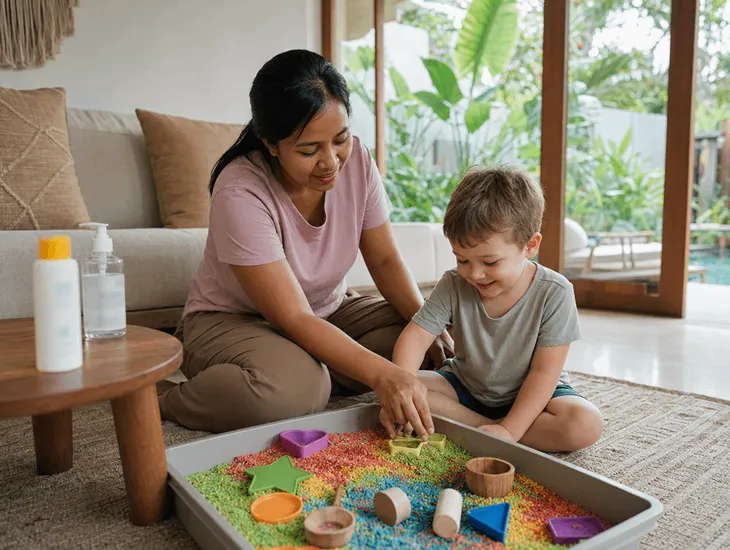
Babysitter in Bali 2026. Experienced caregiver assisting a young child with age-appropriate crafts and sensory play.

Safety protocols are non-negotiable for high-quality childcare services. Caregivers must provide constant supervision near pools, ensuring non-swimmers are always within an arm’s reach for immediate physical intervention in case of accidents.

Hygiene standards include safe bottle preparation and clean food handling. Caregivers must ensure children wash their hands regularly and apply sun protection during outdoor play in the intense tropical heat of Bali.

Strict rules prevent caregivers from leaving children alone with unknown third parties. Professional agencies also prohibit posting child photos or locations online without the explicit, written consent of the parents for privacy reasons.

Age-appropriate activities are crucial for healthy development. For toddlers, this includes simple crafts, stories, and music. School-aged children receive homework help and structured routines that prioritize learning over passive screen time.

When you Fair pay for childcare in Bali for professional service, you receive this commitment. Expert caregivers focus on safety and developmental value, ensuring your children remain secure while gaining new skills daily.

Common Cultural Pay Mistakes to Avoid

Newcomers often confuse general helper wages with professional childcare rates. Paying the same as an untrained housemaid leads to high staff turnover and resentment, as childcare requires much higher responsibility and skill.

Bundling multiple jobs into one salary is a recurring mistake. Expecting one person to be a cleaner, cook, and dedicated caregiver without adjusting the pay creates burnout and reduces the quality of childcare.

Lack of clarity on overtime or travel rates often leads to conflict. You must set higher hourly rates or per-night fees from the start if you rely on late evenings or trips.

Failing to provide the mandatory religious holiday bonus is a serious error. This annual payment is required by law and supports the caregiver’s family. Always Fair pay for childcare in Bali all legally required benefits.

Fair pay prevents staff turnover and ensures a stable relationship. Respecting market norms and providing clear incentives results in more reliable, long-term care for your family during your residence in Indonesia.

FAQs about Pay Your Babysitter in Bali​

Q: What is the average monthly salary for a day caregiver? 

A: In 2026, a professional day caregiver typically earns between IDR 3,500,000 and IDR 6,000,000 per month.

Q: How much should I pay for an overnight shift? 

A: Night specialists for newborns generally command premium rates of IDR 700,000 to IDR 1,000,000 per night.

Q: Are there additional costs for multiple children? 

A: Yes, hourly rates often increase to IDR 100,000 for two children to reflect the increased responsibility.

Q: Is the religious holiday bonus mandatory? 

A: Yes, providing one month’s salary as a bonus during the major religious holiday is a legal requirement.

Q: Why do agency caregivers cost more? 

A: You Pay Your Babysitter in Bali more through agencies because it covers vetting, training, and emergency replacements.

Q: Should I pay for transport and meals?

A: For short-term bookings, a transport fee is standard, while meals are usually provided for long daily shifts.

Need help determining the right pay for your babysitter in Bali? Chat with our team on WhatsApp now.