
Is Empathy School Bali Right for Your Nature-Loving Child?
Empathy School Bali is designed for families who want serious English-medium learning without losing childhood, mental health or a love of mud, trees and open skies.
Many parents first meet Empathy School Bali in international school listings for Bali, where it appears as a small Ubud campus focused on nature, empathy and global academics.
On its own Empathy School Bali website, the school describes itself as Cambridge-based, nature-led and built around daily social-emotional learning and mindful routines.
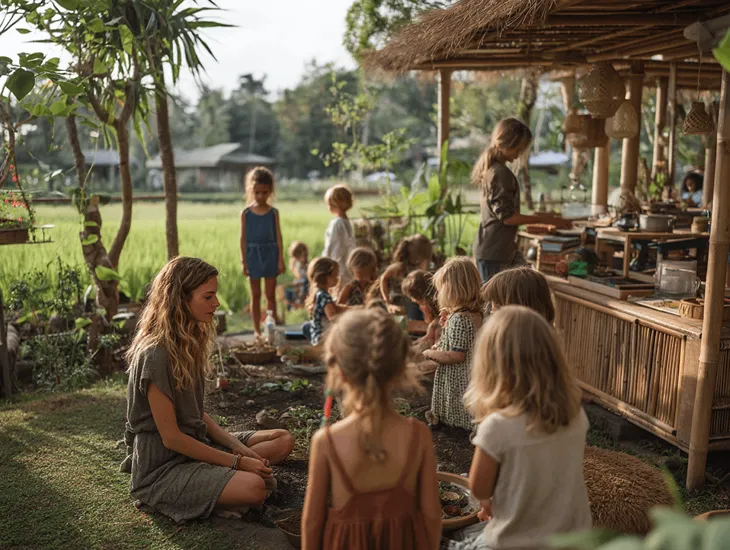
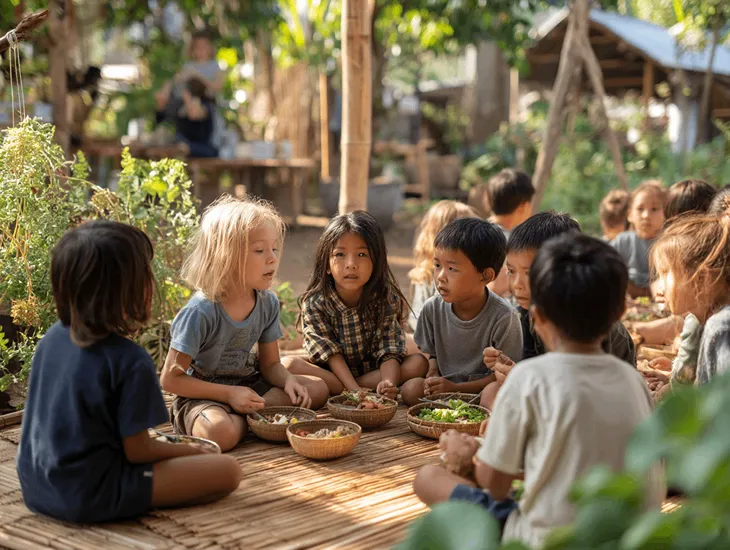
The campus itself is barefoot-friendly, with rice fields, food forest, mud kitchens and organic, fully plant-based meals that turn sustainability into a normal part of each school day.
Empathy School Bali also runs weekly programmes for visiting children, which helps families who are still testing an Ubud lifestyle before committing to a full academic year.
This guide summarises the facts parents care about most, then links them back to registration and programme details so you can decide if Empathy School Bali truly fits your child.
Why Empathy School Bali Appeals to Heart-Centred Families
Empathy School Bali appeals to parents who want real academics but refuse to trade away calm mornings, barefoot play and emotional safety just to chase high-pressure exam scores.
Many families arrive in Bali with sensitive or anxious children and find that large, busy campuses feel overwhelming. A smaller, nature-based setting can make the transition far gentler.
At Empathy School Bali, heart-centred routines, check-ins and social-emotional learning slots are treated as core timetable entries, not extras squeezed around worksheets and tests.
Location, Identity and Daily Rhythm at Empathy School Bali
Empathy School Bali sits in Pejeng, just outside Ubud, on a quiet campus surrounded by rice fields, food forest and village life rather than traffic noise and tourist crowds.
For most families based in Ubud or Gianyar, the daily drive to Empathy School Bali is short. Those living in Canggu or Sanur need to weigh longer commutes against the nature-based lifestyle.
The school day typically runs from mid-morning to mid-afternoon, with plant-based snacks and lunch served on campus so Empathy School Bali can keep food choices aligned with its values.
Curriculum and Age Bands Offered at Empathy School Bali
Empathy School Bali welcomes children from roughly one to fifteen, with toddler, kindergarten, primary and middle-school programmes sharing the same nature-rich campus.
Academically, Empathy School Bali leans on Cambridge-style core subjects in English, mathematics and science, then layers in S.T.E.A.M, robotics, arts and rich Indonesian language learning.
Influences from Montessori, Reggio Emilia and Waldorf appear in the way Empathy School Bali mixes open-ended play, hands-on projects and predictable rhythms instead of rigid, test-driven schedules.
Campus Life and Facilities Families Find at Empathy School Bali
Empathy School Bali uses open-air classrooms, gardens, paddies and performance spaces as teaching tools, so lessons often move outdoors instead of staying at desks all day.
Children at Empathy School Bali might start with mindfulness under the trees, then rotate between literacy, science experiments in the garden, art in the pavilion and unstructured play in the mud zone.
The campus also supports technology and project work, so Empathy School Bali can run robotics or media projects while still keeping screens in balance with movement, nature and real-world collaboration.
Real Story — Choosing Empathy School Bali for an Ubud Move
When Lara moved her family from Singapore to Ubud, Empathy School Bali was the only school her ten-year-old would even agree to visit after a rough year in a competitive, exam-heavy system.
On their first tour, staff at Empathy School Bali invited her son to join a garden project instead of a formal interview. Getting his hands in the soil calmed him far more than another test could.
A year later, Lara reports that school refusal has vanished. Her son still works hard, but Empathy School Bali tracks progress through projects and growth, not just timed exams and ranks.
Fees, Scholarships and Flexibility at Empathy School Bali
Fees at Empathy School Bali place it in the mid-to-upper tier for Bali schools, with middle years sitting around the low-to-mid hundreds of millions of rupiah per year.
For many families, the value of Empathy School Bali comes from what is included in daily life: tiny classes, plant-based meals, nature projects and close attention to emotional wellbeing.
Scholarships, sponsorship options and flexible weekly programmes let some families access Empathy School Bali even if they are still testing a move to Ubud or managing a tighter education budget.
How Empathy School Bali Fits Eco, Plant-Based Family Lifestyles
Empathy School Bali is unusual in being fully plant-based, so every school meal quietly reinforces the eco-conscious, compassionate lifestyle many Ubud families already practise at home.
Mindfulness, yoga, non-violent communication and reflection circles are woven into the week at Empathy School Bali, helping children name feelings instead of bottling them up.
Many parents also involve nannies or carers, asking them to mirror Empathy School Bali habits by serving similar foods, supporting screen limits and keeping nature play alive after school.
Checklist to Decide If Empathy School Bali Suits Your Child
Empathy School Bali may suit your child if they thrive outdoors, enjoy small, mixed-age groups and feel overwhelmed in large, busy or highly competitive school environments.
Location matters too. If your family is based in Ubud or Pejeng, the daily rhythm of Empathy School Bali will feel more sustainable than if you commute from distant coastal areas.
Before deciding, visit Empathy School Bali, observe a full morning, talk with teachers and parents and ask how they support transitions to other schools if your long-term plan may change.
FAQ’s About Empathy School Bali for Relocating Families ❓
Q: What kind of school is Empathy School Bali?
A: It is a small, nature-based international school near Ubud that blends Cambridge academics with social-emotional learning, plant-based living and project-based, outdoor education.
Q: What ages does Empathy School Bali currently serve?
A: Empathy School Bali currently serves children from about one to fifteen years old, starting with toddler and kindergarten groups and continuing through primary and middle-school programmes.
Q: What curriculum does Empathy School Bali follow?
A: Empathy School Bali uses Cambridge-style core subjects with strong English, mathematics and science, then adds S.T.E.A.M, Balinese culture, nature projects and structured social-emotional learning blocks.
Q: How expensive is Empathy School Bali compared with other schools?
A: Fees at Empathy School Bali sit in a mid-to-upper band for Bali, with scholarships and limited sponsorships helping some families, especially in the middle years, access places when budgets are tighter.
Q: Which families and children are the best fit for Empathy School Bali?
A: Empathy School Bali suits eco-minded families, plant-based households and children who benefit from small groups, gentle routines and extra support for anxiety or sensory sensitivity.
Q: Can students move from Empathy School Bali to more traditional schools later?
A: Many families plan long-term at Empathy School Bali, but the Cambridge base and focus on core skills mean students can usually transition later to more traditional international or national-plus schools if needed.

