
Is Ubud Monkey Forest the Right Bali Stop for Families?
For many families in Bali, Ubud Monkey Forest is the first “wild animal” outing they consider near Ubud. It mixes temples, jungle and macaques in a way that feels magical and slightly risky at the same time.
The sanctuary’s own story, shared on the official Sacred Monkey Forest site, emphasises conservation and temple guardianship as much as tourism. Families are guests in both a forest and a living place of worship.
At the same time, Ubud Monkey Forest can be intense. Monkeys climb on bags, grab food and sometimes bite or scratch. Children who love animals may be thrilled, while more anxious kids can feel overwhelmed within minutes.
Ticket prices, central location and simple entry make it tempting to “just go”. Yet for Bali-based parents, the real question is whether Ubud Monkey Forest belongs on this trip with this child’s age and temperament.
Clear rules help. Official Ubud Monkey Forest visitor guidelines warn against feeding, touching or staring at monkeys and advise against carrying visible snacks or loose bags.
This guide walks through Ubud Monkey Forest in 2026: what it is, how long to stay, safety rules, what to wear, how to involve nannies or drivers, and when it might be wiser to wait a year.
Table of Contents
Why Ubud Monkey Forest Still Draws Bali Families in 2026
For many Bali itineraries, Ubud Monkey Forest anchors a half day of central Ubud exploring. It is close enough to walk from many villas yet feels like a deep jungle.
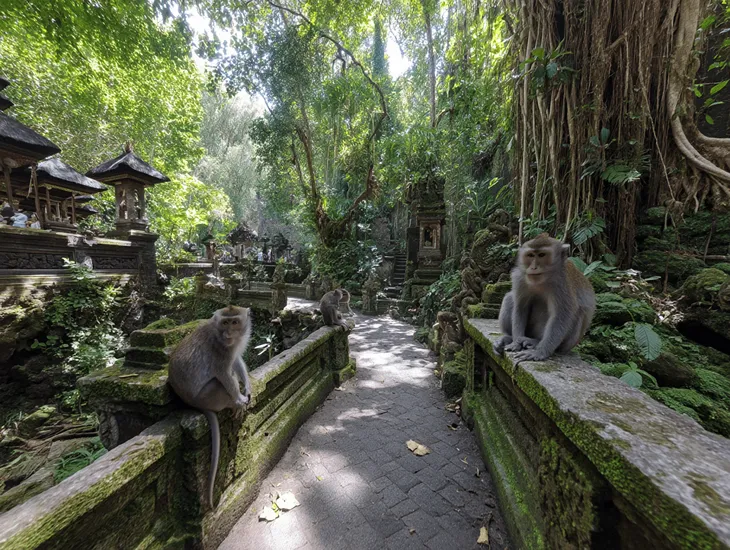
Families see Balinese long-tailed macaques jumping through trees, grooming each other and carrying babies along temple walls. Children rarely forget their first close-up encounter.
At the same time, spiritual and cultural layers matter. Ubud Monkey Forest protects three key temples, so the visit is as much about learning respect as about taking photos.
Key Facts About Sacred Monkey Forest Location and Layout
The heart of Ubud Monkey Forest lies at the southern end of central Ubud on Jl. Monkey Forest, within walking distance of markets, shops and many guesthouses.
The sanctuary covers roughly twelve hectares of forest, ravines and rivers. Paths, bridges and boardwalks lead past mossy statues, dragon bridges and dense canopy.
Three main temples sit inside Ubud Monkey Forest: Pura Dalem Agung, the Holy Spring Temple and Prajapati Temple. Visitors view them from the outside unless joining specific rituals.
Opening Hours, Tickets and Ubud Monkey Forest Visit Times
Most days, Ubud Monkey Forest opens from 09:00 to 18:00, with the last entry around 17:00. Morning visits avoid the heaviest heat and some of the crowds.
Recent price bands place foreign adult tickets in the low hundred-thousand rupiah range, with slightly cheaper rates for children and discounted prices for Indonesian or KITAS holders.
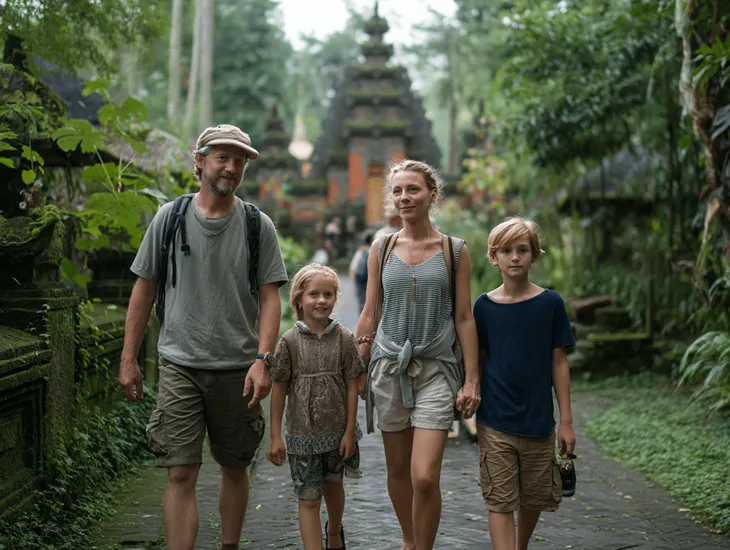
Most families find 60–90 minutes inside Ubud Monkey Forest enough. That allows time to walk the main loop, pause for photos and use toilets without rushing anxious children.
Real Story — Handling Ubud Monkey Forest With Young Kids
When Liam and Anya took their five-year-old to Ubud Monkey Forest, they had visions of calm jungle walks. Their son arrived clutching snacks and a toy banana.
Within minutes, a macaque rushed toward the crinkling packet. A ranger stepped in quickly, but the scare left their child in tears and the parents shaken by how fast it happened.
They finished the visit on the higher paths, away from dense monkey groups. Afterward, they agreed that Ubud Monkey Forest is amazing, but better once kids are old enough to follow rules strictly.
Safety Rules for Ubud Monkey Forest Monkeys and Temples
Ubud Monkey Forest staff and signs repeat one core message: do not feed, touch or tease the monkeys. They are semi-wild, not trained performers or pets.
Families should leave snacks, plastic bags and loose bottles in the car or hotel. Backpacks are best worn on the front, with zips closed. Children need to stay at arm’s length at all times.
If a monkey grabs an item, parents should not pull or scream. In Ubud Monkey Forest, the safest move is to stay calm and call a ranger, who can swap food or help recover belongings.
What to Wear and Bring to Ubud Monkey Forest in 2026
Clothing at Ubud Monkey Forest needs to manage humidity, temple respect and the chance of sudden rain. Light, modest outfits with covered shoulders work well for both photos and culture.
Closed shoes protect feet on steps and uneven paths. Sandals with back straps are better than loose flip-flops, especially when carrying younger kids or walking near ravines.
Families should pack water in plain bottles, tissues, basic plasters and a small hand sanitiser. Umbrellas or light rain jackets help in the wet season, but should stay folded unless needed.
Ubud Monkey Forest With Nannies, Drivers and Nervous Kids
In many Bali households, Ubud Monkey Forest is visited with nannies or drivers rather than just parents. Clear instructions make these trips safer and calmer.
Adults should agree on simple rules before entering: no feeding, no selfies with monkeys, no carrying food or rustling bags, and no letting kids stand under low branches.
For very nervous children, families can choose outer paths or send just older siblings and one adult inside Ubud Monkey Forest while others enjoy nearby cafes or markets.
Checklist Before Adding Ubud Monkey Forest to Your Day
Before committing to Ubud Monkey Forest, parents should consider age, temperament and recent behaviour. Children who struggle with following safety rules may need to wait.
Check the weather and crowd patterns. Heavy rain or peak midday heat can turn paths slippery or exhausting. Early morning often works best for younger kids.
Think about what follows. After Ubud Monkey Forest, calmer stops such as rice terraces, art museums or a quiet lunch help children process excitement and reset.
FAQ’s About Ubud Monkey Forest for Bali Visitors in 2026
Q: Is Ubud Monkey Forest safe for toddlers and very young children?
A: Ubud Monkey Forest is safer when children can follow clear rules and stay close to adults. Toddlers may be better in carriers, further from dense monkey groups.
Q: Do I need to book tickets to Ubud Monkey Forest in advance?
A: Standard entry to Ubud Monkey Forest is usually bought on the day at the gate. Families planning peak holiday visits can check the official tickets page for updates.
Q: What should I do if someone is bitten or scratched by a monkey?
A: Clean the wound quickly with soap and clean water, then seek help from a local clinic or hospital. Staff near Ubud Monkey Forest are used to advising visitors after minor incidents.
Q: Can my nanny or driver take the kids without me?
A: Many families send nannies to Ubud Monkey Forest while parents work. Agree on rules and emergency plans beforehand. For longer stays, a trusted visa agency in Bali can help you stay compliant while exploring.
Q: Is Ubud Monkey Forest a must-see if we only have one day in Ubud?
A: With young animal-loving kids, Ubud Monkey Forest can be a highlight. If your family dislikes crowds or feels anxious about monkeys, temples, rice fields and museums may be a better use of limited time.

