
Review Us
Kite Surfing Lessons in Bali 2026 – Family safety gear, IKO certified training, and windsurfing activities for children.
author

5 Cooking Classes in Bali: Great Family Experiences to Try Together

Parents often struggle to find safe water sports, as choosing a professional school that prioritizes safety remains a challenge for families on the island. Every lesson requires expert local supervision and care.

Uncertified instructors often lack rescue skills to manage wind changes. This lack of oversight leads to accidents in open water, causing stress for traveling and active expat parents. Safety is paramount on the coast.

Choosing a certified school for your lessons provides a secure environment. These organizations follow the International Kiteboarding Organization standards to protect every young student during their active training and skill development.

Mastering the wind requires a structured approach that builds confidence. Professional instructors ensure that children understand kite mechanics before they ever enter the tropical and deep coastal water. This foundation is vital for success.

This guide outlines essential vetting steps and safety protocols for families. You will discover the best locations and seasonal windows to ensure a successful and highly memorable vacation for your active group in Indonesia.

From theory to board starts, we cover every detail. Implement these expert strategies to transform a stressful activity into an exhilarating and safe family adventure for everyone on vacation in Indonesia this year.

Vetting Schools and Instructors

Reputable schools for water sports must hold a current IKO certification to operate safely. This global gold standard ensures that equipment and teaching methods meet rigorous international safety and rescue protocols for families.

Every instructor should possess a valid IKO diploma and up-to-date first aid certifications for emergency care. Professional centers also require a local license for motorized boats to facilitate rapid water-based rescue missions.

Strict supervision ratios are necessary to maintain a secure environment during active Kite Surfing Lessons in Bali. Certified schools enforce a 1:1 or 2:1 student-to-instructor ratio to ensure focused guidance and safety.

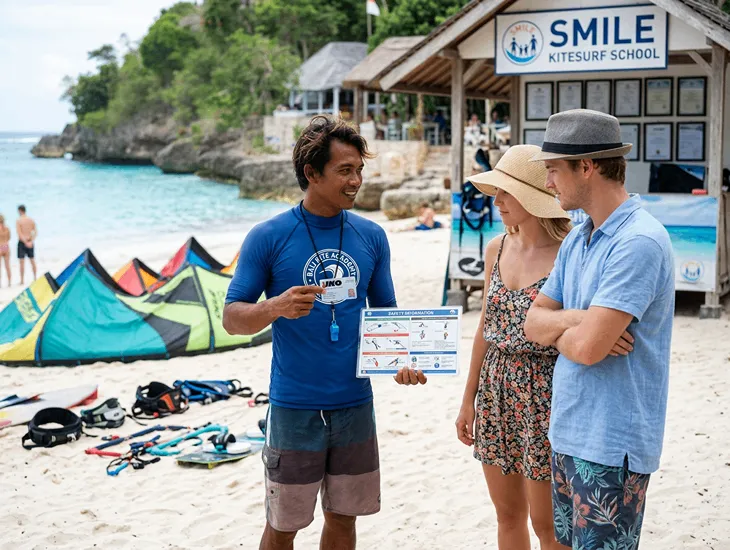
Verify the credentials of the facility before you finalize any booking for your young family members. High-quality centers will openly display their certifications and instructor profiles to build trust with international travelers online.

Comprehensive background checks on all staff members are standard practice for top-tier schools. Ensuring that instructors have experience working specifically with children is essential for a productive and safe learning environment.

A professional school will always provide a clear orientation for parents before the first lesson begins. This transparency allows you to understand the specific safety measures in place for your child’s aquatic training.

Safety Standards for Water Sports in Bali

Water sports in Indonesia 2026 – Motorized rescue boats, first aid protocols, and professional instructor certifications in Sanur.

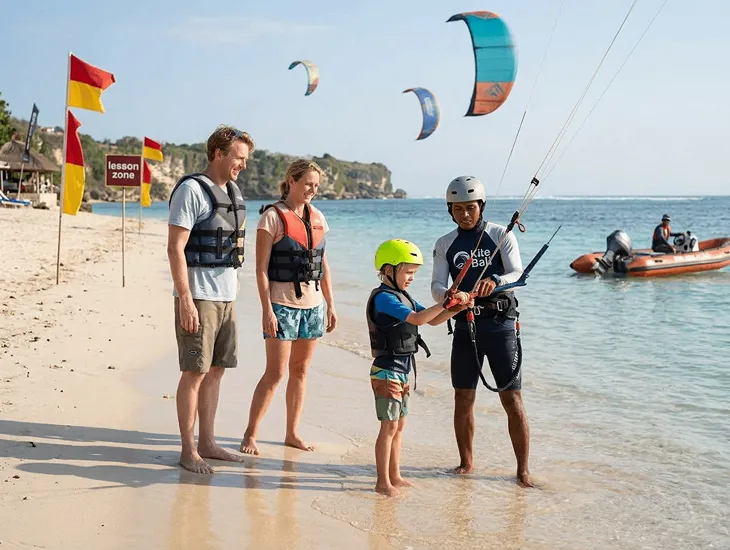
Wearing protective gear like helmets and impact vests is strictly mandatory for children during all lessons. These flotation devices provide essential protection and buoyancy while students navigate the unpredictable waves and wind gusts safely.

Thick reef booties are also required to prevent painful coral cuts in the shallow lagoons of Sanur. This proactive approach to safety minimizes physical risks and allows children to focus on their developing skills.

Instructors monitor weather conditions constantly to ensure that wind speeds remain within safe beginner thresholds. Lessons are immediately suspended if the local lifeguards raise red flags or if conditions become too chaotic for students.

Safety systems like the emergency quick-release are taught during the very first hour of land-based training. Understanding how to depower the kite instantly is a vital skill for every young student in Indonesia.

Modern schools utilize radio helmets to provide real-time coaching while the student is in the water. This technology allows the instructor to offer immediate safety corrections and technical guidance from a safe distance.

Annual equipment inspections are a mandatory part of maintaining high safety standards for reputable schools. Using well-maintained kites and lines reduces the risk of mechanical failure during intense water-based sessions for children.
The Kitesurfing Learning Path in Indonesia

Lessons begin on the sand with a small trainer kite to teach basic steering and control. Students must understand the wind window mechanics before they are allowed to enter the shallow coastal water safely.

Body dragging is the next essential phase where students experience the pull of the kite without a board. This technique builds physical stamina and teaches self-rescue skills that are necessary for the open water.

Once kite control is mastered, instructors introduce the board for the first water-start attempts during Kite Surfing Lessons in Bali. This gradual progression ensures that children feel confident and secure at every stage.

Continuous riding and tacking are advanced skills that require several hours of dedicated practice and guidance. Professional instructors provide real-time feedback to help students refine their technique and maintain balance on the board.

Mastering the “power stroke” allows the student to generate enough lift to stand on the board. This specific movement requires precise timing and coordination, which are developed through repetitive and supervised practice drills.

Progressing to upwind riding is a major milestone that grants the student more independence in the water. This skill allows them to return to their starting point without having to walk back on land.

Windsurfing Options for Younger Kids in Bali

Windsurfing in Indonesia is a fantastic alternative for children who may not meet the kitesurfing weight limits. This sport allows kids as young as six to experience the thrill of the wind safely.

Students must weigh at least 25 kg to act as a physical lever for the sail. Smaller, child-sized sails are used to make the uphauling process manageable and fun for younger active explorers.

Physical evaluation by the instructor ensures that the gear is perfectly matched to the child’s weight. This customized approach to equipment prevents physical strain and encourages a positive learning experience for everyone involved.

Balancing on the board while managing a sail builds core strength and coordination for young children. Many families find that windsurfing serves as a perfect introduction to more advanced coastal water sports later on.

The learning curve for windsurfing is often more immediate, providing children with a sense of accomplishment early on. Basic steering and tacking can be mastered within a few sessions in the calm lagoons.

Safety for windsurfing involves learning how to fall away from the sail and board. Instructors emphasize these falling techniques to prevent minor bumps or bruises during the initial stages of balance training.

Experience: A Journey in Sanur

Meet Lukas, a 42-year-old architect from Germany living in the Sanur neighborhood with his daughter. He moved to the island to enjoy the coastal lifestyle but struggled with the unpredictable and strong afternoon winds.

The humidity was high, and the sound of the nearby scooters made concentration difficult for his daughter. Lukas wanted her to learn a new sport but feared the chaotic traffic and the deep water.

He realized his daughter lacked the weight to counterbalance a large kite during her first attempt. That is when he used a professional resource to book Kite Surfing Lessons in Bali for her.

The instructor weighed her and switched to a lighter trainer kite to ensure her absolute safety. This personalized adjustment allowed her to master the wind window easily while Lukas watched from a nearby cafe.

Lukas felt a sense of relief seeing the 1:1 supervision provided by the certified instructor on the beach. His daughter’s smile grew wider as she successfully navigated her first body drag in the shallows.

By the end of the week, she was attempting her first board starts under the golden afternoon sun. This tailored experience provided her with a lifetime of confidence in the unpredictable tropical ocean environment.

Pricing for Lessons in Bali

Coastal activities in Bali 2026 – Private windsurfing lesson rates, equipment rental fees, and family water sport pricing.

A single private lesson for beginners usually costs between *IDR 800,000 and *IDR 1,000,000 for 90 minutes. This rate typically includes all the necessary safety gear, including helmets, harnesses, and professional kites for students.

Families can save money by booking multi-hour packages that offer a comprehensive introduction to the sport. A 3-hour beginner course costs around *IDR 2,400,000, while a 10-hour advanced package is *IDR 7,400,000 in Bali.

Windsurfing lessons are generally more affordable, ranging from *IDR 350,000 to IDR 500,000 per private session. These prices provide excellent value for families looking to explore different activities during their tropical island vacation.

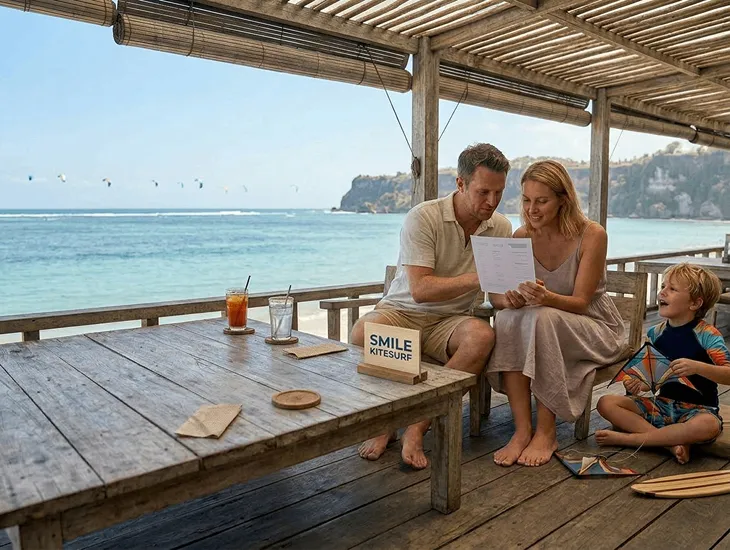
Confirmation of all fees and inclusions should be done via WhatsApp before you arrive at the beach. Transparent pricing ensures that there are no unexpected costs for transport or extra equipment during your stay.

Some schools offer family discounts when multiple members sign up for the same training package. Inquiring about these group rates can significantly reduce the overall cost of your family’s water sport adventure.

*(Disclaimer: Amounts may be changed at any time without prior notice by the authorized authority.)

Risks and Seasonal Wind Windows in Indonesia

Sudden wind gusts can cause uncontrolled dragging if the student does not use the safety release. Instructors emphasize the importance of situational awareness to manage these rare but possible risks in the water.

Hidden rip currents are most dangerous during the outgoing low tides in the lagoons of Sanur. Students are taught to identify these currents and follow strict self-rescue protocols to ensure their physical security.

The optimal wind season in Indonesia runs from May through September due to the consistent trade winds. Planning your trip during these months provides the most reliable conditions for successful and fun water sports.

Sharp coral reefs are a common hazard that requires the use of thick booties at all times. Professional schools choose areas with sandy bottoms whenever possible to minimize the risk of cuts and scrapes.

Sun exposure is a significant risk that requires the frequent application of high-SPF, reef-safe sunscreen. Protecting young skin from the intense tropical sun is vital during long hours spent on the open water.

Jellyfish encounters can occasionally occur during certain tidal cycles throughout the peak season. Wearing a full-length UV rash guard provides an extra layer of protection against both stings and harmful sun rays.

Cultural Respect on the Water in Bali

The flat-water lagoons are shared spaces with traditional fishermen and their boats. Maintaining positive relationships with the local community is essential for every international family practicing sports in Indonesia during their holiday.

Students must learn the strict right-of-way rules to avoid tangling their long kite lines with fishing nets. Respecting these traditional boundaries prevents local disputes and ensures a peaceful environment for everyone on the island.

Traditional jukung boats have priority on the water, and kiters should always maintain a safe distance. This cultural etiquette shows that you value the local heritage and the livelihoods of the Balinese residents.

Using the right hand for greetings and showing a polite attitude builds a warm connection with locals. These small cultural nuances transform a standard holiday into a meaningful and respectful exchange with the community.

Avoid kitesurfing near sacred temple areas or during local religious ceremonies held on the beach. Respecting these quiet periods ensures that your family remains a welcome guest within the traditional village community.

Always dispose of any trash properly to help preserve the pristine coastal environment for future generations. Participating in local beach clean-up initiatives is a great way to give back to the Balinese community.

FAQs about Kite Surfing Lessons in Bali

Q: What is the minimum weight for Kite Surfing Lessons in Bali?

A: Children must weigh at least 30 to 35 kg to counterbalance the kite safely.

Q: Do children need to be strong swimmers for these sports?

A: Yes, independent swimming confidence is a mandatory prerequisite for water-based training in Indonesia.

Q: What is the best season for kitesurfing in Sanur?

A: The trade winds are most consistent from May through September for optimal learning conditions.

Q: Are helmets and impact vests provided by the schools?

A: Yes, certified schools provide all mandatory safety gear as part of the lesson fee.

Q: Can younger children try windsurfing instead?

A: Yes, children weighing at least 25 kg can start windsurfing with small, child-sized sails.

Q: Are the instructors certified by an international body?

A: Reputable schools employ instructors with valid IKO diplomas and first aid certifications for safety.

Need help with kite surfing lessons in Bali? Chat with our team on WhatsApp now!