
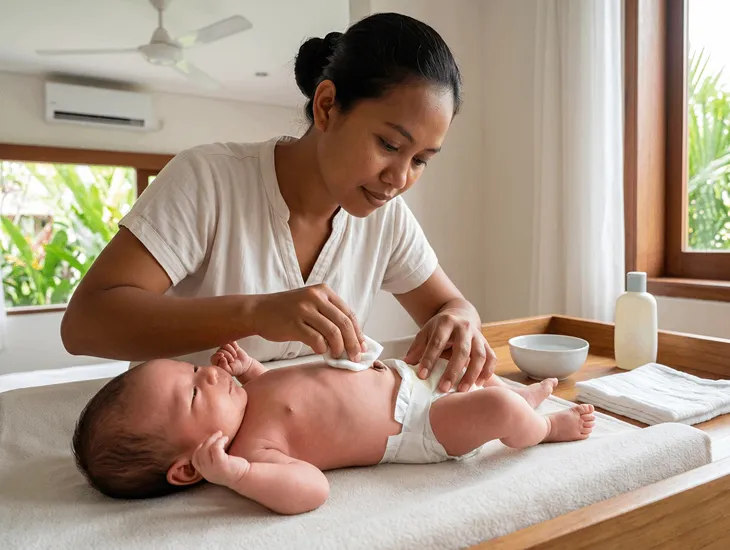
Newborn Umbilical Cord Care: Essential Tips for New Parents
Bringing a new baby home in Indonesia brings immense joy and sudden anxiety for foreign parents. The tropical heat and humidity create unique challenges for keeping delicate infant skin safely dry.
The remaining stump causes significant stress for highly anxious expatriate mothers and fathers. You might fear touching the sensitive belly area while dressing your crying infant after a sponge bath.
One accidental pull during a diaper change can cause painful bleeding instantly. The humid tropical climate actively encourages dangerous bacterial growth if the area remains consistently damp.
A severe infection requires an immediate trip to a local hospital. Sleep-deprived parents easily miss crucial early warning signs while managing constant nighttime feeding schedules.
The Indonesian Ministry of Health strongly emphasizes following strict dry healing protocols at home. Modern pediatric science simplifies this delicate healing process into highly manageable daily hygiene routines.
Mastering Newborn Umbilical Cord Care requires consistency and gentle, professional handling. A trained Babysitter in Indonesia provides vital guidance, ensuring your infant heals safely while you rest comfortably.
Table of Contents
What Normal Healing Looks Like
After birth, doctors clamp and cut the attachment, leaving a small stump behind. This remaining tissue gradually dries, shrivels, and turns a dark brown or black color naturally.
This crucial drying process typically takes between one and three weeks to complete. You must remain incredibly patient while the tissue slowly separates from your infant’s delicate belly.
Parents often notice a tiny amount of dried blood when the stump finally falls off. Slight bleeding remains normal as long as it stops quickly without continuous oozing.
If the stump remains firmly attached after three weeks, consult a medical professional immediately. Prolonged attachment sometimes indicates underlying immune issues that require proper clinical pediatric evaluation locally.
Proper navel healing means trusting the natural biological timeline. You must resist any sudden urge to speed up the delicate separation process at home.
A reliable local caregiver understands this medical healing timeline. They monitor the daily progression calmly, reassuring nervous parents that the dark color indicates healthy, normal drying.
Current Best Practices for Parents
Modern pediatric organizations globally advocate for strict dry cord management. You should avoid applying rubbing alcohol, as it actively delays the natural healing and separation process significantly.
The primary goal remains keeping the area exceptionally clean and perfectly dry always. Exposing the belly to fresh air speeds up the necessary tissue drying phase incredibly well.
If unexpected stool or urine soils the area, you must act quickly and calmly. Use mild baby soap and clean water to gently wash away the dangerous bacterial contamination.
After washing, you must never aggressively rub the sensitive skin with a towel. Use a soft cloth to gently pat the entire area dry without causing friction.
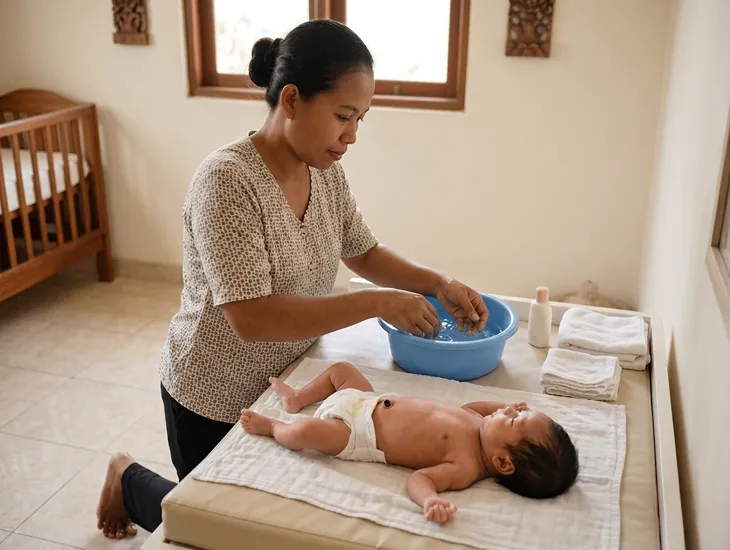
Skip traditional immersion baths until the stump detaches and fully heals. Daily sponge baths keep your baby clean without dangerously soaking the healing tissue in warm water.
Professional caregivers incorporate these strict hygiene protocols into their daily childcare routines. A trusted helper manages these delicate sponge baths while prioritizing your infant’s safety.
Protecting the Navel from Friction
Friction from tight clothing damages the healing tissue and causes unnecessary bleeding quickly. You must fold standard diapers carefully below the navel to prevent constant rubbing and irritation.
Purchasing specialized newborn diapers featuring a customized front cutout provides excellent daily protection. This brilliant design prevents harsh urine from soaking upwards into the vulnerable drying tissue.
Dress your infant in loose, breathable cotton clothing to promote continuous air circulation. Light fabrics allow the gentle tropical breeze to naturally dry out the sensitive navel area.
Avoid tight onesies that aggressively compress the stomach area during sleep or play. Physical compression physically traps dangerous moisture against the skin, increasing the risk of bacterial growth.
Successful navel hygiene involves remaining highly vigilant during every single diaper change. Parents must consciously check the fabric alignment to ensure the stump remains safely exposed.
An experienced caregiver manages these wardrobe adjustments flawlessly throughout their busy shift. They ensure your infant stays comfortable and safe from accidental fabric friction all day long.
Infection Warning Signs to Watch
While rare, severe navel infections require immediate and aggressive clinical medical intervention. You must actively monitor the surrounding skin for sudden spreading redness, intense warmth, or unusual swelling.
Pus or foul-smelling yellow discharge indicates a dangerous bacterial infection developing rapidly. Healthy healing tissue should never produce a strong, foul odor during the natural drying phase.
Continuous or increasing active bleeding from the base signals a serious medical emergency. You should apply gentle pressure and seek urgent pediatric care if the bleeding refuses to stop.
If your infant cries intensely when you accidentally touch the area, suspect infection immediately. Severe localized pain combined with unusual lethargy always warrants an emergency hospital visit locally.
The Indonesian Pediatric Society recommends rapid medical assessments for any newborn presenting a high fever. Systemic infections escalate incredibly fast in vulnerable infants living in tropical environments.
Your caregiver will actively look for these red-flag signs during every change. Their professional vigilance ensures you catch potential infections long before they become life-threatening emergencies.
Real Story: Beating Infection Fears in Sanur
Emily stared blankly at the nursery clock in Sanur, the red numbers flashing 3:00 AM. Her two-week-old son whimpered continuously, and every time she tried to change his diaper, he arched his back in obvious discomfort.
When she gently lifted his onesie, her heart dropped into her stomach. The base of his stump looked alarmingly red and inflamed, and the loose cotton newborn clothing felt slightly damp from the humid night air.
The thought of navigating a foreign hospital with a sick newborn terrified her. She needed a professional who truly understood clinical infant hygiene protocols to assess the situation immediately.
She contacted our childcare platform the next morning to hire a specialized newborn professional. The assigned caregiver arrived promptly, immediately recognizing the early signs of minor moisture irritation rather than a severe infection.
The caregiver demonstrated proper folding techniques to maximize airflow and keep the diaper low. She expertly managed the sponge baths, ensuring the sensitive belly remained exceptionally clean and dry over the next two days.
Within three days, the redness vanished entirely, and the dried stump separated naturally. Emily finally exhaled, profoundly grateful that expert intervention had prevented a serious medical disaster.
Local Traditions and Modern Advice in Bali
Balinese culture celebrates the detachment of the stump with a beautiful traditional ceremony. This meaningful ritual honors the spiritual connection between the newborn child and their loving family.
Historically, local communities applied traditional herbal powders and warm oils to the belly. These ancient practices aimed to protect the child from harmful spiritual and physical ailments locally.
However, modern medical professionals strongly advise against applying any foreign substances at home. Clinical studies prove that traditional powders significantly delay healing and introduce dangerous environmental bacteria quickly.
Local midwifery programs now actively promote evidence-based dry healing methods across the island. These educational initiatives successfully reduce severe neonatal infection rates within rural and expatriate communities alike.
You can safely honor beautiful local ceremonies while maintaining strict modern medical hygiene. Newborn Umbilical Cord Care requires following clinical science rather than outdated, potentially dangerous home remedies.
A professional caregiver respects your cultural wishes while strictly enforcing medical safety. They bridge the gap between rich local traditions and necessary modern pediatric health standards.
How a Professional Helps Daily
Navigating newborn hygiene leaves foreign couples feeling incredibly drained physically. A trained childcare provider offers crucial respite during these intensely demanding early postpartum weeks.
They handle the meticulous daily hygiene routines with incredible confidence and precision. You can finally rest knowing a trained expert is actively managing your infant’s delicate physical recovery.
Caregivers perform gentle sponge baths that completely avoid soaking the healing navel tissue. Their expert handling prevents accidental tugging or painful friction during slippery and chaotic bath times.
They meticulously fold diapers and dress the infant in climate-appropriate clothing every morning. This proactive clothing management guarantees optimal air circulation for the vulnerable abdominal area continuously.
A vetted Babysitter in Bali knows exactly what healthy healing looks like daily. They provide immense peace of mind by confirming that the dark, shriveled appearance remains normal.
This dedicated support system empowers exhausted parents to recover their own physical strength. Professional assistance transforms a highly stressful medical obligation into a smoothly managed daily household routine.
Essential Screening for Childcare Support
Because hiring unvetted help can expose your newborn to unsafe hygiene practices, you must rigorously screen potential candidates for verified infant experience and medical emergency training.
Reputable agencies conduct comprehensive background checks and mandate rigorous pediatric health assessments. This vital vetting process ensures that only highly qualified professionals enter your private family sanctuary.
We specifically test our candidates on current pediatric hygiene protocols and safety standards. They must demonstrate a flawless understanding of dry healing methods before ever accepting a placement.
Caregivers receive explicit instructions to never apply unprescribed creams or traditional herbal remedies. Strict adherence to parental and medical guidelines remains our absolute highest professional priority always.
Our internal protocols require immediate communication if any alarming physical symptoms suddenly appear. This rapid escalation process ensures your child receives urgent medical attention without unnecessary delays.
Investing in perfectly matched professional support guarantees your child’s ultimate health and safety. Proper Newborn Umbilical Cord Care becomes effortless when managed by a dedicated, trained specialist.
FAQs about Newborn Umbilical Cord Care
Q: How long does the stump usually take to fall off naturally?
A: It typically dries, shrivels, and falls off naturally between one and three weeks after birth.
Q: Can I give my baby a normal tub bath safely?
A: No, you should only provide gentle sponge baths until the stump detaches and heals completely.
Q: What should I do if the diaper covers the stump?
A: Always fold the front of the diaper down to prevent friction and urine from soaking it.
Q: Is a little bit of bleeding completely normal?
A: Yes, a few drops of dried blood are normal during the final separation phase.
Q: When should I take my baby to the doctor immediately?
A: Seek urgent care if you notice spreading redness, foul-smelling pus, high fever, or continuous bleeding.

