
Personal Cook in Bali: Weekly Meal Prep for Villa Living
Living in a tropical villa is appealing, but managing daily meals becomes a chore. Expat families often struggle to balance work and healthy eating while navigating local markets.
Cooking three times a day quickly loses its appeal for most parents. Relying on food delivery apps leads to unhealthy habits and mounting plastic waste in your home.
Without a structured meal plan, you end up eating repetitive dishes. The stress of grocery shopping adds difficulty to your daily routine during your stay.
Hiring a personal cook in Bali transforms your experience by managing your weekly menu. These professionals shop for fresh ingredients and prepare ready-to-eat meals for your fridge.
By following professional childcare standards for hygiene, these cooks ensure your family eats well. You get restaurant-quality food at home without the hassle of cleaning.
Establishing a weekly routine with a professional returns valuable time to your schedule. It allows you to focus on your time in Indonesia while maintaining a healthy diet.
Table of Contents
What Weekly Meal Prep Looks Like in Bali
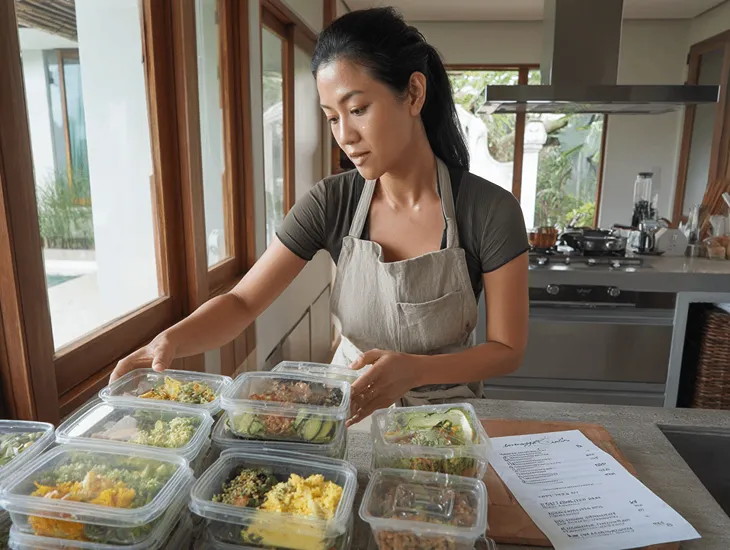
A typical setup involves the cook visiting your villa two or three times per week. They spend a few hours preparing multiple dishes stored for later consumption.
This model combines efficiency with freshness for busy households. Some families prefer a mix of prep days and fresh cooking days for variety throughout the week.
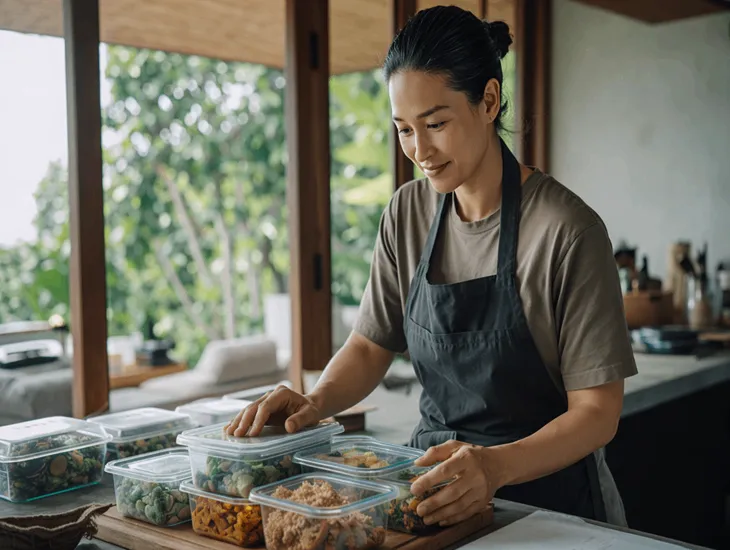
The cook handles everything from washing produce to packaging meals in labeled containers. This organization simplifies your week and ensures every family member can grab a healthy meal instantly.
Menu planning is collaborative, allowing you to request specific dishes or ingredients. This flexibility ensures that your dietary preferences are met without the daily decision fatigue of cooking.
Your cook organizes the refrigerator to maximize freshness and space. Clear labeling with production dates prevents confusion for the family members. This system ensures safety for leftovers consumed later.
Reheating instructions are often provided for each specific dish prepared. This ensures that the food retains its texture and flavor when you are ready to eat.
Screening Vetting and Safety Standards
Villa owners must prioritize candidates with proven experience in reputable hotels. References from previous long-term clients are essential to verify reliability and cooking skills before hiring.
Hygiene is non-negotiable in open-concept kitchens where food is exposed. A personal cook in Bali must understand safe food handling to prevent spoilage and contamination in the tropics.
Check if the candidate has knowledge of allergen management for sensitive family members. Willingness to follow strict kitchen rules regarding cleanliness is a key indicator of professionalism.
Conducting a background check ensures that the cook has a clean record. This step is crucial for maintaining the safety and security of your private villa.
Ask previous employers about the cook’s punctuality and general attitude. A skilled cook must also be reliable with handling petty cash. Honesty regarding grocery change is just as important.
Verify their understanding of kitchen sanitation protocols using a simple checklist. They should use separate cutting boards for meat and vegetables to avoid cross-contamination risks.

Step by Step Hiring Process
Start by consulting your villa management or searching local platforms. Look for professionals who specialize in weekly meal prep rather than just one-off dinner events.
Define the scope of work clearly, including the number of days required. Specify any dietary restrictions like Halal or gluten-free to ensure the cook can meet your needs.
Conduct a paid trial day where the cook prepares a full day’s worth of meals. This allows you to assess cooking speed, taste, and how clean they leave your kitchen.
Review the cook’s portfolio to see examples of their previous work. Photos of plated meals and organized fridges can give you a good idea of their standards.
Prepare a list of your family’s favorite ingredients before the trial. Discussing brand preferences for milk or butter prevents disappointment. Clear instructions lead to better results from day one.
Provide immediate feedback after the trial meal to gauge their adaptability. A professional will welcome constructive criticism and adjust the salt or spice levels accordingly.
Defining Menu Styles and Diets in Bali
Families often request a fusion of Balinese flavors and Western comfort foods. A skilled professional adapts their repertoire to suit picky toddlers and adventurous adults alike.
Clear communication about portion sizes prevents wasted food and unhappy children. A personal cook in Bali should customize every dish to your specific preferences and appetite.
Weekly menu planning sessions ensure you never get bored of the same meals. You can request special themed nights or lighter options depending on your schedule.
Discussing ingredient preferences helps the cook shop more effectively. Knowing whether you prefer organic produce or local market finds allows them to budget accordingly.
Vegetarian families often request tempeh and tofu variations for protein. A skilled cook knows local plant-based recipes that are delicious. This ensures you get nutrients without imported meat alternatives.
Be specific about “spicy” levels when ordering local Indonesian dishes. What is mild for a local might be too hot for a foreigner. Tasting sauces during prep helps avoid errors.
Fees, Salary Rates, and Timelines
Rates for weekly meal prep services are typically structured as a recurring retainer. This provides stability for the cook and a predictable cost for the family budgeting process.
Groceries are billed separately based on actual receipts from local markets. Some cooks add a small handling fee. This transparency ensures you only pay for what you eat.
Booking your cook at least two weeks in advance is recommended. Popular professionals often have full schedules, so securing your slot early ensures consistent service during your trip.
Clarify if the fee includes travel expenses for the cook. Depending on your villa’s location, you may need to cover their transport costs if they commute far.
Establish a petty cash system for daily market runs to streamline payments. Reviewing receipts weekly keeps the household budget on track. This transparency builds trust between you and the staff.
Discuss overtime rates if you occasionally need dinner service for guests. Extra hours should be compensated fairly to maintain a good relationship with your cook.
Key Risks and Cultural Points
Informal arrangements without a written agreement lead to disputes over pricing. Document the agreed hours, duties, and payment terms to avoid misunderstandings later on.
Cultural mismatches occur if expectations around cleaning are not clarified upfront. Be specific about whether you expect the cook to set the table or just prepare the food.
Safety around children is paramount, especially if the kitchen is near the pool. Ensure the cook understands your house rules regarding knife safety and supervision while working in the villa.
Respecting local holidays and customs fosters a positive working relationship. Discussing time off for ceremonies ensures that both parties are happy with the arrangement.
Clarify if you will provide lunch for the cook during their shift. It is polite to offer water and a simple meal. This gesture fosters goodwill and loyalty during long days.
Set boundaries regarding personal phone use during working hours. A professional should focus on the task at hand, especially when using sharp knives or hot stoves.
Real Story: Maya’s Kitchen Reset in Canggu
Maya (34, UK) moved to a villa in Canggu with two toddlers. She quickly realized that managing three meals a day was impossible while running her online business.
The local warung food was too spicy for her children to eat. Maya struggled with the logistics of feeding her family healthy meals. She needed a consistent solution.
She hired a personal cook in Bali through a local agency recommendation. The cook stocked her fridge with healthy, kid-friendly meals. Maya reclaimed her evenings and reduced her stress.
Age Appropriate Menus and Activities in Bali
A good cook knows how to hide vegetables in sauces for kids. They prepare fun, colorful plates that appeal to picky eaters without compromising on health or nutrition.
Some professionals offer simple cooking activities for children as an add-on. Making fruit kebabs or decorating cookies can be a fun way to involve kids in food.
These interactive sessions help children learn about local ingredients and flavors. It turns mealtime into an educational experience rather than just a daily necessity for the family.
Encouraging children to taste new foods expands their palate. A patient cook can introduce mild Balinese dishes that are suitable for young taste buds.
Older children may enjoy a guided tour of the local market nearby. The cook can teach them how to select ripe fruit. This experience connects them to the culture of the island.
Simple tasks like washing vegetables can be delegated to children. This involvement helps them appreciate the effort that goes into preparing a meal for the family.
FAQs personal cook in Bali
Q: How much does a weekly cook cost?
A: Weekly rates range from IDR 1 to 1.5 million plus grocery costs.
Q: Do I need to provide recipes?
A: Most cooks have their own repertoire but welcome specific family recipes.
Q: Can the cook handle allergies?
A: Yes, professional cooks are trained to manage cross-contamination and strict dietary rules.
Q: Is grocery shopping included?
A: Shopping time is included, but ingredients are billed separately based on receipts.
Q: Do I need to pay a deposit?
A: Yes, a deposit is standard to secure the cook’s schedule for your stay.
Q: Can the cook prepare baby food?
A: Yes, they can prepare fresh purées and age-appropriate finger foods for infants.

