
Review Us
Sea Walking in Bali – Dry-hair underwater excursions, safe marine tours, and family adventures
author

Sanur Sea Walking in Bali: Dry-Hair Kids Plan

Finding unique marine activities for children while traveling often causes anxiety for cautious parents. Navigating unfamiliar underwater excursions abroad leaves expatriate families feeling hesitant. This initial planning phase becomes incredibly stressful quickly.

Without knowing local safety standards, ensuring your family enjoys a secure aquatic experience becomes difficult. The desire for memorable marine interactions makes finding age-appropriate attractions essential. Every parent wants safe fun.

This worry can easily take the fun out of your family holiday. When parents cannot confidently find safe underwater recreational zones, exploring the ocean feels like a gamble. The anxiety ruins everything.

Fortunately, discovering professionally guided activities drastically eases this difficult transition for traveling families. Choosing operators that enforce strict safety protocols transforms exploration into a worry-free island experience. This approach guarantees better trips.

Reviewing water safety guidelines from the Indonesian Ministry of Health ensures your chosen activities meet essential standards. Consulting local resources helps ensure your family’s marine experience remains safe and well-maintained. Preparation is incredibly vital.

By researching these specialized locations, parents can confidently experience aquatic helmet tour. These carefully vetted excursions provide essential marine education, safe social engagement, and absolute peace of mind. Everyone enjoys the vacation.

Participating in Sanur Sea Walking in Bali is a fantastic way to introduce children to the ocean. It offers a gentle, highly controlled environment for their very first underwater exploration.

What is Sanur Sea Walking in Bali?

Sea walking uses specially designed, weighted helmets connected securely to surface air compressors via hoses. Guests walk comfortably on the shallow seabed along a metal walkway. It is usually five meters deep.

This unique setup allows participants to breathe normally without requiring any specialized diving certification. The innovative helmet design keeps the air trapped safely around the head. It ensures a highly comfortable experience.

Tour descriptions explicitly state that participants can comfortably wear prescription glasses during the walk. The face is never exposed directly to the ocean water. It keeps hair completely dry throughout.

Underwater time is typically around thirty minutes, allowing ample time to observe marine life. The total trip time usually takes about two hours. This includes the briefing and quick boat transfer.

Understanding the basic mechanics of Sanur Sea Walking in Bali helps alleviate any initial fear. It is remarkably straightforward and requires absolutely no previous diving experience to enjoy safely.

Strict Age Limits and Suitability

Child Safety in Bali – Age limits, height requirements, and secure marine exploration for kids

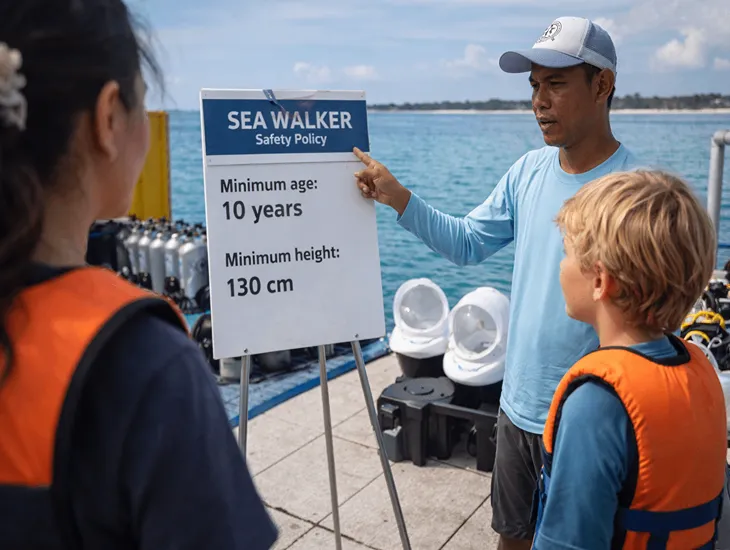
Operators impose very specific age restrictions to ensure the physical safety of younger participants. Many established providers strictly set a minimum age requirement of ten years old. This rule is highly enforced.

Some operators clearly list a minimum height requirement of 130 centimeters alongside age limits. This ensures the heavy helmet fits correctly on the child’s small shoulders. Comfort underwater is strictly prioritized.

While some marketing materials suggest seven-year-olds can participate, ten is the safest general guideline. A shifting helmet underwater can cause severe panic and extreme difficulty signaling. This triggers immediate emergency help protocols.

Parents must treat this activity as suitable only for highly water-confident children. Non-swimmers or anyone who feels claustrophobic should completely skip this excursion. Safety must always come first here.

Age restrictions are a critical component of safe Sanur Sea Walking in Bali. They exist solely to protect smaller children from the physical demands of the heavy equipment used.
Medical Screening and Health Rules

Beyond strict age limits, operators enforce comprehensive medical screening protocols before allowing anyone inside. Participants must be generally healthy and completely free from any cardiovascular medical conditions. Passing this check is mandatory.

Operators state that people with asthma, heart problems, or severe lung issues cannot participate. Chronic sinus infections, recent ear surgeries, and pregnancy also rule out this activity. These rules are non-negotiable standards.

Children must clearly understand the pre-dive briefings and effectively equalize their ear pressure independently. If your child struggles with painful ear pressure during flights, this activity hurts. Equalizing correctly is entirely crucial.

If you have any doubts about these health requirements, it’s safest to skip the activity. Parents must always prioritize their child’s physical safety over the desire for photographs. Skipping prevents potential severe emergencies.

Medical transparency is vital before attempting Sanur Sea Walking in Bali. Never lie on a medical questionnaire just to ensure your child gets to participate.

Understanding Safety Protocols and Gear

Standard safety features include certified divers accompanying every single group underwater constantly. Operators guarantee that a professional instructor will remain with you closely at all times. They monitor the seabed walk continuously.

The specialized helmets weigh approximately thirty kilograms on land, requiring significant physical strength initially. However, they only weigh about five kilograms in the water. This is due to natural underwater buoyancy.

Despite the buoyancy, the helmets remain bulky, directly reinforcing the strict minimum height guidelines. The walking depth is deliberately shallow to minimize risks. Participants hold a fixed handrail throughout the session.

Sessions are promptly canceled or rescheduled if poor weather or rough sea conditions arise. Families must verify that their chosen operator includes comprehensive insurance coverage. Checking the policy details is highly recommended.

The equipment used during aquatic helmet tour is meticulously maintained for passenger safety. Regular inspections are conducted to ensure the air compressors function perfectly at all times.

Real Story: Santiago's Underwater Adventure in Bali

Mid-2023 in Sanur. Santiago, a 46-year-old father from Mendoza, Argentina, found himself pacing the beach with a tricky dilemma. His daughter absolutely loved the ocean, but she wasn’t a strong swimmer.

Standard snorkeling trips were off the table due to her immense fear of deep water. Between the blazing sun and busy vendors, figuring out a safe way was tough. He needed an unforgettable marine solution.

He searched forums and discovered the strict safety protocols for aquatic helmet tour. Carefully reviewing the equalization techniques helped reassure his anxious mind completely. He booked a certified morning session.

Practicing the hand signals before their session transformed their morning into a joyful experience. The controlled environment helped her relax instantly. This allowed the Argentine family to enjoy the coral reefs happily.

Santiago’s thorough research guaranteed a successful Sanur Sea Walking in Bali experience. He found the perfect balance between adventure and absolute safety for his nervous daughter.

Key Risks and Drowning Context

Drowning Prevention in Indonesia – Water safety, emergency hand signals, and marine risk prep

Drowning remains a major cause of child mortality, requiring vigilant supervision around any water. Researchers strongly emphasize the critical need for realistic risk perception. Booking any recreational aquatic activity requires deep caution.

While marketed as suitable for non-swimmers, serious reviews warn that anxious kids may panic. If the helmet feels too heavy, communication underwater is incredibly difficult. Equalizing ears can also become very painful.

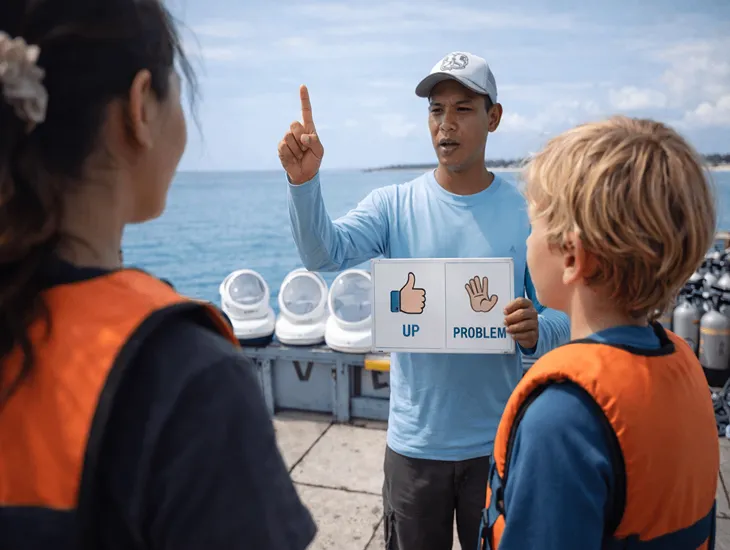
Parents must brief their children thoroughly on how to use vital hand signals effectively. Teaching the signs for “up” and “problem” prevents severe communication breakdowns. It is crucial to understand these basics.

Ensure the child understands it is perfectly acceptable to abort the dive anytime. Parents should carefully observe the first group and watch the professional instructors respond. You reserve the right to cancel immediately.

Acknowledging these risks makes aquatic helmet tour a much safer endeavor. Education and clear communication are your best tools for preventing panic underwater.

Structuring a Dry-Hair Kids Outing

A typical morning begins by arriving at the designated beach location for screening. Completing the mandatory medical questionnaire is the very first critical step. Participants are then fitted with heavy helmets carefully.

Adult prices generally range from sixty to eighty dollars, with various child discounts available. Since there isn’t a standard price list across all providers, it’s best to verify the cost directly before booking.

Reviewing the Ministry of Tourism and Creative Economy advice suggests booking morning sessions. After the thrilling thirty-minute underwater walk, families return to shower and quickly change clothes. Packing fresh, dry clothes is absolutely essential.

While hair and faces remain completely dry, swimsuits will definitely get quite wet. Following the activity, families can easily continue with nearby relaxing kid-friendly activities. Planning a full rinse-off removes residual salt.

Structuring your aquatic helmet tour excursion in the morning avoids the afternoon heat. It leaves the rest of the day free for a relaxing lunch and pool time.

Cultural Expectations and Common Misunderstandings

Aggressive marketing often emphasizes that swimming is not required for this unique attraction. This can unfortunately give eager families a dangerously false sense of total security. The activity is not an aquarium visit.

In reality, it remains a serious compressed-air underwater activity carrying significant physiological risks. If standard procedures fail or safety instructions are ignored, situations become dangerous. Panic makes these scenarios much worse rapidly.

Local communities sometimes underestimate the severe drowning risks present in seemingly controlled water settings. Public-health research strongly calls for significantly better education regarding child drowning susceptibility. Formal marine safety measures need immense improvement.

Aquatic helmet tour is undoubtedly a memorable underwater option for confident kids. However, it is absolutely not a casual beginner water play activity. It is completely unsuitable for nervous non-swimmers.

Understanding the reality of aquatic helmet tour sets the right expectations. It prevents parents from pushing terrified children into an activity they are not ready for.

FAQs about Sanur Sea Walking in Bali

Q: What is the minimum age for participating in this activity?

A: While some operators say seven, the safest minimum age is nine or ten years old.

Q: Will my hair really stay completely dry underwater?

A: Yes, the helmet design traps air, keeping your face, hair, and glasses completely dry throughout the walk.

Q: Is this activity safe for children who cannot swim?

A: It is marketed for non-swimmers, but anxious children may panic, so strong water confidence is highly recommended.

Q: Can my child participate if they have asthma?

A: No, anyone with asthma, heart problems, or severe lung issues is strictly prohibited from participating.

Q: How deep do we actually go during the walk?

A: The fixed walkway is typically located in relatively shallow water, about four to five meters deep.

Q: Why is planning for Sanur Sea Walking in Bali important?

A: It ensures your child meets the strict age and medical requirements for a safe, enjoyable experience.


If you need a nanny while experiencing Sanur Sea Walking in Bali, chat with our team on WhatsApp now!