
Review Us
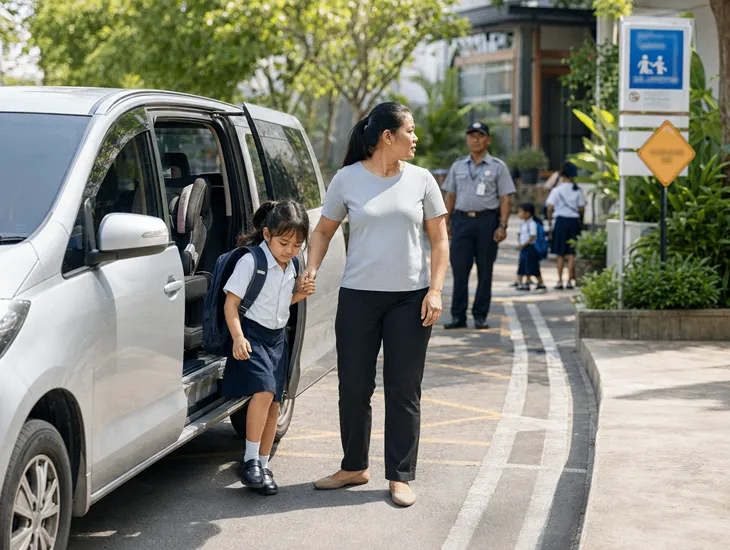
School Commute Safety Tips in Bali 2026 – Professional caregiver ensuring safe drop-off for students in a protected vehicle
author

School Commute Safety Tips in Bali: Keeping Kids Safe on the Road

Organizing a school run in a foreign country is challenging. You want the best education for your children, but the roads create significant risks that feel overwhelming for parents in Indonesia.

Parents worry about where their children spend the commute. You see other kids navigating traffic and wonder if your chosen transport method is truly secure. This uncertainty breeds constant family stress every morning.

Professional support provides the missing link. A skilled caregiver bridges the gap between your home environment and the school gates for active young kids. This helps your child arrive focused and safe.

Expert guidance identifies exactly what your child needs. You do not have to guess at standards. Targeted support from a vetted expert creates a clear, achievable path for your young student to succeed.

Following effective School Commute Safety Tips in Bali transforms your daily routine into meaningful progress. These protocols focus on protection, ensuring your child gains confidence during your family’s stay on the island.

We help you navigate these complex requirements easily. Read official Indonesian child safety guidelines to understand national standards before you begin your daily journey toward enrollment for your growing child.

Unique Traffic Challenges for Students

Traffic on the island presents unique challenges for families. Road accidents remain a serious concern. Reliable data shows thousands of incidents annually. Most involve motorcycles, which are dangerous for young passengers.

Congestion during peak hours creates constant delays. Parents often feel rushed, leading to risky driving behaviors. A calm, professional approach is the only way to manage these daily road hazards effectively.

Commute safety requires specialized preparation. You must consider vehicle type, driver experience, and route knowledge. Never assume that standard transport services prioritize the safety protocols that your children specifically need every day.

Dedicated supervision provides an essential safety layer. A professional caregiver understands defensive driving. They remain vigilant, ensuring your child is never exposed to the chaos of open traffic flows on their way.

Standard transport options often lack necessary safety features. Many taxis do not have installed child seats. Prioritize services that guarantee proper equipment to ensure your children remain protected during the morning school run.

Late morning traffic requires immense patience. Professionals manage these periods systematically. This structured approach keeps the children calm during their commute to school, avoiding the stress caused by sudden delays on the road.

Proper planning eliminates chaos during transitions. Professionals manage loading times systematically. This structured approach keeps the children calm during their commute to school, ensuring they arrive ready to start the day.

Age-Appropriate Safety Measures

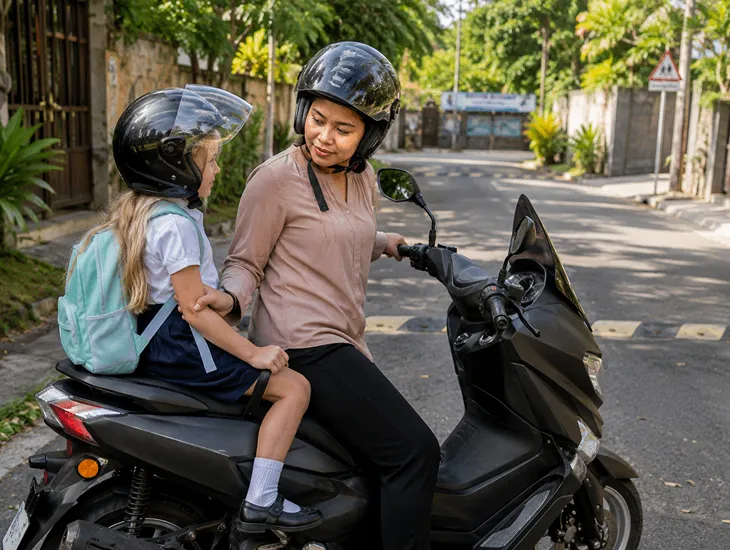
School Commute Safety Tips in Bali 2026 – Caregiver supervising a child safely secured in a motorbike

Infants and toddlers must use properly installed, age-appropriate car seats. Never allow a child to sit on a lap or ride without a secured belt. This requirement is non-negotiable for student safety.

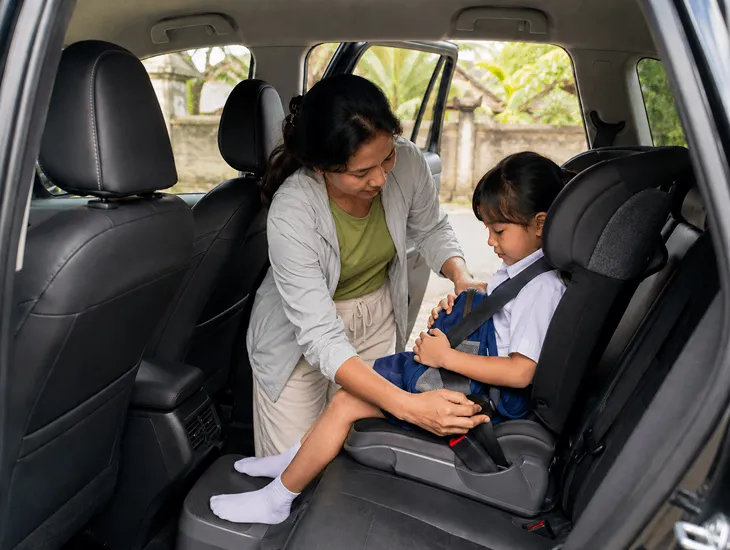
Preschoolers require booster seats until they reach the correct height for a standard belt. A properly positioned seatbelt crosses the shoulder and hip securely. This setup protects them during any sudden stops.

School-age children should always occupy the back seat. Never allow a child to ride in the front seat, regardless of their height or age. The rear provides the safest protection during unexpected impacts.

If using a motorcycle for transport, helmets are mandatory. Ensure the helmet fits properly, with the strap snug under the chin. A loose helmet offers zero protection in the event of an accident.

Supervision is vital for children walking to school. Adults should accompany students under the age of ten at all times. Never allow young children to navigate busy intersections or parking lots completely alone.

Teach children to be visible to drivers. Bright clothing helps during early morning or rainy conditions. Remind students to always wait for the vehicle to come to a complete stop before entering.

Safety education starts at home. Discuss road rules with your child regularly. Understanding why we use seats or helmets makes the transition to school transport easier and more secure for every student.
Commute Route Assessment and Planning

Traffic variability makes route planning difficult. A road might take ten minutes during off-peak times but forty minutes during rush hour. You must test your route during actual school drop-off hours.

Ceremony road closures occur frequently. These events often block major thoroughfares without warning. Always identify two or three backup routes to ensure you can reach the school regardless of local traffic blockages.

Rainy season flooding presents another significant obstacle. Certain roads become impassable during heavy downpours. Select a provider that monitors weather conditions and communicates route changes before the morning journey begins for you.

Proximity is a major safety factor. If possible, choose housing close to the school. A shorter drive significantly reduces the time your child spends in traffic, lowering fatigue and improving daily focus.

Google Maps estimates are often unreliable. Never rely solely on digital traffic predictions. Add a significant buffer to your departure time to avoid feeling rushed, which encourages risky driving behaviors on the road.

Regularly monitor your commute for changes. New construction or roadworks can disrupt even the most established routes. Keeping communication open with your driver or caregiver helps you navigate these daily changes effectively.

Consistency helps children feel secure. When you follow the same route and routine, the child learns to expect the journey. This predictability makes the transition to school much smoother for your child.

Choosing Reliable Transportation Options

Hiring a private family driver is often the safest choice. A trained professional understands local routes and safety standards. They provide consistency, ensuring the same person handles your child’s daily transport needs.

A professional caregiver with driving skills offers a dual advantage. They manage the morning routine, breakfast, and the school run. This continuity reduces the number of transitions your child experiences each day.

School buses are another viable option if available. Verify the company’s safety protocols before signing up. Check driver qualifications, vehicle maintenance schedules, and the presence of safety equipment like fire extinguishers inside.

Parent self-driving requires significant time commitment. You must navigate the drop-off line and handle the traffic yourself. This consumes hours every week, leaving less time for work or other essential daily tasks.

Avoid using taxi apps for daily school runs. Drivers change constantly, meaning there is no established relationship with your child. Most vehicles lack proper child seats, which is a major safety violation.

Professional agencies offer vetted solutions. They provide background checks, training, and regular health examinations for their staff. This removes the stress of vetting individuals yourself and guarantees a high level of service.

Assess your specific family needs before choosing. Consider the age of your children, your work schedule, and the distance to school. A customized transport solution is the foundation of a successful school year.

Real Story: Logistics Solved in Berawa

Leon, a designer from Germany, lived in Berawa. He struggled with constant friction at home, especially when his sitter seemed unhappy during long shifts. The tension affected the home environment for everyone.

Leon felt lost regarding his expectations. He needed a way to align his needs with his sitter’s professional requirements. The situation felt unsustainable for his family’s long-term needs.

He utilized our agency service to define clear expectations. Our team provided structured job briefs. Leon realized he had never formally defined the scope of work or mandatory break times clearly enough.

The change was immediate. He provided a one-hour lunch break daily. He clarified that the Babysitter in Bali was a childcare expert, not a housekeeper. This restored the sitter’s professional confidence instantly.

The home became harmonious again. Mia thrived under a calm, energized caregiver. Leon finally maintained his business focus without guilt. He learned that a clear partnership is the key to childcare success.

By establishing this trusted relationship, Leon finally found his balance. He realized why hiring a professional caregiver is essential for maintaining peace of mind while running a business abroad with young children.

Vehicle Safety Standards and Equipment

School Commute Safety Tips in Bali – properly fitted child seats, working seatbelts, and safe, well‑maintained vehicles for school journeys.

Properly installed child seats are the most important safety equipment. Ensure the seat matches your child’s weight and height. An improperly installed seat offers little protection during a sudden stop or impact.

Functional seatbelts are mandatory for all passengers. Check that every belt clicks securely and retracts properly. Do not allow children to ride in vehicles with broken or missing seatbelts under any circumstances.

A well-maintained vehicle is critical for safety. Brakes, tires, and lights must be checked regularly. A vehicle breakdown on a busy highway is dangerous and stressful for you and your young children.

Include a first aid kit in the car. It should contain bandages, antiseptic, and any specific medications your child needs. Being prepared for minor injuries helps you manage small problems without panic.

Keep the vehicle interior clean and comfortable. A cool, air-conditioned environment prevents heat exhaustion. Tropical heat can quickly become oppressive during traffic jams, making the ride difficult for young, sensitive passengers.

Emergency tools like a fire extinguisher and glass breaker are essential. Keep these items accessible in case of an accident. They allow you or your caregiver to respond quickly to unforeseen situations.

Regular professional maintenance is the best prevention. Schedule inspections for your transport vehicle frequently. Knowing your vehicle is in top condition provides the peace of mind you need for school runs.

School Pickup and Drop-off Protocols

Punctuality ensures your child enters school calmly. Arrive ten to fifteen minutes before the bell rings. This prevents the rush associated with late arrivals and allows your child to settle in comfortably.

Follow the designated school drop-off zone. Never double-park or stop in traffic to let your child out. These dangerous behaviors create risks for your child and other students arriving at the school.

Always ensure your child exits curb-side. Opening a door into traffic is extremely dangerous. Train your child to wait until the vehicle is stopped completely before exiting the car or bus.

Make eye contact with the teacher or staff during pickup. Ensure they know your child is leaving with the authorized caregiver. This basic verification protects your child and maintains school security standards.

Communicate daily needs during the drop-off. If your child had a difficult morning or needs extra attention, tell the teacher directly. This keeps the school informed and helps them support your child better.

Have a clear emergency contact plan. The school must have the current number for your caregiver or driver. If traffic delays your arrival, inform the school office immediately to prevent student worry.

Maintain a calm, positive attitude during transitions. Your mood affects your child’s emotional state. A cheerful drop-off starts the school day well, setting the stage for learning and social engagement for kids.

Seasonal Weather Considerations in Bali

The rainy season brings significant hazards to Bali roads. November through March require extra caution. Anticipate heavy downpours that reduce visibility and create flooding in low-lying areas. Always allow extra travel time.

Dry season heat poses its own risks. Ensure your vehicle has strong air conditioning to keep the interior cool. Dehydration happens quickly in tropical traffic, so always keep fresh water available in the car.

Ceremony seasons often disrupt traffic patterns. Galungan and Kuningan bring many road closures and processions. Stay updated on local announcements and prepare for slower commutes during these important cultural holidays and events.

Prepare your commute plan accordingly. If the weather looks severe, consider alternative transport or discuss remote options with the school. Prioritizing safety over attendance is the right choice during extreme weather events.

Monitor the news for traffic updates. Local sources often report flooding or accidents that Google Maps might miss. A well-informed driver or caregiver can choose better routes to keep your child safe.

Adaptability is essential for success. Weather in the tropics changes rapidly. Being flexible with your plans protects your family from unnecessary stress and ensures a smooth, safe journey every single day.

Consistent monitoring makes you a proactive parent. When you anticipate weather risks, you prepare better. This foresight ensures your child reaches school safely, regardless of the challenges the tropical environment may present.

FAQs about School Commute Safety Tips in Bali​

Q: Should I trust Google Maps for school runs? 

A: No, traffic varies greatly; always test routes during school hours with a buffer.

Q: Can caregivers drive children safely? 

A: Yes, professional caregivers in Indonesia can drive if they hold a valid local license.

Q: What safety equipment is mandatory? 

A: Always use age-appropriate car seats and helmets for all children in vehicles.

Q: Is taxi app transport recommended? 

A: No, avoid apps for daily school runs due to inconsistent car seats and drivers.

Q: What should be in a car emergency kit? 

A: Keep a first aid kit, extra water, snacks, and medications for children handy.

Q: Are sitters trained in first aid? 

A: Yes, professional caregivers in Indonesia often hold certifications for basic safety and emergency handling.

Need help with School Commute Safety Tips in Bali, Chat with our team on WhatsApp now!