
Review Us
Ubud Monkey Forest 2026 – sacred sanctuary visits, safe monkey encounters and temple-respect tips
author-2

Ubud Monkey Forest: What Families Should Know First

Managing an international business from a tropical island is difficult. Many expatriate families want to explore iconic wildlife sanctuaries during their downtime. However, bringing toddlers to natural habitats often creates immense parental anxiety.

Wild animals are unpredictable and highly habituated to tourists in Indonesia. The prospect of a monkey snatching a bag or scratching a child is terrifying. Parents often spend the trip managing crises instead of relaxing.

This constant vigilance ruins the relaxing family outing you planned. You cannot appreciate the ancient temples when you are desperately guarding your children. The stress of maintaining strict safety rules leads to complete exhaustion.

You need a solution that balances family adventure with absolute security. A reliable professional support system is vital for navigating complex tourist spots. This ensures your children learn about nature without unnecessary physical risks.

The Ubud Monkey Forest is a stunning natural sanctuary housing over 1,260 free-roaming macaques. Reviewing safety protocols from the Indonesian Ministry of Health regarding wildlife encounters is the first step in planning.

Essential Basics of the Ubud Monkey Forest

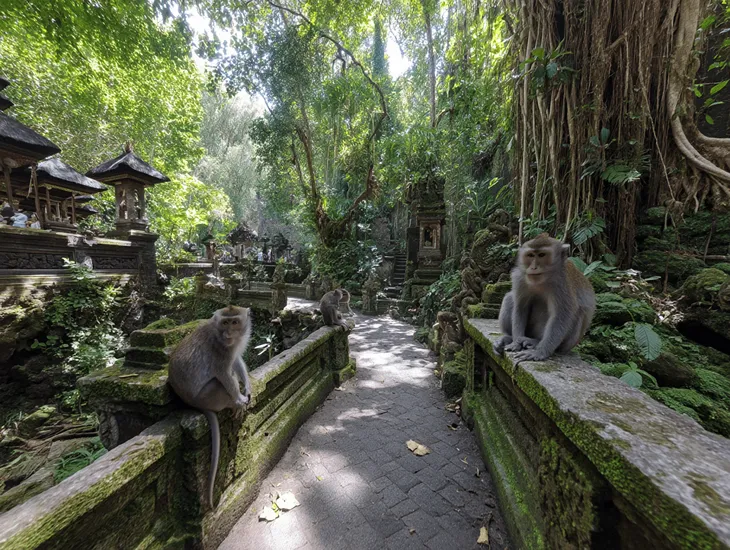
The Sacred Monkey Forest Sanctuary is a massive natural complex. It features ancient banyan trees and three sacred temples. Over 1,260 long-tailed macaques call this beautiful sanctuary their permanent home.

The sanctuary operates daily from 09:00 to 18:00 for visitors. The final entry is permitted at 17:00. Arriving early in the morning helps families avoid the dense midday crowds and intense tropical heat.

Entry fees are very structured and highly affordable. Adults pay IDR 80,000 while children between 3 and 12 years pay IDR 60,000. Children under three years old enter the facility for free.

This environment is suitable for young kids but requires continuous, hands-on adult supervision. It is a wild habitat and not a petting zoo. Visitors must treat the animals and the grounds with absolute respect.

A professional Babysitter in Bali ensures this continuous supervision. They brief your children on how to behave before entering the gates. This proactive approach sets a calm and respectful tone for the visit.

Having an extra set of watchful eyes is crucial in a wild environment. Caregivers allow parents to absorb the cultural beauty of the temples. The entire family enjoys a safe and memorable excursion.

Strict Safety Rules and The Absolute Do Nots

Ubud Monkey Forest 2026 – central Ubud location, sacred temples, shaded jungle paths for families

The sanctuary has strict rules designed to prevent monkey aggression. These published guidelines also prevent tourist injuries during interactions. For expatriate families, following these specific rules is completely non-negotiable.

Do not make direct eye contact with the animals. Staring directly into a monkey’s eyes is interpreted as a threat or a challenge to fight. You must teach your children to look away immediately.

Do not touch, pet, or grab the monkeys under any circumstances. This rule applies strictly to the baby monkeys as well. Touching them will trigger an aggressive defensive response from the adult macaques.

If a monkey climbs on you or your child, do not panic. Do not scream, wave your arms, or run away. Stay still, avoid eye contact, and walk away slowly until the animal jumps off.
Managing Bags, Accessories, and Food Items

Do not bring any food or drinks into the sanctuary. Monkeys have an incredible sense of smell and will locate snacks through wrappers. Hiding snacks is the most common way tourists get bitten.

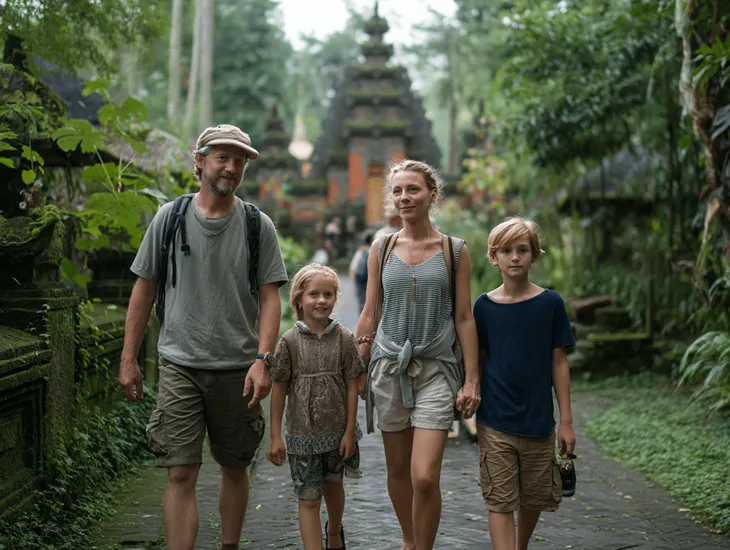
Do not bring plastic or paper bags into the forest. Monkeys associate these specific materials with food and will actively snatch them. You must put everything inside a secure, zipped, and sturdy backpack.

Loose items are also highly targeted by the macaques. Remove sunglasses, hats, and dangling jewelry before passing through the entrance gates. The monkeys love to steal these shiny or easily accessible accessories.

A reliable Babysitter in Bali helps manage your family inventory. They ensure that all prohibited items are secured before the tour begins. This attention to detail prevents sudden ambushes by curious animals.

Water bottles must be kept completely hidden inside your bag. Only take them out when you are away from the main monkey groups. Managing hydration discreetly is key to a safe visit in Indonesia.

The animals are highly habituated to humans and very fast. They will open unzipped pockets in seconds. Keeping your gear secure ensures your excursion remains a peaceful observation rather than a stressful conflict.

Age-Appropriate Observation and Activities

The primary activity here is careful observation of nature. Families enjoy walking the paved trails and viewing the ancient banyan trees. Watching the monkeys interact in their natural habitat is highly educational.

Older kids and teenagers often want a famous monkey selfie. Families should never attempt to orchestrate this dangerous photo themselves. You risk serious injury if the animal feels threatened by the camera.

Instead, you can purchase a specific selfie ticket inside the park. Trained sanctuary staff use your phone to safely orchestrate the photo. This ensures a great memory without compromising your physical safety.

A Babysitter in Bali guides younger children along the designated paths. They point out interesting behaviors and teach basic wildlife respect. This turns the walk into an engaging, age-appropriate biology lesson.

Children can be very unpredictable when excited or scared. Running, shouting, or waving arms will startle the monkeys and trigger an attack. Caregivers keep kids close and calm to maintain a peaceful environment.

The Ubud Monkey Forest offers a unique cultural and environmental experience. Structured observation prevents children from crossing boundaries. With professional help, your children learn to appreciate wildlife from a safe and respectful distance.

Real Story: Secure Wildlife Viewing in Sayan

James recently relocated from Canada to a villa in Sayan. He wanted to show his nieces the local macaques. The heavy tropical humidity clung to his skin as they prepared to leave the house.

The girls ran around the courtyard screaming with excitement. James wiped sweat from his forehead. He envisioned a monkey snatching their bright pink hats or scratching them. The physical reality of the trip felt daunting.

He hired a professional Babysitter in Bali named Sari through our platform. Sari arrived and immediately secured the girls’ loose accessories. They drove to the Ubud Monkey Forest with a clear safety plan.

Sari held their hands tightly on the humid, mossy trails. A large macaque suddenly dropped onto the stone railing inches away. The youngest girl gasped and tightly gripped Sari’s hand in sudden fear.

Sari positioned her body between the animal and the toddler. She calmly guided the girls backward without making eye contact. James exhaled deeply, his tense shoulders finally dropping as the immediate danger passed.

The group safely reached the temple courtyard. James took a deep breath of the incense-filled air. He captured beautiful photos of his nieces smiling. Having expert help made the wild environment completely manageable.

Strollers Versus Carriers on Uneven Paths

Ubud Monkey Forest 2026 – family packing lists, modest clothing and wet-season comfort in Bali

The natural topography of the forest presents several logistical challenges. The sanctuary features many steep stairs and uneven stone paths. Some areas can become quite slippery due to the high humidity.

If you are visiting with a baby or toddler, planning is essential. A sturdy baby carrier is highly recommended over a traditional stroller. Navigating the stairs with a bulky pram is frustrating and exhausting.

Monkeys often use strollers as climbing frames or resting spots. They will search the undercarriage baskets for hidden food or bright objects. A baby carrier keeps your child elevated, secure, and close to you.

Your Babysitter in Bali can manage the baby carrier for you. This physical support is incredibly helpful during a long, humid walk. It prevents back strain and allows you to enjoy the scenery.

Carriers also provide a stronger sense of security for the child. Being elevated keeps them away from sudden movements by the animals on the ground. It is the safest way to transport infants here.

Understanding Sanctuary Rangers and Vetting

The sanctuary employs local rangers dressed in green uniforms. They monitor the paths, manage the monkeys, and assist tourists daily. These rangers are experts in macaque behavior and wildlife management.

However, specific internal details regarding these rangers are not confirmed. Formal police background checks or explicit pediatric first-aid certifications are unknown. Parents must understand the limits of the facility’s public staff.

You must act as the primary security for your children. You should rely on the rangers strictly for wildlife management and emergency assistance. They are not private guides or dedicated childcare providers.

This is why hiring a vetted Babysitter in Bali is crucial. Our caregivers undergo strict background checks and professional screening. You have total confidence in the person managing your child’s immediate safety.

Do not assume a ranger will constantly watch your specific toddler. Their job is to monitor the entire macaque population and all tourists. Dedicated personal supervision remains your absolute and legal responsibility.

First-Aid Protocols for Wildlife Interactions

Despite strict rules, unpredictable wildlife interactions can sometimes occur. If a bite or scratch happens, the sanctuary has basic first-aid stations on-site. Rangers will assist with immediate wound cleaning and basic bandaging.

However, any break in the skin from a monkey is a serious medical issue. You must follow the on-site treatment with an immediate clinic visit. Rabies and tetanus are significant risks in wild populations.

A doctor must assess the wound for post-exposure prophylaxis. Time is critical when dealing with potential rabies exposure in Indonesia. You cannot delay medical treatment after a monkey scratch or bite.

A professional Babysitter in Bali helps manage this emergency protocol. If an incident occurs, they can safely escort the other children away. This allows parents to focus entirely on the injured child’s medical needs.

Our caregivers know the locations of the nearest reputable clinics. They assist with transportation and translation if required during a medical visit. This logistical support is invaluable during a highly stressful family emergency.

FAQs about Ubud Monkey Forest

Q: What are the daily opening hours?

A: The sanctuary is open daily from 09:00 to 18:00, with the last entry at 17:00.

Q: How much is the entry fee for children?

A: Children between 3 and 12 years pay IDR 60,000. Kids under three enter for free.

Q: Can I bring snacks for my toddler?

A: No. Bringing any food or drinks is strictly prohibited as it triggers monkey aggression.

Q: Is it safe to use a stroller inside?

A: No, a baby carrier is highly recommended due to steep stairs and uneven, slippery paths.

Q: Can a Babysitter in Bali help during the visit?

A: Yes, our caregivers enforce safety rules, manage bags, and provide constant supervision for kids.

Q: What happens if my child is scratched?

A: You must visit an on-site first-aid station immediately, followed by a local clinic for rabies assessment.

Need a reliable babysitter to watch your child while you enjoy a trip to the Ubud Monkey Forest? Chat with us on WhatsApp now!