
Unique Balinese Culture Lessons: Fun and Educational Activities for Families
Finding engaging activities for children during vacations requires careful planning. Parents often struggle to locate authentic educational experiences abroad. It is hard to keep young minds entertained daily.
Many tourist traps lack genuine educational value. Rushing through crowded attractions leaves kids feeling tired and disconnected. Families miss the true essence of local historical traditions.
Improperly vetted workshops can expose children to hidden safety hazards. Unsupervised craft sessions sometimes result in accidental injuries or burns. This creates unnecessary stress for traveling expat parents.
You need reliable information to choose safe and enriching activities. Proper research helps you find vetted instructors and secure environments. Understanding local customs prevents embarrassing and awkward cultural misunderstandings.
We created a comprehensive guide covering safe traditional craft workshops. You can explore authentic Balinese Culture safely with your kids. The government provides official education guidelines for preserving historical arts.
You will discover step-by-step booking methods for reputable artisan studios. Your energetic children will learn ancient traditions in safe settings. Enjoy memorable and highly secure family bonding experiences today.
Table of Contents
Vetting Instructors in Bali
Reputable cultural conservatories utilize highly trained experts and native researchers. Traditional music and dance classes feature recognized community elders. These respected leaders possess inherited generational knowledge and deep wisdom.
Independent artisan workshops are typically small family-run local businesses. These intimate art studios rely heavily on active parental supervision. Parents must remain present to ensure complete child safety.
Verifying instructor credentials guarantees a high-quality educational experience for children. You should politely ask about their specific teaching background beforehand. Experienced teachers easily adapt complex lessons for younger audiences.
Learning from certified experts provides a genuine immersion into Balinese Culture. Professional guides communicate historical facts clearly and accurately. Your children gain profound respect for indigenous traditional arts.
Choosing a vetted instructor ensures that information remains historically accurate. Professional teachers know how to handle group dynamics effectively. They create a supportive environment for every child to succeed.
Exploring Batik Workshops in Bali
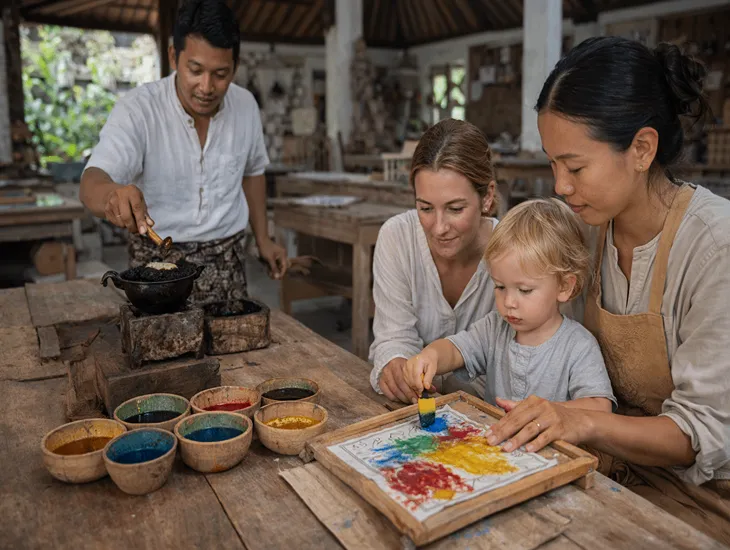
Traditional fabric painting offers an incredibly engaging hands-on art experience. Local artisans teach families how to create beautiful textile patterns. This activity perfectly blends creative expression with ancient history.
Instructors explain the intricate process of applying hot melted wax. They demonstrate how different colors interact on the woven fabric. Children watch the vibrant dyes transform blank canvas.
Proper supervision remains essential during the tricky wax application phase. Parents must carefully guide small hands holding the warm tools. This focused teamwork prevents minor burns and ensures safety.
Younger toddlers can easily participate by using cool water-based dyes. They skip the hot wax phase for safety. This modified approach lets everyone enjoy exploring Balinese Culture.
The finished Batik fabric serves as a wonderful personal souvenir. Kids feel a great sense of pride in their creations. This hands-on lesson stays in their memory for many years.
Understanding Workshop Booking Processes
Family-run conservatories do not accept walk-ins. You must book these intimate sessions at least two weeks early. Emailing the studio directly secures your preferred time slot.
Standard independent artisan classes usually require one or two days’ notice. You can easily contact them via popular messaging applications. Quick digital communication makes scheduling your family outing effortless.
Always check the minimum participant requirements before finalizing any booking. Traditional language or offering-making classes often require three participants minimum. Confirming these small details prevents frustrating unexpected schedule cancellations.
Explicitly confirm if your quoted price includes all raw materials. Ask if the studio provides a free local shuttle service. Clear communication guarantees a smooth introduction to Balinese Culture.
Check if the studio offers refreshments for longer art sessions. Some workshops provide traditional snacks and local tea for families. These small additions make the learning process even more enjoyable.
Reviewing Fees for Culture Classes
Fabric painting classes cost approximately IDR 350,000 per individual person. This flat fee usually covers a detailed three-hour interactive session. It includes all materials and the final finished fabric.
Offering-making and language classes cost roughly IDR 300,000 per person. These engaging sessions typically last around ninety highly informative minutes. The price reflects the specialized knowledge shared by instructors.
Intensive historical etiquette masterclasses average IDR 350,000 for two hours. Music and dance workshops feature highly customized pricing structures. The final cost depends heavily on your specific group size.
General multi-activity immersion tours average roughly USD 45 per person. These comprehensive packages offer fantastic value for curious traveling families. Budgeting properly helps you experience Balinese Culture without financial stress.
Private lessons often come with a small premium fee. However, they allow for a much more personalized teaching pace. Many parents find the extra investment worthwhile for focused learning.
Solving Workshop Challenges
Andrew is a designer from London living in Sanur. He wanted an authentic art class for his daughter. He struggled to find a studio that handled safety correctly.
The local street vendors offered unverified craft sessions using open flames. Andrew worried about hot wax accidents and unregulated studio environments. He needed a secure option for his young child.
He used bali-babyysitter.com to find a vetted childcare expert. The professional recommended a secure and child-friendly painting studio. They provided cool water-based dyes for a hazard-free experience.
This local guidance saved their weekend family trip. His daughter proudly painted vibrant traditional patterns safely. They created unforgettable memories while learning about Balinese Culture together.
Andrew was relieved to find a professional art environment. The instructor spoke excellent English and explained every safety rule clearly. His daughter felt confident and happy during the entire session.
Identifying Key Safety Risks
Traditional workshops present physical risks for young children. Tracing complex patterns requires tools filled with hot melted wax. This hot liquid poses a significant burn hazard for kids.
Parents must actively supervise their children near any heated materials. Instructors will physically guide the hands of children under eight. Strict adult attention prevents painful accidents during the class.
Never leave toddlers unattended near heavy traditional wooden carving tools. Sharp chisels require advanced motor skills and intense focus. Recognizing these specific dangers ensures a completely secure family outing.
Proper clothing adds an extra layer of physical safety too. Wearing closed shoes protects small feet from dropped artistic tools. Taking simple precautions lets you enjoy Balinese Culture safely.
Check the workshop area for adequate ventilation and space. Open flames used to heat wax must be placed securely. A tidy workspace reduces the risk of accidental trips or spills.
Respecting Local Etiquette Rules
Traditional musical instruments are considered highly sacred by local communities. Visitors must never step over any large brass percussion instrument. You must always walk politely around these revered objects.
Dressing modestly is expected when making daily flower offerings. Tourists should cover their shoulders and knees out of respect. Appropriate modest attire honors the deeply spiritual nature of crafts.
Maintain strict silence when village priests conduct brief opening blessings. Loud disruptive noises severely interrupt the focused spiritual learning environment. Your quiet observation shows deep respect for community traditions.
Educate your curious children about these vital rules before arriving. Explaining specific behavioral boundaries helps kids understand important local customs. This smart preparation fosters a deep appreciation for Balinese Culture.
Avoid pointing your feet towards the sacred temple offerings. In local belief, the head is sacred while feet are considered impure. Following these subtle rules makes your family very welcome guests.
Age-Appropriate Crafts for Kids
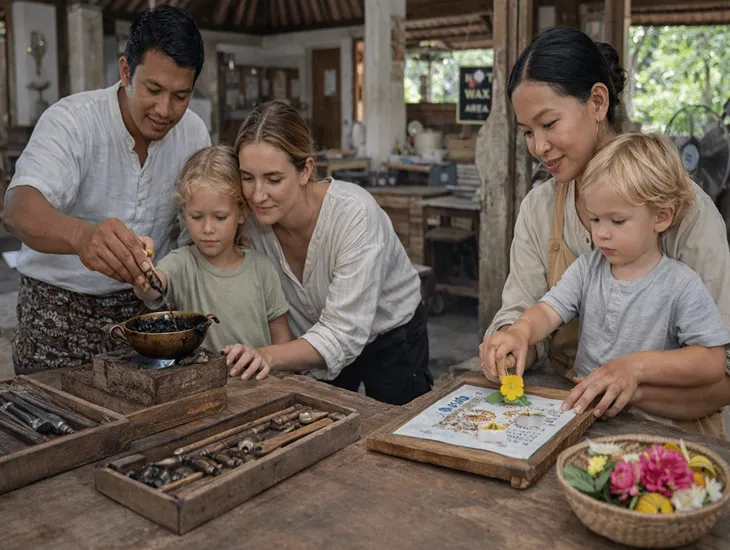
Toddlers between four and seven years old enjoy simple tasks. They can color pre-drawn canvases with vibrant fabric dyes easily. Arranging loose flower petals for daily offerings keeps them engaged.
Older children between eight and twelve handle more complex projects. They can trace their own custom designs with warm wax. Practicing basic percussive rhythms on brass instruments builds coordination.
Teenagers thrive on highly demanding and intricate artistic challenges. They can carve wooden masks using traditional sharp steel chisels. Deep-dive history and language seminars stimulate their growing intellect.
Choosing the right activity prevents physical exhaustion and emotional frustration. Instructors tailor their specific teaching methods to match different ages. Everyone finds a meaningful way to connect with Balinese Culture.
Teens can also learn the basics of traditional costume design. Understanding the symbolism behind different patterns adds historical depth. This keeps older children intellectually engaged during the workshop.
FAQs about Balinese Culture
Q: Do traditional art classes provide transportation?
A: Many central studios include a free local shuttle service, but you must confirm this beforehand.
Q: Are painting workshops safe for toddlers?
A: Yes, toddlers can safely paint pre-waxed fabrics using cool water-based dyes instead of hot wax.
Q: What should we wear to an offering-making class?
A: You must dress modestly by covering your shoulders and knees to respect the spiritual traditions.
Q: How far in advance should we book?
A: Family-run conservatories require two weeks’ notice, while standard artisan classes need two days.
Q: Can children play traditional musical instruments?
A: Older children can learn basic rhythms, but they must never step over the sacred instruments.
Q: Is there a certificate of completion for kids?
A: Many official conservatories provide a small certificate to celebrate your child’s new cultural skills.

