

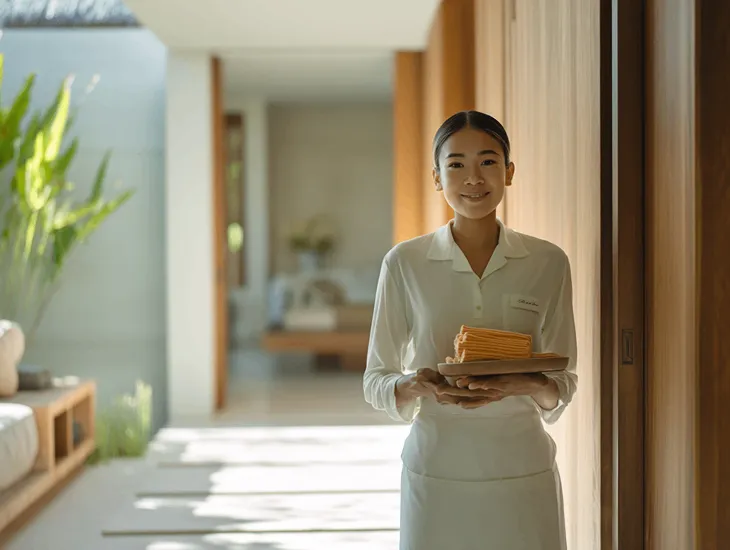
Why a Live-out Maid in Bali Best Suits Digital Nomad Families
For digital nomad families landing in Indonesia, the dream is often a perfect balance of professional productivity and tropical relaxation. However, the reality of managing a household in a new country can quickly disrupt this equilibrium.
You might find yourself juggling Zoom calls with laundry piles, or trying to focus on a deadline while managing the constant presence of staff in your villa. The challenge isn’t just finding help; it’s finding the right kind of help that respects your need for privacy and a quiet work environment.
The problem often comes from the traditional “live-in” model common in Southeast Asia. While having 24/7 assistance sounds appealing, it can lead to blurred boundaries and a lack of solitude, which is crucial for remote work.
Digital nomads, who often rent villas for a few months at a time, may find the logistics of providing staff accommodation and meals cumbersome. The feeling of never truly being “alone” in your home can add a layer of subtle stress, defeating the purpose of your flexible lifestyle.
The solution for many is hiring a live-out maid in Bali. This arrangement offers the best of both worlds: professional household support during core working hours and complete privacy in the evenings.
It aligns perfectly with the rhythm of remote work, allowing you to be productive during the day and reclaim your family space at night. This guide explores why this model is the superior choice for modern expat families, detailing typical duties, salary expectations, and how to find trustworthy staff in 2026.
Table of Contents
Live-out vs Live-in: The Privacy Advantage
Understanding the distinction between live-in and live-out arrangements is critical. A live-in maid resides on your property, often in a designated staff room, and is effectively “on call.” While this provides immense convenience for late-night childcare or early breakfasts, it comes at the cost of privacy. For a digital nomad family, having someone constantly in your personal space can feel intrusive, especially when you need quiet for deep work or confidential calls.
In contrast, a live-out maid in Bali commutes to your villa daily, works a set shift (typically 8 hours), and returns home. This structure creates clear boundaries. You get a clean house and laundry done during the day, but your evenings are yours alone.
This separation is vital for mental health, allowing you to switch off from “employer mode” and simply enjoy family time without an audience. It treats household help as a service, not a roommate situation.
Typical Duties and Scope of Work
A live-out maid typically handles a comprehensive range of housekeeping tasks. Daily responsibilities include sweeping and mopping floors, cleaning bathrooms, making beds, and managing kitchen cleanliness.
Laundry and ironing are standard, often done to a high standard. Some staff can also assist with simple meal preparation, like chopping vegetables or cooking basic Indonesian dishes for lunch, freeing up your break times.
If you hire a candidate who also functions as a nanny or helper, their scope expands to childcare. This might involve supervising play, reading with children, or facilitating simple crafts while you work in the next room.
However, boundaries are important. A live-out maid in Bali is generally not expected to handle complex tutoring, deep-clean swimming pools, or provide overnight newborn care unless specifically negotiated. Clarifying these duties upfront ensures a smooth working relationship.

Salary Ranges and Cost Comparison 2026
Budgeting is often easier with a live-out arrangement. In 2026, the salary for a full-time live-out maid in Bali (working 6 days a week, roughly 8 hours a day) typically ranges from IDR 3,000,000 to IDR 5,000,000 per month. Hourly rates for ad-hoc help sit between IDR 40,000 and IDR 150,000 depending on experience and language skills.
Comparing this to live-in staff reveals hidden savings. While base salaries for live-in roles might appear similar (IDR 3,000,000–7,000,000), you must also factor in the cost of providing a room, electricity, water, and three meals a day.
For digital nomads renting villas, a live-out arrangement avoids the need to rent a larger property with staff quarters, offering flexibility and reducing total monthly overheads.
Screening, Vetting, and Hiring Process in Indonesia
Finding a trustworthy candidate requires due diligence. Start by checking reputable sources like established recruitment agencies or trusted expat community groups. Word-of-mouth recommendations from other families are often the gold standard.
Once you have a shortlist, the screening process begins. Essential checks include verifying their KTP (National ID) and calling previous employers to confirm reliability and honesty.
Conduct an in-person interview to assess their communication style and interaction with your children. A paid trial period of 3 to 7 days is highly recommended. This allows you to observe their punctuality, initiative, and how well they respect your work-from-home boundaries.
Finally, draft a clear written agreement outlining hours, salary, and duties. This professional approach sets the tone for a respectful and organized working relationship.
Legal and Ethical Considerations
While the domestic work sector in Indonesia is informal, ethical employment practices are essential. Live-out staff generally follow office-like hours, such as 8:00 AM to 4:00 PM. Any work beyond these hours should be considered overtime and compensated accordingly. Adhering to these boundaries prevents exploitation and ensures your staff remains rested and motivated.
Standard benefits include a weekly day off (usually Sunday) and observance of major religious holidays like Galungan or Eid. The Religious Holiday Allowance (THR) is a customary bonus, typically equivalent to one month’s salary, paid before their major holiday.
Providing these benefits not only aligns with local customs but also fosters loyalty, reducing the turnover that disrupts your work schedule.
Safety Protocols and Cultural Nuances
Safety is paramount, especially when children are involved. Establish clear protocols regarding pool safety—staff should never leave non-swimmers unattended near water. Provide a list of emergency contacts in both English and Bahasa Indonesia.
It is also wise to never leave a new staff member alone with young children until vetting and a trial period are successfully completed.
Culturally, Indonesian staff are often polite and non-confrontational. They may say “yes” to instructions they don’t fully understand to avoid losing face. Encourage open communication and ask them to repeat instructions back to you.
For digital nomads, explaining “do not disturb” signs or camera privacy rules is crucial. A gentle but clear explanation of your work needs helps them understand that your presence at home doesn’t mean you are available to chat.
Real Story: The Pererenan Pivot
For Mark and Jen, the “dream” of having full-time staff quickly turned into an awkward reality. They found themselves eating dinner in silence because their live-in maid was watching TV in the next room.
They skipped movie nights to avoid “disturbing” the staff. The villa that was supposed to be their sanctuary felt like a shared hostel. They realized they didn’t need 24/7 service; they needed their home back.
They decided to pivot to a live-out maid in Bali. They hired Ibu Wayan, who arrived at 8 AM and left at 4 PM. The change was transformative. During the day, the house was spotless, lunch was prepped, and their toddler was entertained, allowing them to focus on their work.
At 4 PM, they “clocked off” and reclaimed their home. The clear separation of work/help and family time restored their island bliss, proving that for them, less presence meant more freedom.
Why It Fits the Nomad Lifestyle
The live-out model perfectly mirrors the flexibility digital nomads cherish. If you decide to move from Ubud to Uluwatu for a month, ending a live-out arrangement is often simpler than relocating a live-in staff member. It allows you to rent smaller, more affordable villas without needing extra bedrooms.
Moreover, it supports a “work hard, play hard” routine. Your staff handles the domestic load during your productive hours, leaving you free to explore the island or relax in a private sanctuary come sunset. This balance prevents the burnout that often comes from managing a complex household, letting you focus on why you moved to Bali in the first place: quality of life.
FAQs about Live-out Maids in Bali, Indonesia
Q: Do I need to pay for my maid’s transport?
A: It is not mandatory, but many employers provide a small transport allowance or ensure the salary covers petrol costs, especially if they live far away. This helps ensure punctuality.
Q: Can a live-out maid stay overnight for babysitting?
A: Yes, this can usually be arranged as “overtime” or a special request. You should agree on a set fee for overnight stays and provide a comfortable place for them to sleep.
Q: Is it safe to give my maid a set of keys?
A: Ideally, no. For security, it is better if you let them in or use a lockbox/smart lock system. If you must give keys, ensure you have a copy of their ID and trust is firmly established.
Q: What happens if my maid gets sick?
A: Ethically, you should allow paid sick leave for genuine illness. While not strictly enforced by law for informal workers, it is a standard expectation for good employers in the expat community.
Q: Do I need to provide lunch for a live-out maid?
A: It is customary and polite to offer a simple meal or a small daily food allowance (e.g., IDR 15k-20k). A well-fed staff member has more energy and feels valued.
Q: Can a maid help with grocery shopping?
A: Yes, many live-out maids are happy to do market runs. Provide cash and ask for receipts to keep track of household expenses transparently.

