
Review Us
Baby Feeding Safety in Bali 2026 – Infant nutrition guidelines, hygiene protocols, and health
author-2

Why Baby Feeding Safety in Bali Matters for Families

Introducing solid foods to infants is a major developmental milestone. Navigating this transition in Indonesia creates logistical hurdles. Foreign parents struggle with local sanitation variables and inconsistent tap water quality.

Contaminated water and high humidity accelerate bacterial growth on equipment. Standard home routines are often insufficient. Preparing meals requires constant attention to prevent severe cases of gastroenteritis in Bali.

Watching an infant suffer from dehydration causes stress for working families. It disrupts both daily life and business schedules. The logistical burden of constant sterilization becomes unsustainable for remote workers.

Relying on untrained household staff for meal preparation poses serious health risks. A single lapse in hygiene can lead to a clinic visit. Parents experience severe burnout monitoring every bite.

Adhering to the World Health Organization guidelines for complementary feeding ensures nutritional adequacy. Combining global standards with strict local protocols protects infants from preventable illness during early growth phases.

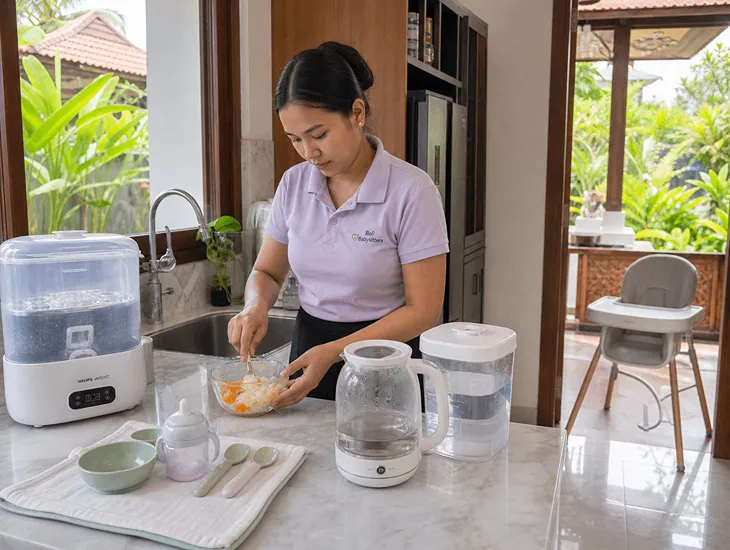
Securing a trained professional to manage baby feeding safety in Bali solves this issue. A vetted babysitter manages sterile preparation tasks, allowing parents to focus completely on their work goals.

Global Standards for Infant Nutrition

The introduction of solid foods is a window for infant development. Global health authorities recommend beginning complementary foods at six months of age. This aligns with the infant’s increasing energy demand.

Foods rich in iron are the priority during this transition. Parents should offer animal proteins and fortified cereals early to prevent anemia. The Indonesian Paediatric Society advises introducing local ingredients carefully.

Proper meal frequency is essential for sustained energy. Infants between six and eight months require two to three meals per day. A knowledgeable babysitter ensures dietary schedules are maintained properly.

Establishing these feeding routines early prevents picky eating later. A consistent approach to new flavors encourages a healthy relationship with food. This dietary foundation supports long-term physical and cognitive growth.

Parents must monitor portion sizes to avoid overfeeding during this crucial transition phase. Tracking daily food intake helps identify potential allergies early. A structured approach ensures the infant receives a balanced daily nutritional profile.

Local Water Hazards and Hygiene Protocols

Hygiene in Bali 2026 – Safe water practices, bottle sterilization, and illness prevention

Operating a household in Indonesia requires an adjustment to water usage. Tap water contains pathogens that are unsafe for human consumption. Families must never use water from the faucet for drinking.

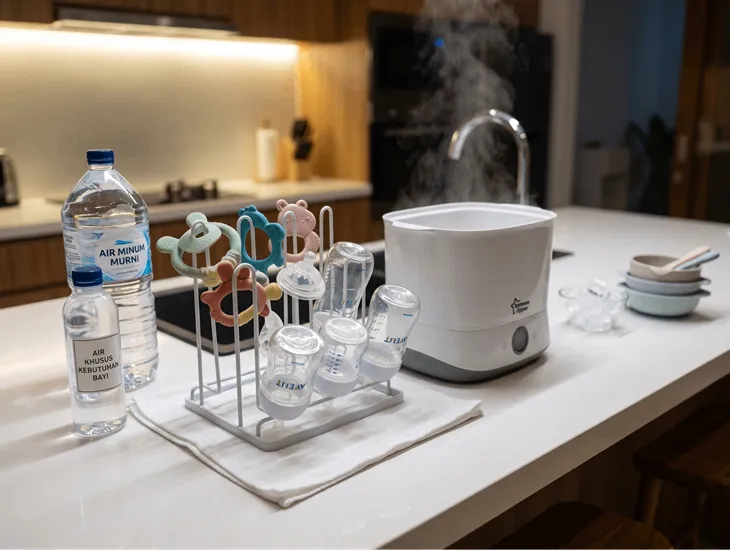
All feeding equipment must be sterilized to prevent infections. Bottles and teething rings should be washed with soap and safe water. Items must air-dry on a sterile surface away from dust.

Caregivers must be aware of cross-contamination in public settings. Gastroenteritis in Bali is often transmitted via contaminated hands. Caregivers must utilize soap and bottled water before touching the baby’s food.

Parents must prevent babies from ingesting bath water during evening cleaning routines. Caregivers should avoid offering ice unless it is confirmed to be made exclusively from purified, safe bottled water sources in the villa.
Choking Prevention and Food Textures

Preventing choking is a concern when transitioning to solid foods. Infants lack the molars required to grind firm foods. Understanding how to adapt textures is a mandatory skill for any caregiver.

High-risk foods include whole grapes and cherry tomatoes. A baby’s trachea is the size of a standard straw. A whole grape can wedge into this space and block airflow completely.

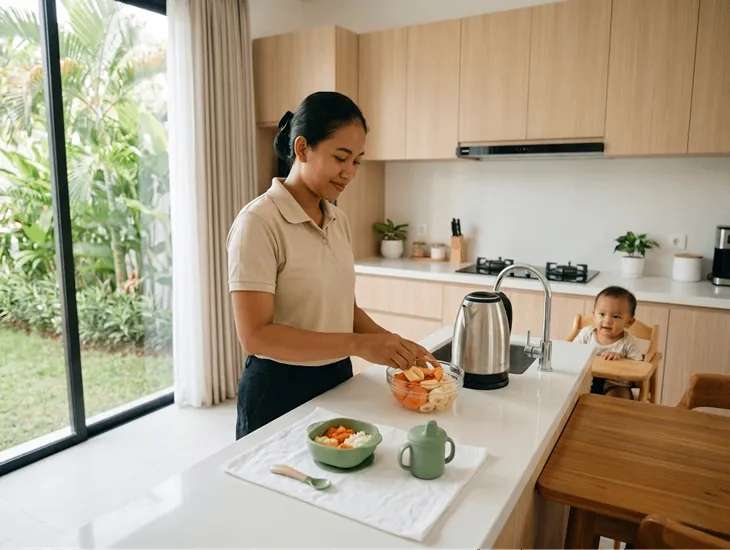
Caregivers must alter food shape and texture. Grapes must be cut lengthwise into quarters. Hard vegetables should be steamed until soft. A trained babysitter understands the difference between gagging and choking.

Infants must never be left unattended while consuming solid foods at any time. Active physical supervision is required to monitor for sudden airway blockages. Caregivers must prioritize focused observation over multitasking during every feeding session.

Practical Rules for Meal Preparation

Implementing protocols for baby feeding safety in Bali requires strict kitchen rules. High tropical heat creates a breeding ground for bacteria. All infant meals should be freshly cooked and served hot.

Food left at room temperature for more than two hours must be discarded. Leftovers touched by a spoon should not be saved. Saliva introduces bacteria that multiply quickly in the food.

Kitchen hygiene must be high. Caregivers must use separate cutting boards for raw meats and produce. Countertops must be wiped with a child-safe disinfectant immediately after the daily meal preparation.

Caregivers must wash feeding utensils immediately after use to deter tropical pests. Leaving dirty plates exposed attracts insects that carry dangerous bacteria into the sterile home environment.

Standards for Professional Caregivers

Delegating infant feeding requires absolute trust in caregiver competence. Many families rely on untrained helpers for meal preparation. Standard cooking experience does not translate to proper infant dietary safety protocols.

Reputable agencies maintain rigorous screening standards to mitigate risks. A professional babysitter must possess up-to-date pediatric First Aid and CPR. They must have verified experience working with weaning infants safely.

High-quality agencies facilitate briefings between parents and sitters. These sessions outline feeding schedules and known allergens clearly. The babysitter enforces dietary rules to ensure no unsterilized items are offered accidentally.

Real Story: Navigating Solids in Canggu, Bali

Nutrition in Bali 2026 – Professional babysitter assistance, meal prep, and infant care

Elena identified a sanitation failure when her independent helper washed fruit in tap water. The infant developed gastroenteritis in Bali, resulting in a clinic stay. Elena required a professional caregiver immediately.

She lost confidence in her household setup after the infection. She fell behind on client work while attempting to prepare every meal herself. The logistical burden became unsustainable for her business.

Elena hired our professional service to implement baby feeding safety in Bali. We placed a vetted caregiver trained in hygiene and choking prevention. The babysitter used boiled water for all preparation.

The caregiver provided detailed daily logs of food intake. Elena appreciated this transparent communication, allowing her to track her son’s nutritional progress without stressful constant micro-management.

Identifying Red Flags and Illness Symptoms

Parents and caregivers must remain vigilant for signs of illness. Infants possess small fluid reserves. Gastrointestinal distress can escalate into severe dehydration in a matter of hours without proper observation.

Primary red flags include persistent vomiting and watery diarrhea. Sunken eyes and a dry mouth indicate the need for medical evaluation. A high fever accompanying these symptoms is a major warning.

If symptoms appear, the caregiver must focus on safe hydration. The babysitter recognizes deviations from normal behavior and alerts parents. This coordinated response prevents stomach bugs from becoming health emergencies.

Caregivers strictly record the number of wet diapers daily. A sudden drop in urine output is a reliable early indicator of dangerous dehydration in small infants.

Creating a Secure Dining Environment

Safety during mealtimes involves the physical environment. Infants should consume solids while seated upright in a secure highchair. The highchair must have a functional safety harness to prevent sudden falls.

Feeding a child in a reclined stroller or while crawling is dangerous. Mealtimes must be free of distractions like televisions. Distracted babies are more likely to inhale before mashing their food.

The caregiver must sit directly facing the infant with visual supervision. Establishing a focused dining routine helps the baby concentrate on motor skills. A professional babysitter orchestrates this secure environment.

Caregivers ensure the dining area remains well-lit during evening meals. Proper lighting allows the babysitter to observe facial expressions and detect silent choking incidents immediately.

FAQs about Baby Feeding Safety in Bali​

Q: Is tap water safe for baby bottles? 

A: No. Always use sealed bottled or boiled water for washing and sterilization.

Q: At what age should I introduce solids? 

A: WHO recommends starting complementary foods at approximately six months of age.

Q: How do I prevent choking on grapes? 

A: Always cut grapes and cherry tomatoes lengthwise into quarters before serving.

Q: What are the signs of gastroenteritis? 

A: Symptoms include vomiting, watery diarrhea, lethargy, fever, and decreased wet diapers.

Q: Can a sitter help with weaning? 

A: Yes. A trained sitter can prepare textures and supervise all meals safely.

Q: Should I serve raw salads to my baby? 

A: No. Raw produce may be washed in contaminated tap water, risking infection.

Need help with baby feeding safety in Bali? Chat with our team on WhatsApp now!