
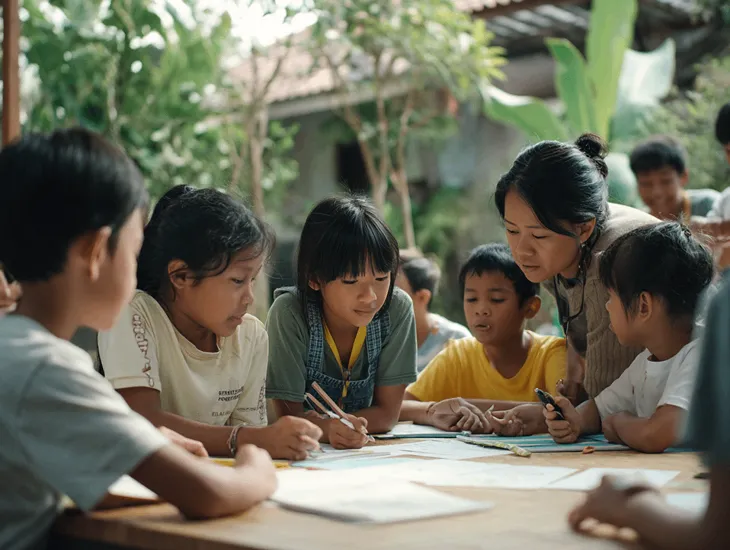
Wood School Bali: Nature-Based Worldschooling in Pejeng
If you are bringing your children to Ubud in 2026, Wood School Bali quickly appears on school shortlists. Families talk about rice-field views, muddy feet, project days and a calm, values-based atmosphere that feels very different from big city schools.
On its official site, Wood School Bali is described as a nature-based worldschooling hub with Neohumanist values, bilingual classes and a learning path that runs from Early Years through to High School.
Independent reviews on worldschooling hubs in Bali highlight Wood School Bali for its outdoor projects, small classes and welcoming mix of long-term expats and travelling families.
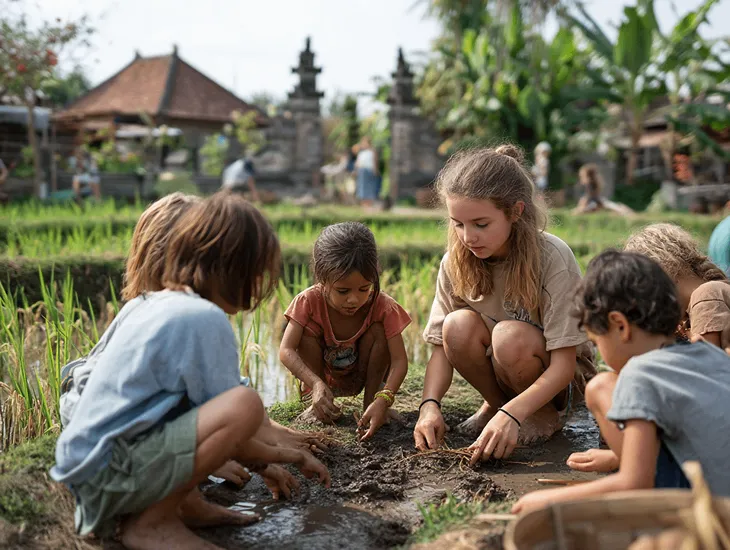
The school’s Pejeng location, just outside Ubud, gives daily contact with rice fields, temples and village life. Children see Balinese ceremonies on the way to class and learn Bahasa Indonesia alongside English from their first weeks at Wood School Bali.
Flexible enrolments make Wood School Bali stand out. Families on Our Year in Bali describe joining for a term, then extending as children settle into projects and friendships.
This guide walks you through how Wood School Bali works in 2026: the Pejeng setting, learning model, fees, discounts and who it really suits, so you can decide whether it belongs on your family’s serious shortlist.
Table of Contents
-
Why Wood School Bali Appeals to Nature-Loving Families in 2026
-
How Wood School Bali Blends Neohumanist and Academic Learning
-
Real Story — One Family’s Journey Into a Pejeng Nature School
-
Worldschooling at Wood School Bali with Flexible Bali Enrolments
-
Checklist to See If This Pejeng Nature School Fits Your Child
-
FAQ’s About Wood School Bali for Expat and Travelling Families
Why Wood School Bali Appeals to Nature-Loving Families in 2026
For many expat and travelling families, Wood School Bali feels like the opposite of a crowded city campus. Set in Pejeng rice fields near Ubud, it offers space to breathe, climb trees and meet Bali’s culture at eye level every single day.
Instead of uniforms and long rows of desks, classes use small mixed-age groups, outdoor classrooms and project corners. Children move between gardens, kitchens, studios and rice fields, not just between bells and corridors.
For families arriving in 2026, the campus works as both a long-term base and a soft landing. Kids reconnect with nature, meet peers from many countries and still see visible progress in reading, writing and maths across the year.
How Wood School Bali Blends Neohumanist and Academic Learning
Wood School Bali follows Neohumanist education, blending Montessori, Waldorf and Reggio ideas with meditation, yoga and social–emotional learning. The aim is not just smart students, but kind, resilient young people who feel part of something bigger.
In daily practice, values turn into habits: class meetings, conflict-resolution circles, shared gardening and community projects. Children learn to name feelings, support friends and see how their choices affect others and the environment.
Academics stay visible. Teachers use rubrics, portfolios and clear goals for reading, writing and maths. Families see real work, not vague promises, so creative learning is grounded in measurable growth from term to term.
Learning Path from Early Years to Teen Projects in Pejeng
From ages three to eighteen, Wood School Bali offers a single learning path instead of constant school changes. Early Years, Primary, Middle and High programmes share one campus culture, so siblings can grow in the same community over time.
In Early Years, the focus is on play-based foundations: story time, sand and water play, movement and gentle pre-literacy skills. Primary adds project-based maths, science and language arts, woven into real-world themes and outdoor exploration.
By Middle and High School, students tackle bigger projects such as permaculture design, entrepreneurship, coding and community research. Visible academic planning helps teens stay ready for portfolios, online pathways or future exams.
Real Story — One Family’s Journey Into a Pejeng Nature School
When Anna’s family moved to Ubud, Wood School Bali was meant to be a six-week experiment. Her ten-year-old had burned out on worksheets and dreaded going back to a rigid classroom after their year of slow travel.
At the school, he spent mornings in the garden measuring beds and afternoons building simple machines in the workshop. Maths and writing showed up in tool plans, harvest logs and project journals rather than in endless test papers.
Six weeks became a full year. Anna noticed her son speaking more Bahasa Indonesia, caring about compost and confidently presenting projects to parents. The school became the anchor that made living in Bali feel sustainable.
Worldschooling at Wood School Bali with Flexible Bali Enrolments
For travelling families, Wood School Bali functions as a worldschooling hub rather than a traditional lock-in. Weekly, term and semester options mean you can join for a season, leave to explore, then return without starting from zero.
During short stays, children join full projects, excursions and community events instead of sitting on the edge as “visitors”. This helps them make real friends fast and feel part of Bali life, even if you are only here for a month.
For long-term expats, this continuity matters. When grandparents visit or visas shift, kids can step out briefly and rejoin the same peer group and teachers, keeping stability inside a lifestyle that often changes around them.
Fees, Discounts and Value at Wood School Bali for 2025–2026
Compared with larger campuses, Wood School Bali keeps fees in a mid-range band while still offering small classes and rich projects. Enrolment, term, semester and year options create different price points for different family situations.
Tuition scales with age, yet longer commitments bring meaningful savings. Semester payments include a discount, and full-year payments reduce costs further for families ready to anchor in Bali for a whole academic cycle.
Sibling discounts help larger families, especially those arriving from high-fee IB or Cambridge schools. When you add in low commute times and flexible calendars, the overall value often beats bigger-name alternatives.
How This Pejeng Nature School Compares with Bigger Schools
Many families weigh Wood School Bali against bigger international schools with uniforms, canteens and exam-heavy timetables. The key question is not which is “better”, but which approach fits your child’s temperament and long-term plans.
In contrast to large campuses, classes here are tiny and often mixed-age, with outdoor learning and values-based projects. There are fewer formal tests but more presentations, exhibitions and community work showing what students can really do.
If your priority is high-stakes exams and league tables, a mainstream campus may suit you. If you want creativity, nature and social–emotional depth, this environment often feels more aligned with worldschooling and purpose-driven teens.
Checklist to See If This Pejeng Nature School Fits Your Child
When visiting Wood School Bali, start with your child in mind. Notice whether they relax into the gardens and workshops, and whether teachers greet them by name and invite them into activities rather than just talking with adults.
Ask about a typical week: how projects run, how reading and maths are tracked, and how often classes leave campus. Look at real student portfolios so you can see concrete progress, not only hear philosophy.
Finally, review logistics. Check how the school fits your visa plans, commute, budget and worldschooling rhythm. A good fit will feel sustainable for your family’s energy, not just exciting for the first month of Bali life.
FAQ’s About Wood School Bali for Expat and Travelling Families
Q: Where is the school located near Ubud?
A: Wood School Bali is in Pejeng, Gianyar, just outside Ubud. The campus sits among rice fields and temples, giving daily contact with Balinese culture and nature.
Q: What age range does the school serve?
A: Wood School Bali supports ages three to eighteen, with Early Years, Primary, Middle and High programmes. Mixed-age groups and small classes keep a family-style atmosphere.
Q: Is this a good fit for short worldschooling stays?
A: Yes. Wood School Bali offers weekly, term, semester and full-year options. Visiting children join full projects and excursions, so they can connect quickly even on shorter stays.
Q: How academic is the learning model here?
A: Wood School Bali blends visible academics with projects. Teachers use rubrics, portfolios and reading and maths goals, so creative work still leads to clear, trackable progress.
Q: How do fees compare with larger international schools?
A: Fees at Wood School Bali sit in a mid-range band, with discounts for semester and yearly payments plus sibling reductions, making it often more accessible than big-brand campuses.
Q: Who is this Bali school best suited to in 2026?
A: Wood School Bali suits families who value nature, small groups, bilingual learning and flexible worldschooling options, more than strict uniforms, heavy homework or exam rankings.

