

Review Us
Calcium for Children in Bali 2026 – Dairy, tofu, leafy greens, and vitamin D strategies supporting strong bone and dental health for expat kids
author-2

The Role of Calcium for Children in Bali: Promoting Healthy Teeth and Bones

Many expat parents in Bali focus on sunscreen and hydration but overlook one critical nutrient: calcium. Children here are active outdoors, growing fast, and often eating unfamiliar foods. Nutrient gaps can develop quietly, without obvious symptoms, until the damage is already underway.

The problem compounds in a tropical lifestyle. Sweet drinks, processed snacks, and irregular meal schedules are common for busy expat families. These habits quietly displace the calcium-rich foods children need most during their most critical bone-building years in Bali.

Dental health suffers first. Children who lack adequate calcium develop weaker tooth enamel, making them more vulnerable to cavities and sensitivity — even before their permanent teeth arrive. In Bali’s climate, where sugary snacks and drinks are everywhere, this risk is especially real.

The stakes are high and long-lasting. According to Indonesia’s Ministry of Health , calcium and vitamin D are among the most critical nutrients for children’s growth and development. What parents do now directly determines their child’s bone density for the rest of their life.

The good news: Bali offers a remarkable combination of calcium-rich local foods and year-round sunshine that, used correctly, gives children here a genuine nutritional advantage. The solution is not expensive supplements — it is informed daily habits applied consistently.

This guide explains exactly how calcium for children in Bali works, which local foods deliver it best, and how to build practical routines that protect your child’s teeth and bones through every stage of growth on the island.

Why Calcium Is Non-Negotiable for Growing Children

Ensuring adequate calcium for children in Bali is the most direct investment in bone density and tooth enamel during growth spurts. Children who fall short during these critical windows cannot fully recover lost bone mass later, regardless of how much calcium they consume as adults.

In Bali, children are typically active, outdoors, and physically engaged — all of which accelerates bone metabolism and increases the body’s demand for calcium. A child who runs, swims, and climbs daily needs more of this mineral than a sedentary child living in a temperate climate.

The bone-building window does not stay open forever. The years between birth and late adolescence represent a one-time opportunity to maximize bone density. Frequent fractures, muscle cramps, or delayed tooth development signal that a child’s calcium intake is falling critically short.

Best Calcium-Rich Foods Available in Bali

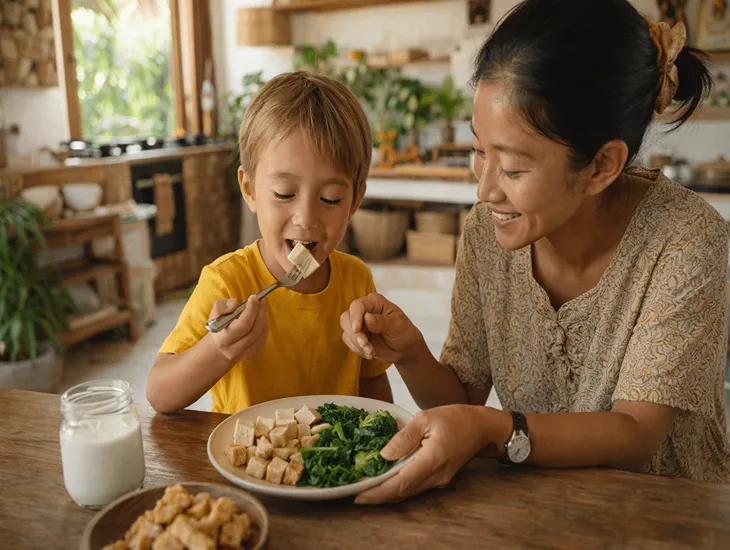
Calcium for Children in Bali 2026 – Local dairy products, tofu, ikan teri, kangkung, and fortified drinks delivering daily calcium for active expat kids

Bali’s local markets and supermarkets stock excellent calcium sources across both animal-based and plant-based food categories. Dairy is the most bioavailable source: fresh milk, yogurt, and cheese deliver calcium that the body absorbs efficiently. Many Indonesian brands offer children’s fortified milk specifically designed for this age group.

Tempeh and tofu are outstanding plant-based alternatives, widely available and affordable throughout Bali. A single serving of firm tofu provides meaningful calcium alongside complete protein. These foods integrate naturally into local meals, making them easy to include in a child’s daily diet without resistance or disruption to family food routines.

Small fish eaten with their bones — particularly ikan teri (dried anchovies), a staple in Indonesian cooking — deliver calcium and protein in a culturally familiar format. Families who incorporate ikan teri into rice dishes, soups, or stir-fries are providing excellent bone nutrition without any additional effort or cost to the household.

Leafy greens including kangkung and bayam (spinach) contribute calcium alongside iron and fiber. Their bioavailability is lower than dairy due to natural oxalates, so they work best as part of a varied diet. Combined with dairy or tofu, they meaningfully support daily calcium targets for growing children.

How Vitamin D Unlocks Calcium Absorption in Bali

Calcium cannot perform its bone-building role without adequate vitamin D. This fat-soluble vitamin acts as a biological key that unlocks calcium absorption in the gut. Without it, even a calcium-rich diet delivers only a fraction of its potential benefit to a growing child’s skeleton.

Bali’s climate makes calcium for children in Bali uniquely effective. Year-round sunshine enables the body to synthesize vitamin D through skin exposure — far more efficiently than dietary sources alone. Children who play outdoors daily naturally support their own calcium absorption through this mechanism.

Safe sun exposure matters. Indonesian pediatric guidelines recommend short periods of morning sun — fifteen to thirty minutes before 10 a.m. — when UV intensity is lower. This window provides sufficient UVB exposure for vitamin D synthesis without the skin damage risk of peak midday sun that is intense year-round in Bali’s tropical climate.

Where diet or outdoor time is inconsistent, a pediatrician may recommend vitamin D-fortified milk or age-appropriate supplements. Parents should consult a qualified healthcare provider before starting any supplement regimen, as requirements vary significantly by age and individual health status.

Dental Health: How Calcium Protects Your Child's Teeth

Calcium is as essential for teeth as it is for bones. Tooth enamel — the hardest substance in the human body — is composed primarily of calcium phosphate crystals. When dietary calcium is insufficient, enamel density decreases, leaving teeth more vulnerable to acids from food, drinks, and bacteria.

Children in Bali are exposed to a steady stream of sugary snacks, sweet drinks, and tropical fruits with high natural acidity. This dietary reality makes strong enamel especially critical. A child with adequate calcium for children in Bali intake maintains enamel that resists acid attack far better than a calcium-deficient child consuming the same foods.

Nighttime is the highest-risk period for dental decay. Saliva flow decreases during sleep, reducing the mouth’s natural ability to neutralize acids. Parents who limit sugary food and drink after dinner, ensure thorough brushing before bed, and provide calcium-rich evening snacks like yogurt give their children significantly stronger enamel protection overnight.

Regular dental check-ups reinforce dietary calcium’s protective effects. Local pediatric dentists in Bali recommend twice-yearly visits starting from the first tooth’s eruption. Professional fluoride treatments complement a calcium-rich diet in maintaining healthy teeth through all childhood stages.

Real Story: How One Family Solved a Hidden Calcium Gap in Canggu

Meet Yuki, a 36-year-old graphic designer from Japan, who moved to Canggu with her husband and seven-year-old son Kenji. At his annual check-up six months after arrival, the pediatrician flagged two small cavities and noted that Kenji’s bone development appeared slightly behind his age group. Yuki was surprised — Kenji ate what she considered a healthy diet back in Japan.

The issue was the transition. In Japan, Kenji drinks fortified school milk daily. In Canggu, that routine vanished overnight, replaced by smoothies, coconut water, and fresh fruit juices — all delicious, but calcium-poor. “The clinic smelled of antiseptic and frangipani,” Yuki recalled, “and I realized I had never once thought about milk since we landed.”

She connected with a local expat parenting group in Berawa and restructured Kenji’s diet: fortified children’s milk at breakfast, tofu in his evening rice, and ikan teri as a crispy afternoon snack he actually enjoyed. She also shifted outdoor play to 8–9 a.m. for safe vitamin D sun exposure.

Within four months, Kenji’s follow-up appointment showed measurable improvement in enamel density and the pediatrician noted a stronger overall growth trajectory. “It wasn’t complicated,” Yuki said. “It was just about knowing which local foods to use and when. Once I knew, Canggu made it easy.”

Age-by-Age Calcium Needs for Children in Indonesia

Children's Nutrition in Indonesia 2026 – Age-specific calcium requirements, food portion guides, and supplement considerations for expat and local families

Calcium requirements change significantly across childhood development stages. Infants aged zero to six months require approximately 200 mg of calcium daily, met entirely through breast milk or fortified formula. At this stage, the parent’s own calcium and vitamin D intake directly affects breast milk nutritional quality and therefore the infant’s bone development.

Toddlers aged one to three need around 700 mg of calcium daily — equivalent to roughly two to three servings of dairy or fortified alternatives. This age group is notoriously selective about food, making variety and repetition essential. Offering yogurt as a snack, adding tofu to familiar dishes, and blending fortified milk into fruit smoothies can help reach daily targets without conflict.

School-age children aged four to eight need approximately 1,000 mg per day, while those aged nine to eighteen require up to 1,300 mg daily — the peak bone-building period. According to Kompas.com’s health and nutrition resources, Indonesian nutritionists flag adolescent calcium intake as one of the most commonly unmet dietary targets in the country.

For families uncertain about meeting these targets, a brief consultation with a registered nutritionist or pediatrician in Bali can clarify current intake and identify gaps. Practical, locally sourced recommendations rarely require expensive imported products or complicated supplement schedules.

Daily Habits That Maximize Calcium Intake for Kids

Building calcium-rich habits into the daily routine is more effective than occasional high-dose supplementation. One to two servings of dairy or fortified alternatives daily — milk at breakfast, yogurt as an afternoon snack — creates a consistent calcium delivery system that supports bone growth reliably and affordably throughout childhood in Bali.

Pairing calcium-rich meals with morning outdoor play significantly amplifies absorption. A child who eats a calcium-rich breakfast and then plays outside for thirty minutes before school is activating both dietary and sunlight pathways simultaneously. This combination is uniquely accessible in Bali, where outdoor morning conditions are genuinely ideal year-round for children.

Limiting phosphoric acid from carbonated drinks protects calcium balance. Colas reduce calcium retention in bones, so replacing them with fortified milk, fresh coconut water, or plain water is a simple switch that protects children’s bone health daily without complicated dietary changes.

Modeling calcium-rich eating as a family normalizes these foods naturally. Children who see parents regularly choosing dairy, tofu, or leafy greens treat them as standard. Family meals that include one calcium-rich item per sitting build habits that carry into adolescence without resistance.

Common Mistakes That Block Calcium Absorption

Giving calcium supplements with iron supplements simultaneously significantly reduces absorption of both minerals. Iron and calcium compete for the same intestinal transport pathways. Parents who give both nutrients at the same meal are inadvertently undermining the effectiveness of each supplement, even when dosages are technically correct and age-appropriate.

Relying solely on plant-based calcium without accounting for lower bioavailability is a common miscalculation. Spinach contains calcium but also oxalic acid that binds and prevents absorption. Parents who believe greens alone meet their child’s needs should review intake with a healthcare professional in Bali.

Skipping vitamin D while focusing only on dietary calcium misses half the equation. A child eating three dairy servings daily but spending all day indoors may still show deficiency signs because absorption is low without sunlight. Outdoor morning time is a core part of effective calcium nutrition.

Allowing sugar-heavy snacks to crowd out nutrient-dense meals is the most pervasive barrier to adequate calcium for children in Bali. When children fill up on biscuits and sweetened drinks, they arrive at meals with no appetite for the foods that build bones and protect teeth properly.

FAQs about Calcium for Children in Bali

Q: How much calcium do children need daily when living in Bali? 

A: Needs range from 700 mg (toddlers) to 1,300 mg (teens); dairy and tofu cover most of this.

Q: Can my child get enough calcium for children in Bali without drinking dairy milk?

A: Yes. Tofu, fortified soy milk, ikan teri, and leafy greens are effective non-dairy alternatives.

Q: Does Bali’s sunshine provide enough vitamin D to support calcium absorption in kids? 

A: Yes, 15–30 minutes of morning sun daily is sufficient for most children in Bali’s climate.

Q: What are the signs that my child may have a calcium deficiency in Bali? 

A: Watch for frequent fractures, dental cavities, muscle cramps, or delayed tooth development.

Q: Should I give my child calcium supplements when living in Bali?

 A: Consult a local pediatrician first; food-based calcium is preferred over supplements when possible.

Q: How does sugar affect calcium levels in children’s teeth and bones? 

A: High sugar intake erodes enamel and displaces calcium-rich foods, weakening both teeth and bones.

Need guidance on calcium for children in Bali? Chat with our team on WhatsApp now!