
Baby Allergy First Aid: Essential Steps for Parents and Caregivers in Bali
Traveling to Indonesia with an allergic infant presents unique risks. New tropical ingredients and insect species increase the chance of frightening allergic reactions. Every parent must prepare for these situations.
Distance from healthcare providers and complex traffic patterns can delay urgent attention. Parents often feel anxious dining in local cafes without a clear emergency plan. This anxiety can ruin a holiday.
A sudden reaction escalates quickly, leaving parents feeling helpless. Without immediate access to a professional who understands local logistics, managing an emergency is a stressful ordeal. Time is critical during a reaction.
Misidentifying symptoms can lead to dangerous delays in treatment. Finding a pharmacy that stocks specific adrenaline devices is difficult during a crisis. Preparation is the only way to ensure infant safety.
Hiring a babysitter in Bali provides an essential layer of safety. These caregivers recognize early warning signs and strictly follow your baby’s written medical action plan. They act with professional calm.
Table of Contents
Recognizing Mild and Severe Allergic Reactions
Identifying the difference between a mild rash and a life-threatening emergency is vital. Localized hives or mild swelling around the eyes are typical mild symptoms. Monitor the baby closely for changes.
If the baby remains active and breathes normally, remove the suspected allergen. Wash the skin or rinse the mouth immediately. Follow the doctor’s specific advice for using prescribed oral antihistamines.
Severe reactions, known as anaphylaxis, affect the airway or circulation. Red flags include noisy, labored breathing or a weak, hoarse cry. The infant may suddenly become very pale and floppy.
Tongue or throat swelling can make swallowing difficult for the baby. Persistent coughing or wheezing indicates a serious respiratory issue. Never wait to see if these life-threatening symptoms improve alone.
A trained babysitter in Bali recognizes these signs instantly. They differentiate between a simple insect bite and a systemic reaction. This rapid assessment is crucial for starting life-saving treatment.
Immediate action reduces the risk of long-term complications. Understanding these symptoms allows you to act with total confidence. Always prioritize the baby’s breathing over any other physical skin symptoms.
Immediate Steps for Anaphylaxis in Bali
If you suspect anaphylaxis, call emergency services in Indonesia immediately. Clearly state that an infant is experiencing a severe reaction. Save local clinic numbers in your phone before you arrive.
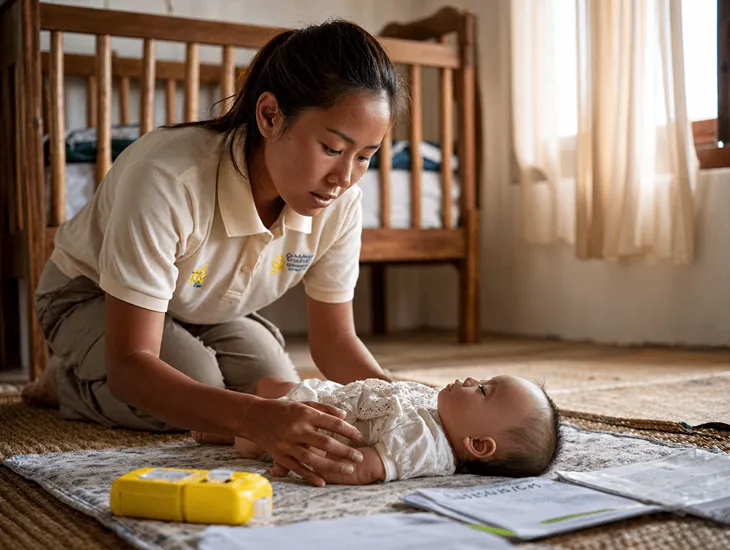
Use the prescribed adrenaline auto-injector without any delay. Administer the medication into the outer mid-thigh as instructed. Do not wait for symptoms to worsen before giving this life-saving dose.
Position the baby correctly by laying them flat on their back. Do not allow the child to stand or walk, even if they feel better. For vomiting infants, use the side recovery position.
A second dose of adrenaline may be required after five minutes. Only do this if symptoms do not improve and you have another device. Monitor the baby’s pulse and breathing constantly.
Transfer the infant to a hospital for several hours of observation. Reactions can return even after the initial symptoms fade. Continuous monitoring ensures the baby remains stable after the incident.
A professional in Indonesia manages these complex steps while you stay with the baby. They coordinate with drivers to ensure a fast transfer. This support is vital for success.
Essential Items for Your Allergy Kit in Bali
Your travel first-aid kit must be tailored for an allergic baby. Include liquid paracetamol, a digital thermometer, and oral rehydration salts. Pack antiseptic wipes and mosquito repellent suitable for infant skin.
Always bring all prescribed allergy medications from your home country. Local pharmacies may not stock these specialized devices or specific brands. Do not rely on local purchase for adrenaline auto-injectors.
Include a doctor-recommended oral antihistamine for mild skin symptoms. Antihistamine creams are also useful for simple insect bites. Always consult your pediatrician regarding the correct dosing for your baby.
Carry a printed copy of the baby’s anaphylaxis action plan. This document should be easy for a babysitter in Bali to find and read. It serves as a vital guide for responders.
Pack a familiar comfort item like a toy or blanket. This helps reduce the infant’s distress during a frightening clinic visit. Keeping the baby calm can assist medical staff during their assessment.
Check your kit regularly to ensure no medications have expired. High heat in Indonesia can affect the stability of certain drugs. Store the kit in a cool, dry place.
Why an Allergy-trained Caregiver is Vital
A specialized babysitter in Bali understands the nuances of pediatric allergies. They use trainer pens to practice the correct injection technique. This preparation ensures they act without hesitation during crises.
Caregivers provide constant supervision during snacks and outdoor play. They are experts at checking labels for hidden allergens in local brands. This proactive approach prevents the need for Baby Allergy First Aid.
They also understand the importance of cross-contamination prevention in kitchens. A trained caregiver communicates with chefs about hidden ingredients like peanut oil. This protects your baby during family restaurant outings.
Trained staff know how to manage the environment around an allergic child. They clean surfaces thoroughly before the baby begins their meal. This level of detail is essential for highly sensitive infants.
The acts as a secondary pair of eyes in crowded places. They identify potential risks like shared utensils or loose food scraps. This vigilance allows parents to enjoy the island.
Regular training updates keep our staff prepared for the latest medical protocols. They understand the importance of following a written action plan exactly. Consistency is the key to medical safety.
Common Triggers: Insects and Tropical Foods
Bali’s biodiversity introduces new environmental triggers for sensitive babies. Tropical fruits like kiwi or mango can sometimes cause unexpected oral allergies. Always introduce new foods slowly in small portions.
Insect bites from spiders, ants, or bees are common in garden villas. Monitor any bite site for extensive swelling or a spreading rash. Some bites can trigger a systemic allergic response.
Seafood is a dietary staple in coastal areas like Jimbaran. Fish and shellfish are high-risk allergens for many infants. Cross-contamination on shared grills is a frequent issue in local markets.
services in Bali emphasize keeping play areas free from fallen fruit. Caregivers use baby-safe repellents to minimize the risk of stings. This management is a core part of their routine.
Hot weather can also exacerbate existing skin conditions like eczema. Sweating may make an allergic rash more uncomfortable for the baby. Keeping the skin clean and cool manages these symptoms.
Educate your caregiver on which local plants or insects to avoid. Knowledge of the environment is a key strength of an experienced babysitter in Bali. Prevention is always better than response.
Real Story: Emergency Assistance in Pererenan
Meet Paulina, a 32-year-old mother from Russia staying in a quiet villa in Pererenan. She was enjoying a tropical afternoon when her ten-month-old daughter touched a local snack containing hidden shrimp.
The baby began to develop rapid hives and started coughing. Paulina felt panicky as she realized her daughter was having a severe reaction. The nearby clinic felt dangerously far away.
Fortunately, Paulina had hired a professional in Bali for the week. The caregiver had previously practiced the family’s medical plan. She immediately assessed the baby’s noisy, labored breathing.
The babysitter calmly retrieved the adrenaline auto-injector from the emergency kit. She administered the dose into the baby’s thigh while Paulina called the clinic. Her steady hands prevented a delay.
While waiting for transport, the babysitter kept the infant flat and calm. She monitored the baby’s pulse and breathing with professional focus. Paulina followed her lead, staying grounded despite the emergency.
The daughter recovered fully after observation at a local hospital. Paulina credits the ‘s training for the positive outcome. The support turned a potential tragedy into a manageable medical situation.
Preventing Cross-Contamination During Restaurant Dining
Eating out in Indonesia requires extra vigilance for families with allergies. Many local sauces contain shrimp paste, nut oils, or soy. These ingredients are often not listed on a standard menu.
A professional in Bali acts as a bridge to the kitchen. They can explain the severity of the allergy to local staff clearly. This ensures the message is taken seriously.
Always wipe down high chairs and table surfaces before the baby sits. Contact with traces of milk or egg from previous diners can trigger hives. Carrying sanitizing wipes is a habit.
Avoid introducing high-risk foods for the first time while at a restaurant. It is safer to trial new ingredients in the controlled environment of your villa. Stay near your Baby Allergy First Aid kit.
Caregivers supervise the baby’s meal to ensure they do not grab food. Shared plates or buffet-style dining increase the risk of accidental exposure. The babysitter remains the designated gatekeeper.
Maintaining strict hygiene reduces the likelihood of a reaction. This meticulous attention to detail is why families trust an experienced babysitter in Bali. Enjoy the island’s culinary delights safely.
Long dinners are hard for toddlers who need to move and play. A caregiver takes the child to a safe area while you finish your meal. This prevents accidents and table mishaps.
How to Screen and Brief Your Caregiver
When hiring, ask specifically about prior experience with Baby Allergy First Aid. A qualified candidate should demonstrate how to use an adrenaline auto-injector pen. References should confirm their medical reliability.
Verify if the candidate has attended a recognized pediatric first aid course. Ask scenario-based questions about recognizing the difference between mild and severe symptoms. Their answers should align with guidelines.
Provide a detailed written brief before the first shift starts. Walk through the baby’s specific action plan together in the villa. Show the caregiver exactly where the kit is stored.
Explain the baby’s safe foods and typical reaction history clearly. List the ingredients that must be avoided at all costs. An informed babysitter in Bali is your best defense against exposure.
Establish a clear communication protocol for emergencies. The babysitter should know to call for an ambulance first and then contact parents. This ensures that life-saving help is prioritized during crises.
FAQs about Baby Allergy First Aid
Q: What is the most common baby allergy trigger in Bali?
A: Peanuts, seafood, and eggs are frequent food triggers in Indonesia.
Q: Can I buy adrenaline auto-injectors in local pharmacies?
A: Local pharmacies may not stock these specialized devices regularly.
Q: Should a babysitter in Bali join us for dinner?
A: Yes, having a caregiver prevents accidental allergen exposure at busy restaurants.
Q: What is the emergency number for an ambulance?
A: Save your specific clinic’s number in your phone before your trip starts.
Q: Are s trained in infant CPR?
A: Reputable agencies ensure their s have current pediatric first aid certifications.
Q: How do I explain an allergy to a chef?
A: A professional in Indonesia can translate the severity to the kitchen staff.

