

Review Us
Sleep Routine for Babies in Bali 2026 – fragmented nights, high-impact bedtime sequences, and consistent support for calmer families
author

5-Minute Sleep Routine for Babies: A Study-Based Guide for Parents

Exhausted parents often struggle with infant sleep fragmentation and long settling times. Nightly wakings and unpredictable schedules create significant stress for families living in or visiting Bali. Consistent rest feels like an impossible goal.

Fragmented sleep impacts parental mood and infant development. Many families find traditional hour-long routines unsustainable during busy travel or work schedules. Without a clear plan, bedtime often becomes a chaotic struggle for everyone involved.

Clinical research offers a solution through condensed, high-impact sequences. According to the American Academy of Pediatrics, predictable bedtime habits are fundamental for healthy infant sleep hygiene and overall family well-being.

A 5-minute sleep routine for babies can transform your nights. By focusing on core calming triggers, you signal to your baby that it is time for rest. Consistency is more powerful than duration.

Implementing these steps requires patience and careful consistency. A professional  in Bali can provide the necessary reliability when parents are occupied. Dedicated support ensures the routine happens exactly the same way every night.

Better rest for your child leads to a more enjoyable life in the tropics. Start your journey toward peaceful evenings by mastering a micro-routine. Discover how expert help makes this transition successful for your family.

Evidence Behind Micro-Routines

Clinical studies demonstrate that a brief, consistent bedtime sequence significantly improves sleep onset. Infants whose parents utilize a nightly routine experience fewer night-wakings and longer continuous sleep periods after only a few weeks.

A 2022 study using sleep-tracking sensors found that routines starting before 21:00 lead to more stable night sleep. The frequency of the routine is a critical factor for success in long-term sleep health.

A professional  in Bali helps maintain this vital frequency. They ensure the sequence occurs at least five nights per week. This regularity helps the infant’s brain recognize the physiological signals for rest.

Condensed routines are practical, evidence-based tools. They function by lowering the infant’s cortisol levels through repetitive, comforting actions. This prepares the body for a deeper and more restorative sleep cycle.

Researchers emphasize that the brain thrives on pattern recognition. When a child experiences the same tactile and auditory cues, the central nervous system begins a natural wind-down process. This is the goal of sleep hygiene.

Expert caregivers understand the science of transitions. They do not rush the process but follow the evidence-based steps precisely. This professional approach removes the guesswork from your family’s nightly schedule.

Stable Timing and Sequence

Infant Sleep Hygiene 2026 – A  in Bali checking a baby's sleep environment for safety and comfort

Consistency in timing is just as important as the actions themselves. Infants rely on external cues to regulate their internal clocks. Performing the same steps at the same time creates a powerful association.

A  in Bali plays a vital role in protecting these wake windows. They monitor the clock to avoid overtiredness, which often causes settling difficulties. Overtired babies produce adrenaline that prevents easy sleep.

The stable sequence should be simple enough to replicate anywhere. Whether you are at home or in a luxury villa, the steps remain identical. This provides a sense of security for the developing infant.

Maintaining this schedule while exploring Indonesia requires dedicated assistance. A caregiver manages the transition from afternoon play to evening wind-down. This protects the sanctity of the bedtime hour for the entire household.

Predictability reduces the production of stress hormones in infants. When a child knows exactly what comes next, they feel safe enough to surrender to sleep. This is why the order of operations matters.

Your babysitter in Bali will strictly adhere to your family’s preferred clock. If bedtime is 19:00, the wind-down begins at 18:55. This precision is what builds lasting sleep habits for children.

Calming Sensory Cues

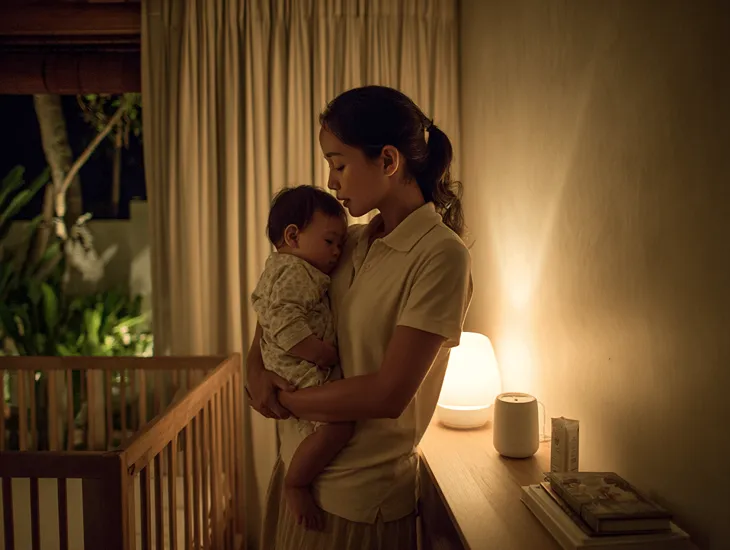
Reducing environmental stimulation is the first step of the micro-routine. Dimming the lights and using a quiet voice signals a transition. These sensory changes help the infant transition from activity to a state of rest.

Non-pharmacological soothing strategies are highly effective for younger infants. White noise at a safe volume and rhythmic motion induce a natural calming response. These cues mimic the sensations found within the womb environment.

A professional  in Indonesia uses these cues with expert precision. They ensure the white noise is not too loud and the room temperature remains comfortable. Small details make a significant difference in sleep.

Gentle swaddling can also promote longer sleep by preventing the startle reflex. However, safety must always come first. Caregivers are trained to ensure swaddles allow for healthy hip movement and prevent overheating risks.

Sensory cues act as a bridge between the busy day and a quiet night. The scent of a specific lotion or the dimming of a lamp becomes a powerful signal. The brain responds by releasing melatonin.

Professional helpers monitor these environmental factors constantly. They ensure the room is dark enough and free from distractions. A perfectly curated environment is the secret to a successful 5-minute sequence.

Predictable Caregiving Actions

The 5-minute sleep routine for babies focuses on a few essential actions. Start with a fresh nappy and comfortable sleepwear. These tactile changes help the baby understand that the active day has ended.

Follow this with a very brief cuddle or a soft song. This connection time should be calming rather than stimulating. Use the same short lullaby every single night to build a strong psychological association.

Predictable actions provide infants with a sense of control over their environment. When the sequence never changes, anxiety levels drop significantly. This psychological safety is the foundation of a successful bedtime transition.

The final minute of the routine involves a consistent physical transition. Whether it is a final kiss or a specific way you hold the baby, keep it uniform. These micro-actions are highly communicative to infants.

Helpful caregivers replicate your specific parental touch points. They learn your soothing style to ensure the baby feels no difference in care. This continuity is essential for emotional stability during sleep.

Simple actions, done repeatedly, create a powerful sense of order. Your child begins to expect the cot after the song ends. This mental preparation makes the final put-down much easier for everyone.

Drowsy But Awake Technique

Placing the baby in the cot while they are drowsy but awake is a vital skill. This technique encourages self-settling, which reduces the need for parental intervention during middle-of-the-night wakings.

It allows the infant to recognize their sleep space before drifting off. If a baby falls asleep in arms and wakes in a cot, they often feel startled. Familiarity with the cot promotes security.

A  in Bali can master this delicate transition for you. They observe the subtle signs of sleepiness, such as rubbing eyes or ear pulling. Timing the placement perfectly is the key to success.

Minimal interaction during this phase is essential. If the baby is fussy, a gentle hand on the chest can provide comfort without overstimulating. The goal is to be a supportive presence rather than a prop.

This technique is a core pillar of sleep hygiene research. It empowers children to manage their own transitions between sleep cycles. Over time, this results in longer stretches of uninterrupted rest for the whole family.

Caregivers remain patient during this process. They do not rush to pick the baby up at the first whimper. Instead, they provide the minimal support needed for the baby to settle independently.

Real Story: Sleep Success in Pererenan

Bedtime Transitions 2026 – A professional caregiver in Indonesia saying a final goodnight to a drowsy infant

Meet Sophie (35), a freelance architect from the UK who recently traded the rainy streets of London for a villa in Pererenan. While her career thrived, her nights had become exhausting.

Her five-month-old son, Arthur, struggled to adapt to the humid air and the hum of neighborhood scooters. Each evening, Sophie stood in her villa feeling completely defeated by the battle.

That is when she hired a professional  in Bali to implement a structure. The breakthrough came when the caregiver introduced a strict 5-minute sequence that remained unchanged every single night.

The success was built on the ‘s unwavering commitment to the sequence. Even when Arthur seemed alert, they followed the wind-down exactly. Sophie realized she only needed a consistent habit.

Now, instead of dreading the sunset, Sophie finally enjoys her quiet evenings in the Pererenan breeze. Arthur rests soundly thanks to the expert support of her .

Support for Better Rest

A well-trained caregiver is an enabler of better family sleep. They follow your chosen sleep routine for babies without deviation. This professional reliability is essential for infants who thrive on predictable patterns.

Beyond the routine, a babysitter in Bali tracks sleep data for you. They monitor the duration of naps and the time it takes to settle at night. This information helps you adjust the schedule as your baby grows.

A  in Bali also ensures the sleep environment remains safe. They follow “Back to Sleep” guidelines and keep the cot free of loose blankets. Safety is always the foundation of any rest plan.

By handling the wind-down, the babysitter  allows parents to have a much-needed break. Whether you are working or enjoying dinner, you know the routine is being followed. Expert help provides the consistency babies need to thrive.

Sleep-savvy helpers understand the importance of non-verbal communication. They use slow movements and low-energy body language to soothe the child. This professional demeanor prevents the baby from becoming playful before bed.

You can trust your support person to handle difficult evenings. If a baby is teething or unwell, they provide the necessary comfort while maintaining the routine. This balance of empathy and structure is invaluable.

Consistent Routine Application

Applying the routine to daytime naps further reinforces the habit. While night sleep is regulated by melatonin, nap sleep is driven by sleep pressure. The same cues help the brain switch into “rest mode” during the day.

A professional  in Bali ensures the nap routine is a shorter version of the night sequence. This might include a nappy change and the same white noise. Continuity between day and night is highly beneficial.

Consistent application prevents the baby from becoming confused. They learn that the cot always means sleep, regardless of the sun’s position. This makes travel and schedule changes much easier to manage.

Establishing these habits early creates a lifetime of healthy sleep associations. A dedicated  in Bali is your partner in building this foundation. Together, you can turn bedtime into a peaceful, 5-minute success story.

Nap routines prevent the overtired cycle that ruins evening sleep. Your caregiver will ensure the baby doesn’t sleep too late in the afternoon. This protects the home’s nighttime peace and order.

By focusing on the same cues every time the baby sleeps, you strengthen the habit. The brain becomes more efficient at falling asleep. This efficiency is the ultimate goal of a structured sleep routine for babies.

FAQs about Sleep Routine for Babies

Q: Will this make my baby sleep through the night?

A: It improves settling and continuity but does not guarantee 12 hours of sleep.

Q: Can a  start this routine while I am away?

A: Yes, a  in Bali can maintain consistency while you are working.

Q: What if my baby starts crying during the routine?

A: Use gentle soothing like patting, but keep the sequence consistent.

Q: Is white noise safe for all-night use?

A: Yes, provided it is kept at a safe volume away from the cot.

Q: How long until we see results?

A: Most families notice improved settling within 7 to 14 days of consistency.

Q: Should the routine be different for naps?

A: It should be a shorter version but keep the main cues identical.

If you need a trusted  to support your baby’s sleep routine in Bali, chat with our team on WhatsApp now!