

Review Us
Baby Coughing at Night 2026 – Nighttime cough in infants, common causes and warning signs, when expatriate parents should seek medical help
author-2

Baby Coughing at Night: Common Causes and How to Treat It

Watching your child struggle with a persistent nighttime cough is a deeply distressing experience for any expatriate parent. The sound of a frequent chesty rattle often disrupts the entire household during the quietest hours.

Exhaustion sets in when you are unsure if the symptoms represent a simple cold or a more serious infection. You worry about potential respiratory distress while balancing your professional responsibilities in a new environment.

Navigating local healthcare systems while your infant is unwell adds another layer of immense pressure. Managing persistent symptoms alone through the early morning hours leaves you feeling isolated and physically drained during the day.

The World Health Organization emphasizes that respiratory infections are common but require careful observation of breathing patterns. Prompt medical attention is vital if you notice any signs of labored or fast breathing.

Understanding the various reasons for Baby Coughing at Night helps you respond with calm and effective action. Identifying specific triggers allows you to implement the correct comfort measures to support your infant’s recovery.

A professional babysitter in Bali provides essential support during these difficult periods of illness. They offer vigilant monitoring and gentle care, allowing you to rest while ensuring your child remains safe and comfortable.

Viral Infections and Post-Nasal Drip

Common viral infections like the cold are the most frequent drivers of nocturnal irritation. When your infant lies down, mucus often pools in the back of the throat, causing a significant post-nasal drip.

This accumulation triggers a protective reflex that results in a wet or dry chesty sound. Bronchiolitis, often caused by RSV, also leads to inflammation in small airways, making symptoms much worse during deep sleep.

A qualified caregiver monitors these patterns closely to help you provide accurate details to your pediatrician. They track the frequency of episodes and any changes in the child’s breathing effort during rest.

Maintaining a clear airway is the primary goal for managing these viral symptoms effectively. Supportive care focuses on hydration and ensuring the child feels secure while their immune system fights the underlying viral infection.

While these symptoms are usually mild, they can disrupt sleep cycles for both the infant and parents. Professional assistance ensures that someone remains awake and alert to offer comfort during frequent night-time wakings.

Croup and Distinctive Barking Sounds

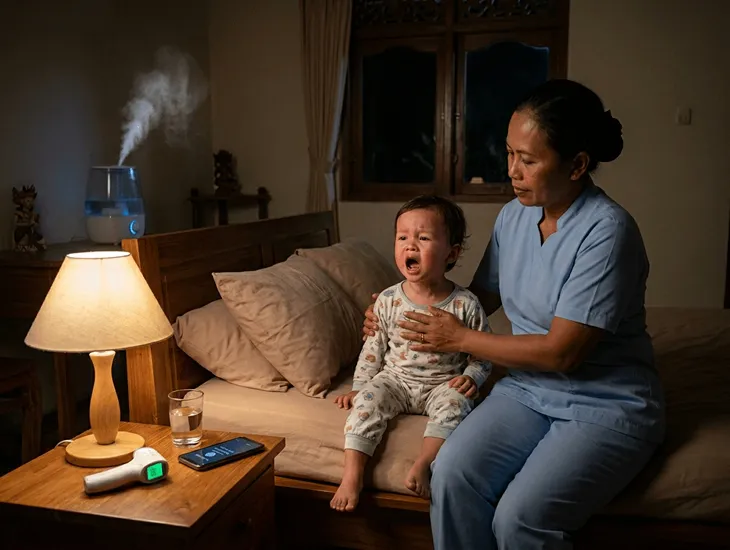
Baby Coughing at Night 2026 – Croup and distinctive barking cough, nighttime symptoms and stridor, when caregivers should seek urgent medical help

Croup is a viral condition that causes swelling around the vocal cords and the windpipe. It is characterized by a very distinctive barking sound that sounds similar to a seal’s loud call.

These symptoms typically worsen during the night when the air is cooler and the child is lying flat. You might also hear a high-pitched sound called stridor when the infant breathes in deeply.

A trained childcare provider recognizes these unique auditory signals immediately. They understand that a calm environment is crucial for preventing the airway from becoming further constricted due to crying.

Steamy air from a warm shower or a cool-mist humidifier can sometimes provide temporary relief for mild cases. However, these methods must always be used under strict supervision to ensure the infant’s absolute safety.

If the barking sound becomes persistent or is accompanied by difficulty swallowing, you must contact a doctor. Caregivers provide a vital second set of eyes to monitor the severity of the condition overnight.
Air Quality and Environmental Irritants

Environmental factors often play a silent role in triggering a persistent dry rattle after bedtime. Dust mites, mold, or pet dander in the sleeping area can inflame sensitive airways and cause significant discomfort.

Dry air in air-conditioned rooms can also irritate the throat, leading to more frequent bouts of hacking. Airway sensitivity or early signs of asthma often manifest as symptoms that only appear during the night.

Using a cool-mist humidifier can help maintain the correct humidity levels to soothe irritated throat tissues. A professional assistant ensures the device is cleaned daily to prevent the growth of harmful bacteria.

Observing whether the symptoms improve when the child is in a different room can help identify local irritants. This documentation is incredibly helpful for medical professionals when they are determining the cause of chronic irritation.

Reliable caregivers also ensure the sleeping environment remains clean and free from heavy perfumes or smoke. Protecting the infant’s immediate environment is a simple but effective way to reduce nocturnal respiratory triggers.

Red Flags: When to Seek Medical Help

Knowing when to transition from home care to professional medical intervention is critical for safety. You must seek urgent care if your infant shows signs of labored breathing or rib retractions during sleep.

Nostril flaring, grunting, or pauses in breathing are serious indicators that the child is struggling for air. If the lips or tongue appear pale, grey, or blue, you must seek emergency help immediately.

Expert support staff are briefed on these specific red flags to ensure immediate action. They are trained to alert parents or emergency services the moment a child’s condition appears to be worsening.

High fever in very young infants is always a reason for a prompt medical consultation. Dehydration, marked by fewer wet nappies or a dry mouth, also requires evaluation by a licensed pediatric professional.

Never ignore a sudden, choking-type rattle that starts abruptly, as this could indicate an inhaled foreign object. Vigilant monitoring ensures that Baby Coughing at Night is addressed safely without any delay.

Evidence-Based Comfort Measures at Home

Supportive care at home focuses on comfort rather than suppressing the symptoms with unapproved medications. Nasal saline drops and gentle suctioning help clear mucus from the nose before you put the baby down.

Ensuring the infant receives plenty of breast milk or formula helps prevent dehydration during an illness. Older infants may benefit from small sips of water if your doctor provides specific approval for extra fluids.

A professional helper follows your pediatrician’s instructions precisely regarding any approved treatments. They maintain a strict log of fluid intake and sleep patterns to ensure the child is recovering well.

Elevating the head of the mattress slightly can help with drainage, but you must follow safe-sleep rules. Never use pillows or wedges inside the cot, as these pose a significant risk for accidental suffocation.

Babies should always be placed on their backs on a firm, flat surface for every sleep. Your caregiver reinforces these safety standards while providing the extra cuddles and upright holding your sick infant needs.

Real Story: Managing a Midnight Fever in Pererenan

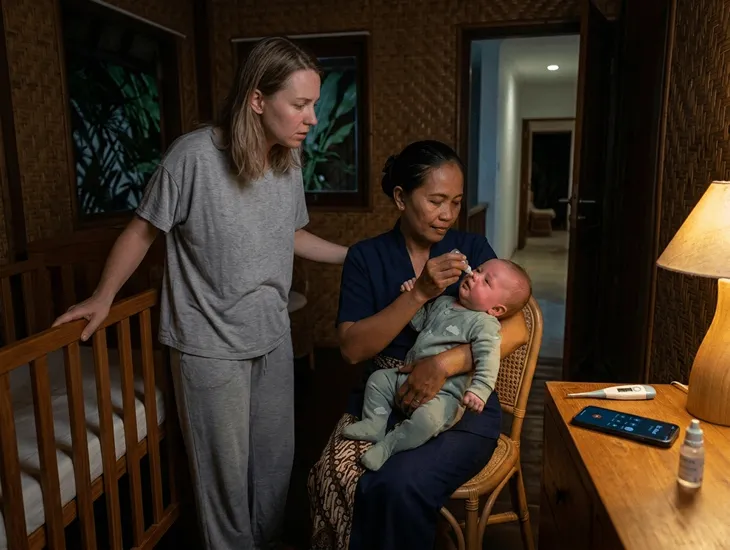
Baby Coughing at Night 2026 – midnight dry cough in a six‑month‑old, calm overnight babysitter support in Bali, quick pediatric consultation and crisis management

Clara, an architect from Canada, living in Pererenan, woke up at midnight to a sharp sound. Her six-month-old daughter, Elora, was gasping for air between heavy, dry hacks. The air was thick with humidity.

She touched Elora’s burning forehead, her hands shaking as the baby struggled to settle. The midday heat had already left Clara exhausted, and now the midnight silence felt heavy with uncertainty and fear.

She called the professional babysitter in Bali who was providing overnight support through our agency. The caregiver entered the nursery instantly, her calm movements contrasting with the frantic energy in the room.

The caregiver applied saline drops with practiced ease while holding Elora in a steady, upright position. She noticed the slight pulling of the baby’s ribs and calmly suggested an immediate medical consultation.

While Clara spoke with the doctor, the caregiver remained focused on monitoring Elora’s temperature. This expert support provided the breathing room Clara needed to manage the crisis and ensure her daughter’s safety.

Essential Do and Do Not Lists for Caregivers

When a child is unwell, caregivers must follow a strict set of protocols to ensure safety. You must always monitor the infant’s skin color and breathing effort more frequently than usual during sleep.

Do use nasal saline and suctioning before bed to help clear congestion. Do keep a detailed log of symptoms, including the time of episodes and the infant’s overall mood and energy levels.

A qualified assistant must never give over-the-counter cough or cold medicines to infants or toddlers. Medical authorities advise against these drugs because they offer little benefit and carry a high risk of harm.

Do not give honey to any child under twelve months old due to the risk of botulism. Do not use unsafe sleep props like pillows or wedges to prop up a sick baby’s head.

Always call the parents or emergency services if red-flag symptoms appear, regardless of the time. A dedicated helper understands that clear communication and strict adherence to medical safety rules are their most important duties.

Screening Childcare for Illness Support

Hiring a caregiver who can handle a sick infant requires a very specific screening process. Ask potential candidates how they would react if an infant started struggling to breathe during a night-time shift.

Look for answers that prioritize checking vital signs and contacting parents immediately. Verify if they have up-to-date infant first-aid and CPR training specifically for respiratory emergencies in young children and toddlers.

A reputable childcare provider should have experience managing common childhood illnesses like croup or bronchiolitis. They must be comfortable following a written emergency plan that includes your preferred clinic and doctor.

Ask for references who can vouch for the caregiver’s composure during high-stress health situations. You need someone who remains calm and logical when a child is unwell, ensuring that safety protocols are followed.

Providing a symptom checklist and a clear communication log during onboarding helps the caregiver succeed. This preparation ensures that any illness is managed with the highest level of professional and medical care.

FAQs about Baby Coughing at Night

Q: Is it safe to use a humidifier in my baby’s room? 

A: Yes, a cool-mist humidifier can soothe airways if it is cleaned daily to prevent mold.

Q: Should I give my toddler honey for a cough? 

A: Only if they are over twelve months old; never give honey to infants under one year.

Q: Can a babysitter in Bali give my baby medicine? 

A: Only with your explicit written permission and following the exact dosage provided by a doctor.

Q: Why does my baby’s cough get worse at night? 

A: Mucus pools in the throat when lying flat, and dry air can further irritate sensitive airways.

Q: What should I do if my baby sounds like a barking seal? 

A: This may be croup; keep them calm, use steam, and consult a doctor if breathing is labored.

Q: When is a cough considered a medical emergency? 

A: If the baby has blue lips, labored breathing, or is too weak to feed or stay awake.

Need a gentle babysitter to help care for your baby who coughs at night? Chat with our team on WhatsApp now!