
Teaching Kids About Gratitude: Practical Tips for Parents in Bali
Raising children in a foreign land presents unique challenges for expatriate families today. Balancing professional work and dedicated parenting requires immense patience. Children often feel disconnected from their cultural surroundings and social groups during life transitions.
Parents worry their children take privileges for granted during these times. Without guidance, kids may miss the benefits of appreciating small moments. This oversight affects their long-term resilience and emotional well-being significantly over time.
Stress peaks when daily routines become chaotic for everyone involved. Parents struggle to model positive habits while juggling massive professional commitments. Children need structured encouragement to shift their focus toward positive experiences and social connections.
Teaching Kids About Gratitude requires consistent effort and simple, daily habits. Families thrive when they integrate appreciation into their routine. This habit builds emotional foundations and supports healthy mental development for all growing children.
Professional experts create environments where appreciation flourishes. Learn more from the American Academy of Pediatrics. We support your family goals and values during your stay in Indonesia with our professional care.
Table of Contents
Modeling Appreciation in Daily Life in Bali
Children learn best by observing the behavior of their primary caregivers. You must model appreciation consistently if you desire to see this trait grow. Vocalize your gratitude for small, everyday acts clearly.
When you notice a positive interaction, share it with your child immediately. This practice helps them understand the value of recognizing kindness. Use specific language to describe how you feel in that moment.
A professional caregiver can support this model by reinforcing positive social behavior daily. They demonstrate how to use polite language during play. This consistent modeling reinforces your family expectations effectively for your children.
Consistently expressing thanks for the efforts of others helps children see gratitude as a core relationship skill. It removes the perception that appreciation is only for gifts or holidays. Gratitude becomes a lifestyle.
Creating Simple Daily Gratitude Rituals
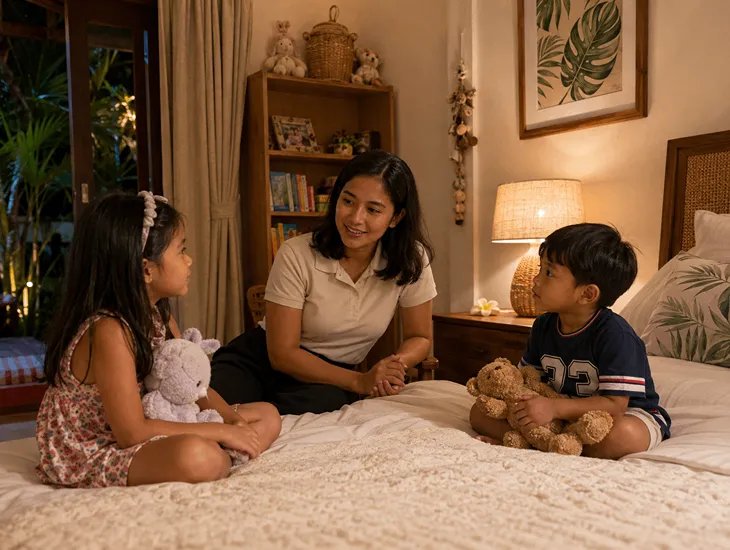
Integrate short, repeatable routines into your existing family schedule. Bedtime remains the most effective window for reflective conversation with younger children. Ask them to share three good things that happened that day.
Keep these daily check-ins brief to maintain their interest. You want to foster a habit rather than a formal chore. Repeat the process until it becomes an automatic part of their daily routine.
Ask a Babysitter in Bali to facilitate these bedtime rituals when you work late. This ensures the practice continues regardless of your professional schedule. Consistency is the key to long-term habit formation.
You can also incorporate these moments into your dinner table conversations. Sharing appreciation during meals strengthens social bonds among family members. Every positive exchange contributes to a supportive emotional environment for everyone involved.
Using Visual Tools to Anchor Learning
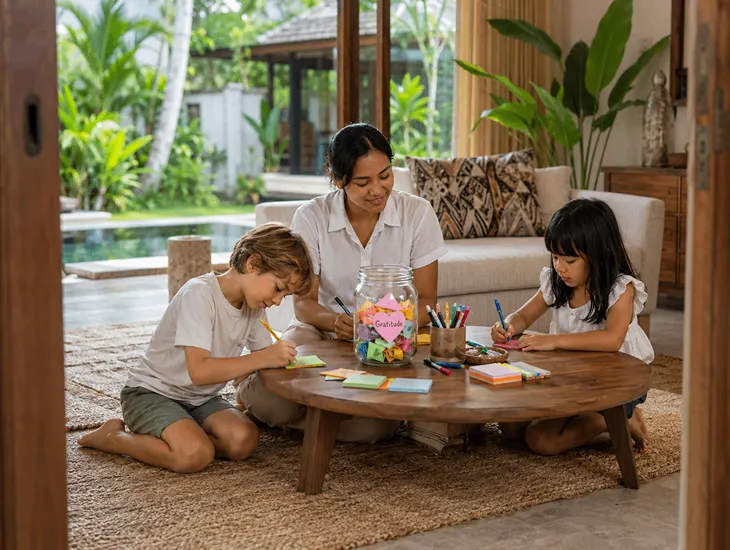
Concrete reminders help children connect abstract emotions to tangible experiences. A gratitude jar serves as a beautiful focal point for your home. Family members deposit written notes of appreciation throughout the week.
Younger children can draw pictures of things they appreciate to include. Regularly reviewing the contents of the jar reinforces the habit. It serves as a visual celebration of family joy and connection.
Our Babysitter in Bali can organize craft sessions to decorate your gratitude jar together. This activity makes the concept fun and accessible for young learners. Visual aids turn abstract ideas into reality.
You may also use a gratitude tree or simple notes on the fridge. These visual cues keep appreciation visible and front of mind daily. Simple tools provide powerful support for your family culture.
Encouraging Sincere Giving and Social Bonds
Gratitude extends beyond receiving to the joy of giving back. Encourage your children to participate in small acts of service for others. Teaching Kids About Gratitude fosters empathy and deep personal satisfaction for everyone.
Helping neighbors or donating unused toys helps them understand the needs of others. Sincere appreciation grows when children witness the impact of their kindness. Action-oriented gratitude builds robust character over time.
A Babysitter in Bali can supervise these small acts of kindness during the afternoon. They help your child prepare thank-you notes or organize charitable donations. Giving back becomes a cherished family activity.
Focus on the specific feelings associated with helping others. Discuss why their contribution matters and how it benefits the community. Linking action to emotion is essential for internalizing deep gratitude for everyone.
Real Story: Building Gratitude in Pererenan
Stefan, a 34-year-old software architect from Canada, moved his young family to a villa in Pererenan recently. The tropical transition left his daughter feeling isolated and frequently complaining about the intense humidity.
The unfamiliar sounds of the village traffic and the lack of her friends made her quite anxious. Stefan struggled to balance his work while managing her constant frustration and complaints about their home.
He worried that his daughter was losing her perspective on their exciting life move. That is when he hired our Babysitter in Bali service to assist with daily routines and childcare support.
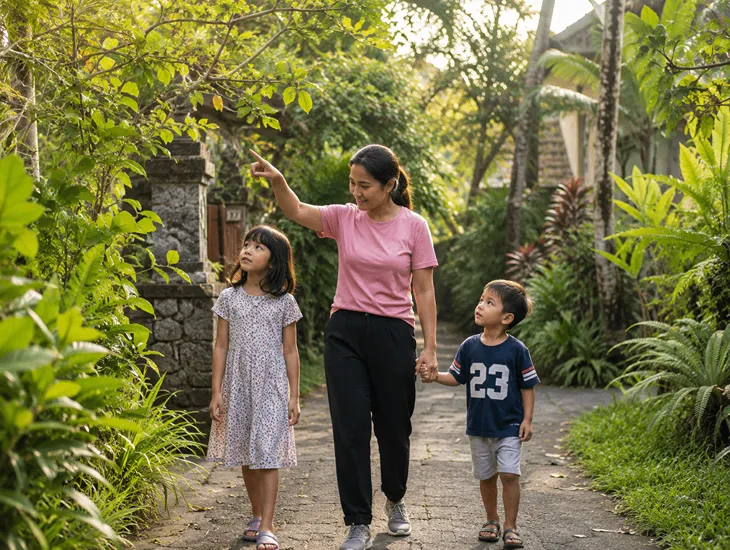
The professional introduced a simple gratitude jar at bedtime each evening. She guided Stefan’s daughter through mindful walks to appreciate the nature surrounding their home. She soon started noting small, positive moments.
Stefan found that the structured support changed their entire family dynamic significantly. The caregiver helped his daughter articulate her feelings through these simple daily rituals. Their house finally became a supportive home.
Practicing Mindfulness and Noticing Good
Mindfulness exercises train the brain to notice small positives. Take short, mindful walks to observe the beauty in your local neighborhood. Deep breathing helps children calm their minds and focus clearly.
Savouring simple experiences reinforces the habit of seeing the good daily. Pause to appreciate a shared meal or a beautiful sunset together. These moments teach children to live in the present.
Our Babysitter in Bali incorporates these mindfulness moments into outdoor play activities. They encourage children to observe nature and appreciate the environment during their afternoon walks. Noticing beauty becomes second nature.
Regularly practicing these skills helps children cope with stress. They learn to identify positive aspects of life even during difficult moments. A mindful approach to gratitude provides long-term emotional resilience.
Tailoring Activities for Different Ages
Teaching Kids About Gratitude requires practices that evolve as your children grow older. Preschoolers require visual aids like jars and drawings. Tweens and teens benefit more from reflective journaling and deep, personal conversations.
Avoid forcing gratitude lists that feel superficial or purely parent-driven. Instead, focus on discussing how appreciation connects to their personal identity and goals. Authentic reflection resonates much more with older kids.
A Babysitter in Bali adapts these activities to match your child’s developmental stage. They provide age-appropriate tools to ensure engagement stays high. Expert support makes these practices effective for every age.
Consistency across different developmental phases ensures the habit sticks long-term. Adjust your approach as their needs and interests change. Flexible strategies keep the conversation meaningful and relevant for everyone.
How a Babysitter in Bali Supports Gratitude
A premium Babysitter in Bali does more than just supervise playdates. They actively support the child’s overarching gratitude goals daily. They reinforce lessons learned during family rituals through casual conversation.
Managing gratitude schedules requires extreme patience and exceptional organizational skills. Caregivers ensure that routines are completed before recreational screen time begins. This consistency builds strong, lifelong habits for young learners.
They act as a vital communication bridge between parents and the children. Caregivers monitor the child’s engagement levels during the afternoon lessons. They report any significant progress or struggles to parents.
Integrating childcare with gratitude support creates a seamless daily routine. Children feel secure knowing their primary caregiver is nearby during difficult lessons. This emotional stability enhances their capacity to absorb information.
Relying on a professional agency guarantees a cohesive household team. Your Babysitter in Bali and family work collaboratively towards shared goals. This synergy maximizes your child’s success in any cultural environment.
FAQs about Teaching Kids About Gratitude
Q: Is gratitude just saying thank you?
A: No, it involves noticing kindness and understanding the positive emotions attached to it.
Q: How can a Babysitter in Bali help?
A: They model positive habits, manage gratitude rituals, and provide consistency for your family.
Q: Does gratitude improve mental health?
A: Yes, regular practice supports resilience and reduces anxiety symptoms in children and teens.
Q: What if my child is resistant?
A: Start with small, non-pressured activities. Focus on modeling rather than forcing participation.
Q: Can we practice gratitude as a family?
A: Yes, daily rituals like sharing “three good things” work best when everyone participates.
Q: Should I punish kids for not being grateful?
A: No, use positive reinforcement and reflection to encourage deeper understanding instead.

