
Review Us
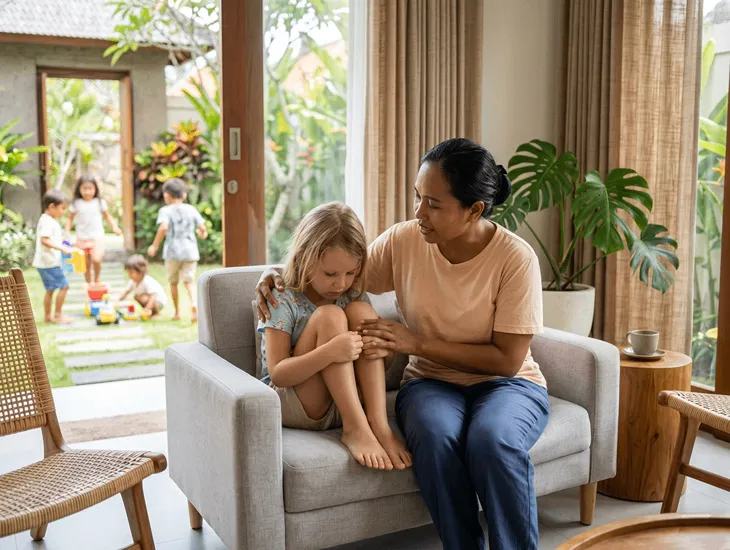
Child Social Anxiety in Bali 2026 – Caregiver in Indonesia comforting a shy child securely
author

Child Social Anxiety in Bali: Warning Signs and When to Get Help

Moving to Indonesia challenges foreign families. Expat children face sudden routine changes. This transition triggers deep isolation and intense fear.

Your child might refuse playdate invitations completely. They cry uncontrollably before simple gatherings. You feel helpless watching them struggle.

If left unaddressed, these emotional reactions can worsen, and persistent avoidance may impact their long-term development and create a stressful home environment.

Normal shyness becomes a severe psychological barrier if ignored. The Indonesian Ministry of Health encourages early pediatric intervention for mental wellness. Delay compounds their suffering.

Recognizing the warning signs of Child Social Anxiety in Bali changes this trajectory. You can provide structured support to build confidence. Guidance transforms fear into comfort.

A trained caregiver offers consistent daily exposure safely. A reliable professional guides your child through interactions. This support restores peace to your family.

Understanding Clinical Childhood Fear

Childhood anxiety involves a persistent and intense fear of peer judgment. It goes far beyond normal playground introversion. Children fear embarrassing themselves and avoid routine social situations completely.

These specific symptoms typically appear in children between eight and fifteen years of age. However, younger toddlers can display early warning signs. They might cling desperately to adults.

To receive a formal medical diagnosis, these symptoms must last for at least six months. The fear must cause clear impairment in school performance. It drastically impacts their friendships.

This medical condition makes children fear saying the wrong thing constantly. They worry obsessively about looking foolish in front of peers. This psychological burden makes attending school incredibly exhausting.

Understanding the clinical definition prevents foreign parents from dismissing genuine psychological struggles. Recognizing the difference between introversion and clinical fear remains vital. This crucial knowledge dictates appropriate parental support.

A trained Babysitter in Indonesia recognizes these specific developmental hurdles immediately. They provide a comforting presence when parents must focus on demanding remote work commitments. This ensures children never feel abandoned.

Early intervention prevents anxiety from becoming a permanent personality trait. Consistent exposure to small social challenges builds vital resilience over time. Your child can overcome these fears with dedicated adult support.

Behavioral Warning Signs in Children

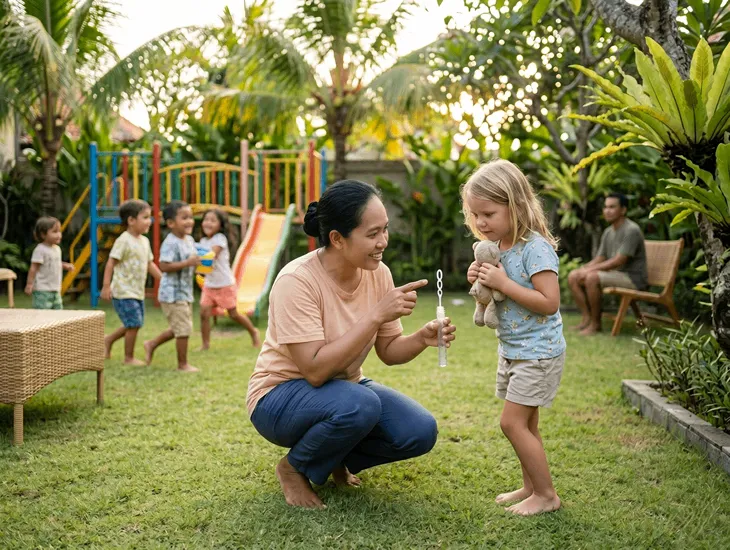
Child Social Anxiety in Bali 2026 – Caregiver in Indonesia encouraging a shy toddler at park

Younger children express their deep fears through specific and sudden behavioral changes. You might witness severe crying or aggressive tantrums before scheduled events. They often freeze completely around strangers.

Avoiding peers serves as a massive red flag for parents. Anxious children might hide behind your legs constantly. They stick strictly to parallel play even after having time to adjust.

Refusing to attend birthday parties indicates serious underlying distress. They frequently invent creative excuses to avoid group activities entirely. This consistent avoidance severely limits their natural social development.

They might completely refuse to speak when interacting with new adults. This selective mutism stems from a profound fear of judgment. A patient caregiver will monitor these reactions closely.

Caregivers must avoid pushing the child into overwhelming environments too fast. Recognizing these behavioral signs early allows for gentle intervention. You can slowly introduce them to safe playdates locally.

Parents should document these behavioral patterns carefully in a daily journal. Tracking specific triggers helps medical professionals understand the exact root cause of the fear. This data is invaluable for therapy.

Physical and Emotional Distress Signals

Older children internalize their intense social fears much more frequently. They experience extreme worry before class presentations or school performances. This hidden fear causes them to over-prepare obsessively.

They actively avoid speaking in class or joining recess games. Some anxious children completely refuse to use public restrooms. Others struggle immensely to eat their lunch in front of classmates.

Physical symptoms frequently accompany these strong emotional fears. Your child might complain of frequent stomach aches or sudden headaches. Nausea and dizziness commonly occur right before attending a large event.

A rapid heart rate and excessive sweating indicate severe internal panic. They possess a strong fear of being watched or criticized constantly. You will hear numerous questions about embarrassing themselves.

In severe cases, they might refuse to leave the house entirely. They actively avoid talking on the phone due to extreme fear. Addressing these physical signs requires deep parental empathy.

Sleep disturbances often accompany these intense waking fears. Your child might experience frequent nightmares regarding upcoming school events. They wake up exhausted, which further degrades their ability to cope socially.

Chronic exhaustion amplifies every minor social stressor throughout their busy day. A well-rested child possesses significantly more emotional resilience to handle playground conflicts. Prioritizing their sleep hygiene becomes absolutely essential.

Cultural Triggers for Expat Children

Life in Indonesia presents incredibly unique social challenges for foreign children. Expat kids frequently move between different cultures and complex languages. This constant shifting creates significant adjustment stress.

Navigating different school systems increases daily social pressure, and the local cultural emphasis on large community ceremonies can easily overwhelm an anxious child.

Mental health awareness is steadily improving across the tropical island. Local medical resources note that anxiety remains common among foreign residents. Symptoms often flare up during crowded beach parties.

Parents must recognize how the environment impacts their child’s confidence. Expat communities emphasize using dedicated playgroups to ease difficult transitions. These kid-friendly spaces help shy children build new friendships gradually.

A patient local caregiver helps soften these difficult cultural transitions. They gently explain local customs and norms to foreign children. This dedicated guidance significantly reduces their intense fear.

Language barriers compound the feeling of isolation for foreign children. Struggling to communicate basic needs to local peers creates immense frustration and fear. They retreat inward to protect themselves from embarrassment.

Real Story: Overcoming Fear in Sanur

The morning school run became a daily battleground for American expat David and his young daughter. The bustling expatriate community at her international school in Sanur felt entirely overwhelming.

Her grip would whiten on the car door handle every morning. She hyperventilated and complained of severe stomach aches. The stress of managing her panic left David completely exhausted.

Her persistent crying caused massive disruptions to their daily routine. David realized this was far beyond normal introversion. He desperately needed a structured strategy to help her manage this panic.

Seeking a gentle approach, he reached out to our specialized childcare platform to find a dedicated professional. The assigned caregiver immediately established a calm and highly predictable morning routine.

This consistency effectively reduced her uncertainty before school. The caregiver practiced gradual exposure through very small social steps. They started with short walks to a quiet local bakery.

Within two months, she began accepting invitations to small playdates. The caregiver’s patient emotion coaching helped her manage the morning stomach aches. David finally saw his daughter thriving socially again.

When to Seek Professional Support

Child Therapy in Indonesia 2026 – Professional therapist in Bali consulting with expat parents

Knowing when to consult a clinical professional is absolutely critical. You must seek help if your child avoids leaving the house entirely. Dropping previously enjoyed activities indicates a serious hurdle.

Watch for extreme distress regarding normal daily social interactions. If their reaction goes far beyond normal nerves, you must act quickly. Persistent physical complaints linked to social events require attention.

If avoidance disrupts your family life for months, seek immediate guidance. Professional therapists provide evidence-based treatments like cognitive behavioral therapy. This clinical approach teaches children to challenge their anxious thoughts.

Children learn to face their feared situations very gradually. In severe cases, a pediatric psychiatrist might consider safe medication. This clinical intervention must always be managed by qualified medical doctors.

Many English-speaking child psychologists currently operate across the island. Expat hubs frequently share excellent recommendations for family therapists and specialized clinics. A reliable professional supports these therapeutic plans perfectly.

Therapy sessions require consistent reinforcement at home to be truly effective. Parents must practice the recommended coping strategies with their children daily. This homework solidifies the psychological tools learned during counseling.

A specialized caregiver reinforces these clinical strategies during your working hours. They practice deep breathing techniques when your child feels overwhelmed by sudden visitors. This continuous support accelerates the healing process.

How a Caregiver Provides Gentle Exposure

A highly trained caregiver acts as an everyday emotional support system. They provide safe and highly predictable daily routines. This essential stability helps anxious children feel perfectly secure at home.

They encourage gentle exposure to very small social steps carefully. Greeting neighbors or attending short playdates builds confidence without undue pressure. They strictly avoid forcing the child into massive social events.

Caregivers practice valuable emotion labeling and healthy coping skills daily. They help children identify exactly when their stomach hurts from worry. Breathing exercises become a highly natural routine.

Our professionals liaise directly with parents about specific anxiety triggers. They document which exact situations cause panic during the day. This vital information helps parents and therapists adjust strategies accordingly.

They follow all established plans agreed upon with your clinical psychologist. Your caregiver acts as a patient and reassuring presence during transitions. This dedicated support helps manage Child Social Anxiety in Bali.

Gentle exposure requires immense patience and a completely non-judgmental attitude. Rushing the process often causes the child to regress and rebuild their emotional walls. Slow progress remains the most sustainable path forward.

A Babysitter in Bali celebrates every minor victory with the child. Praising a successful greeting at the local grocery store reinforces positive associations. This encouragement motivates them to try harder next time.

Avoiding Harmful Parenting Misunderstandings

Parents often mistake intense clinical anxiety for normal childhood shyness. Ignoring a child’s social anxiety can severely impact their daily functioning. You must watch for persistent isolation rather than temporary quietness.

Forcing children into overwhelming situations worsens their deep fears significantly. Shaming them by calling them dramatic is incredibly damaging psychologically. Punishing a child for school refusal never addresses the root fear.

Best practices emphasize validating their complex feelings and offering deep empathy. You must break large social challenges into much smaller steps. Gradual exposure works far better than throwing them in completely.

Cultural misunderstandings easily trigger anxiety in newly arrived expat children. Differences in schooling and public performance expectations surprise foreign kids constantly. Parents must prepare their children for these distinct cultural differences.

A compassionate caregiver softens these difficult cultural transitions effectively. They use role-play to rehearse social interactions safely before they happen. This consistent reassurance builds a strong foundation of genuine social confidence.

Overprotection is another common trap for loving foreign parents. Shielding your child from every single uncomfortable interaction prevents them from developing vital coping mechanisms. They must experience mild discomfort to grow.

Finding the perfect balance between comfort and challenge requires professional insight. You must trust the structured process of gradual social exposure completely. Your child will emerge stronger and much more resilient.

FAQs about Child Social Anxiety in Bali​

Q: What triggers social fears in expat children locally? 

A: Unfamiliar cultural norms, language barriers, and shifting environments trigger severe anxiety.

Q: How do physical symptoms relate to childhood fear? 

A: Extreme worry causes real physical reactions like stomach aches, nausea, and rapid heart rates.

Q: Can a caregiver replace a child psychologist? 

A: No. Caregivers provide daily support, but clinical therapy requires a licensed medical doctor.

Q: How should I handle severe morning school refusal? 

A: Validate their fear, break the morning into small steps, and consult a professional immediately.

Q: How does gentle exposure actually help anxious kids? 

A: It allows them to face fears in manageable doses, building confidence without causing panic.

Need a gentle sitter to support your child’s daily routine while you work with a professional on their social anxiety? Chat with our team on WhatsApp now!