
Review Us
Febrile Seizures in Children 2026 – fever‑related shaking episodes, calm first aid steps, when expatriate parents and babysitters in Bali should call an ambulance
author

Febrile Seizures in Children: What Parents Can Calmly Do to Keep Them Safe

Experiencing a medical emergency abroad terrifies expatriate families. Watching a child suddenly stiffen and shake causes immediate panic. This fear paralyses parents completely.

Fever spikes happen frequently in tropical climates. The sudden onset leaves you feeling helpless and isolated. You worry constantly about leaving your child alone.

Without proper knowledge, parents often make dangerous first aid mistakes. Attempting to restrain a shaking child causes severe injuries. This panic worsens the situation significantly.

Medical guidelines from the National Health Service provide clear emergency protocols. They emphasize calm observation and safe positioning. Proper training prevents tragic outcomes.

Understanding the mechanics of Febrile Seizures in Children restores your confidence. Knowing exactly when to call an ambulance protects your family. You regain control over unexpected health crises.

A professional Babysitter in Bali understands these emergency protocols perfectly. They execute safe first aid while you work. This reliable support brings total peace of mind.

Understanding the Mechanics of Fever Spikes

These physical events are triggered by a sudden high temperature. They usually affect children aged six months to five years. The rapid spike disrupts normal brain electrical activity temporarily.

They are surprisingly common among toddlers globally. Approximately four in every hundred children experience at least one episode. Most occur around eighteen months of age.

Clinical reviews emphasize that these events do not damage the brain. They do not reduce intelligence or cause permanent physical harm. The long term prognosis is generally excellent.

Understanding these fever-induced episodes reduces parental panic significantly. Caregivers must understand they are usually not life threatening. However, they remain a strict first aid emergency.

A Babysitter in Bali recognizes the onset of a high fever early. They monitor the child closely when temperatures rise. This vigilance allows for rapid and calm intervention.

Fever management is a daily reality in tropical environments. Knowing the basic biological mechanics helps remove the fear factor. Education empowers parents to handle intense medical moments with absolute clarity.

Simple Versus Complex Presentation Patterns

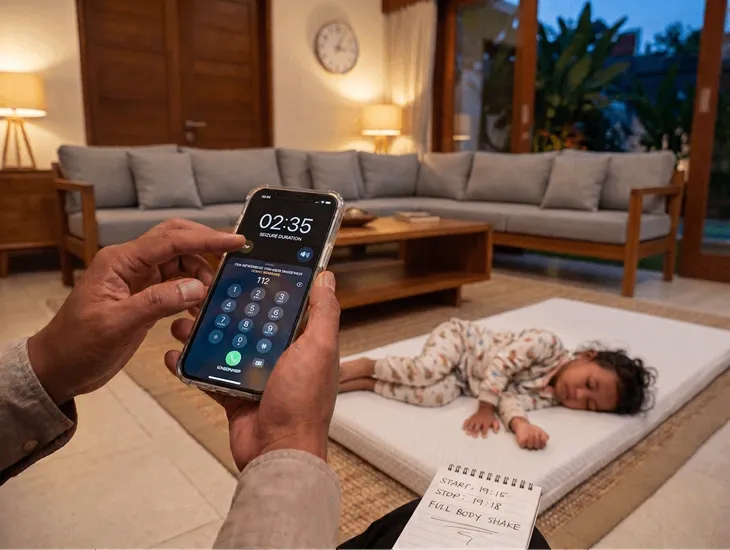
Babysitter First Aid in Indonesia 2026 - A professional timing an emergency event using a mobile phone.

A simple presentation is the most common type encountered. Physical jerking affects the entire body evenly. The episode typically lasts less than fifteen minutes.

Simple episodes occur only once within a twenty-four hour period. They resolve naturally without medical intervention to stop the shaking. The child recovers full consciousness relatively quickly.

A complex presentation requires much more urgent medical attention. The shaking might affect only one side of the body. The duration often exceeds fifteen minutes entirely.

Complex events may also repeat within a single day. Caregivers should never attempt to classify these types independently. They must accurately report the duration and physical symptoms.

Clear communication with emergency dispatchers is vital. A professional caregiver tracks the exact timing using a phone. This data helps doctors determine the appropriate clinical response.

First Aid for Fever-Induced Medical Events

The official first aid steps are highly consistent across pediatric sources. You must stay calm and start timing the event immediately. Use a phone timer for exact precision.

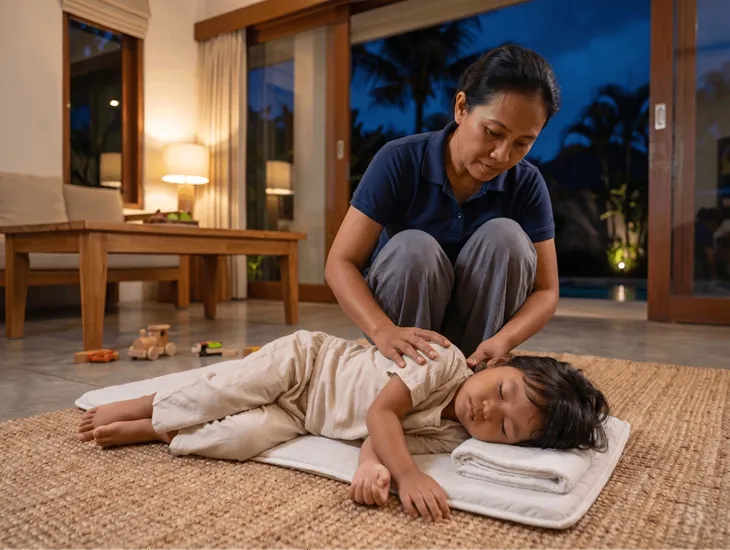
Gently place the child on the floor away from sharp objects. Put something soft under their head to prevent injury. Do not restrain their physical movements at all.

Turn the child onto their side into the recovery position. This allows saliva or vomit to drain safely. The airway remains clear during Febrile Seizures in Children.

Never put anything into the mouth of the child. They will absolutely not swallow their tongue. Forcing spoons or fingers causes severe dental and airway damage.

Do not put the child in a cold bath. Rapid cooling shocks the system and causes harm. Wait until they are fully conscious before administering any fever medication.

Maintaining a safe perimeter is your primary responsibility. Move heavy furniture away from the shaking limbs. Creating this safe zone prevents secondary physical trauma while the episode runs its course.

When to Call an Ambulance Immediately

Major pediatric hospitals agree on specific emergency triggers. You must call an ambulance if this is the first episode ever. Immediate evaluation is strictly required in Indonesia.

Call emergency services if the shaking lasts longer than five minutes. If you are unsure of the timing, treat it as exceeding five minutes. Fast action saves lives.

Repeated episodes without full recovery demand urgent hospitalization. If breathing looks difficult or the face turns blue, call immediately. These are severe medical red flags.

Stiffness affecting only one limb requires a fast medical response. If the child remains unusually drowsy for an hour afterward, seek help. Never drive during an active episode.

A trained caregiver knows to call an ambulance before calling parents. A Babysitter in Bali prioritizes the immediate survival of the child. This strict protocol prevents dangerous delays.

Relying on professional transport ensures paramedics can intervene en route. Attempting to navigate busy streets while panicked puts everyone at risk. Trusting emergency services is the safest logistical choice.

Real Story: Medical Emergency in Canggu

The intense midday humidity in Canggu made the villa feel like an oven. Thomas watched in horror as his two-year-old daughter stiffened and collapsed on the rug.

Lily’s body began jerking violently while her skin radiated heat. Thomas stood frozen, unable to process the sudden medical crisis unfolding directly in front of him.

He had recently hired Ayu, a professional Babysitter in Bali. Ayu sprinted from the kitchen and dropped to the floor instantly. She rolled Lily gently onto her side.

Ayu pulled out her phone and started a timer immediately. She instructed Thomas calmly to call the local emergency number. She ensured Lily’s airway remained completely clear of obstruction.

The jerking stopped naturally after three terrifying minutes. Ayu stayed on the floor, comforting Lily until the ambulance arrived. Her quick, trained response prevented any secondary physical injuries.

The local pediatrician confirmed it was a simple viral fever reaction. Thomas exhaled deeply, realizing he had relied entirely on trained support. The crisis demonstrated the absolute necessity of safety training.

How a Babysitter in Bali Manages Risks

Pediatric Safety in Bali 2026 - Caregiver explaining an emergency plan to expatriate parents.

A professional service provides caregivers with written emergency plans. These plans include local hospital locations and emergency numbers. This preparation is vital for expatriates in Indonesia.

Caregivers respect strict medical boundaries during any crisis. They never adjust prescribed seizure medicines without explicit parental consent. They never give unapproved medication during a shift.

A skilled Babysitter in Bali never delays reporting a medical event. They communicate openly without fear of worrying the parents. Transparency builds essential trust in the working relationship.

Managing Febrile Seizures in Children requires intense practical focus. The caregiver keeps the environment safe from physical hazards. They focus entirely on the airway and timing.

This trained presence makes a crucial difference when parents are out. You can attend meetings knowing a professional handles emergencies. Your family remains safe in tropical environments.

Long-Term Medical Evaluation and Outlook

Pediatricians focus on identifying the underlying cause of the fever. They rule out serious infections like meningitis quickly. Simple episodes usually do not require extensive blood tests.

Long term daily medication to prevent recurrence is not recommended. Routine use of antipyretics does not significantly reduce future risks. These medications carry their own physical side effects.

The risk of developing future epilepsy is incredibly low. It is only slightly higher than the general healthy population. Parent education is the core part of medical care.

Understanding these statistics helps parents process the trauma. These frightening physical events look terrifying but heal cleanly. The child returns to normal activity very soon.

Always follow general international practice regarding follow up care. Consult with a licensed pediatrician in Indonesia for accurate guidance. Reliable medical advice ensures complete physical recovery.

Screening Caregivers for First Aid Skills

Screening candidates requires specific questions about medical emergencies. Ask if they possess valid first aid training covering fevers. This qualification is non-negotiable for safe childcare.

Ask the candidate to explain their emergency response step by step. Look for answers that match the strict recovery position protocols. They must know to avoid physical restraint.

Check references specifically regarding their handling of sick children. Ask previous employers if the caregiver followed medical instructions accurately. Reliable execution under pressure is absolutely critical.

A trial shift allows you to observe their general awareness. A Babysitter in Bali should identify physical hazards in the playroom. Proactive safety measures prevent compounding injuries.

Professional agencies screen candidates for these exact medical competencies. They ensure caregivers know how to access local clinics fast. This rigorous vetting protects your family entirely.

FAQs about Febrile Seizures in Children​

Q: What triggers these specific medical events? 

A: A sudden spike in body temperature due to an underlying infection triggers the physical shaking.

Q: Should I put a spoon in their mouth? 

A: No, never put anything in the mouth. It causes severe damage and blocks the airway.

Q: Can a Babysitter in Bali manage this emergency?

A: Yes, our vetted caregivers hold first aid certifications and know the recovery position.

Q: Do these events cause permanent brain damage?

A: Simple episodes do not cause brain damage, lower intelligence, or increase the risk of death.

Q: When must I call an ambulance immediately? 

A: Call if it lasts over five minutes, affects one side, or is the very first episode.

Q: Can I give fever medication during the shaking?

 A: No, wait until they are fully conscious and can swallow safely before administering medicine.

Need extra support caring for your child after a febrile seizure? Chat with our team on WhatsApp now!