
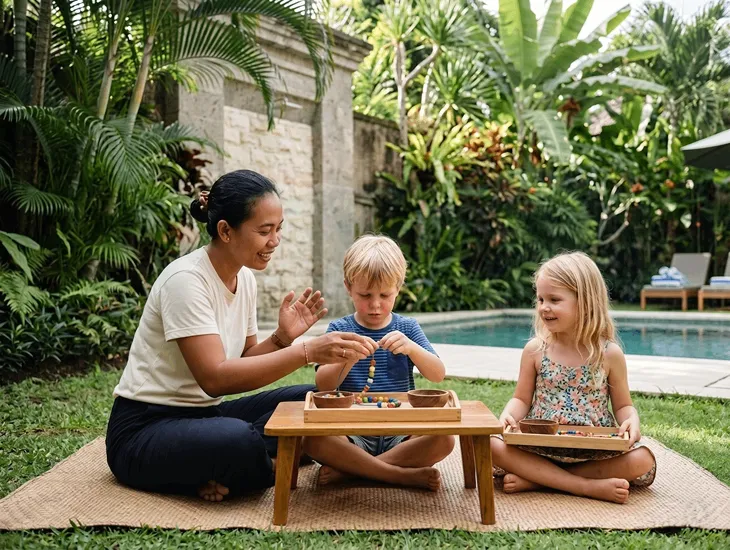
Kindergarten Readiness Assessment in Bali: 7 Key Signs Your Child is Ready
Transitioning to preschool is a major milestone for your child. In Indonesia, this period is crucial for cognitive growth. Many parents worry if their little one is prepared for the structure ahead.
You might notice your child struggles with new environments. Perhaps they find social interaction challenging or lack basic self-help skills. These gaps can cause significant anxiety for both you and your child.
Preparation is the difference between a smooth start and a difficult transition. Understanding developmental signs allows you to support your child early. You do not have to navigate this vital stage completely alone.
A professional caregiver acts as a vital partner. By focusing on daily independence and skill-building, they help bridge the gap. Your child gains the confidence needed for a successful school entry.
Conducting a proper Kindergarten Readiness Assessment in Bali helps identify strengths and areas for improvement. This structured approach ensures your child enters the classroom feeling capable, secure, and ready to learn new things.
Start by reviewing official child development guidelines to understand national standards. These tools provide a clear baseline for growth, ensuring you support your child’s journey toward school readiness effectively right now.
Table of Contents
Sign 1: Self-Care Independence
Bathroom independence is the most critical indicator of readiness. Your child must be able to use the restroom and wash hands without assistance. Teachers in local schools manage many children at once.
They cannot provide individual bathroom assistance for every student. A child who manages these tasks alone feels confident and secure. Being the only child needing help often causes social embarrassment and frustration.
Food independence is equally essential for daily success. Can your child open their lunchbox or snack container alone? Practicing these small daily tasks at home builds the confidence needed for the school day.
Zipping, buttoning, and fastening pants are specific motor skills to master. Choose outfits with buttons or zippers during practice sessions. This preparation significantly lowers stress levels for your child during the day.
A skilled caregiver supports these routines through daily practice. They observe from a distance, offering gentle encouragement rather than immediate help. This builds the autonomy necessary for a successful classroom transition.
Sign 2: Social-Emotional Maturity
Passing a Kindergarten Readiness Assessment in Bali means your child should understand how to share toys. Maturity involves getting along well with other children. Cooperative behavior is a primary focus for teachers.
Controlling emotions is vital for a classroom setting. While tantrums are normal at home, a ready child expresses frustrations verbally. They learn to communicate their feelings rather than using physical reactions like hitting.
Waiting for turns during conversations demonstrates emotional regulation. Interrupting peers or teachers disrupts the learning environment for everyone. A ready child waits patiently for their turn to speak during circle time sessions.
Separation readiness is a key sign of maturity. Your child should feel comfortable saying goodbye without prolonged crying. Trusting their caregiver or teacher to meet their needs helps them focus on activities.
Coaching social skills during playdates ensures your child is prepared. A professional caregiver facilitates these interactions, teaching kids to negotiate, share, and express empathy. This social practice is invaluable for early success.
Sign 3: Basic Academic Foundations
Basic literacy and numeracy form the foundation for learning. A child entering school should recognize letters and numbers up to ten. Identifying colors and shapes is also essential for their initial educational journey.
Recognizing their first and last name is a fundamental requirement. Your child should respond clearly when called and begin to recognize the written form of their name on personal belongings at school.
Counting objects with one-to-one correspondence shows cognitive readiness. It proves they understand the value of numbers beyond rote memorization. Playing counting games at home reinforces this skill in a fun, natural way.
Identifying colors and common shapes prepares them for advanced creative work. Sorting activities using toys or household items helps reinforce these concepts daily. This play-based learning makes academic prep feel exciting.
A dedicated caregiver integrates these academic foundations into daily play. They use letter-recognition games, number hunts, and coloring activities to build skills. This makes learning feel natural and engaging for kids.
Sign 4: Following Routines and Rules
Kindergarten requires adherence to a structured daily schedule. Your child must follow simple instructions from teachers. The ability to sit quietly during short learning periods is vital for classroom success today.
Schools in Indonesia often start promptly at eight in the morning. Lateness causes children to miss outdoor physical activities, leaving them feeling excluded. Establishing a consistent morning routine at home prepares them.
Following two or three-step directions is a key developmental sign. Instructions like hanging up a bag, sitting on the carpet, and opening a book test their focus. Practicing these improves listening.
Rules provide a sense of safety and predictability. A ready child respects the classroom environment. They understand that there is a time for playing and a time for focused, quiet learning activity.
Caregivers can simulate the kindergarten schedule at home. By mirroring the school rhythm, they reduce anxiety. A child familiar with transitions finds the move to a classroom environment much easier to navigate.
Real Story: Readiness Journey in Bali
The midday heat in Sanur pressed against the windows as Sarah watched her son, Lucas, cry over a jammed zipper. His frustration mirrored her own mounting anxiety about his impending preschool enrollment.
Lucas, a five-year-old from the UK, became visibly overwhelmed during small group play. Whenever neighborhood kids gathered, he retreated. Sarah worried deeply that his lack of social confidence would hinder his education.
She contacted our agency to find dedicated support for his development. She needed an experienced professional who could patiently guide him through these hurdles. A caregiver arrived, bringing structured, play-based learning methods.
The caregiver gently introduced turn-taking games on the cool tile floor. She practiced buttoning shirts using fun, timed challenges that made Lucas laugh. Soon, the tears over zippers transformed into proud smiles.
His anxiety during playgroups slowly vanished. He learned to negotiate sharing his favorite toy cars without retreating into a shell. Sarah watched him confidently approach a group of local children at the beach.
Lucas entered his new school feeling secure and prepared. She realized that professional, targeted support made a lasting difference in his learning journey. This focused guidance gave him the ultimate foundation to thrive.
Sign 5: Fine Motor Skills
Fine motor skills involve the small muscles in hands and fingers. Your child should hold a pencil or crayon with a tripod grip. This ability is foundational for writing their name later.
Using scissors is a key fine motor milestone. A ready child cuts along a straight line with reasonable control. Regular practice with safety scissors improves their hand-eye coordination and builds finger strength.
Glue sticks and paint brushes require controlled application. These tasks teach children to measure their force. They learn how to use materials effectively to complete a craft project from start to finish.
Activities like beading or using playdough strengthen hand muscles. These exercises are not just fun; they develop the physical dexterity required for academic tasks. Strengthening these muscles prepares them for writing.
A focused caregiver organizes these activities daily. Whether it is drawing, cutting, or threading beads, they focus on building precision. This specialized attention ensures your child is physically prepared for school work.
Sign 6: Gross Motor Development
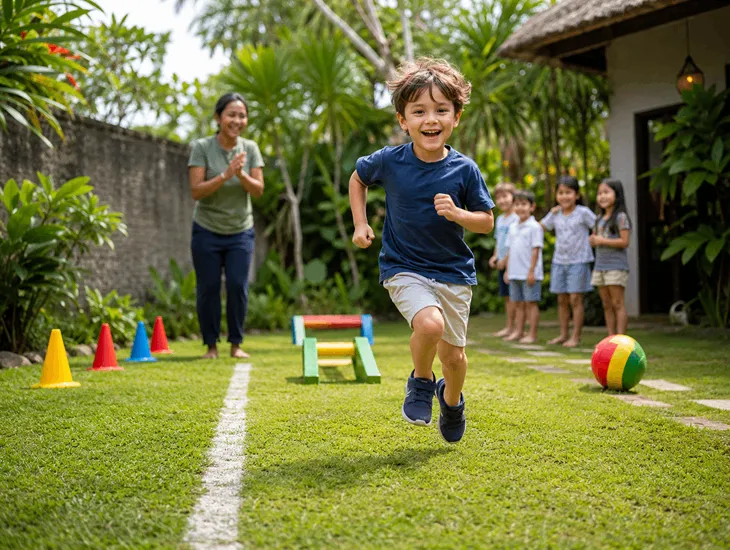
Gross motor skills involve large body movements. Your child should participate confidently in physical play. Running, hopping, and catching a ball are essential signs of healthy, age-appropriate physical development for kids.
Active play helps children build stamina and coordination. Participating in group games on the playground requires movement control. These skills are essential for the physical activities inherent in the kindergarten curriculum.
Balance is a critical component of gross motor health. Walking on a line or hopping on one foot shows body awareness. These activities build the strength needed for longer periods of movement.
Outdoor play for thirty minutes daily is standard in local programs. A child accustomed to this level of activity transitions easily. It prevents fatigue and keeps them engaged with their school peers.
Caregivers prioritize outdoor time to build physical confidence. They organize games like tag, relay races, or ball skills. This physical coaching ensures your child is strong, coordinated, and ready for active learning.
Sign 7: Sensory Exploration and Curiosity
Curiosity drives early learning. A ready child explores the world using touch, sight, and hearing. They ask frequent questions about their surroundings. This inquisitiveness is a powerful sign of cognitive development.
Problem-solving begins with simple experimentation. A child who tries to stack blocks in different ways demonstrates creative thinking. They learn to adapt their strategies when the first attempt does not work.
Sensory exploration helps children understand textures and patterns. Playing with water, sand, or clay engages their senses. This exploration provides the basis for scientific observation and later understanding of the world.
Encourage your child’s questions. Discussing why plants grow or how machines work fuels their cognitive growth. A supportive environment validates their need to learn, making them excited about the school experience.
Caregivers foster curiosity through rich, sensory-based activities. They facilitate science experiments, nature walks, and open-ended creative play. This guidance turns every day into a learning opportunity, preparing them for the classroom.
FAQs about Kindergarten Readiness Assessment in Bali
Q: How do I know if my child needs an assessment?
A: Watch for signs like difficulty with potty training, sharing, or following simple rules.
Q: Can a Babysitter in Bali help with readiness?
A: Yes, caregivers follow structured programs to build academic and social skills.
Q: What is the most important skill for preschool?
A: Independence. Being able to use the toilet and open containers is vital for school.
Q: Should I hire a sitter for school runs?
A: Yes, a consistent, professional caregiver reduces morning stress and ensures punctuality.
Q: How long does readiness preparation take?
A: An eight-week intensive program is often enough to bridge significant developmental gaps.
Q: Does local culture help readiness?
A: Yes, traditional activities like dance and crafts build fine and gross motor coordination.

