

Pool Safety for Kids: Essential Summer Water Safety Tips for Parents in Bali
Villa life in Bali offers dream tropical vacations for families. However, the open-plan architecture often leads to dangerous, unfenced swimming pools. These water features pose severe risks to your adventurous young children every single day.
Parents frequently underestimate how fast a toddler accesses an unfenced pool. Drowning happens silently and rapidly. You cannot watch your children every single second while managing your busy remote work schedules during your holiday.
Without proper barriers, your villa becomes a high-risk zone for energetic little ones. Constant anxiety prevents you from enjoying your well-deserved break. This lingering fear disrupts your island holiday significantly for everyone involved.
You need professional intervention to ensure your children remain secure. Specialized support removes the burden of constant surveillance from your shoulders. Proactive safety measures create a secure environment for your family while in Indonesia.
Hiring a specialist who is CPR-certified and competent in water safety is the ultimate solution. A trained caregiver provides undivided attention during all water play sessions. You finally gain the freedom to focus.
Table of Contents
The Reality of Pool Safety for Kids
Drowning remains a top cause of child mortality in many regions. Bali poses unique challenges because few villas implement strict pool fencing. You must remain vigilant to protect your children from these risks.
The lack of legal requirements for pool barriers in Indonesia is concerning. Most rented properties prioritize aesthetic open-plan designs over child safety. This environment demands that you take complete responsibility for protecting your family.
Drowning happens silently and rapidly in residential pools. Children often slip away from adult attention in a matter of seconds. Relying on visual checks is insufficient because hazards exist in every corner of the villa.
Understanding these risks allows you to plan your holiday much better. Proactive parents prioritize safety by identifying hazards immediately upon villa check-in. Never assume that your accommodation is naturally safe for young explorers.
Expert care provides the necessary layer of protection. Swimming-competent professionals actively monitor your children near water. Their presence eliminates the worry associated with unprotected pools, allowing you to enjoy your holiday with total confidence.
Universal Guidelines for Safe Swimming
The American Academy of Pediatrics strongly advocates for four-sided pool fencing. A physical barrier should completely surround the water and isolate it from your living areas. This fence acts as the primary safety layer.
Always ensure that any pool gate features a self-closing, self-latching mechanism. The latch must be positioned high enough to prevent young children from opening it. Regularly test the gate to verify its security status.
Constant supervision remains the most effective drowning prevention measure available. Never leave your children alone near pools, even for a short moment. Use the Water Watcher strategy, designating one adult for focused supervision.
Designate an adult as the Water Watcher for fifteen-minute intervals. This person provides undivided attention, avoiding phone calls or social distractions. Rotating this duty among adults ensures no lapses occur during holiday swimming sessions.
Empty all buckets and small containers immediately after usage. Even shallow water presents significant drowning risks for curious toddlers. Maintain a tidy outdoor area to prevent children from wandering near dangerous water hazards today.
Installing Proper Pool Fencing Solutions in Bali
Villa rentals in Bali often lack adequate pool barriers. Fortunately, local rental companies specialize in temporary pool fencing. These sturdy installations meet strict international standards and effectively prevent unsupervised water access for young children.
Professional installation teams secure the fence using custom concrete blocks or stakes. They construct these barriers from strong bamboo or steel materials. The gates feature reliable child-proof locking systems for maximum residential protection.
You must book these essential safety barriers well in advance of your arrival. Popular holiday seasons see high demand for safety equipment across Bali. Secure your fence early to ensure it is installed upon arrival.
Inspecting the pool area with the installation team is a wise safety practice. Ensure there are no gaps between the fence and the surrounding walls. A well-installed barrier gives you immense peace of mind.
Consider these temporary fences as vital components of your holiday infrastructure. They provide a physical safeguard that protects your children while they explore the villa. Never compromise on safety when living in Bali with kids.
Supervision Protocols for Water Play in Bali
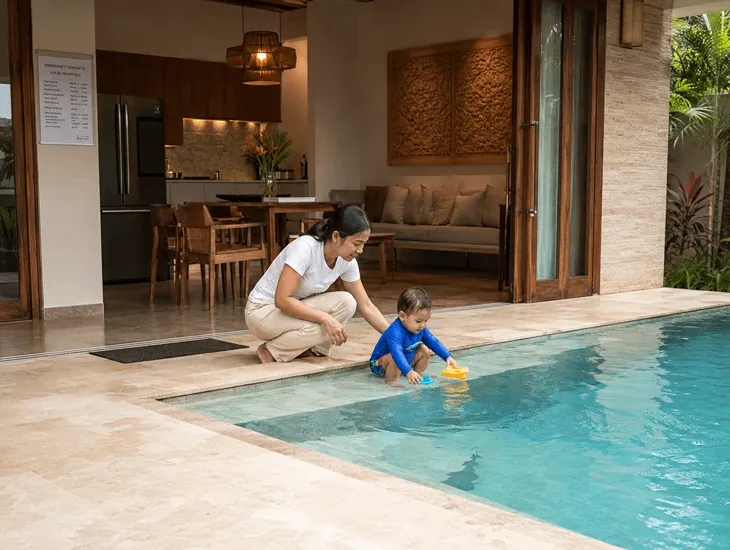
Supervision requires your absolute, undivided attention during water play sessions. You must stay within arm’s reach of infants and toddlers at all times. This touch supervision is the gold standard for pool safety daily.
Establish clear water rules for older children who are already competent swimmers. Enforce the buddy system where everyone swims with a partner. This rule ensures that help is always available if an emergency occurs.
Never assume that someone else is watching your child. Always confirm the specific Water Watcher before anyone enters the pool area. Direct, verbal communication prevents tragic assumptions that lead to fatal drowning accidents daily.
Remove all floating toys from the pool immediately after swimming sessions. Toys left in the water attract young children and encourage them to lean over the edge. Clean pool decks minimize tripping hazards.
Encourage your children to ask for permission before entering the pool area. This rule builds respect for water safety habits from a very young age. Consistent reinforcement of these rules saves lives in Bali.
Real Story: Navigating Uluwatu Villa Hazards
Calvin, a 35-year-old software architect from the UK, arrived in Uluwatu, but he struggled immediately. His toddler constantly wandered toward the unfenced pool edge, making it impossible to finish his urgent work.
Traffic noise and humidity worsened his frustration. He frequently muted his video calls to rush outside and check on his son. His work productivity plummeted while his stress levels climbed higher every day.
Calvin realized he had reached a breaking point. He needed a professional solution that combined safety with his need for focus. He searched online for a professional platform to find reliable childcare support.
They matched him with a CPR-certified caregiver who possessed excellent swimming skills. She arrived the next day, bringing calm professional oversight. She organized safe, structured water games while Calvin finished his work.
Calvin finished his reports early and felt relieved. Having a swimming-competent babysitter saved his professional reputation. He could finally enjoy the stunning Uluwatu sunsets with his son by his side in total safety.
Swimming Lessons and Water Competency
Formal swimming lessons significantly reduce drowning risks for young children. Start parent-infant classes early to promote comfort and water familiarization. These fun sessions teach children essential survival skills through active, supervised play in water.
Children as young as four often master essential skills like floating. Treading water allows them to rest and signal for help if they encounter trouble. Competence provides an additional layer of personal safety.
Look for reputable swim schools that operate locally across Bali. Many provide personalized instruction that focuses on survival rather than just stroke refinement. Consistent lessons build lasting confidence and respect for the water.
Recognize the indicators that your child is ready for structured instruction. Children who enjoy splashing and floating during bath time often transition well to classes. Increased energy and curiosity also signal readiness to learn.
Reinforce these water competency lessons during your own family pool time. Practice floating and exiting the water independently. Always supervise these practice sessions closely to ensure your children remain secure in the water.
Professional First Aid and CPR Training
Medical emergencies require immediate and correct physical responses. High-quality professionals possess advanced practical medical training. They know exactly how to handle critical situations effectively, ensuring your child remains safe at all times.
Training covers cardiopulmonary resuscitation techniques for both infants and adults. Caregivers also learn to use automatic external defibrillators correctly. These specific practical skills save lives during sudden medical emergencies at home.
Choking hazards remain a common fear for busy parents. Certified childcare workers practice specific choking assistance protocols regularly. They also learn proper shock treatment methods for handling serious accidents or minor household injuries.
Secondary first aid is equally important for daily child supervision. Caregivers can assess minor injuries quickly and accurately. They know proper bandaging techniques for minor playground falls, protecting your child during play.
Immediately verify that the caregiver possesses an active first aid certification. Reliable childcare workers carry physical or digital copies. Verify the exact expiration dates carefully before finalizing any service booking.
Why Experts Recommend Certified Babysitters
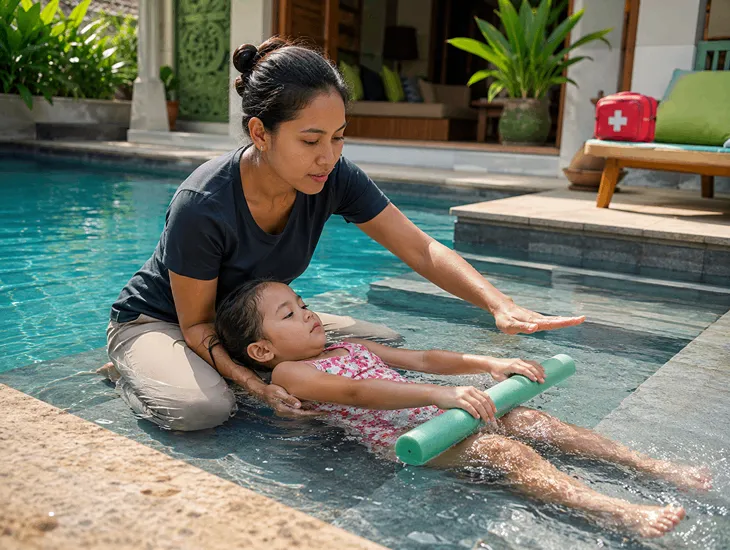
Professional childcare support ensures your children receive undivided attention during water play. A swimming-competent babysitter maintains constant visual contact with your child. They implement touch supervision protocols that effectively prevent dangerous water-related accidents.
Professional childcare support ensures your children receive undivided attention during water play. A swimming-competent babysitter maintains constant visual contact to prioritize Pool Safety for Kids and effectively prevent dangerous water-related accidents.
These caregivers enforce safety rules consistently, such as the buddy system. They prevent running near the pool deck and ensure children ask permission before entering. Professional support creates a safe, structured aquatic experience.
Agencies require strict vetting, including background checks for every staff member. You gain peace of mind knowing a thoroughly vetted expert monitors your family. Professional caregivers are trained to handle group dynamics efficiently.
English-speaking professionals ensure clear communication regarding all safety boundaries. They engage your children with age-appropriate games that promote water comfort. Hiring a specialist allows you to balance professional tasks and family enjoyment successfully.
FAQs about Pool Safety for Kids
Q: How can I ensure pool safety in a Bali villa?
A: Rent a temporary pool fence from a reputable local service to isolate the water entirely.
Q: Should I rely on swimming lessons for safety?
A: No, swimming lessons are a vital skill, but they do not replace active adult water supervision.
Q: What is the Water Watcher strategy?
A: Designate one adult to focus solely on watching the water for a 15-minute rotation.
Q: Can a babysitter supervise swimming sessions?
A: Only hire a CPR-certified, swimming-competent babysitter to supervise pool play with touch supervision.
Q: What should I include in my emergency kit?
A: Carry first aid supplies, a list of local emergency contacts, and the nearest hospital location.

