
Review Us
Baby Swimming Time in Bali 2026 – Aquatic motor skill development and safe infant pool play
author

Helping Development Through Baby Swimming Time in Bali

Expatriate parents seek engaging activities to support infant milestones in tropical climates. High temperatures limit outdoor playtime during the afternoon. Leaving a child indoors stunts sensory exploration and physical development. Remote workers often lack the time to facilitate structured sensory activities safely.

Relying on untrained staff for pool supervision creates operational risks. Unstructured splashing without developmental goals exposes infants to hazards. Open waterways and private villa pools present drowning risks for toddlers. Accidental submersions occur silently and rapidly when vigilant supervision lapses during busy workdays.

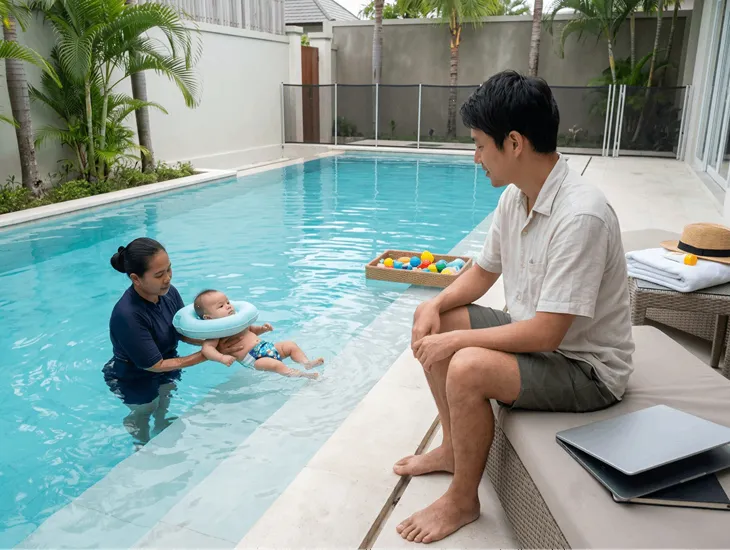
Following American Academy of Pediatrics guidelines ensures infants gain physical benefits from water play safely. A trained professional transforms the pool into a secure developmental environment. A vetted babysitter manages baby swimming time in Bali to facilitate motor skill progression while you work securely.

Early Motor Skill Development in the Pool

Structured aquatic activities correlate with improvements in infant motor skills. The natural buoyancy of water supports the baby body weight. This allows them to move their limbs freely and comfortably.

This environment helps infants practice coordinated arm and leg movements. Moving against water resistance strengthens muscles safely. It accomplishes this without placing stress on fragile joints.

Babies participating in water programs achieve higher motor scores. These controlled environments encourage reaching and splashing. These actions build early physical competence and coordination.

Infants learn to balance their core while floating with adult support. This core strengthening translates to better posture. It helps them sit up or crawl on solid ground later.

Consistent aquatic practice builds physical confidence early. The infant learns to trust their physical capabilities. A trained caregiver facilitates these specific movements during supervised play.

Sensory Awareness and Body Coordination

Aquatic Activities in Indonesia 2026 – Infant sensory awareness and motor skill development

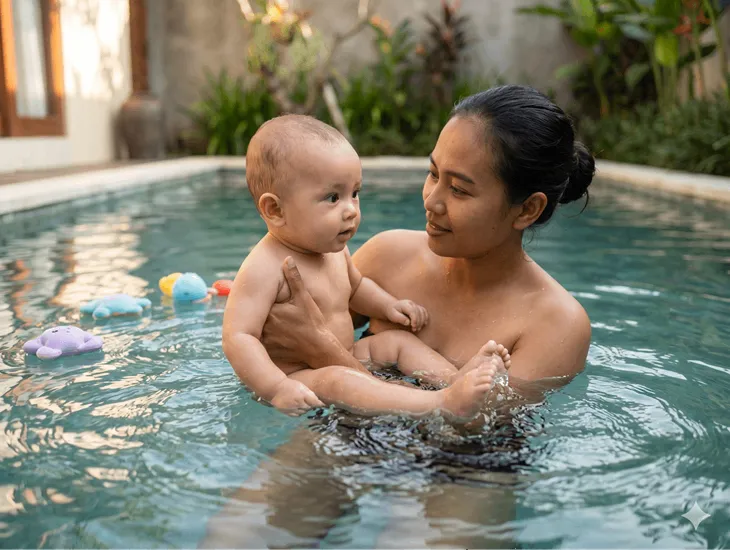
Changing water temperatures and buoyancy provide sensory input for babies. Tactile feedback stimulates their developing nervous system. This enhances body awareness and sensory integration.

Water movement across the skin helps babies understand physical boundaries. The sensation of splashing creates neural pathways. These pathways support spatial awareness and physical coordination.

Close skin-to-skin contact with a caregiver enhances emotional regulation. Maintaining eye contact during water play builds trust. This interaction reduces infant stress hormones effectively.

Structured routines featuring predictable songs help babies manage excitement. This predictable environment teaches early self-regulation. It balances arousal with calmness during physical activities.

A trained babysitter utilizes these sensory techniques deliberately. They transform simple splashing into a targeted developmental activity. The infant remains calm and physically supported throughout the experience.
Age-Appropriate Goals for Infant Water Play

Pediatric sources advise avoiding public pools before six months due to infection risks. Early water exposure must be brief in warm, private pools. The primary goal is comfort and bonding for young infants.

Caregivers should hold the baby securely in shallow water for ten minutes maximum. Between six and twelve months, the focus shifts to comfortable splashing. Adults must provide full support while encouraging gentle kicking.

There is no expectation of independent swimming during the first year. Formal survival lessons are recommended only after the child turns one. These structured classes teach basic water competence like reaching the wall.

Parents should avoid pushing infants beyond their comfort zones. Forcing a baby to submerge their face causes trauma. This slows their aquatic confidence and developmental progress.

A professional babysitter understands these strict developmental timelines. They never treat infant pool sessions as rigorous training. They ensure aquatic play remains gentle, safe, and age-appropriate.

Recognizing Local Drowning and Pool Risks

Drowning remains a major cause of death for children in Indonesia. Infants and toddlers face the highest mortality rates. This requires vigilance whenever they are near any water source.

Adults frequently underestimate drowning risks in domestic environments. Children often wander near private villa pools without active supervision. This leads to silent accidents quickly.

Many rental properties feature unfenced private pools. Parents must take proactive measures to secure the perimeter around living areas. Property managers recommend installing temporary mesh fences immediately.

Keeping the swimming area separated from indoor play spaces is a safety requirement. Educating all household members about these local risks is mandatory. A culture of strict aquatic vigilance prevents lapses in supervision.

Open waterways and decorative ponds also present hidden dangers locally. A trained caregiver maintains strict ratios and constant visual contact. They neutralize these environmental threats during daily routines.

Essential Water Safety Protocols for Caregivers

Safety requires implementing multiple layers of protection simultaneously. Isolation fencing and constant supervision work together. They create a secure environment for infants living near water.

Babies must remain within arm’s reach of an adult at all times. This supervision rule is absolute. It cannot be delegated to older siblings or distracted household staff.

Caregivers must never use mobile phones while supervising water play. Removing digital distractions ensures the adult remains focused. They must monitor the infant breathing and physical comfort constantly.

Using inflatable toys as safety devices is highly dangerous. Infants can slip through cheap floaties easily. Caregivers must use only approved personal flotation devices if necessary.

Caregivers must clear the pool deck of tripping hazards. Removing wet towels and unused toys prevents accidental falls. Our agency trains every babysitter to enforce these absolute safety protocols.

Real Story: Structured Water Play in Seminyak

Pool Safety in Indonesia 2026 – Professional babysitter supervising infant water play

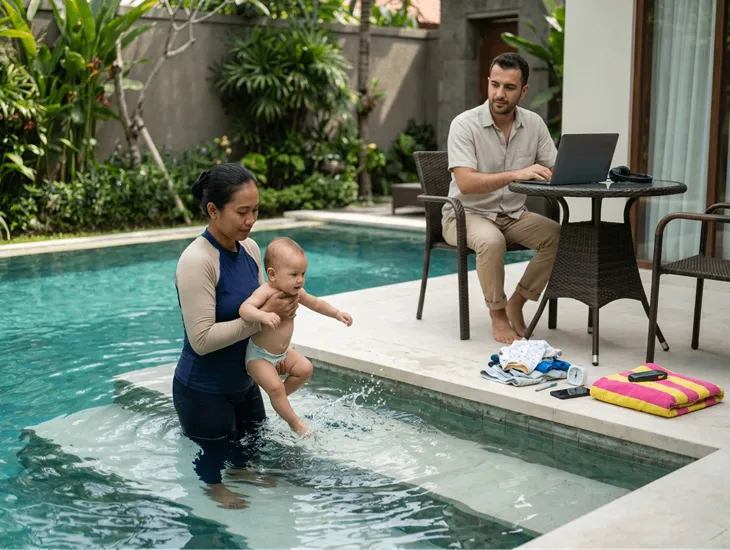
Zein identified a safety deficit after moving to Seminyak. His villa featured an unfenced pool, and his active ten-month-old crawled toward the water. He required a reliable professional to manage aquatic exploration while he worked.

He struggled to manage his conference calls while blocking the pool deck. The intense humidity made indoor play stifling. His untrained housekeeper lacked basic water rescue knowledge to supervise the infant.

Zein hired our professional agency to provide a vetted caregiver. The babysitter implemented a strict routine for aquatic exploration. She guided the infant through supportive kicking exercises in the shallow end.

The caregiver strictly enforced the arm’s-reach rule and dried the baby after ten minutes. Zein balanced his career while his son enjoyed developmental aquatic stimulation. The structured schedule eliminated his daily operational stress.

Screening Standards for Aquatic Caregivers

Reputable childcare services maintain rigorous screening standards for their staff. Caregivers must be certified in pediatric first aid and infant cardiopulmonary resuscitation. This allows them to handle sudden aquatic emergencies effectively.

Professionals understand safe supervision ratios and refuse dangerous arrangements. A trained babysitter will never watch multiple toddlers around an unfenced pool. They prioritize safety above operational convenience.

Vetted caregivers familiarize themselves with specific villa safety policies. They locate emergency exits and check pool gate latches. They review the property emergency response procedures before beginning their shift.

Freelance helpers rarely possess this specialized aquatic safety training. Expatriate parents must verify certifications to ensure competent supervision. Agencies conduct detailed background checks before placing staff.

This rigorous vetting process ensures genuine experience and verified references. Our agency guarantees that every professional babysitter exceeds baseline standards. We prioritize continuous emergency training for daily childcare operations.

Creating Safe and Fun Pool Routines

Establishing a predictable routine helps infants transition into the water calmly. Caregivers use the same gentle entry techniques and familiar songs. This signals the start of playtime consistently.

Monitoring the infant body temperature is extremely important. If the baby begins shivering, the caregiver must remove them from the water immediately. Post-swim care requires prompt attention to prevent chills.

The babysitter must wrap the infant in a warm, dry towel instantly. They change them out of wet swimwear quickly. Applying a baby-safe moisturizer after swimming prevents skin irritation from pool chemicals.

A structured hydration break ensures the infant replenishes fluids. Consistent praise during these routines reinforces positive associations. Cheering for small aquatic achievements builds the infant self-esteem.

A dedicated babysitter orchestrates these routines safely. They manage the entire process from safe water entry to post-swim dressing. The infant receives maximum developmental benefits comfortably.

FAQs about Baby Swimming Time in Bali​

Q: When can my baby safely use a villa pool?

A: Introduce water play after six months in warm, private pools for safety and comfort.

Q: What is the main goal of infant pool play?

A: The primary focus is comfort, gentle movement, and bonding rather than survival skills.

Q: Can a babysitter supervise my child in the pool?

A: Yes. A CPR-certified babysitter safely supervises water play using strict arm’s-reach contact.

Q: Are inflatable floaties safe for my baby?

A: No. Floaties are dangerous. Adults must provide direct physical support during all activities.

Q: How does water play help development?

A: Gentle resistance strengthens muscles, improves coordination, and provides sensory input.

Q: How long should an infant stay in the water?

A: Keep sessions short. Limit exposure to five or ten minutes to prevent the infant from chilling.

Would you like me to connect you with a CPR-certified caregiver to facilitate a safe pool routine for your infant?