
Review Us
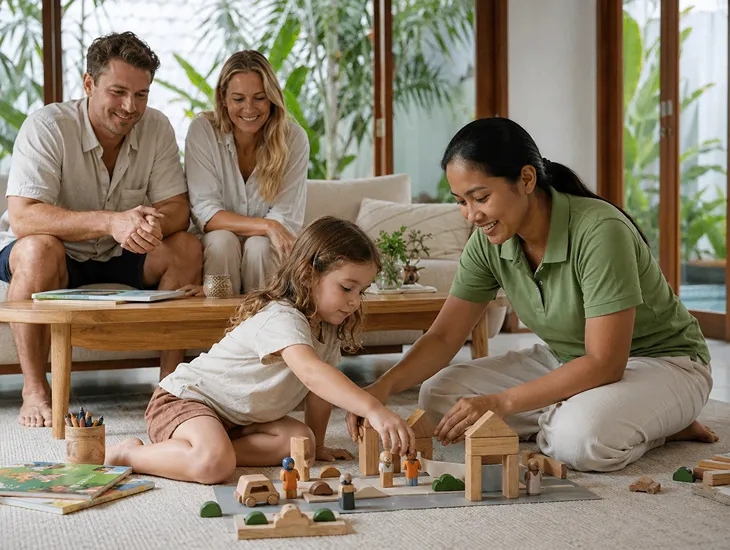
School Readiness Skills 2026 – Child engaging in creative play with a caregiver in Indonesia
author

School Readiness Skills: Signs Your Child Is Truly Ready for School in Bali

Expat parents relocating to Indonesia often worry about early education. Finding the right playgroup is stressful. Ensuring your child adapts to a new classroom environment adds immense pressure on foreign families.

Many children struggle with sudden transitions to structured learning. Without proper preparation, leaving parents at the school gate causes severe separation anxiety. This emotional distress disrupts their early learning experience.

Focusing solely on academics is a common mistake. Parents force alphabet memorization while neglecting essential emotional regulation. This imbalance leaves children unprepared for actual classroom dynamics and group interactions.

The Indonesian Ministry of Education and Culture outlines broad developmental domains for young learners. True preparedness involves managing emotions, following routines, and building basic independence before the first day.

Developing strong School Readiness Skills requires consistent daily practice. Children need safe environments to rehearse sharing, listening, and self-care. Professional support at home bridges the gap between toddlerhood and formal schooling.

An experienced local caregiver provides this vital foundation. They use structured play to build confidence. This ensures your child enters their new classroom feeling secure, capable, and eager to learn.

Official Context for Early Education in Bali

Indonesian standards set seven years as the primary entry age. However, early childhood programs focus on broad developmental domains rather than strict age limits. Readiness involves the whole child.

Local research identifies several critical areas for growth. These include cognitive abilities, social behaviors, and motor skills. A child must navigate these areas to thrive in a structured setting.

Kindergartens in Indonesia emphasize play-based learning and socialization. Teachers expect children to possess basic independence. They must participate in group activities and handle minor frustrations without constant adult intervention.

Mastering School Readiness Skills ensures a smooth integration. Children who understand classroom expectations adapt much faster. This reduces the burden on teachers and creates a positive educational environment for everyone.

Parents often underestimate the importance of these non-academic domains. Social competence predicts early school success better than reading ability. Early childhood preparation must focus heavily on emotional resilience.

An experienced local caregiver can seamlessly weave these concepts into daily routines. They introduce gentle structure during playtime. This prepares the child for the expectations of local or international schools.

Cognitive and Language Milestones for Children

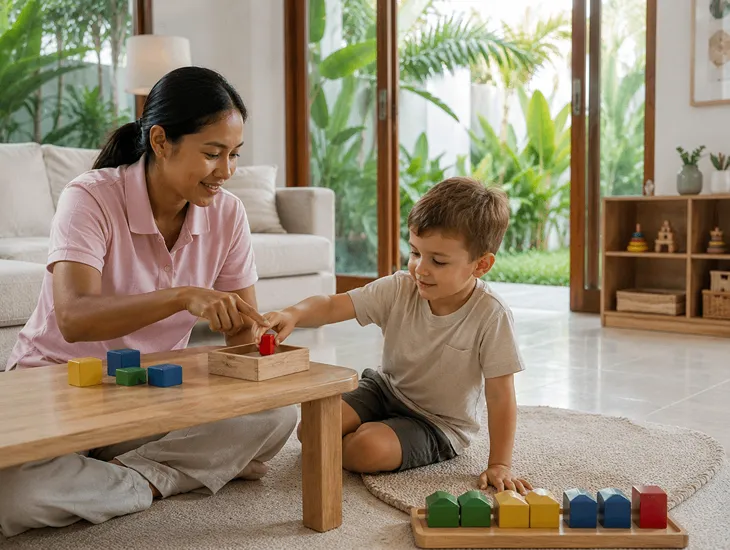
School Readiness Skills 2026 – Child practicing early language development with a professional

Cognitive development forms the basis of early learning. Children must demonstrate basic attention spans and memory retention. They need to solve simple problems independently during their daily activities.

Language milestones are equally critical for classroom success. A child must understand basic instructions. They should clearly express their needs, ideas, and frustrations to adults and their peers.

Teachers look for children who can follow two-step directions. Examples include putting away a toy and sitting on a mat. This shows the child processes and executes verbal commands.

Curiosity is a strong indicator of School Readiness Skills. Children should ask questions about stories or their surroundings. They might sort objects by color or size during creative play.

Building early learning skills involves constant verbal engagement. Caregivers must talk to children about their day. This expands their vocabulary and boosts their confidence in speaking up.

A dedicated professional reads aloud and encourages storytelling. They play simple counting games. These natural interactions stimulate brain development without the pressure of formal academic drills.
Building Social and Emotional Independence

Emotional regulation is crucial for a smooth school transition. Children experience big feelings when separated from parents. Managing these emotions requires practice, patience, and gentle guidance from trusted caregivers.

A key milestone is separating from parents without prolonged distress. Children must learn that caregivers return. This trust allows them to focus on playing and learning with their peers.

Social independence involves sharing and taking turns. Children must play alongside others peacefully. They need to recover quickly from minor upsets, like losing a game or dropping a toy.

Practicing School Readiness Skills builds emotional resilience. Children learn to name their feelings. They understand basic rules and begin to show empathy toward other children in their group.

Parents can foster this by organizing supervised playdates. These small gatherings simulate a classroom environment. Children learn to navigate social friction with an adult nearby to mediate safely.

Hiring a Babysitter in Bali helps coach these interactions. They model polite language and turn-taking. This quiet support builds a strong emotional foundation for the busy classroom ahead.

Physical Coordination and Basic Motor Control

Physical readiness involves both gross and fine motor skills. Children need basic coordination to navigate a busy classroom. Running, jumping, and climbing safely are essential daily activities.

Fine motor control is necessary for early academic tasks. Children must learn to hold a pencil correctly, turn pages without tearing them, and manage simple clothing zippers.

Self-care is a major component of physical independence. Children should use the toilet with minimal assistance. They must wash their hands properly before meals and after playing outside.

Managing lunch boxes independently is another practical requirement. Children must open simple containers and feed themselves. Teachers cannot open thirty snack boxes simultaneously during a short break period.

Developing daily independence includes organizing personal belongings. Children should pack away their toys when asked. They must recognize their own bag and shoes in a shared space.

A reliable caregiver encourages this independence daily. They supervise handwashing instead of doing it for the child. This patient rehearsal builds immense confidence before the school year begins.

Real Story: A Smooth Transition in Sanur

After relocating to Sanur, German expat Clara realized her four-year-old son, Leo, was entirely unprepared for his new kindergarten environment due to severe separation anxiety.

The stress of the relocation amplified his tantrums. Clara could not leave the room without him crying uncontrollably. She worried his inability to self-soothe would make preschool impossible.

Clara recognized that her son lacked vital emotional regulation. She needed a structured approach to gradually build his confidence and help him tolerate time away from her.

She decided to seek professional support to gently introduce School Readiness Skills at home. A local specialist started with short, engaging play sessions while Clara remained in the house.

Over several weeks, Leo learned to manage his emotions effectively during longer separations. He practiced packing his small backpack independently, which built his self-esteem and sense of personal responsibility.

When Leo finally started kindergarten, he walked in smiling. Clara felt immense relief seeing him wave goodbye easily. She credits this focused emotional preparation for his joyful school entry.

Cultivating Positive Classroom Behavior at Home

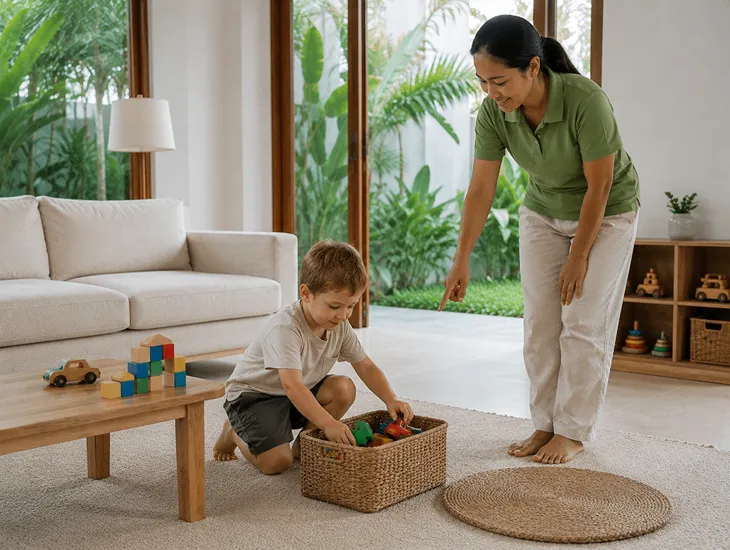
School Readiness Skills 2026 – Child packing toys independently with caregiver support

Classroom behavior differs greatly from home life. Children must understand how to function within a larger group. They have to wait their turn and listen quietly during group activities.

Sustaining attention is a critical milestone. A child should sit for age-appropriate periods. Participating in a short circle time without constant redirection shows they are ready for structured learning.

Following daily routines provides a sense of security. Children thrive when they know what happens next. Consistent schedules at home prepare them for the predictable rhythm of a school day.

Parents can simulate classroom dynamics easily. Setting a specific time for drawing or reading builds focus. Encouraging the child to clean up afterward reinforces personal responsibility and respect.

Mastering classroom expectations requires consistent boundary setting. Children must learn that rules apply outside the home. Respecting instructions from other adults is vital for their educational success.

A structured childcare provider practices these routines flawlessly. They establish consistent meal and nap schedules. This environment teaches the child how to follow rules and respect shared spaces.

Common Misconceptions About Early Academics

Many parents overemphasize academic achievements early on. They push toddlers to memorize the alphabet. They believe writing their name is the ultimate sign of preparedness for early education.

This purely academic approach ignores holistic development; a toddler who can recite numbers perfectly might still lack the emotional regulation needed to stop biting peers.

Behavioral readiness predicts successful transitions better than academics. Teachers prefer a child who can share over one who can read. Schools are designed to teach letters and numbers later.

Another misconception involves age and automatic readiness. Turning five does not guarantee a child is prepared. Every child develops at their own unique pace across various developmental domains.

Expat families often overestimate their child’s adaptability. A child who attended daycare in Europe might struggle in Indonesia. The change in language and culture causes unexpected behavioral regressions.

Focusing on holistic School Readiness Skills prevents these issues. Building resilience and adaptability is crucial. This ensures the child can handle academic challenges when they eventually arise.

How a Sitter in Bali Supports Growth

Professional caregivers provide more than just supervision. They actively participate in pre-primary development. They turn everyday moments into valuable learning opportunities for your growing child.

A skilled caregiver implements mini school mornings. They practice waking up, dressing, and eating breakfast on a schedule. This rehearsal removes the shock of rushed mornings when school officially starts.

They gradually extend the time spent away from parents. This gentle separation builds independence. The child learns to trust other adults, which reduces anxiety on the first day.

Caregivers also support early literacy naturally. They read books and ask engaging questions. This builds vocabulary and comprehension without relying on stressful flashcards or rigid academic worksheets.

Strong educational foundations are built through consistent, patient guidance. A caregiver acts as a gentle coach. They help the child navigate big emotions and minor social conflicts effectively.

Investing in a Babysitter in Bali is a strategic choice. They protect your child’s first educational experience. This dedicated support creates a calm, confident, and joyful learner ready for anything.

FAQs about School Readiness Skills​

Q: What are the most important signs of readiness? 

A: The ability to separate from parents, follow simple instructions, and use the toilet independently.

Q: Should my child know how to read before starting school? 

A: No. Emotional regulation and social skills are more important than early reading abilities.

Q: How can a Babysitter in Bali help my child? 

A: They establish routines, practice separation, and encourage independence through daily tasks.

Q: Is turning the right age enough for school entry? 

A: Age is just a baseline. True readiness depends on emotional, social, and physical developmental milestones.

Q: How do I improve my child’s focus? 

A: Practice early learning by reading together and doing short tasks without digital distractions.

Looking for a caring sitter to support your child’s school readiness routine every day? Chat with our team on WhatsApp now