
Review Us
Smart play in Bali 2026 – Educational workshops, cultural activities, and sensory exploration for children in Indonesia
author-2

Use smart play in Bali to grow curious thinkers

Many expat parents worry their children spend too much time on screens. Finding activities that are both fun and intellectually stimulating can be difficult while living in Indonesia.

Traditional babysitting often lacks the developmental depth needed for growing minds. You want your child to learn, but you do not want to force them into a boring classroom.

Passive entertainment leads to shorter attention spans and less curiosity about the world. This creates a cycle where kids depend on gadgets rather than their own imagination for joy.

Without active engagement, children miss out on critical problem-solving skills and cultural understanding. The heat often traps families indoors, further limiting the options for adventurous, brain-boosting play.

Professional childcare standards in Indonesia emphasize the importance of sensory and cognitive stimulation. Choosing an approach rooted in smart play in Bali transforms everyday moments into powerful learning opportunities.

By focusing on workshops and science labs, you encourage children to ask deep questions. This method fosters a lifelong love for discovery while they simply enjoy their tropical environment.

Turn Culture Into Hands-On Play

Bali is rich with rituals that offer tactile experiences for children. Joining kid-friendly workshops for kite-making allows them to handle natural materials and copy intricate patterns.

Participants in canang-making workshops learn to create traditional offerings while asking about local stories. This active engagement helps them understand the complex rituals and history behind Balinese life today.

Handling clay at places like Sari Api allows for sensory development and artistic expression. Children see the immediate results of their work, which builds confidence and sparks curiosity.

Mask and puppet workshops encourage children to explore character development and storytelling. By copying traditional patterns, they develop fine motor skills while learning about the diverse people of the island.

Explore Science in Bali Play-Labs

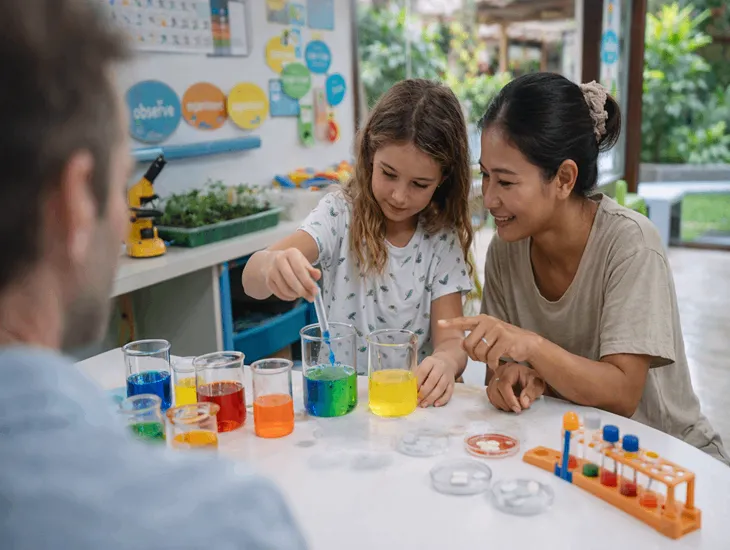
Smart play in Bali 2026 – Science experiments, cause-and-effect learning, and laboratory exploration for kids in Indonesia

Play-labs allow children to explore scientific concepts through colorful and messy experiments. They see cause-and-effect in action, which builds the foundations of early scientific thinking in a fun environment.

Many kids’ clubs now include science corners featuring bubbles, magnets, and simple chemical reactions. These zones show that smart play in Bali involves testing ideas rather than just burning energy.

Exploring nature in the garden provides opportunities to learn about biology and ecosystems. Children can observe insects and plants, sparking questions about how life works in a tropical climate.

Scientific exploration at a young age encourages a skeptical and inquisitive mind. By predicting outcomes and observing results, children learn that the world is a place full of discoverable secrets.
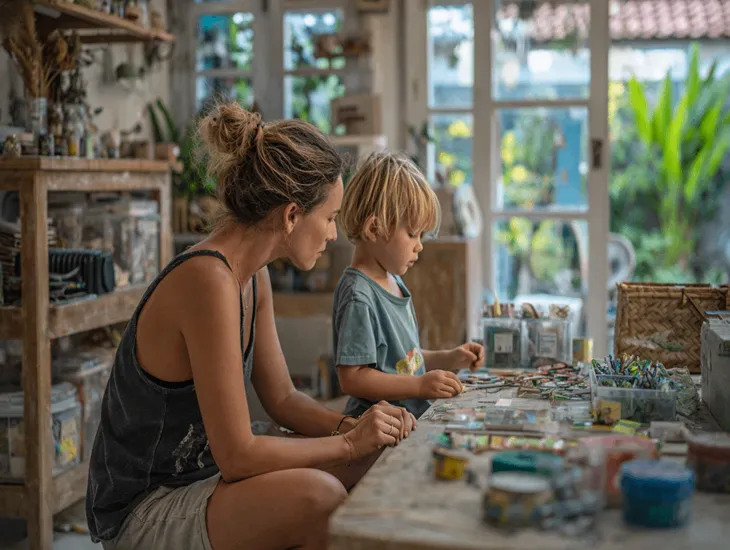
Choose Play-Based Kids Clubs

Selecting centers that focus on early learning is better than simple babysitting services. Playgroups at locations like The Garden Bali design their sessions around sorting, patterning, and outdoor exploration.

Role-play areas like “shops” or “hospitals” help children practice essential language and negotiation skills. They act out real-world scenarios, which helps them develop flexible thinking and social confidence.

Outdoor exploration in these clubs focuses on sensory play and physical coordination. Children learn to navigate their environment safely while interacting with peers from many different backgrounds and countries.

Early literacy is integrated into fun activities like storytelling or puppet shows. This ensures that smart play in Bali supports academic foundations without feeling like a traditional school environment.

Mix Structured Workshops with Free Exploration

Blending structured activities with free time gives enough support to stretch skills. Saturday Club Bali offers programs that combine cooking, arts, and outdoor games for a balanced day.

Free exploration allows children to process what they learned during a guided workshop. After a batik session, unstructured time on the beach lets them experiment with colors and patterns independently.

Alternating between focused learning and self-chosen play prevents burnout and keeps curiosity high. This method ensures that activity remains an enjoyable and voluntary choice for every child on the island.

Balanced days help children internalize new information through practical application in their own play. This flexibility is key to developing a self-motivated and curious thinker in a holiday setting.

Real Story: Curiously Exploring in Pererenan

When Luca, an Italian architect, first moved to the neighborhood of Pererenan, his son, Marco, struggled. Marco spent his humid afternoons watching cartoons instead of exploring the vibrant gardens nearby.

The transition felt slow, and the constant sound of passing motorbikes outside their villa made Marco anxious. He seemed to lose the inquisitive spark that usually defined his busy personality.

That is when Luca used bali-nanny.com to find a professional caregiver with a focus on education. They began attending a local pottery workshop together to help Marco connect with the community.

Touching the cool clay and smelling the woodsmoke from the kiln changed his perspective. This shift to smart play in Bali restored his curiosity and helped him adapt to Indonesia.

Establish a Curiosity Framework at Home

Smart play in Bali 2026 – Reflective learning, parent-child discussion, and creative recycling of local materials in Indonesia

Extending the learning at home involves using simple prompts after a daily activity. Asking “What surprised you today?” helps children reflect on their experiences and strengthen their critical thinking.

Questions like “What would you change about that kite?” encourage children to think about design and problem-solving. This reflection turns a simple workshop into a deep lesson in engineering.

Re-using local materials like weaving strips or natural dyes at the villa lets kids repeat experiments. Remixing what they have learned is the real engine of a curious mind.

Creating a dedicated “maker space” in your home provides a permanent area for experimentation. This encourages a mindset where every household object is seen as a tool for discovery.

Essential Safety for Outdoor Play in Indonesia

Safety is paramount when exploring the tropical outdoors with young and curious children. Parents must ensure their kids are well-hydrated and protected from the strong sun with high-quality repellent.

Exploring rice fields or gardens requires careful supervision to avoid local wildlife like snakes or spiders. Professional nanny services in Bali provide the extra eyes needed for safe exploration.

Check that play equipment at kids’ clubs meets international safety standards before letting your child play. Look for soft flooring and secure structures that prevent falls during active movement.

Educating children about local safety rules helps them become responsible and aware of their surroundings. This awareness is a vital part of smart play in Bali and overall physical development.

Cultural Etiquette for Workshops in Bali

Learning local etiquette is an important part of the cultural education offered in many workshops. Children should learn to use their right hand when giving or receiving objects during rituals.

Dressing modestly when visiting temples or community centers shows respect for the local traditions and people. This understanding of social norms is a key trait of a respectful childhood.

Patience and a quiet voice are often valued during traditional arts and crafts sessions in the village. Teaching these social skills helps children integrate better into the rich Balinese community.

Understanding the “why” behind these rules helps children connect more deeply with the island’s heritage. It turns a simple art class into a meaningful lesson in global citizenship and respect.

FAQs about Smart Play in Bali

Q: What age is best for workshops? 

A: Most workshops accommodate children starting from age four with adult supervision.

Q: Are these clubs safe for expats? 

A: Yes, reputable centers follow international safety and high professional childcare standards.

Q: How do I find a science lab? 

A: Many modern kids’ clubs in areas like Canggu now offer science-themed sessions for children.

Q: Can this help with language? 

A: Role-play and collaborative workshops are excellent for practicing new vocabulary and social skills.

Q: Do I need to book in advance? 

A: Popular workshops and clubs often require booking at least twenty-four hours ahead.

Need help with smart play in Bali, Chat with our team on WhatsApp now!